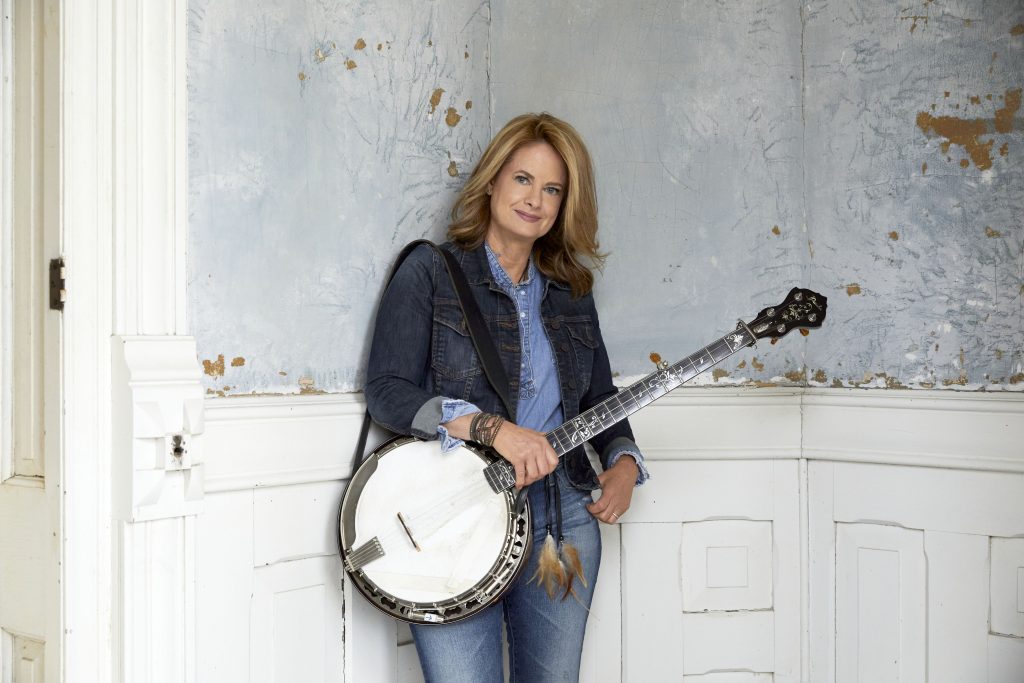
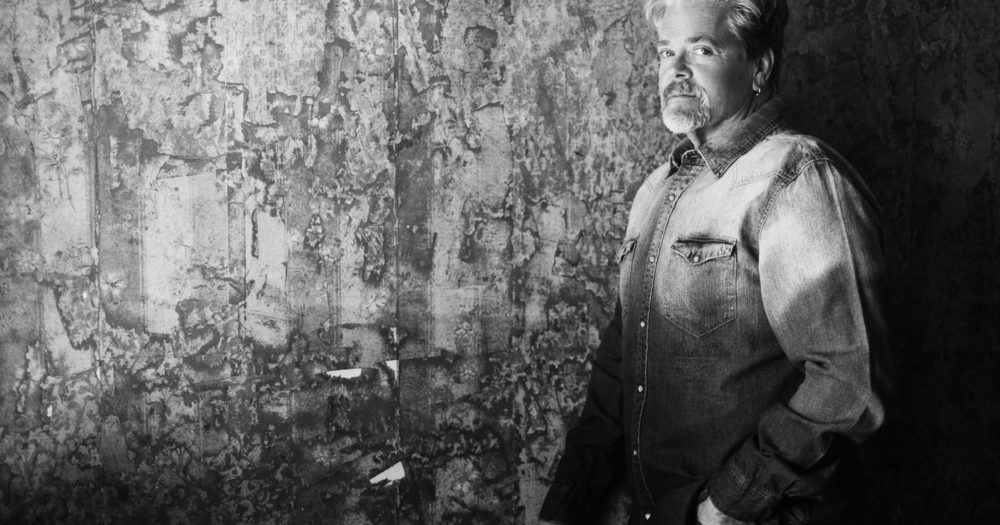
Alone or with fellow musicians; guitar, fiddle, or banjo in hand, Bruce Molsky has been exploring traditional musics from an astonishingly broad range of cultures over the past two decades — synthesizing them and refracting them through his own evolving sensibilities to the point where the sources of his inspiration transform themselves into a sound that is uniquely his. While most identified with traditional American old-time music, Molsky’s influences range from the Appalachian soul of Tommy Jarrell to Delta blues; from the haunting modal strains of Irish music to the rhythmically nimble music of Eastern Europe. His many recordings are more like snapshots — postcards home, mementos of stops along the way. Yet they say as much about where he is heading next as they do about where he’s been.
Soon Be Time is his sixth solo album, and is his most demanding, personal statement to date. The unifying element of Soon Be Time sounds simple, yet it required an immense amount of consideration and concentration. “It doesn’t make sense to consider a new project unless there’s a concept or a motivation to support it,” Molsky explains. “It’s not just about presenting a new set of tunes; there has to be something more than that. Soon Be Time is about revisiting my own musical self and wanting to make the more intimate statement.” While his past albums have featured collaborations and contributions with an array of fine musicians, this is his first truly solo venture — recorded with only his own banjo, guitar, fiddle, and soulful, inviting voice. “After some wonderful and intense style-crossing collaborations over the last few years,” he continues, “I just felt the need to revisit where I was before all that happened. I started into all of this as a solo player, and it’s still a very strong calling for me. Playing solo also allows introspection to a depth you can’t get any other way. It’s like falling deep into your own internal and very private space, and then coming out the other side with something to share.”
The constraints imposed by Soon Be Time’s mission have resulted in a set of performances which, in their spartan dignity, are among the most pure and affecting in Molsky’s remarkable career. Hailing from New York City, he followed a circuitous musical path that began with Motown and “60s pop music, through Jimi Hendrix and into the blues. Through his fascination with acoustic blues guitar, he was introduced to Doc Watson and more rural American music. “It’s easy to see blues and old-time music as separate cultural expressions,” he says, “but as soon as you scratch the surface, most of the barriers go away. There is so much blues in old-time music that it’s inescapable.” True to his word, Molsky’s own music is marked by a subtle bluesy undercurrent. Branching out from guitar to fiddle and banjo, he studied with master old-time musicians and became a familiar participant in (and frequent winner of) fiddle conventions and contests. In the process, he developed a performing style which fused the rhythmic propulsion of stringband music, the soul of the blues, a jazz-inflected harmonic sophistication, and an engagingly conversational eloquence born of many evenings in jam sessions and song swaps.
Molsky’s recordings have had a wide-ranging impact on today’s old-time scene, bringing little-heard songs to light and introducing intriguing new variations on traditional themes. As a solo artist, his 2001 release Poor Man’s Trouble received AFIM’s “Indie” award for Best Traditional Folk Recording, while his 2004 release Contented Must Be was well-received by audiences and international media alike. His collaboration with Darol Anger, Michael Doucet, and Rushad Eggleston, Fiddlers 4, was nominated for a 2002 Grammy Award. The unique pan-global group Mozaik, featuring Bruce, Andy Irvine, Donal Lunny, Nikola Parov, and Rens Van Der Zalm, released their debut album Live at the Powerhouse in 2004.
When not recording or touring with various aggregations, Molsky teaches at a number of well-known music workshops and camps, and tours regularly as a solo performer. Much of the material on Soon Be Time was first honed at his live solo performances, lending the album a distinct blend of assuredness and spontaneity. “There’s no one else to hide behind or rely on for musical support,” Bruce explains. “Every moment of making this recording was like being on the very edge of something; really liberating and kind of scary at the same time. I love that feeling, just pushing myself to that edge and losing myself in the music.”
It is music that lends itself to getting lost, to voyages. “Every piece brings me back to some place or event,” Molsky continues. He first heard the haunting “The Golden Willow Tree,” while in college in Ithaca. “I was washing dishes in the kitchen at Johnny”s Big Red Grill,” he recalls, “and listening to the folk music sessions in the bar.” The guitar-driven “Fair Thee Well Blues” entered Molsky’s repertoire when he was a teenager, via a battered Mississippi delta blues LP discovered in the back room of a record store in the Bronx. “I played that LP to death,” he reflects with a smile. Bruce’s refreshing version of the stringband warhorse “Cotton Eyed Joe” has been in his shows as an encore for years, yet he has never recorded it. “I’ve tried several times,” he explains, “but never quite nailed it. It’s a first-take tune, and I finally got a first-take that captures it.”
Molsky’s peers in the traditional music community were the source of several of Soon Be Time’s songs. “My version of “Forked Deer” is loosely based around the Kentucky fiddler Ed Haley’s ” I spent hours on the phone with John Hartford discussing and trying to figure out how Haley played, how he drew his bow and held the fiddle,” Bruce says. “I can’t play that tune without thinking of John and feeling lucky for having known him. The curiously Eastern European-tinged “Brass Band Tune” came from Andy Irvine, who explained that it was played by a state brass band in Bulgaria. “It’s never been played on the guitar to my knowledge,” Molsky explains. “I was so set on arranging the tune for guitar that I had to invent a tuning for it. 7/16 time doesn’t lend itself too well to Travis-style guitar either!”
Tucked in among the array of songs on Soon Be Time is “My Street,” a humble and immediately likeable Molsky original, finger-picked on acoustic guitar. “It takes me a very long time for my own compositions to feel complete,” he says. “I’ve just been kind of saving this one up, for the right time, right situation. It’s a pretty personal statement, and the unaccompanied format here suits it best.” The song’s loping rhythm and simple, uncluttered melody speaks of home, bringing to mind a muffled clamor of early morning humanity just as the sun rises and the neighborhood awakes for the day.
Of course, as one of the foremost old-time musicians of his generation, Molsky isn’t home very often. But as Soon Be Time so tellingly demonstrates, music can evoke a sense of place with just a few notes. “Music is empty without its foot in something and somewhere to transport the player and the listener,” Bruce reflects. “I’ve spent 50 years trying to get to that place and feel blessed just to see a glimpse of it from time to time.”
Most every songwriter tries new work out for friends and colleagues. When Andrea Zonn does so, it must be especially nerve jangling, because her friends includes some of the finer songwriters of all time. Her years on the road as a fiddler and harmony singer for James Taylor, Vince Gill, Trace Adkins and others have drawn her close to some important artists. And she’s the first to tell you how much she values working for them. But on “Rise,” Zonn’s second album as an artist, they’re supporting her.
“I kept wanting to call this The Love Record because I have so much reverence for the people who are on this project and who I’ve had the opportunity to collaborate with over the years,” Andrea says. “I have learned so much from them. And I’m their fan. There are no casual calls here.”
Nor is she merely dropping names. These are the kind of high-level recording sessions any producer would put together if they had these contacts. Besides Taylor on harmony vocals, plus country legend Gill and modern day blues master Keb’ Mo’ singing and playing guitar, her dream team includes great session and road musicians she’s worked with over her career: dobro star Jerry Douglas, Newgrass-founding mandolinist Sam Bush, former Newgrass vocalist and current Doobie Brother John Cowan, and multi-award winning musician Mac McAnally.
Central to the project’s conception and guiding her songwriting was the core rhythm section of bassist Willie Weeks and drummer Steve Gadd. Weeks (Eric Clapton, George Harrison, Rolling Stones, Doobie Brothers) and Gadd (Paul Simon, Steely Dan, Simon & Garfunkel, Paul McCartney) are certified legends, yet only rarely had they recorded together before these sessions. Zonn, who’s known both of them for years, conceived the project around their studio collaboration. “I knew that the chemistry between them would be fantastic,” she says, “and so the album was written with the two of them in mind.”
To some, this might seem like insider talk, but it’s actually central to the creative process and to the exceptional results. Zonn knows as well as anyone that the right players and the right chemistry are what elevates an album and serves the songs. The ten tracks that emerged in this case elude any neat genre descriptions—folk-rock suits as well as anything – but they’re heavy on groove, natural tones and spontaneous, transparent beauty.
As for those songs, they represent a new chapter in Andrea’s story. Whereas her debut record featured her interpreting works by her favorite writers, many of them her friends, the new project shows off Andrea digging into songcraft with focus and newfound confidence. “I had always been a bit timid about writing, because I’ve been fortunate enough to work with some of the greatest writers ever, anywhere,” she says. “I wasn’t writing up to my own standards. Or I didn’t feel like I could.”
Then came a life and family crisis. Andrea’s young son needed a series of dangerous brain operations. More than anything she’d encountered, she says, the surgeries and their related complications became a “catalyst for me learning to speak.” In a hospital setting, with so much on the line, she explains, “you can’t afford to pussyfoot around.” Suddenly she had plenty to say and the will to say it, so in the company of some extraordinary co-writers, new material came flowing out.
Andrea Zonn is rare in modern music in her twin training in classical and traditional music. In her teens, she became a national fiddle champion the same year she won a prestigious violin fellowship at the Aspen Music Festival. She played in bluegrass bands around the same time she was performing avant-garde classical music at Lincoln Center and the Library of Congress. Hoping to bridge the gap between folk and art music, she came to Nashville, ultimately landing a scholarship to Vanderbilt’s Blair School of Music.
Zonn’s wide-ranging tastes and training helped her find extensive studio work, including recordings with Linda Ronstadt, George Jones, Amy Grant and countless others. Besides Vince Gill and James Taylor, her touring has included stints with Lyle Lovett, Trisha Yearwood and Jerry Douglas. In 2005, she ventured into production, initiating the Hands Across The Water album that raised money for victims of the Indian Ocean Tsunami. So she’s seen music making in all its possible outlets and venues.
Somehow, Zonn found the time to pursue her desire to make a fresh album of original material. The first song that emerged and the one that became an emotional beacon for the project is the roiling gospel/New Orleans funeral number and title track, “Rise.” She’d just learned the extent of her son’s health crisis and as they came home to process what lay ahead, clouds began gathering for what would become the historic Nashville flood of 2010. The beginning of the song she felt that day was completed with phenomenal young musician Luke Bulla, himself a member of Lyle Lovett’s band.
After that, songs continued to flow. Opener “Another Side of Home,” a study in how age changes our perceptions of the simple things, was written with Nashville power pop favorite Bill Lloyd and Thomm Jutz, a hidden treasure Nashville guitarist and record producer who is deeply wound into the way this album feels and sounds. Jutz was also part of the writing session, along with recording artist, journalist and baseball fan Peter Cooper, that produced “Another Swing And A Miss,” the album’s melancholy swing jazz tune. “You Make Me Whole” has a mid-tempo Motown feel and is a lovely tribute to a friend or lover who went the extra mile. Here, James Taylor’s kindly background vocals evoke the similar message and magic of his touchstone song “You’ve Got A Friend.” The power of his belonging on this shimmering track is testimony that Zonn belongs in rarified company when it comes to songwriting and record making.
“There’s a peacefulness and a surrender” behind “Rise,” says Zonn. “I don’t have a need to show anything off. I don’t have anything to prove. I’m just there to serve the song and serve the moment and to listen to my bandmates and let this dialogue occur.”
One could say Zonn is worthy of close attention based on the company she keeps. But it’s even more telling that they seem just as honored to have her around.
As Amelia Earhart is to aviation, as Julia Child is to the culinary arts, Alison Brown is to the five-string banjo. She created a seismic shift in the instrument’s history when her wholly individual style gained her entry into the elite class of acknowledged banjo innovators—who, at the time, were all men.
Starting In the mid-20th century, thanks to the stylistic innovations of Earl Scruggs, the banjo largely became identified for its role in bluegrass music. Other men pushed the instrument to new stylistic heights, led by forward-thinkers such as Bill Keith, Tony Trischka and Béla Fleck.
Alison Brown broadened the instrument’s sound and identity when she rose through the ranks by developing a distinctive voice as a player and composer. Breaking precedent, she gained recognition when she became the first woman to win an International Bluegrass Music Award in an instrumental category. As the IBMA’s 1991 Banjo Player of the Year, she marked a sea change within the organization, which now regularly honors women instrumentalists.
Like many of her peers, Brown picked up the banjo after hearing Earl Scruggs; at age 10, she heard the Flatt & Scruggs’ album, Foggy Mountain Banjo, and her destiny was sealed. But, while her roots extend deep into bluegrass, her musical vision has always looked beyond the genre. On her 1991 GRAMMY-nominated debut, Simple Pleasures, she explored Latin and jazz alongside bluegrass with producer David Grisman, one of the early acoustic pioneers to blur musical borders. Her latest album, aptly titled On Banjo, continues that thread with Brown offering a musical autobiography of sorts. She explores the breadth of her instrument with original compositions that acknowledge her bluegrass roots yet venture confidently into broader stylistic horizons, putting her mark on Brazilian choro music, chamber music, Latin-fused classical and swing-era jazz.
While many of Brown’s previous albums have included guest vocalists (check out Keb’ Mo’ on “What’s Going On?” from 2015’s Song of the Banjo),her new collection is a purely instrumental outing. She invited an eclectic cast of collaborators, including fellow female virtuosos Sharon Isbin, Anat Cohen, and Sierra Hull, as well as banjo player/comedian/actor Steve Martin, multi-cultural chamber group Kronos Quartet, childhood pal and fiddle stalwart Stuart Duncan, and the supremely talented members of her touring quintet. In her mind, having guest musicians from across a variety of musical genres helps to shine a light on the disparate musical influences that co-exist within the banjo’s DNA.
“When I think about where the banjo can go I can’t help but think about where it has been,” says Brown. “Most people know the banjo from bluegrass music and have heard the enormous influence Earl Scruggs had on the instrument. But many aren’t as aware of the banjo in early jazz or of its immense popularity in late 19th century America. In a twist I find fascinating, during that period the banjo was the parlor instrument of choice for demure young white women to play with their legs crossed, ‘just so.’ All that history before Earl Scruggs ever played a lick!”
The GRAMMY Award winner, and co-founder of the nearly 30-year-old Compass Records Group with producer/bassist/husband Garry West, Brown is considered among the world’s foremost banjoists and composers. In her hands, the banjo is equally at home on the front porch or the symphony hall. Throughout her career, she has taken the banjo beyond its Appalachian roots, blending bluegrass and jazz influences into a unique sonic tapestry that has earned praise from national tastemakers, including The Wall Street Journal, CBS Sunday Morning, National Public Radio and USAToday. Among many firsts, she is the only female five-string banjoist inducted into the American Banjo Hall of Fame. Leader of the renowned Alison Brown Quintet, she also is a frequent collaborator with other artists, including Indigo Girls and Steve Martin. Brown also co-chairs the annual Steve Martin Banjo Prize with its namesake, which speaks to their mutual respect.
Garry West, her longtime co-producer, cites Brown’s compositional talents as her secret weapon. “Alison is widely acknowledged as one of the world’s best banjo players,” West says. “But her original tunes are every bit as notable as her instrumental ability. Her compositions are so diverse and distinctive, which is key when you look at the scope of her work and how she’s maintained such a unique voice and a consistently high quality over the years.”
For On Banjo, Brown wrote a Brazilian choro to play with Israeli jazz clarinetist Anat Cohen; classical-influenced pieces to play with guitarist Sharon Isbin and with the Kronos Quartet; a blistering duet with Sierra Hull on “Sweet Sixteenths;” and a banjo/fiddle tune to play with longtime collaborator Stuart Duncan that tributes their shared California bluegrass mentors Byron Berline and John Hickman.
Isbin notes that she collaborated with Brown onstage at the 2010 GRAMMY Awards, and she has admired her ever since. “I was honored when she wrote her joyous, Latin-flavored ‘Regalito’ for me, with its virtuosic finger-busting guitar part,” Isbin said. “Hearing for the first time the two sound worlds of nylon string guitar with banjo was a revelation, and the hot tune’s irresistible rhythms and colorful sounds with her band make it a winner.”
Similarly, Cohen expressed delight about the chance to collaborate with Brown on “Choro ‘Nuff,” which included the Brazilian musicians Alexandre Lora on pandeiro and Douglas Lora on seven-string guitar. “I cannot think of a better way to get to know a person than through their music,” Cohen said. “I discovered a sensitive, swinging, virtuosic, collaborative, and kind musician. I felt immediately at home sharing the melodies with her, intertwining my clarinet lines with Alison’s flowing banjo playing. This song makes me smile every time I hear it.”
Steve Martin described Brown as “the great lyrical genius of modern banjo.” The two co-wrote “Foggy Morning Breaking,” pairing Martin’s clawhammer playing with Brown’s Scruggs-style banjo. Brown’s inspiration for the tune grew out of various backstage jams with Martin in double C tuning, a particular favorite of his, and borrowed the title from a lyric by John Hartford, an early influence on and collaborator with Martin and later musical influence for Brown.
Hartford’s influence comes up again on “Sun and Water,” showcasing Brown’s arrangement sensibilities on a clever mash-up of the George Harrison composition “Here Comes the Sun” and Antonio Carlos Jobim’s “Aguas de Marco” (“Waters of March”). Brown plays a low banjo on the track, an instrument John Hartford used frequently to accompany his baritone voice and which she and many others consider to be his sonic signature. She played her Julia Belle low banjo on the track, an instrument she created in collaboration with Deering Banjos and which includes inlays of Hartford’s artwork on the fingerboard. “I think of John every time I pick up a low banjo,” Brown says. “That particular sound was so much a part of his music and it’s a special legacy he left for us banjo players.”
The Alison Brown Quintet—with John Ragusa on flute, Chris Walters on piano, Garry West on bass, and Jordan Perlson on drums—shines throughout On Banjo, from the engaging opener, “Wind the Clock,” through the aptly titled barnburner, “Old Shatterhand,” to “BanJobim,” which features Brown on a custom banjola and on nylon string guitar and offers another nod to Brazilian music and master guitarist-composer Antonio Carlos Jobim.
Taken together, Brown, her studio cohort West, her guests, and the rest of her band have fashioned yet another distinctive collection that defies expectations, crosses musical divides, and brings new sounds and ideas to a band led by a banjoist. Brown comments: “The moment I discovered Earl Scruggs, I unwittingly set off on a journey with an instrument that, at every personal crossroad, has shaped the direction of my life. Although bluegrass music was my first love, I’m still endlessly fascinated by reaching outside the box and exploring other musical possibilities through writing my own tunes for the banjo. To me that seems fitting for an instrument whose legacy extends beyond our shores and whose history is older than our nation itself. I believe the banjo has a lot to tell us about ourselves if we know how to listen.”
At a time when musical hybrids seem to be all the rage, it’s important to acknowledge that Brown has been blurring musical boundaries since the beginning of her career. As a banjoist, she is often and easily labeled a bluegrass musician, but the reality is that none of her solo records have been traditional bluegrass. From her GRAMMY-nominated debut forward, her music has boldly included elements of jazz, Latin and Celtic music in addition to bluegrass. On Banjo is a continuation of Brown’s innovative, technical, and compositional artistry. What genre is it? Who cares? It’s Alison Brown music.
“There’s something wonderful about the God-given pleasure of putting new strings on an old banjo and picking on them a little when they’re all loose and way down low and lonesome like an old sweet voice coming across a wet field after a spring rain.” – John Hartford
“John Hartford was one of the rarest of musical birds. He had one foot deeply rooted in the past and the other always at least a few steps into the future- and both were dancing.” – Larry Groce, Mountain Stage
Overview Nearly a decade after his passing, Memories of John was recorded to commemorate the life and music John Hartford. The core of the project is the John Hartford Stringband—Chris Sharp/guitar, Bob Carlin/banjo, Matt Combs/fiddle, Mike Compton/mandolin and Mark Schatz/bass—the same group of musicians who appeared on Hartford’s last five Rounder Records projects and who were his touring band during the last years of his life.
Special guests Tim O’Brien, Bela Fleck, Alison Brown, Alan O’Bryant, George Buckner and Eileen Carson Schatz join the band on renditions of hit original John Hartford songs, traditional fiddle tunes, country and bluegrass songs refashioned by Hartford as well as a few rarely heard Hartford originals written shortly before his death. But the most special guest on the CD is John Hartford himself who appears on several previously unreleased tracks. Memories of John is a loving tribute to one of the most influential musicians of his time and an essential recording for all John Hartford fans.
Watch
Little House on the Prairie, the autobiographical book series by Laura Ingalls Wilder, holds in its pages a comprehensive review of 19th-century American folk music via the very real character of Charles “Pa” Ingalls (1836-1902), a highly acclaimed fiddler of the time and Laura’s own non-fictional father. For the first time, in January 2012, a concert based on this music was performed before a live audience at the Loveless Barn just outside of Nashville, TN for broadcast by the PBS television network. PA’S FIDDLE: THE MUSIC OF AMERICA, thePBS special broadcast—an effort co-produced by Dean Butler (“Almanzo” on the Little House on the Prairie TV show) and esteemed musicologist Dale Cockrell (President of Pa’s Fiddle Recordings)—will air throughout the nation this June during pledge-drive season and will be available for national broadcast over the next two years.
Watch
“Susan Greenbaum’s voice is a delight…strong, clear, and drenched in pleasing harmonies. A startlingly adept writer…ripe for national airplay.”–Billboard
Susan Greenbaum committed the first sin of musicians: She quit her day job. After working as a corporate executive in Fortune 500 companies, she traded her power suits for performing and songwriting. Since then, the Harvard graduate is poised for success, having won several national songwriting awards, including the Smithsonian Songwriters Award, The Philadelphia Songwriters Project and released four albums independently. Now, Greenbaum is releasing This Life, her most insightful and engaging songs to date, distributed by Compass Records Group on January 31st. Not only were the songwriting trophies a boost to Greenbaum’s career change, she won a national competition to be the opening act for Jewel and enjoyed overwhelming success on the tour, welcoming thousands of new fans. Prior to This Life, her most recent album of all-original songs, Hey, Hey, Hey! was lauded by Billboard for having songs with “hooks that drill into your brain; smart, organic production; and lyrical substance to make the music an interactive experience.” Her success has not come without sacrifice, as the tragedy of personal loss lends itself to the depth to Greenbaum’s songwriting. The album-opening “This Life” is a reflective letter to her brother who passed away from brain cancer; she wrote the song a week before her wedding. “I was thinking about how he wasn’t going to be at my wedding but maybe he was, maybe he is somewhere safe and healthy and not in pain and able to at least look down on all of us. That’s the whole idea of the song—a conversation with him.” Greenbaum instills a glimpse of hope and recovery in her music, even in songs inspired by tragedy.
The album is far from somber and includes high-energy singles such as “Big,” a lively recipe for fame and fortune. “It’s very me, it’s funny and cynical and it’s unafraid to really look at things and be blunt and honest and there’s positivity in it and there’s reflection in… It’s like, ‘Chop chop! Let’s get to it, let’s get famous!’” The album includes lighthearted love songs like “Penny on the Sidewalk” and even a novelty bonus track lamenting the consequences of the indecision of squirrels.
Recorded in Nashville at Compass Sound Studios and produced by Garry West and Alison Brown, This Life includes such esteemed musicians as multi-instrumentalist Stuart Duncan on fiddle, Todd Phillips on upright bass, and the banjo of Alison Brown on the tracks “Virginia, the Home of My Heart” and “The Squirrel Song.” Says Greenbaum of the recording process, “Garry and Alison are very right-brained as well as very left-brained, and I am too, so we worked very well together. I had no idea what was going to happen, but it was one of the smartest risks I’ve ever taken!” Greenbaum draws big, enthusiastic audiences who delight in her lively, diverse and powerful performances. Greenbaum has toured as a solo artist, playing such storied venues The Bottom Line and The Bitter End in NYC, The Birchmere, Bethlehem Musikfest, Floyd Fest and Rams Head Tavern. In addition to touring with Jewel, she performed an acoustic set with Dave Matthews Band violinist Boyd Tinsley; sharing bills with Jill Sobule; and opening for Kenny Loggins, Patty Griffin, Dar Williams, Janis Ian, Jim Messina, Todd Snider, Tuck and Patti, Iris DeMent, Lucy Kaplansky, Lloyd Cole and Catie Curtis. Susan also endorses W.L Gore’s Elixir Strings.
Unafraid, brazen and under five feet tall, the dynamic Greenbaum shares an empowering message: “If you have something you know you love to do and you want to do it, you can do it! Follow your dreams!”
“Tim and Dan are blood related to A.P., Sarah and Maybelle Carter but they don’t make a big deal out of it. Like their mama, who taught them to rinse collard greens in the Maytag, they make their new old timey music with tried and true ingredients and modern appliances,” says esteemed mandolinist and vocalist Tim O’Brien of Carter Brothers. Now living north of Nashville, Tim and Danny Reid Carter arrived in Music City with the kind of tight harmony only siblings can claim. Performing to adoring fans for the past two decades, the Carter Brothers are releasing their first album of rocking bluegrass, and their first with Compass, The Road To Roosky, on October 25.
Raised in the Carter Family musical legacy, The Road To Roosky embodies their unique heritage with equal parts of reverence and raucousness. Their talent on their many instruments – Tim on banjo, vocal harp, mandolin and guitar, Danny Reid on guitar – lends itself to masterful arrangements alongside the drums of Dann Sherill and electric bass of Ross Sermons.
The brothers were also charmed by black gospel and blues music, especially musicians like Blind Willie Johnson. The album covers “Soul of a Man” in a tribute to the style while Tim’s bluesy banjo permeates throughout. “I’ve been playing with my brother for so long and he’s such a blues guitar player that all of that rubbed off on my playing through the years. I wanted to make sure that the banjo on this was not so much about playing Earl Scruggs style banjo but that [the banjo] fit these tunes,” comments Tim. Sam Bush, the patron musician of newgrass music, is featured on many of the tracks, including the traditional tune “Jerusalem Moan,” which became a special collaboration between past and present. Recorded with Vassar Clements a few months before his untimely death in 2005, “Jerusalem Moan” is possibly the only recording that features Vassar singing and scatting as well as playing fiddle.
Additional standout tracks include “She’s a Hurricane,” which features Ferrell Stowe on slide guitar as well as the title track, a story-song about a vagabond with no arms, his dog and the small town in Ireland that the Carter Brothers can’t seem to get off their minds. “Any American that has ever been to Ireland and that has any roots to there gets a feeling that they’ve been there before, it’s eerie. We love that place.” The album rounds out nicely with the bluegrass tune “What Does the Deep Sea Say,” a track that foregoes the drum set for the classic brother duo tradition and features Tim O’Brien on mandolin and vocals.
The Carter Brothers’ music is universal, inspiring fans from California’s west coast, to Florida’s Key West, to the heart of Ireland. Dave McAdams of the Dublin Times praises, “Electrifying and hard driving original rock/folk/blues and newgrass music. Superb songwriters on a level all their own. Stunningly precise musicianship performed with a seemingly effortless and totally joyful demeanor.” Their loyal following shares the sentiment with a fan club that runs merchandise tables and uses their airline points for cross-country tours. “We allowed people to come into our lives and be a part of this, we encourage it. We try our best to go out and make friends and fans along the way. When we were approached to start a fan club, we were hesitant to call it a fan club, we wanted to call it a friends club,” laughs Tim.
Tim and Danny Reid will be on tour promoting the album this fall in Ireland and Key West, FL with dates throughout the Southeast United States to be announced. Their CD release event will take place on October 8th, in Key West at the Hog’s Breath Saloon.
Louisa Branscomb was born writing music for the country-bluegrass world and came to fame for the 1991 SPBGMA song of the year “Steel Rails.” Now it’s 2011, she’s had over 90 songs recorded in bluegrass and acoustic music, and Compass Records has announced the launch of her 9th project, the first distributed by a national label. I’ll Take Love pairs 13 Branscomb originals with world-class vocalists and players, resulting in a musical feat as powerful in its execution as in it’s originality. Co-produced by Branscomb and Missy Raines, the collection features bluegrass and acoustic vocal legends Dale Ann Bradley, John Cowan, Claire Lynch, The Whites, Dave Peterson, emerging artist Josh Williams, and more. Among other surprises is Alison Krauss returning to her early career connection with Branscomb (“Steel Rails”) to sing harmony on the title track. These and other vocal and instrumental collaborations make every song a recorded event in itself.
The title song, “I’ll take Love,” presents Dale Ann Bradley with Alison Krauss and Steve Gulley in a song both poignant and profound: the plaintive words of someone nearing the end of life to a beloved mate – a song that moves from grief to celebration of a life lived with love. In the words of Dale Ann Bradley, co-writer, “I could not wait to step up to the challenge of expressing the emotion of this song—sadness to joy in a life well-lived. To have a chance to sing with Alison Krauss and Steve Gulley made this a recording experience that ranks near the top for me.”
It doesn’t stop there. The front door of the project opens with Claire Lynch and previous band member and vocal partner Jim Hurst on an uplifting co-write by Branscomb and Lynch, and the selections move through unique collaborations – vocal giant John Cowan with power-singer Dave Peterson, and Emerging Artist Josh Williams with Dave Peterson. Unusual in bluegrass, Branscomb presents two duets sung by long time friends Dale Ann Bradley and Steve Gulley, along with guests Claire Lynch and Jim Hurst respectively – one an exchange between a returning combat veteran and his wife (“Surrender”), and the other a haunting song about regret. “Closin’ Nashville Down,” plaintively rendered by Grasstown’s Steve Gulley, shows Branscomb’s competence as a country songwriter and recalls Keith Whitley back when, as they say, country was country.
Add instrumental virtuosos Alison Brown (banjo), Stuart Duncan (fiddle), Missy Raines (bass), Rob Ickes (dobro and slide guitar), Jim Hurst (guitar), Alan Bibey (mandolin), Buck White (piano)—the list goes on—and this is a CD that keeps its promise to hit home from beginning to end.
For Branscomb, it all goes back to a childhood filled with imagination fueled by the roots music and story-telling culture of Birmingham, Alabama, interwoven with the magic of childhood memories from Nashville, Tennessee. “When I was 5, I wrote songs by writing stair-steps for the melody, and putting the words under the steps. I always saw music, and it just seemed natural…I just did it. One summer when I was six, I met a girl at camp who had a ukulele…but she wasn’t very generous about sharing it. It’s embarrassing to admit, but I’d say I had a stomachache during canoeing, and I’d get her ukulele out and write songs every day. I was hooked.”
From this perspective, it seems inevitable that a child who preferred to write songwriting to recess would end up having penned some of the best-known songs in bluegrass music, including “Steel Rails,” the Krauss standard credited with bringing “a whole generation” into bluegrass music.
Branscomb’s serendipitous introduction to Krauss came from a Union Station performance of “Steel Rails” at the Station Inn in Nashville. “I walked in…and was transported by Union Station, totally, who isn’t? I was awestruck. But I made myself speak to Alison Brown because I had a TB 6 like hers. Then she said, “You’re Louisa Branscomb? We’ve been trying to find you for two years!” I was SO confused. Like I went from complete humility to confusion, then Alison Krauss said, “Did you like your song?” I hadn’t heard them do “Steel Rails”, so I was still confused. I was hoping someone would tell me what was going on. Then they came back out and did the song and that was a moment I will never forget,” Branscomb recalls.
“That’s What Texas Was For” is a dance hall-flavored tune Branscomb penned in the middle of the project. ”Mom had passed away right after we scheduled our first session – ironic in a way, because the song we planned on that session was “I’ll Take Love.” And when we went home to take care of her effects, I saw how my father had stacked all her things neatly on tables and in boxes in the garage, and on the way home I wrote a song about someone facing that, having to pack up the memories of someone they love. The song talks about Texas being really made for waltzing together over the years. The Whites were scheduled to sing on the project…I wanted to bring in the elements of Buck’s Texas style piano playing, which I’ve always loved, their unbeatable family harmony, and the Texas roots from the Whites as well as my own Grandmother. I was thrilled when they said they liked the tune, and prepared to sing on it less than a week away. Then Dad rode the bus up from Birmingham and played harmonica on the song. In the studio, I think we all felt recording this song was one of those profoundly life altering and healing experiences only music can create. And in the middle, while listening to the piano track, Buck grabbed me and we danced around the room! That was my favorite moment.”
Thus Louisa’s label as “a pioneer for women in bluegrass.” She was one of the first women to play banjo and front a bluegrass band, and one of the first to provide enough original material for her band to be known primarily as a mostly all-original band. Louisa’s list of “firsts” goes on. She was likely the youngest clinical employee of University of Alabama when she took her first job at age 15, and later the youngest faculty member at Bowman Gray School of Medicine in 1971, which she left to play banjo full time with her band, Boot Hill, for 9 years. She runs a songwriter retreat center at her North Georgia farm, Woodsong Retreat, where she has worked with songwriters for two decades in an experiential approach to songwriting. In addition, Louisa has served as a mentor for songwriters for several decades through private workshops, festivals, and working as a founding member of the IBMA Bluegrass Songwriter Committee, which she chaired for its first 5 years.
So this Compass release, though not the first to showcase a songwriter, is unique in meeting the vision described by co-producer Missy Raines: “We wanted to pick some of Louisa’s best songs, and really consider the very best singer for each song.” Missy goes on to say, ” The problem was, Louisa gave me 38 songs, and I picked 32! Narrowing them down was difficult, and it didn’t make it easier that she kept writing songs during the project. But on this project we are really just wanting it to be about the songs, presented by great musicians in a tasteful, clean arrangements. Seeing it come to life, to see so much enthusiasm that each artist brought to the project - everyone wanting to be a part – was a special experience.”
And so Branscomb reaches another leading edge, in I’ll Take Love. And that is where you are left listening to these songs. At the edge, the frontier of a thought or feeling, perhaps taken farther than you planned, but likely with a closer connection to something beyond the song. And without words, because Branscomb has done that part — and her hallmark evocative melodies have done the rest. As she herself says in the liner notes when talking about the journey of a song, “I hope something in the long journey of these words and melodies finds its way into your heart, and if it does, the song will know it has come home.”
When Bill Keith played with Bill Monroe as one of the The Bluegrass Boys, Monroe would introduce him as Brad Keith. When corrected, Monroe would reply, “There’s only one Bill in my band.” When it comes to 5-string banjo, there’s only one Bill Keith.
John Cowan, also known as the Voice of Newgrass, has been singing his heart out for thirty-five years, and his soaring vocals have only improved with time. A true innovator, John applies his powerful pipes to genres from country, bluegrass, and gospel to soul, jazz, and rock-and-roll – often within the space of a single concert. His ability to move fluidly through multiple styles, and carry mesmerized audiences on the journey with him, has set him apart as one of the most loved and admired vocal artists of his generation, not just by fans and critics but among fellow musicians as well.
Cowan’s rise to fame began in 1974 when he auditioned as the bassist for the then up-and-coming New Grass Revival. Needless to say, John was offered the gig, but it wasn’t until he’d accepted the job that the shy 22-year-old casually mentioned that he could sing. With his distinctive, rock-tinged tenor vocal and heart-thumping electric bass, John, along with fellow New Grass Revival band mates Sam Bush, Courtney Johnson, and Curtis Burch, and later Béla Fleck and Pat Flynn, introduced a new generation of music fans to an explosive, experimental and ultimately, eponymous brand of bluegrass. The “newgrass” sound spawned popular jam bands such as Leftover Salmon and Yonder Mountain String Band in addition to shaping the sensibilities of country megastars Garth Brooks, the Dixie Chicks, the Zac Brown Band, and Darius Rucker.
After New Grass Revival disbanded in 1990, John went on to record a series of critically acclaimed solo albums in addition to laying down guest bass and vocal parts on some 120 recordings for artists including Steve Earle, Béla Fleck, Alison Krauss, and John Prine. A few years later, John teamed up with Rusty Young of Poco, Bill Lloyd of Foster & Lloyd, and Pat Simmons of the Doobie Brothers in The Sky Kings, a widely successful country rock band. John’s newfound alliance with Pat Simmons gained him the role of bassist for the Doobie Brothers from 1992 through 1995, as well as a songwriting credit for “Can’t Stand to Lose” on the Doobie Brothers 2000 release Sibling Rivalry.
Not content to remain a sideman, however, John left the Doobie Brothers to follow his creative muse in pursuit of a solo career that, at the dawn of the 21st century, found him circling back to his acoustic “newgrass” roots. “What we did back in the New Grass Revival days was unique,” he says. “Our vision was to take acoustic music somewhere new. What I’ve done with the John Cowan Band is try to recapture the magic of that ground-breaking experimentation and take it to the next level.”
The John Cowan Band, featuring some of acoustic music’s finest players, has been a force to be reckoned with these fifteen years – and counting. John is a fixture and a favorite at major festivals like the Telluride Bluegrass Festival in Colorado and Wilkesboro, North Carolina’s “traditional-plus” MerleFest. Stints in his band have helped launch the careers of Noam Pikelny (Punch Brothers), Luke Bulla (Lyle Lovett), and Scott Vestal, among others. The band’s current lineup features long-time collaborator and outstanding flatpick guitarist Jeff Autry, renowned and in-demand fiddler Shad Cobb, and fellow Doobie Brother, Ed Toth, on drums. John again found himself the bassist of the Doobie Brothers in 2010, and currently tours around the world with the Doobies, laying down the low notes and singing the high ones as they perform various hits.
In 2014 John signed to Nashville-based Compass Records for the release of Sixty, a career retrospective of sorts that is the singer’s most ambitious project to date. Produced by fellow Doobie Brother, John McFee, the album’s 12 tracks showcase Cowan’s iconic vocals alongside an incredible array of special guests including Leon Russell, Alison Krauss, Rodney Crowell, Bernie Leadon, Sam Bush, Chris Hillman, Huey Lewis, Bonnie Bramlett, Ray Benson and many more. Tracks range from the Dixieland-influenced, heartfelt song “Miss the Mississippi,” to “Why Are You Crying,” a banjo-pickin’ foot stomper, to the rocking “Run For Your Life,” which could easily become a blues rock classic. The album’s opener “Things I Haven’t Done” allude to Cowan’s newgrass roots while the standout piano/vocal duet with the legendary Leon Russell, recorded live in one take, is an absolute stunner. Taken as a whole, the album illustrates the breadth of Cowan’s vocal talents while showcasing his remarkable vocal dexterity across a variety of genres, proving that 45 years into his career, John is still one of the most iconic singers in roots music. “I love my ‘job’,” Cowan says. “I love playing music for people every night. I’m very grateful for every opportunity I have to play my music with my own band for the fans that have been so loyal to me over the years. I don’t ever want to stop sharing my music with them.”
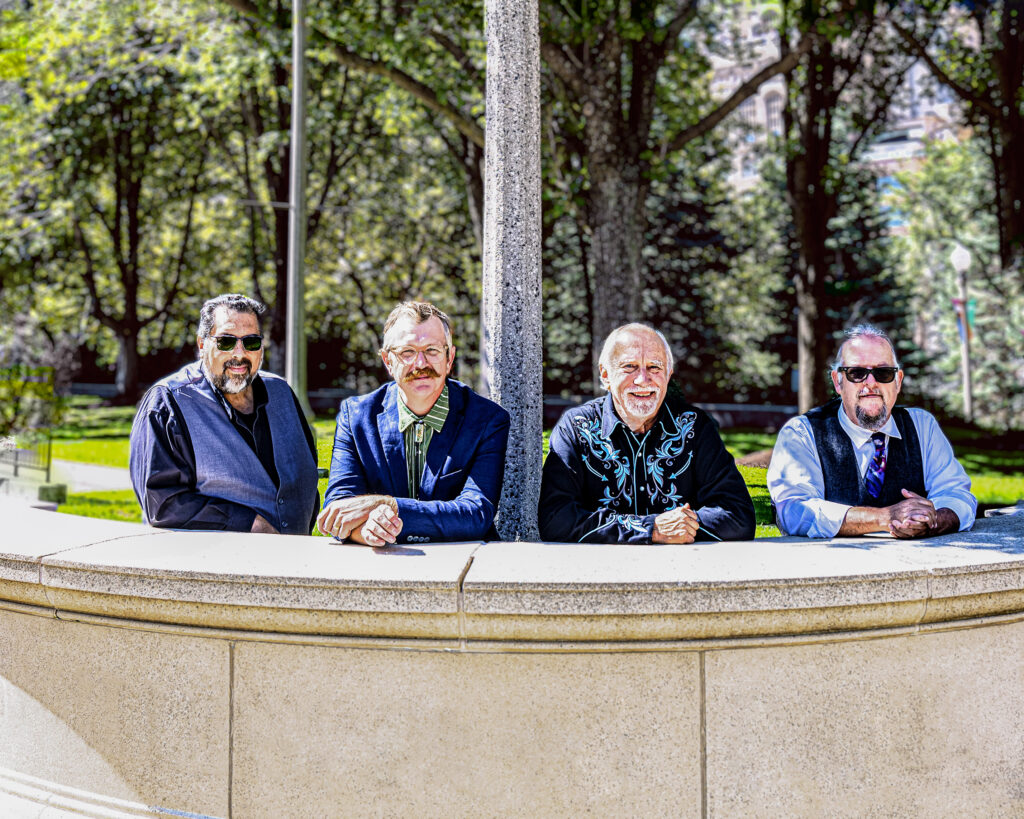
Special Consensus at Millennium Park, Chicago. Credit: Karen Murphy
No band has done more to elevate bluegrass music over the past 50 years than Chicago-based Special Consensus. The two-time Grammy-nominees and multiple IBMA-Award winners are celebrating their golden anniversary with the release of Been All Around This World, a stellar set of contemporary bluegrass featuring special guest appearances from notable lead singers from over the band’s 50-year history: Robbie Fulks, Rick Faris, Josh Williams, Chris Jones, Ashby Frank and Dallas Wayne.
Working again with producer Alison Brown, Special Consensus builds on their legacy of blending classic sounds with contemporary influences. Bluegrass standards including “I’ve Been All Around This World”and Tony Rice’s “Like a Train” sit alongside re-workings of The Marvelettes’ “Please Mr. Postman” and Roger Miller’s “King of the Road.” All but two of the album’s tracks are collaborations between the current and former band members and the spirit of musical camaraderie that informed the recording sessions shines through the music.
The most heartfelt track on the album, the John Hartford-penned “I Wish We Had Our Time Again” has special guests join in with current band members Greg Cahill (banjo), Brian McCarty (mandolin), Greg Blake (guitar) and Dan Eubanks (bass) and the track is infused with a casual jam session vibe, everyone trading vocal lines and swapping fiddle tunes during the instrumental sections. The friendship between all the musicians is palpable and bandleader Greg says the session filled him with gratitude. “I feel so very fortunate to have had so many talented, fantastic musicians and great people pass through the band and remain friends forever. I am so lucky to have been able to follow my ‘path with heart’ for the past 50 years!”
Been All Around This World is chock full of stellar collaborations. The album kicks off with “What Am I Doing Hangin’ Round,” a song made popular by the Monkees, featuring Chris Jones on lead vocals and a climactic final chorus that includes harmonies from Rick Faris and Dallas Wayne. Faris’s high tenor vocals are featured on the album’s second single “Please Mr. Postman” and Dallas Wayne delivers a stunning version of “Always on a Mountain” made popular by Merle Haggard in the late 1970s. Greg Cahill and Alison Brown continue their tradition of including a twin banjo tune on every Special Consensus album, this time with a tasty take on the classic Louis Armstrong song “Red, Red Robin.”
The album’s title track, “I’ve Been All Around This World,” winds through three modulations, each section featuring a different lead singer starting with Josh Williams on the first verse, Greg Blake with Ashby Frank on the second verse and ending with Robbie Fulks.
Over the course of their 50-year career, Chicago-based Special Consensus has toured across the globe, playing in every state in the continental US as well as in over a dozen countries on multiple continents. The band’s founder and banjoist Greg Cahill has built a legendary farm team for a long list of bluegrass musicians who started their careers as members of the band. Special Consensus has released over two dozen albums, received two Grammy nominations and eight IBMA Awards. They hold the distinction of being the longest continuously touring and recording band in bluegrass music still performing today.


 Most every songwriter tries new work out for friends and colleagues. When Andrea Zonn does so, it must be especially nerve jangling, because her friends includes some of the finer songwriters of all time. Her years on the road as a fiddler and harmony singer for James Taylor,