Druha Trava (which means “Second Grass”) was formed in 1991 by singer-songwriter Robert Krestan, banjo and wind instrumentalist Lubos Malina, dobro player Lubos Novotny and other veterans of the Czech acoustic music scene.
Its distinctive sound is based on exceptional musicianship combined with Krestan’s gritty vocals and original songs.
DT “uses American roots music as a launching pad for its own synthesis of jazz, pop, folk and even classical motifs,” stated an article about the band in The New York Times. “In doing so it transforms a quintessential American idiom into a richly textured, highly personal statement that defies genre classification.”
The winner of multiple Czech music awards, DT has a loyal following at home and in the United States. It first performed in the U.S. in 1993 and since 1994 has toured North America every year except 2008.
The band has recorded more than a dozen albums, including collaborative CDs with American stars Peter Rowan and Charlie McCoy.
The legendary Czech band Druha Trava returns to America in the fall of 2010.
Famed on both sides of the Atlantic for its “Czechgrass” fusion of acoustic, bluegrass, folk and rock, Druha Trava will introduce U.S. fans to a new addition to its line-up — award-winning bass player Tomas Liska, who took over in April from long-time DT bassist Petr Sury.
Liska, 31, is well known in the Czech and European jazz scene and also performs with other top artists such as Lenka Dusilova and David Doruska.
“We are excited to introduce Tomas to our American fans,” said DT banjo player Lubos Malina. “He is a phenomenal musician and also brings a youthful style to the stage.”
Watch
The Chapmans are a family band from The Ozarks with contemporary bluegrass, Americana, and acoustic country roots. Together now for 20 years and with fans such as Rhonda Vincent and Chris Thile, brothers John, Jeremy, and Jason, and dad Bill possess “an abundance of major league talent” (Nashville Scene). After they signed to Compass Records, they released their album, Grown Up, in the spring of 2010.
Watch
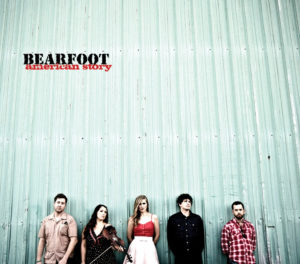
It’s a commonplace that change creates opportunities, but the principle was thoroughly—and successfully—tested by Alaska-by-way-of-Nashville’s Bearfoot last year, when original members Angela Oudean and Jason Norris found themselves presiding over a prolonged period of shifting personnel.Yet the cliché proved true in the end when the pair recruited Todd Grebe, another Alaska-to-Nashville transplant, Nora Jane Struthers, a rising young singer/songwriter andone of her bandmates, P. J. George, to create a renewed ensemble full of energy and creativity.And now, with the release of American Story (available Sept 27), the group’s latest effort for Compass Records, it’s plain to see that the changes were little more than a blessing in disguise.
Following the success of Bearfoot’s 2009 Compass debut, Doors And Windows, which debuted at # 1 on the Billboard Bluegrass chart, American Story introduces three new members, showing off both their distinctive voices and the impressive level of integration the quintet’s already achieved.Lead singer, songwriter and guitar player Nora Jane Struthers is the best known of the additions, having already released one stellar album highlighting her thoughtful songwriting and cool, clear voice—and having won the tough Telluride Bluegrass Festival Band Competition in 2010 with her Bootleggers, a group featuring the second new member of Bearfoot, bass player P. J. George.Rounding out the revamped lineup is guitarist/vocalist Todd Grebe, previously known for his work fronting the acoustic honky-tonkgroup Todd Grebe & Cold Country.And while the group claim that they’re still settling into their new sound, one listen to American Story offers compelling evidence that they’re being more modest than accurate.
With veteran producer/engineer Brent Truitt at the helm, Bearfoot hits the ground running on the new project with the Struthers-penned opener, “Tell Me A Story.”With its restrained prologue and keenly rhythmic body, the song dishes up a healthy serving of the band’s strong points: a winningly intimate lead vocal, tight harmonies, and an arrangement that weaves together a multiplicity of musical strands, from the string band and bluegrass music that made up Bearfoot’s earliest sounds to a unique take on the acoustic pop influences whirling around the group’s East Nashville home.“This song, and in some ways, this album, is really about escapism,” says Nora Jane.“We all have different ways of removing ourselves from reality, and I get myself lost in stories.”
From there, it’s a swift, satisfying run through a dazzling array of sounds and stories to the easy, good-time lope of Grebe’s closing “Mr. Moonshine.”Along the way, there are stops for hard-core bluegrass (“Midnight in Montana” with help from guest Charlie Cushman on banjo), a sly and sultry come-on (“When You’re Away,” written by the entire group), the poignant and ominous portrait of a trapped woman in “Eyes Cast Down” (written by Struthers and Claire Lynch) and much more—true stories and tall tales, but always with real people and real situations at their center.“I really connect with those lyrics,” Jason Norris says of “Feel Free” (written by Struthers and Tim O’Brien). “When Nora Jane first played it for us, I thought ‘Wow, that could actually have been written by me,’” he adds, and in truth, the sentiment could as easily come from a listener.
Adding to the project’s depth, Truitt and Bearfoot haven’t been afraid to explore new sonic territory, deftly blending the group’s acoustic instruments with touches of percussion, electric bass, accordion, banjo and more—many of them supplied by P. J. George, who serves as the group’s gifted utility man—yet always, each touch appears to underline, rather than draw attention from the songs.“I love that the entire album has a really rockin’ element to it, with more energy than we’ve ever had before,” Oudean observes—From start to finish, it’s an album of distinctive music that remains deeply authentic, true to the band’s rootsy origins even as it steps into more sophisticated musical territory.
American Story would be a strong collection coming from a veteran artist and it’s certainly true that the individual members of Bearfoot, old and new, are, while still young, genuine veterans.Yet it’s all the more impressive for being the product of a group that has yet to celebrate its first anniversary as an ensemble.That makes for a great story, and for an even greater appreciation of American Story, but as the members of Bearfoot would be the first to point out, in the end the only thing that matters is the music; here it is, and it’s mighty fine.
Watch
“They called it music, in the church house and the fields /
It was honest, it was simple, and it helped the hard times heal”
Last year, Eric and Leigh Gibson found that lyric, from the title track of their new record They Called It Music, to be truer than they could have realized.
2012 was a year of triumph for the Gibsons, who took home the Entertainer of the Year trophy, bluegrass music’s highest honor, at the International Bluegrass Music Awards. But it was also a time of tragedy due to the death of their father, the duo’s biggest supporter, who passed away before he saw his boys recognized on bluegrass music’s biggest stage. Kelley Gibson, the last in a line of family farmers who had tended soil and raised dairy cattle since the Civil War, was adamant that his two sons not follow in his footsteps; he knew all too well the backbreaking labor and financial instability such a career entailed, especially in a town like Ellenburg Depot in upstate New York, where the climate is temperamental and the land ill-suited for growing much beyond hay for the herds.
When it comes to sustainability and stability, a career in music isn’t the first that comes to mind. But Eric and Leigh, despite being geographically removed from the genre’s Appalachian roots, have made a name for themselves in bluegrass over the past two decades, playing over 80 shows and festivals a year and gradually building a deeply dedicated, nationwide fan base with their spellbinding harmony singing, which can reach the high lonesome notes of Bill and Charlie Monroe and capture the tenderness of pop/country crooners the Everly Brothers.
They Called It Music, the Gibson Brothers’ third release for roots label Compass Records and the follow-up to 2011’s IBMA Album of the Year, Help My Brother, is their best yet, incorporating their varied influences–which range from Roy Acuff to Tom Petty & The Heartbreakers–and delivering gorgeous acoustic music with the finesse that only comes from decades of experience. They’ve always had an uncanny ability to blend the classic and the modern, a tradition that continues on this album. “Home on the River,” a spiritual song that’s approximately a century old—and was recorded by the Delmore Brothers decades before the Gibsons were born–fits seamlessly among well-written originals and covers of songs by contemporary artists like Mark Knopfler (“Daddy’s Gone to Knoxville”) and Shawn Camp and Loretta Lynn (“Dying for Someone to Live For”). “There are so many different flavors on this record,” Leigh says. “Every song has its own personality.”
While both Leigh and Eric have written extensively for their previous albums, as they were working on material for They Called It Music, the latter found a renewed passion for writing. “In the past, I’ve waited for inspiration, but, to me, if you’re going to call yourself a songwriter, you need to find time to write songs,” he explains. The time Eric found wasn’t always deliberate—the poignant album closer “Songbird’s Song” was written during a losing battle with insomnia while on tour in Europe—but the work he put into his craft paid off: the six songs he wrote or co-wrote for They Called It Music, including the title track,display a sharp eye for detail and, in the case of “Something Comin’ to Me,” which was written with Leigh and Shawn Camp a month after Kelley Gibson’s passing, heartbreaking emotional rawness.
The dozen songs on They Called It Music were specifically chosen to highlight the brothers’ hallmark: their sublime harmonies. “That’s always been our calling card,” says Eric, “But we wanted to accentuate it on this record.” “Home on the River” features close harmony singing throughout the entire song, and on rafter-rattlers like “Dusty Old World” and “Sundown and Sorrow,” the harmonies are so tight it’s hard to tell where one brother’s voice ends and the other’s begins.
The five-man band has honed their sound through hundreds of shows and thousands of miles. Mike Barber has played bass behind Eric’s banjo and Leigh‘s guitar for 20 years, so long that he’s affectionately nicknamed “the third Gibson Brother;” fiddler Clayton Campbell has been with them for eight, and the group’s newest member, Joe Walsh, recently celebrated his fourth anniversary as the band’s mandolin player. It’s a lineup that gets better with each performance, providing deft and tasteful backing for Leigh and Eric’s harmonies and occasionally tearing through a blistering bluegrass instrumental. They’re in sync onstage and in-studio – much of They Called It Music was recorded live at Compass Sound Studios in Nashville, capturing the exhilarating energy and impeccable musicianship that captivate the crowds who flock to their performances.
After a year of unimaginable highs and devastating lows, the Gibson Brothers continue to find strength in each other and in the harmonies they’ve honed since childhood. They’re a long way from the pastures of that Ellenburg Depot dairy farm, but They Called It Music sure feels like coming home.
Watch
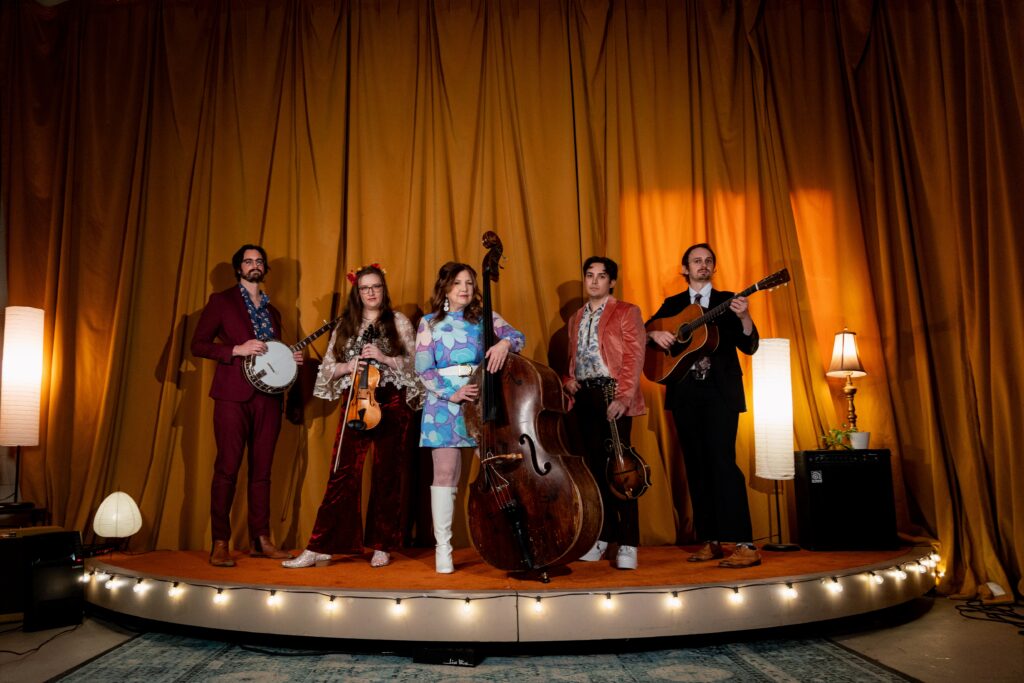
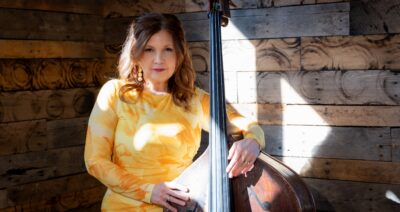
Missy Raines & Allegheny announce the release of their new album Love & Troubleon Compass Records. Working again with producer Alison Brown, the new album showcases a band at the peak of its powers on an inspired set which includes re-workings of traditional songs, contemporary covers and Missy Raines’ originals.
Following on the heels of 2024’s Highlander, the new project firmly establishes Missy Raines & Allegheny as one of the most vibrant bands on the bluegrass scene. Talking about the new project, Missy says: “We had lots of shows under our belt and there was an overwhelming feeling of connection you can only get from a lot of time on stage together. I knew I wanted to try and capture the magic again and I think we did.”
Love & Trouble opens with a driving trio of banjo, fiddle and mandolin on “Yanceyville Jail,” which Missy wrote about a true event. She recalls: “At a bluegrass festival in the 70’s, I was in the audience when the promoter, Carlton Haney, came out on stage to address the crowd. In his very thick North Carolina accent, Carlton said, ‘Now I know that you folks are looking forward to hearing Jimmy Martin tonight. But you’re not gonna hear Jimmy sing tonight cause Jimmy’s gonna spend the night in the Yanceyville jail.’ I was a kid but I was old enough to know this wasn’t a good day in the life of a storied entertainer. So I decided to write a song to tell a version of what might have been going through Jimmy Martin’s head that day.”
From the traditionally-influenced opener, the album segues into “Claude Allen,” a veritable traditional Appalachian ballad that the band discovered on a search through the Library of Congress archives. With Missy on lead vocals, each of the players shines in their ability to instrumentally color this tale of love gone wrong. Fiddler/vocalist Ellie Hakanson is featured on the Hazel Dickens classic “Scraps from Your Table,” a crowd pleaser from the band’s live shows and an homage to Dickens’ 100th birthday this year. And, mandolinist Tristan Scroggins steps into the vocal spotlight on “Future on Ice,” a classic country song recorded by Jimmy Martin more than 50 years ago about drowning the sorrows of unrequited love, featuring special guest Deanie Richardson (Sister Sadie) on fiddle.
The album’s first single, “Anywhere the Wind Blows,” was culled from the repertoire of The Good Ole Persons and penned by Kathy Kallick. Kallick and Laurie Lewis join Missy and Ellie on lead vocal and harmony duties on this driving re-arrangement. Missy comments: “Laurie and Kathy were among the first women to front their own bands and write songs and have influenced generations of musicians including both Ellie and me.”
Love & Trouble closes on the Earl Klugh instrumental “Vonetta,” a staple of the band’s live performances, which gives banjoist Eli Gilbert, guitarist Ben Garnett and the rest of the members a chance to showcase their instrumental versatility on an arrangement that reflects the influences of new acoustic pioneers Tony Rice and David Grisman.
Taken as a whole, Love & Trouble is a strong musical statement from a band at the top of its game. Missy Raines & Allegheny show the possibilities for traditional bluegrass in a contemporary context, expanding the genre’s roots even as they cultivate them. And the result is an ear-opening pleasure.
Love & Trouble is available now via Compass Records.
Dusk is a bittersweet time of day. There’s no other point in the sun’s arc that captures the imagination quite like it. Maybe the Nashville-based alternative folk-pop trio the Bittersweets can’t literally splash a sunset across the sky, but they can bring the same striking contrast of shadow and luminescence to the ears.
The Bittersweets—Chris Meyers (guitar, keyboards, vocals) and Hannah Prater (vocals, guitar)—live up to their name. They fuse yellows and blues, sunniness and melancholy, with evocative lyrics and lush arrangements, transcendent melodies and Prater’s alluring voice. On every track of their new album, Goodnight, San Francisco, their recent live set, Long Way From Home, and their 2006 full-length debut, The Life You Always Wanted, the Bittersweets weave a captivating tension between hope and poignancy that rings true.
“I think the name fits us because a lot of the songs talk about life’s tensions and that you can’t just have happy or just dwell on the sad,” Prater explains. “I feel like a lot of the songs embrace both, the beautiful and the ugly, happy and sad—life’s paradoxes.” And the Bittersweets are well-equipped for that sort of musical alchemy.
There’s a reason why Prater’s singing is such a satisfying pleasure. Both of the California native’s parents are music teachers; she sang in jazz groups and musical theatre productions; and she pursued a degree in vocal performance before discovering a different style of vocal expression in Joni Mitchell and Over the Rhine. Prater drew the best from each approach to hone her sumptuous vocal instrument.
“Hannah has so much vocal control,” says Meyers. “That’s a rarity for pop
vocalists. The technical stuff just seems like second nature to her.”
Before the Massachusetts-born Meyers ever picked up a guitar in his late teens, he was an accomplished jazz pianist. His musical epiphany came during college. As he dug into the history of American roots music and wrote at length about how country music made its way from front porches to radio airwaves, his musical palette was forever changed. Of his college studies, Meyers says, “They turned me on to a bunch of artists that I never really listened to before—everything from bluegrass to Johnny Cash or Gram Parsons, the whole spectrum.”
Meyers is the Bittersweets’ primary songwriter. He crafts poetic, often abstract lyrics and the kind of melodies that send shivers of sensory pleasure down the spine. “He keeps everything so interesting,” says Prater. “He keeps me thinking, he keeps me on my feet and having to interpret, and that’s something I’ve always loved to do.”
The chain of events leading up to Goodnight, San Francisco reads like a fairy tale. Meyers and Prater discovered their musical kinship in the Bay area after college. The manager of a teenage musician Meyers was tutoring got the Bittersweets’ demo into the hands of taste-making San Francisco station KFOG, and KFOG’s instant embrace of the Bittersweets built so much buzz that 200 people came out for their very first show—on Superbowl Sunday, no less. By only their third performance, the head of Virt Records was flying in to see them, and their first record deal soon followed. When the band arrived in Nashville two years later, Compass Records was ready to sign them the moment they breathed a word about starting a new album.
That new album, Goodnight, San Francisco, flows seamlessly through eleven gorgeous mood pieces. Lex Price—Mindy Smith producer and sideman—lent his delicate producing touch, and brought in a perfectly sympathetic team of players: steel guitarist Russ Pahl (Don Williams), bassist Dave Jacques (John Prine), drummer Steve Bowman (Counting Crows), guitarist Doug Lancio (Patty Griffin), cellist David Henry (Ben Folds), organ player John Deaderick (Emmylou Harris) and others. GRAMMY nominee Jason Lehning (Guster) also lent his mixing and playing abilities to the project.
Goodnight marks the end of the Bittersweets’ season in San Francisco and the beginning of a new one in Nashville with a leaner lineup (the Bittersweets recorded The Life You Always Wanted as a quintet). “Basically we were all going through various personal struggles the last year we were there, even as a band,” says Meyers. “One of the band members went to law school and another one had a baby—both of which are wonderful things.” But that meant shifting from their five-person lineup—which included bassist Daniel Schacht and multi-instrumentalist Jerry Becker—into a duo, a change that’s ultimately made the Bittersweets even more versatile.
The album’s title track, a slow-burning R&B ballad, captures the bruising and beauty of embarking on a new journey as no one but the Bittersweets can. It eases in with piano and Prater’s breathy lilting and swells into a full-band catharsis, stoked by B-3 organ and an eruptive guitar solo. The lyrics move between past and future, pain and hope: “Goodnight all you dreamers / Goodnight all you refugees of hope / Get on home, it’s getting real late / And time stands like a chorus calling my name out loud / from behind the curtain / The voices in my head say, ‘You’re gonna be a rock and roll star, someday.’”
The fine-grained meditation “When the War Is Over” is another song that
captures the uncertainty of change with devastating accuracy, picking up the story after the leap has already been taken. Like many of the songs on Goodnight, there’s a question ringing at its core: “When the war is over/is it ever over?”
Just like dusk, the Bittersweets’ songs have a stirring, not-neatly-sewn-up
quality that’s hard to shake. And that’s just the point. Says Meyers, “I think art is at its best when it’s asking questions rather than giving answers.”
Watch
If bluegrass is the point at which jazz rhythms, blues inflections, Scotch-Irish fiddle tunes, and Appalachian ballads intersect, The Other Side of the Mountain is the place where all of those influences are tossed into the air and reassembled on their way down. While the tracks on this illuminating new collection draw from bluegrass music in different ways, they have in common is the same adventurous spirit that was present at the founding of bluegrass music — a spirit of innovation as well as the freedom of not being limited by any one musical source.
In its nearly fifteen years of existence, Compass Records has emerged as a premier outlet for unfettered bluegrass explorations. Founded in 1995 by Grammy-winning banjoist Alison Brown and bassist/producer Garry West, Compass’s willingness and flexibility – stemming from it being artist-owned – has made it a haven for creative musicians of all genres. In addition to being an exquisite document of trends in modern bluegrass, The Other Side of the Mountain doubles as testament to Compass’s unflagging commitment to the artistic visionaries at the cutting edge of bluegrass.
Features performances by Alison Brown (w/Vince Gill), Victor Wooten (w/Bela Fleck), Drew Emmitt & Peter Rowan, Matt Flinner, David Grier, Todd Phillips, NewGrange (Tim O’Brien, Mike Marshall, Darol Anger, Todd Phillips, Philip Aaberg, and Alison Brown) and more.
Over twenty years ago, two of contemporary string music’s greatest masters joined forces for the first time, setting in motion a partnership that would take them all over the world, exciting acoustic music lovers along the way. Mike Marshall and Darol Anger began making music together in 1978 as members of The David Grisman Quintet and continued stretching from solo and duo records for Kaliedoscope, Rounder and Windham Hill, through the Montreux Band, Psychograss and The Anger/Marshall Band. They have consistently been at the center of the acoustic music scene and can be heard on hundreds of recordings in the acoustic music world. Marshall’s mastery of mandolin, guitar and violin and his ability to swing gracefully between jazz, classical, bluegrass and Latin styles is rare in the community of American vernacular instrumentalists. Anger’s ability to be at home in a number of musical genres, some of which he helped to invent, have put him at the top of his field.
These two major forces in contemporary string music once again join talents to explore a musical world stretching from Brazil through the Appalachian hills, by way of Manhattan and the Florida Swamps. Their brand new release, At Home and On The Range, continues their journey together, begun in 1978. This live cd, recorded during a tour of the U.S. eastern seaboard during which the duo played The Community Church in Chapel Hill, the Prism Coffeehouse in Charlottesville, VA, the Arden Club in Delaware, Acoustic Stage in Hickory, North Carolina and the Zirinsky Home in Long Island, is engaging and sheds light on this duo that The Oakland Tribune called “Some of the most gifted and amazing players in the field”. At Home and On The Range features the duo’s mind-bending improvisations, eclectic instrumental compositions and tight synergistic relationship on tunes like Down In The Willow Garden and Fiddles of Doom Medley (Old Dangerfield/Big Mon). Marshall and Anger have mastered the powers of simple virtuosity and once again careen their musical backhoe straight across the backyards of jazz, newgrass, rock and world music, cutting a deep trench filled with tunes so exuberantly personal that it can’t be mistaken for anyone else .
At Home and On The Range reflects the journey and growth of this longtime partnership as they continue their musical odyssey together. This duo is at the edge of the world of modern American string bands in the 21st century and ready to fly once again.


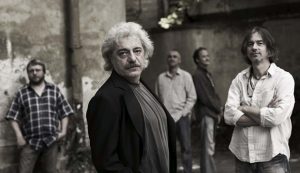
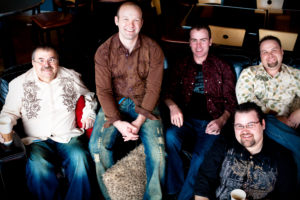 The Chapmans are a family band from The Ozarks with contemporary bluegrass, Americana, and acoustic country roots. Together now for 20 years and with fans such as Rhonda Vincent and Chris Thile, brothers John, Jeremy, and Jason, and dad Bill possess “an abundance of major league talent” (Nashville Scene). After they signed to Compass Records, they released their album, Grown Up, in the spring of 2010.