Simon Thoumire internationally acclaimed concertina virtuoso, has a gift for both traditional Irish and jazz. The founder of Foot Stompin’ Records, Scottish Traditional Music Trust, and Hands Up for Trad, Thoumire established himself as a world-class performer by the age of 26.
Winner of the prestigious BBC Radio 2 Young Tradition Award in 1989, Thoumire joined the Boy’s Brigade (65th Edinburgh) as a highland piper at the age of 9, and when he was 12, he received his first concertina, after conceding to the fact that no one around could teach him his desired instrument: the mandolin. By the time he was a teenager, Thoumire was performing in accordion clubs across Scotland, before joining a locally gigging band, with whom he cut his first record.
Then, one day while Thoumire was practicing in his house, the promoter for the Scottish supergroup Silly Wizard walked by and heard him. She immediately introduced him to Alistair Anderson, and the Radio 2 Young Tradition Award, which the 19-year-old Thoumire won in 1989.
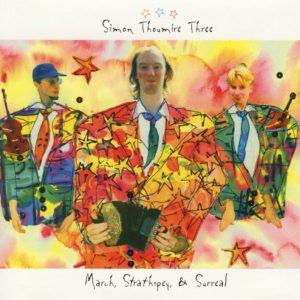
In the 1990s, Thoumire recorded several times with Ian Car, and Kevin Mackenzie and Simon Thorpe as the the Simon Thoumire Three which recorded the album Waltzes For Playboys, for Green Linnet in 1994.
In 1997, Thoumire toured the Netherlands with the free-imrov combo Drones in the Bones, and in 1997, he composed the Celtic Connection’s Suite for Glasgow’s Celtic Connection’s festival. 1999 brought a composition, Music for a New Scottish Parliament, and in 2000, The Scottish Requiem premiered.
The Big Day In, Thoumire’s first album with pianist David Milligan, was recorded in 2001. The duo traveled throughout Europe and Australia before he cut Experiments in Culture, a modern record featuring real-life recordings of “existence” accompanied by musicians improvising freely over the top.
A céilí (kay-lee) is a night of live Irish music and set dance; a massive party for all ages and the premier social event of rural Ireland, a céilí provides a regular chance for the entire village to come in from the fields for a pint, some set dancing, and good fun.
One of the premier céilí bands in the world, Co. Clare’s Tulla Céilí Band was formed in 1946 by Paddy Canny and P.J. Hayes. Since then, the Tulla Céilí Band has entranced audiences and dancers alike from Co. Clare to Carnegie Hall. A family tradition at it’s finest, P.J. Hayes’s son, world-class fiddler and Compass Records artist Martin Hayes, currently helps to lead the band when he is in town.
Whether live or recorded, a great céilí band creates a compelling, driving atmosphere intended for set dancers. Incorporating fiddles, accordions, flutes, whistles, a piano and a snare drum, the band will slip seamlessly from tune to tune, gaining momentum and intensity . The multi-award winning band has recorded four albums, including Echoes of Erin, The Claddagh Ring, Ireland Green, Sweetheart in the Spring and A Celebration of 50 Years, (Green Linnet).
Watch
“Sparsely accompanied fiddle music has rarely sounded so complete and so essential.” – Colin Harper, Q Magazine
Martin Hayes epitomizes the fiddle music of County Clare for many people. He started playing when he was seven years old and, by the age of thirteen, was touring with the Tulla Ceili Band, arguably the most revered and famous ceili band in Ireland at the time which was led by his father, PJ Hayes. Martin was also entering national competitions and winning them. By the age of twenty he had won every available competition in the country.
The music scene in East County Clare in the 1970’s was full of fine fiddlers, and Martin’s locality near the village of Feakle was home to many of them. In addition to PJ Hayes, Paddy Canny, Martin Rochford, Francie Donnellan, Vincent Griffin and Martin Woods all were a great influence on the young musician. The gentle contemplative style of these fiddlers molded Martin at an impressionable age, and by the time he left school he was playing to the approval of musicians thirty years older and more. It is a rare thing to have such depth and clarity of understanding in one so young, but Martin Hayes seemed to feel the music of his home place and to hear what older players were trying to express.
When Martin left Clare for Chicago in the 1980’s he became immersed in the diversity of musical styles that the city had to offer. It was also in Chicago where Martin met his current musical partner, Dennis Cahill. With several other musicians, they formed an electric/Irish/rock fusion band called Midnight Court, after the poem by the eighteenth century Clareman, Brian Merriman. After three years dedicated to the freedom of musical experimentation and exploration, Martin was drawn back to the music of his roots with new insights and a deeper confidence. He headed for Seattle in the 1990’s and pursued a new path playing a pure and distilled version of the music he had grown up with; a version built on universal musical principles that could now find its place in the wider world of music.
The 1993 recording, Martin Hayes was greeted by widespread critical acclaim, which garnered Martin the National Entertainment Award (the Irish Grammies) and the Hot Press Heineken Award. His second album, Under the Moon, released in 1995, continued to build on the success of the first, attracting an international following.
For Martin, the music spoke to him and inspired him. He constantly sought to express that inspiration and to convey the same musical message as generations of musicians before him. With Dennis Cahill’s understated guitar outlining and intensifying that message, the duo touched audiences across the world. The Lonesome Touch, released in 1997, reached out to the Irish music community and beyond. Hayes and Cahill became more adventurous, more empathic, more attuned to each other, and more able to stretch the music while remaining true to its essential qualities.
Following international festivals, concert tours, television spots and awards ceremonies, Martin and Dennis released Live in Seattle in 1999. Their live sound had become legendary: tunes which never ended, sets which started in one place and finished somewhere totally different. Recorded at the Tractor Tavern, the album featured as its centerpiece one medley lasting almost thirty minutes.
The duo’s new album, Welcome Here Again, is a fresh departure; eighteen tracks and not one of them over seven minutes, but with that same burning intensity and depth of emotion. It used to be common for Irish musicians to record one tune at a time, to make each one a self-contained masterpiece. The new album revives this tradition. The playing of Martin Hayes and Dennis Cahill renders the essence of the tunes, revealed in their purest form, accessible and appealing to all. “The Dear Irish Boy” is one such track. “P Joe’s Reel” is another. The mesmeric rhythms, the tantalizing slow release of melody, the extra tone from viola or tuned-down fiddle, all of that and more is on this album. After eight years, Hayes and Cahill are indeed Welcome Here Again.
Quotes From the Press
“A Celtic complement to Steve Reich’s quartets or Miles Davis’s ’Sketches of Spain.” – The New York Times
“Hayes has one of the most ravishing violin styles in all of Celtic music…the vocal quality of his tone brings an incomparable feeling of warmth to everything he plays. Cahill’s gentle, supportive accompaniment adds precisely the right touch.” – Los Angeles Times
“Together they create a music filled with calm and silence, the likes of which you’ve never heard before. Except, perhaps, in brief snatches of a long forgotten dream.” – Time Out, London
“Martin Hayes…the most important individual musician in Ireland right now.” – Hot Press, Ireland
“There’s no more impressive partnership in Irish instrumental music today than Martin Hayes & Dennis Cahill.” – The Irish Echo
“…maddeningly slow and unbearably beautiful, with an approach so radical it sounds perfectly true to the tradition.” – Acoustic Guitar
“Fiddler Martin Hayes wielded his bow with such an exquisite balance of sweetness and sinew, delicacy and fire, graveness and mischief you just didn’t want him to stop…Simply the loveliest fiddle music I’ve heard.” – Scotland on Sunday
“Hayes redefines your concept of excellence and reveals levels of beauty and artistry that previously hadn’t existed in your frame of reference.” – The Sydney Morning Herald, Australia
“Ireland’s answer to hot young American fiddler Mark O’Connor.” – Washington City Paper
“Hayes weaves seemingly magical spells over his audience, which ride with every curve of the bow as he gently shifts moods, styles and nuances. Dennis Cahill’s symbiotic guitar accompaniment is a crucial foil for Hayes’ deliciously subtle displays of charming brilliance.” – Folk Roots, UK
Watch
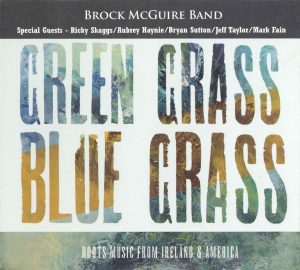
Passion and precision, authenticity and diversity: these are the hallmarks of Ireland’s traditional music quintet, The Brock Mcguire Band. They are steeped in tradition and perform it with abiding respect and rousing creativity. The band’s tight, tenacious blend of instruments often reaches fever pitch on stage, and their repertoire runs wide and deep, emphasizing mostly Irish music but also sprinkling in exciting arrangements of Shetland, French-Canadian, and other Celtic traditions.
Founding members button accordionist Paul Brock and fiddler Manus McGuire are two of Ireland’s most celebrated traditional musicians, and have been at the forefront of Irish music for many years through their joint work with the group Moving Cloud. Manus is also a founding member of Buttons & Bows, and both bands, ranking among Ireland’s finest, have helped to introduce international audiences to the virtuosity of their playing.
A multiple All-Ireland champion born in Athlone, County Westmeath, and now residing in Ennis, County Clare, Paul has many albums to his credit, including the classic Omós do Joe Cooley with fiddler Frankie Gavin, and his solo album Mo Cairdín called “a master piece of accordion playing” by the Rough Guide to Irish music, 2001. Manus was raised in Sligo Town and now lives in East Clare. His solo album Saffron and Blue was placed in many overseas top-ten music polls and was also named best album of 2000-and Manus, best male musician of the same year-by the Irish American News.
Performing with the Brock McGuire Band are two highly-rated musicians on the traditional music scene: young Galway player Enda Scahill, a five-time All-Ireland champion on tenor banjo and a senior All-Ireland champion on mandolin, and his brother Fergal Scahill, a superb multi- instrumentalist who has an all-Ireland senior fiddle title to his credit and who drives the rhythm section of the band on guitar and keyboards.
Manus McGuire Growing up in Sligo in the 1960s when fiddle music had regained popularity in its native home, the Northwest of Ireland, Manus McGuire was ideally placed to carry on a tradition made legend by fiddlers Michael Coleman, James Morrison, and Paddy Killoran thirty years previously. From an early age, he learned various dance tunes by his father’s knee and followed his older brother, Seamus, into the national traditional music arena that was steadily gathering momentum. In 1970, at the young age of 14, Manus won Sligo’s prestigious Fiddler of Dooney competition. Since then, he has toured extensively in North America and Canada.
Manus has recorded eight albums, including The Humours of Lisadell (Folk Legacy, 1980), and Carousel (Gael Linn, 1984),with Seamus; Buttons & Bows (Green Linnet, 1983), First month of Summer (Green Linnet, 1987) and Grace Notes (Gael Linn, 1991), all with the group Buttons & Bows; Moving Cloud (Green Linnet, 1994) and Foxglove (Green Linnet, 1997), with the group Moving Cloud; and a solo debut, Saffron & Blue (Green Linnet, 2000) This last recording was placed in the Top Ten polls of the Boston Globe and Irish Echo newspapers. It was also named Best Album of 2000–and Manus, Best Male Musician of the same year–by the Irish American News.
Watch
Celtophile [kelt-o-fī(-ə)le] : One who is obsessed with the beauty and imagery conjured up by the music that emanates
from the “auld sod”.
(Alt) : A person of rarified taste in Celtic music of all forms (no apologies necessary!).
The Compass Records Group is proud to present the CELTOPHILE collection. Drawn from the vast Green Linnet, Compass Records, and Mulligan Records catalogs, and spanning the breadth of traditional music from Ireland and the British Isles, these CDs are thematically organized and packaged and offered at a special value price. A unique and varied collection, CELTOPHILE is a welcome addition to the music collections of novices and fans alike.
“A guitar god in the US, Simpson has been blending folk and country blues for four decades. Danny Thompson and Radiohead’s Philip Selway are among his helpers on this tasty mix of trad and original material.” – Q Magazine
“A very different animal to Prodigal Son, but in its own way, equally formidable. He sweeps from down’n’dirty to tender reflection in the blink of an eye.” – MOJO
“Martin Simpson returns with an album that confidently walks a tightrope over the gulf between tradition and contemporary songwriting—this is folk at its finest.” – Sunday Mercury
“His performances elicit powerful emotions and subtle, understated beauty.” – Guitar Player Magazine
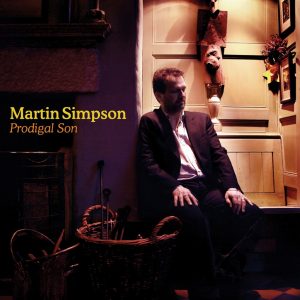
English folk singer and guitarist Martin Simpson’s last album Prodigal Son was a universally acclaimed, career high for the five time BBC Folk Award winner. His follow up release True Stories is even better. The album features some of England’s finest musicians including bass legend Danny Thompson, Radiohead drummer Philip Selway, pedal steel legend BJ Cole, Bellowhead frontman Jon Boden and many others. The tracks are evenly split between traditional tunes and Martin’s original compositions. Add this to the superb guitar work and vocals from Simpson and you have yet another exceptional disc from this most celebrated British folk icon.
Like the best musicians, Martin Simpson deploys a control of pace and dynamics to his playing that touches the heart, regardless of whether the listener has a bit of Lincolnshire, Mississippi or Ganges beneath their manicured or careworn nails. Martin’s career has included collaborations on stage and in the studio with Kelly Joe Phelps, Danu, Cara Dillon, David Lindley, Dick Gaughan and David Hidalgo (of Los Lobos). He’s a regular nominee at the BBC Radio 2 Folk Awards and was named Musician Of The Year in both 2002 and 2004 and won both Best Original Song for “Never Any Good” and Best Album for Prodigal Son in 2008.
Watch
On his debut solo album entitled Far From the Hills of Donegal, Oisin McAuley embraces the opportunity to express musical ideas in a manner that reflects his highly individual and progressive style of fiddle playing. “You’ll probably hear a lot of stuff that is not very traditional, that reaches a bit beyond that,” says McAuley, who has been a member of the award-winning band Danú since 2001. “Danu is known for being a traditional band, but playing music that reaches out from the traditional has been part of my life for a long time, longer than I’ve been with Danú.”
This collection of songs shows McAuley’s approach to tradition is an eclectic one. It begins with the many flavors of Donegal music, moving through Sligo to Brittany to Quebec, and back to Western Ireland. McAuley infuses his traditional musical styling with jazz, bluegrass, and classical.
McAuley grew up in a quiet, rural part of Western Ireland, speaking Irish as his primary language and honing his craft in the wide-ranging and experimental style of famed fiddle player John Doherty. “You’ll hear a lot of John Doherty on this record, both his music and his style,” McAuley says. “He mixed up and changed things a lot, so in a way it was easier for me to mix up different types of tunes.” On this project that mix includes Port Na Bpucai (or Tune of the Fairies), a piece that reaches back into the tradition, Swing and Tears from Breton composer and guitarist Gille Le Bigot, and a set including Paddy Fahey’s My Former Life/Paidin O’ Raifertaigh/The Rumors of a Dart. The last tune is McAuley’s own composition, as are several other pieces on the disc. “The Scottish or Irish tunes that you hear on there are ones that I’d picked up along the way, that are special to me, and ones that I hadn’t heard many other people play, except for the people they came from. I wanted to include some tunes that I had composed myself, too. That’s something I love to do,” McAuley says.
McAuley has been involved with music from an early age, starting with the fiddle when he was nine and living in Carrick County, Donegal. “My grandfather played the fiddle, and he’d often give bed and board to fiddlers, just to hear tunes in the house,” he recalled. Traditional music took a back seat to classical when McAuley moved to Belfast to earn a music degree at Queen’s University, and followed that with a series of gigs (including time with Cran and Stockton’s Wing), some teaching, and a year in Brittany playing with a band and learning tunes before later going on to join Danu. McAuley is now based in Boston, where the sounds and rhythms of bluegrass and newgrass, as well as his love for jazz, attract his ear and his interest in discovering new sounds. “I can never get enough tunes. I love Charlie Parker and Bill Evans and newgrass, too.”
McAuley is rooted and grounded in the West Ireland musical tradition, a tradition that is known for taking influences from other lands and building upon them. For McAuley, reaching beyond traditional Irish music is as much a part of preserving tradition as well as extending it. “There’s no doubt that part of me comes through,” he says. “And it was a great for me to get my ideas down the way I wanted to. It was very freeing for me.”
LAU has been described as “a formidable union of three of the finest and most innovative exponents of modern traditional music in Scotland today”; Kris Drever (guitar and vocal), Martin Green (piano accordion) and Aidan O’Rourke (fiddle).
Recorded in the winter of 2006, Lau’s debut album, lightweights & gentlemen, sound like men willing to redefine how a trio can sound. Arming themselves with both highly original repertoire and some superb takes on traditional song, their fearless appetite for improv, dig deep into a wild array of genres taking in their influences from around the world and spitting them out as a perfect folk -jazz stew.
The album is a testament to the skills of all three members: Kris Drever’s amazing guitar work and formidable vocals showcases the talents that won him the BBC Folk Awards “Horizon Award”; Aidan O’Rourke’s playing shows you why he won “Instrumentalist of the Year” at this seasons Celtic Music Awards; Martin Green takes the Piano Accordion to places your ears can only dream about visiting. No guests, No frills just three of the finest young artists working in traditional music today showing us what can be done when you keep one ear to the past and an eye on the future.
Watch
Michael Black’s self titled album includes a music hall song from the 1930s, a traditional song sung in Irish, a ballad about war and the costs of it from New Zealand, a sea shanty, and a song to dance the baby on your knee. What makes it a cohesive whole is Black’s voice and his love of and natural ability to convey a good story.
Dublin born Michael Black grew up in a family of singers. Mother, Patty, and father, Kevin, filled their home with music and their children clearly took up that love, with all five of them following music professionally at various points in their lives. Black has often performed with his brothers Shay and Martin as The Black Brothers, and he is older brother to Irish superstar Mary Black and top solo artist Frances Black. All five have also recorded three albums together as The Black Family.
“The music’s in my blood, you know, I don’t think there’s anything I can do about it,” he reflects, laughing. With a doctorate in sociology, Black has taught at the university level in San Francisco where he now lives but, “really, my job is a dad. I have three small kids, three girls. My wife works a professional career, and when they came along we made the decision that I’d care for them. I’ve been a teacher, been around kids all my life, so it was a natural decision.” With his daughters growing up, it was time to turn more of his attention to his music. One of the results is his first solo album.
Each of his siblings add vocals to various cuts on this collection, but it is very much Black’s voice, style, and ideas which are the driving force of the album. There’s his ebullient sense of humor on “My Father Loves Nikita Kruschev”, the lively trip he leads around Irish tradition, fun and landscape with “Little Pack of Tailors” / “I’ve Got a Toothache”, a thought provoking look at a soldier’s choice in “The Deserter”, and a heartfelt ballad of the coal miner”s life on “The Coming of the Roads”. “Celt’s very representative of what I do when I’m performing,” Black says. I don’t stick to just that one genre of traditional Irish music, I select from things that suit me and that I like. I needed to make an identity for myself,” he says. “People would say well, we know the name, but we don’t know you. And I wanted to make something I was proud of musically.” To that end, he recruited producer John Doyle, “and I was really lucky. John’s a great guitarist, and a great producer, he’s got a really quick ear, and he understands acoustic music.”
The family pitched in to add outstanding harmonies to the tracks, too. Black’s brothers and sisters Shay, Martin, Mary and Frances all sat in, as did members of the next generation of the Black family, including rising pop star Danny O’Reilly and up and coming singers Eoghan Scott and Roisin O’Reilly. “They’re even more amazing singers than we are,” Black says. “All the family can sing, so why not have them all along?” he adds with chuckle. In addition to John Doyle on guitar and bouzouki, others who support Black on the recording include fiddlers Liz Carroll and Liz Knowles, Solas’ Seamus Egan on whistles, Chico Huff on bass and Dirk Powell on piano.
It’s Michael Black’s voice and influences that hold the center around which these voices and instruments work. Being Irish is part of who he is musically, and he incorporates that into his music always “but I don’t stick to just one genre,” he says. “I’m rooted in roots music, music of the people.” His beloved roots music, from Appalachian ballads to Irish jigs to songs of reflection, is what’s celebrated on this recording. “I’m singing this stuff, and people are enjoying it. This is what I do. This is what I sing.”
Athena Tergis hails from San Francisco where she released her first album at age 16. Shortly after, she moved to Ireland to follow her musical passions where she lived for over 3 years playing with groups such as the Sharon Shannon Band. Her musical journey brought her to London and then on to New York where she starred in Riverdance on Broadway for the full year and a half run of the show. Her talent for many genres of music attracted the attention of Bruce Springsteen’s sax player, Clarence Clemmons with whom she toured for over a year.
In 2001 Athena joined up with Mick Moloney, John Doyle and Billy McComiskey in the Green Fields of America playing Traditional Irish tunes and songs at they’re best while exploring the music’s journey to America. The Green Fields of America’s self-titled album was on Compass records, as was Absolutely Irish! a documentary about 2 special concerts produced by Paul Wagner for PBS. Also on Compass records, Athena Tergis’ solo album ‘A Letter Home’ was produced and accompanied by John Doyle.
In 2009, Athena performed as a featured soloist in a 49-city tour of the Dublin Philharmonic Orchestra. With a tour of China scheduled for 2010, Athena began composing, working with several top classical composers and arranger.
Now living in the village of Montalcino in Tuscany, central Italy; Athena and husband Mario Bollag have built a state of the art recording studio called TerraLuna Studios in the hills of Tuscany www.terralunastudio.it . While still touring regularly, Athena is also very involved in running their winery, Terralsole.
Armagh-born Niall Vallely has established himself in recent years as one of the most original and distinctive voices in Irish music. A former member of Cork-based band NOMOS, he has been acclaimed throughout the world as one of Ireland’s greatest concertina players. Niall began learning the concertina at the age of seven, taught by his parents Brian and Eithne Vallely, founders of the Armagh Pipers’ Club, and over the years he has developed a unique approach to playing the instrument.
A resident of Cork since 1988, Niall completed a degree in music at U.C.C. in 1992. As a student he was involved in various musical projects with composer/pianist Mícheál Ó Súilleabháin.
In 1992 Niall was featured on the highly acclaimed BBC/RTE television series ’A River of Sound’, and had a track included on the Virgin album and BBC video that accompanied the series. In 1990 Niall formed NOMOS who went on to become internationally recognised as one of the most important Irish bands of recent times. They recorded two critically acclaimed albums, before splitting up in 2000.
In more recent years Niall has been performing in a solo capacity and with musicians such as Karan Casey, Tim O’Brien,
Mícheál Ó Súilleabháin, Paddy Keenan, Mel Mercier, and others. In 1999 he released his debut solo album, BEYOND WORDS, and in 2003“Callan Bridge”
(Compass Records) with his brother Cillian on pipes.
Paul Meehan
Paul grew up and started learning Irish music in Manchester in the midst of a flourishing scene which also produced the likes of Mike McGoldrick and Dezi Donnelly. In his early teens Paul moved back to Middletown, County Armagh with his family. He quickly established himself as a rising star on the banjo, while more recently spending a lot of time on the guitar.
He spent a few years living in Cork City where he became a member of the highly acclaimed North Cregg, with whom he recorded three albums. He has also spent a number of years touring and recording with Dorsa and the Karan Casey Band. He is currently a member of one of Ireland’s foremost traditional bands, Lunasa. In recent years Paul has also appeared on stage with the likes of Altan, At the Racket, Paddy Keenan, Tommy Peoples and Liz Carroll.
Caoimhín Vallely
Like his older brother, Niall, CaoimhÃn grew up in Armagh and began tin whistle lessons at the Armagh Pipers Club before moving on to learn the fiddle. He also started classical piano lessons at this time. On leaving school he went to University College Cork to study music. From there he moved on to the University of Limerick where he studied for an M.A. in Traditional Music Performance.
He has played and recorded with many different bands and individuals over the past ten years including North Cregg, Upstairs in a Tent (along with Brian Finnegan now of Flook, and Kathryn Tickell), Nomos, The Karan Casey Band, Alan Kelly, Mícheál Ó Súilleabháin and Mel Mercier, Barry Kerr, and Martin Meehan. In late 2005, he released his debut solo piano album, entitled “Strayaway”.
Watch
“She suggests the future of the Celtic fiddle.” – The Washington Post
“Her originality and rhythmic swing well provide the bridge Irish music needs to break through to a mainstream audience.” – The Los Angeles Times
”She electrifies the crowd with a dazzling show of virtuoso playing” – The Irish Times
It is a rare grade of artists whose work is so imaginative and virtuosic that it alters the medium. It has been said that the task of respectfully exploring the traditions and progression of the Celtic fiddle is quite literally on Eileen Ivers’ shoulders.
Over the past 15 years, fiddler Eileen Ivers has established herself as the pre-eminent exponent of the Irish fiddle in the world today. Well known as a nine time All-Ireland Fiddle Champion, founding member of Cherish The Ladies and musical star of Riverdance, Eileen Ivers has performed with The London Symphony Orchestra, The National Symphony at The Kennedy Center, The Boston Pops, The Chieftains, Hall and Oates, Afrocelts and Patti Smith. Ivers’ recording credits include over 80 contemporary and traditional albums and numerous movie scores including “Gangs Of New York” and “Some Mother’s Son”.
The daughter of Irish immigrants, Eileen Ivers grew up in a culturally diverse neighborhood in the Bronx, New York. Rooted in Irish traditional music since the age of eight, Eileen proceeded to win nine All-Ireland fiddle championships, a tenth on tenor banjo and over 30 championship medals.
Being Irish-American, the intrigue of learning more about the multicultural sounds of her childhood took hold. After graduating magna cum laude in mathematics from Iona College and while continuing her post-graduate work in mathematics, Eileen fully immersed herself in the different genres of music she experienced growing up in New York. Perhaps it was the mathematical mind coupled with her passion for seeking parallels in certain traditional music styles which contributed to what has become the signature sound featured in much of Eileen’s recordings since the late 1980’s.
The release of Ivers’ latest CD, An Nollaig: An Irish Christmas, coincides with her annual Christmas tour and Christmas symphony shows. It is a truly joyous, animated and at times contemplative Christmas collection composed equally of beautiful airs, traditional carols, dance tunes and holiday classics. An Nollaig: An Irish Christmas continues to display why Ivers, while always staying respectful to the tradition, is hailed as one of the great innovators and pioneers in the Celtic and world music genres.