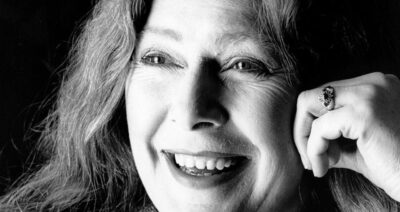
Founded in 1977, the L’Ensemble Choral du Bout du Monde (the “World’s End Choir”) brought together traditional instrumental performers and over a hundred vocalists from over forty native choral groups throughout Brittany, the celebrated Breton province in Northern France.
Accompanied by bagpipes, keyboards, harps, guitars, flutes, claviers, percussion, conremuse, and the Grand Organ of the Landévennec Abbey, the ensemble keeps the native music alive through both traditional and original choral music in their Breton language (the Celtic dialect of Brittany).
Since 1989, composer, musician, and arranger Christian Desbordes has led the ensemble. In 1991, Desbordes composed the music for a theatrical production, La passion Celtique / Ar Basion Vras.
They recorded albums in 1992 and 1994, and in 1997, L’Ensemble Choral du Bout du Monde recorded Noëls Celtiques: Christmas Music from Brittany for Green Linnet, which won AFIM’s “Best Seasonal Music Album” in 1998.

The Bothy Band evoked universal praise from audiences and critics alike. They are that rare combination of genius, harmonic subtlety, rhythmic drive, and vocal clarity that moved Rogue’s Gallery to dub them, “the most important Celtic band of the rock era.”
From their very first album, the Bothies attracted the attention of listeners on both sides of the Atlantic. When legendary fiddler Tommy Peoples was replaced by Kevin Burke for the group’s second album, Old Hag You Have Killed Me, which came out in 1976, none of the awesome power of the group’s initial surge was lost. It was that auspicious second album which contained a vocal tour de force with an unpronounceable Gaelic title, moving an unabashed fan to proclaim that “one listen to the quick-paced, strangely harmonized Fionnghuala (fuhwhun-NOO-whu-luh is close) will leave you convinced of their greatness.”
By the time their third album, Out of the Wind, Into the Sun, was released, there was no doubt in anyone’s mind that siblings Mícheál Ó’Domhnaill and Triona Ní Dhomhnaill, rhythm genius Dónal Lunny, piping king Paddy Keenan, flute virtuoso Matt Molloy, and brilliant fiddler Kevin Burke stood at the very summit of Celtic music — a group admired by all, imitated by many, surpassed by none.
It was inevitable that the group would record a live album (in that bastion of Celtic music, Paris, France!) producing a wild, uninhibited set of music, “played with verve, and captured with truly great sonics.” Before you knew it, the band members had gone their separate ways, joining up with such celebrated progeny as Touchstone, Patrick Street, The Chieftains and Nightnoise. But the Bothies’ legacy remains on their four stellar albums, as well as a collection, The Best of the Bothy Band, released after their breakup.
Upon hearing this collection, Emily Friedman of Chicago Magazine was moved to deliver the following paean, which might serve as an elegy for the band’s tenure: . . . together they took jazz chords, Gaelic-language songs, taut instrumental interplay, and a deep sense of their shared Celtic past and created a body of music that still shines . . .This was one of the greatest of all bands; get this album and learn how much we lost when its brief career ended.”

Each a master-musician in his own right, Matt, Tommy, and Paul come together on this album to produce a collection of fiery reels, jigs and hornpipes. The tunes here are from different sources, mainly from Counties Clare, Donegal and Roscommon, and capture the atmosphere of the informal yet spirited sessions that traditional musicians revelled in. Superb Irish traditional music from superb Irish traditional musicians.
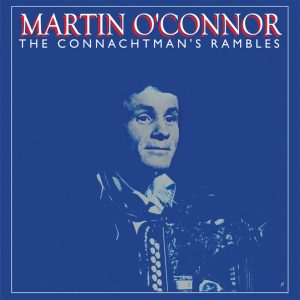
An accordion player since the age of nine, Martin’s career has seen him playing in many of traditional music’s leading groups including Midnight Well, De Dannan, The Boys of the Lough, and Skylark.
His first solo album ’A Connachtman’s Rambles’ met with critical acclaim and established him as a solo musician. His second solo album 1990’s ’Perpetual Motion’ is considered by some to be one of the best accordion albums ever produced by an Irish artist. The release in 1993 of ’Chatterbox’ gave further evidence of his outstanding technique, imagination, and compositional talent.
A popular session musician, O’Connor has appeared on recordings by such diverse musicians as Rod Stewart, Elvis Costello, Mark Knofler, Tanita Tikaram, Townes Van Zandt, Chieftains, the Dubliners, Davy Spillane, Maire Brennan, and the Waterboys.
In 1995, O’Connor became the first recipient of the Allied Irish Banks, Traditional Musician of the Year award at a ceremony in his home town of Galway. The award was to acknowledge the tremendous contribution he’s made to traditional Irish and in particular, accordion music.

Sligo-style fiddler Kevin Burke and guitarist Mícheál O’Domhnaill first played together as members of the legendary Bothy Band. After the band broke up, the pair toured the United States and Europe, recording two albums together: Promenade (1979), and Portland (1982).
Both albums were critically acclaimed internationally, and are now considered to be staples in any avid Celtic music-lover’s collection. In the making of their two albums, the fiddle and guitar duo aspired to embody relaxed vitality, which they achieved through their compelling melodies, pulsing Sligo rhythms, intricate variations, and vocal perfection.
For over forty years, Kevin Burke has been considered to be the living master of Sligo-style Irish fiddling. Burke has recorded over twenty albums, taught at countless camps, universities, and summer schools, and has toured extensively all over the world. A founding member of Patrick Street, Planxty, Bothy Band, The Celtic Fiddle Festival, and Open House, Burke is instrumental in keeping the Sligo music tradition alive.
Producer, guitarist, vocalist, and keyboardist Mícheál O’Domhnaill began his musical career as a teenager when he created the band Skara Brae with his sisters Tríona and Maighread. Throughout his short life, O’Domhnaill played, recorded, and toured with Mick Hanley, the Bothy Band, Relativity (a band he founded with Triona and brothers Phil and Johnny Cunningham) and ex-Bothy Band members Kevin Burke and Paddy Glackin.
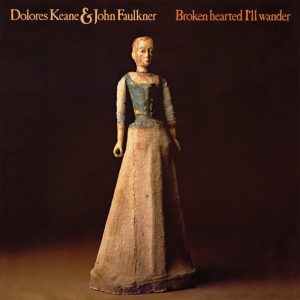
Since they were wed in 1977, vocalist Dolores Keane and multi-instrumentalist John Faulker have recorded three duet albums, toured extensively together, and have since collaborated on several musical projects.
Dolores Keane was born in Co. Galway, Ireland, and was a founding member of the Irish folk group Dé Danann. After she and Londoner John Faulkner wed, he produced her first solo album and the duo subsequently recorded three duet albums.
John Faulkner got his start as a member of songwriter Ewan MacColl’s band in the 1960s and early 70s. Later, he and Keane founded the band Reel Union.
Together they have performed and toured extensively throughout the world, focusing especially on North America, Europe, the Eastern Asia, and Australia. To date, Faulkner’s discography includes fifteen albums, six of which he produced or co-produced, and two of which are solo albums. Faulkner is also an accomplished film composer and songwriter, and wrote the music for the 1970s BBC children’s television show Bagpuss.
Jackie Daly is credited with revitalizing the image of the accordion and concertina by taking them out of the dance band and into the trad band.
Daly was also a founding member of some of the most prominent Irish bands since the mid-70s including De Dannan, Arcady, Buttons & Bows, and Patrick Street. Born in the Sliabh Luachra region of Ireland in 1945, he remains one of the most emulated carriers of the Sliabh Luachra-style tradition.
Throughout his career, Daly surrounded himself with distinguished fiddlers with whom he would play in tight unison. This fiddle-accordion duet style has now been imitated across Celtic music micro-genres. After playing with Kevin Burke on Burke’s debut solo album,If the Cap Fits the duo continued to play, tour, and record together throughout the 20th century and into the next.
Forty years after If the Cap Fits was first released, Kevin Burke is still considered to be the most prominent living master of Sligo-style Irish fiddling. Burke has recorded over twenty albums, taught at countless camps, universities, and summer schools, and has toured extensively all over the world. A founding member of Patrick Street, Planxty, Bothy Band, The Celtic Fiddle Festival, and Open House, Burke is instrumental in keeping the Sligo music tradition alive.
Together, Daly and Burke founded the band Patrick Street with Andy Irvine and Arty McGlynn. Before leaving the band in 2007, Daly had played with them for 21 years, on all of their nine recordings, and at countless worldwide performances.

Vinnie Kilduff has been heralded as one of Ireland’s greatest tin whistle players, having shared the stage with everyone from Clannad to U2, he succeeded in gracefully spanning the gap between traditional Irish music and contemporary Irish rock.
A founding member of the Irish rock group Tue Nua, Kilduff released his first solo record The Boys from the Blue Hill in 1990, which is a collection of traditional tunes featuring Kilduff’s multi-instrumental abilities.

Born in Straide, County Mayo, and now living in Galway, Sean is an All-Ireland champion on both fiddle and whistle.
His 1993 solo debut, The Blue Fiddle, was named one of the ten best albums of that year by The Irish Echo.
Other recordings on which Sean appears include Ceol Tigh Neachtain, Music at Matt Molloy’s, Brendan O’Regan’s A Wind of Change, Alan Kelly’s Out of the Blue and Mosaic, and Dónal Lunny’s Coolfin.

Karan Casey is one of the most influential and imitated vocalists in Irish and American folk music; a natural innovator, she proves that the ancient and the modern make excellent bedfellows. On Ships in the Forest, her fifth solo album and debut with the Compass Records Group, Casey’s warm, soulful voice ebbs and flows around ballads both timely and timeless. Produced once again by Donald Shaw (of Capercaillie fame), the album was recorded at Casey’s home in County Cork and features the members of her current touring band, Caoimhín Vallely (piano), Kate Ellis (cello) and Robbie Overson (guitar) along with special guests Kris Drever, Niall Vallely and Cillian Vallely.
The songs found on Ships in the Forest range from fresh arrangements of tried and true folk standards (“Black is the Color of My True Love’s Hair” and “Johnny I Hardly Knew Ye”) to “The Fiddle and the Drum”, Joni Mitchell’s 1969 anti-war madrigal and Martin Furey’s newly-composed “The Town of Athlone”. Casey says of the album: “I feel that this is by far my most ambitious album to date. I think it has taken me all my years as a singer to come to the point of feeling confident enough to tackle the big songs within the traditional repertoire.”
As well as touring extensively with her own band, over the past two years Karan has performed with Peggy Seeger, Liam Clancy, Solas, Lunasa, Breton guitarist Gilles le Bigot, Mícheál Ó Súilleabháin, Iarla Ó Lionáird, Karen Matheson and Donald Shaw and was involved in Mick Moloney and Paul Wagner’s Absolutely Irish film project which will be screened on PBS in 2008.
New ventures for 2008 include The Vallely Brother’s Big Band, Karan and Seamus Egan’s new project involving Aoife O’Donovan and Lau, and Niall Vallely’s “Turas na dTaoiseach/Flight of the Earl’s” event, which was premiered in Belfast’s Grand Opera House in November 2007 and is to be repeated during 2008 in Louvain, Belgium.
Casey began 2008 with critically acclaimed appearances at the renowned Celtic Connections festival in Glasgow and will be touring North America throughout February and March.

Weaving intricate patterns around a core of fiddle, melodeon, flute and guitar, the House Band’s rich, complex music spans the Celtic nations and beyond.
Flute/bombarde/bodhrán player John Skelton helped piece together many of the band’s arrangements. Ged Foley (guitar/small pipes/vocals), honed his talents in the Battlefield Band, and currently plays with Patrick Street. Chris Parkinson’s accordion playing has been a driving force in the English dance scene, and his keyboard work is incomparable. Roger Wilson adds texture to the group with his soulful singing and deft fiddle-playing.
-->