Tommy Keane was born in Waterford City, Ireland in 1953. While in his early twenties, after playing tin whistle for a couple of years, he met local piper Tommy Kearney who encouraged him to take up the uilleann pipes. After attending the Willie Clancy Summer School where he developed his piping skills (with the help of pipers Pat Mitchell and Liam O’Flynn) he became much in demand as a session musician and worked with musicians including Elvis Costello, The Pogues, Clannad, Ralph McTell and more. He has toured with Liam Clancy, Tony McMahon and Seamus Tansey and has performed with The Irish Philharmonic Choir and Orchestra.
Compass Records is particularly proud of our long association with Irish musician, John McSherry, founding member of the seminal Irish band Lunasa, and one of the foremost composers and performers on low whistle and uilleann pipes. John is widely regarded as a premier contemporary torch-bearer of the uilleann pipes, a venerable instrument with a storied history comparable to the blues in America, but even more mysterious and mythological in character. John’s new album THE SEVEN SUNS follows the recent release of a comprehensive, 610 page examination of the art form that he co-authored with music writer, Colin Harper, The Wheels of the World: 300 Years of Irish Uilleann Pipers, described as “an epic tale of triumph and survival, where the soulful heart of a nation has been kept alive across ages by a slender thread of guardians.”
While John is well known on whistles, in particular the low whistle—familiar to mainstream ears by its omnipresence on soundtracks such as Rob Roy, Braveheart and Titanic—he is also both a guardian of the piping tradition and its most profound boundary pusher. This album doesn’t disappoint on either score—in the words of Donal Lunny, legendary founder of The Bothy Band, John “embraces the ancient strangeness of music passed on to us from centuries before while also possessing the harmonic and rhythmic sensibilities of the best of rock and contemporary music.”
In McSherry’s words: “I’ve been fascinated by the ancient megalithic monuments of Ireland since I was a boy. Shrouded in mystery, these magical monuments have inspired so many artists over the centuries and continue to spur the imagination today. They are the remnants of an ancient civilisation that stretched all along Europe’s Atlantic coast and into the Meditteranean, from The ‘Ring of Brodgar’ in The Orkneys to the Menhirs of Mzora in Morocco. The Irish monuments, in particular those of Brú na Boinne (Newgrange, Knowth and Dowth), Loughcrew and Carrowmore, are truly awe inspiring and invoke a deep sense of the spiritual. The music on this album has been inspired by these marvelous sites and the stories that go with them. Hope you enjoy!”
“The music she makes is tender, sometimes melancholy, and yet her voice, walking a line between her sister’s combined with the timbre of Nanci Griffith’s, is expressive of emotions behind or perhaps beyond the lyrics of the songs she chooses to sing.” —All Music Guide
After taking a 10-year break from recording, Frances Black, one of Ireland’s top vocalists, makes her long-awaited return with Stronger. Her pure vocal tone and energetic, pop-minded delivery showcase an artist stronger and more passionate than ever about her music. “This is an album of all my favorite songs that I have sung through the years. I have loved and lived these songs, they all tell the stories of my life,” adds Black. A former member of Arcady and The Black Family, Black made her solo debut with two tracks on the million-selling, multi-artist compilation Woman’s Heart in 1993. An album-related tour with Maura O’Connell, Dolores Keane, Sharon Shannon, Sinead Lohan, and her sister, Mary Black, broke all of Ireland’s box office records. While Black’s debut solo album, Talk to Me (released in 1994), sold over 100,000 copies and spent eight weeks at the top of Ireland’s music charts, her releases The Sky Road (1995), The Smile on Your Face (1996), and Don’t Get Me Wrong (1998) further established her as an internationally known performer.
T with the Maggies are Tríona & Maighread Ní Dhomhnaill, Mairéad Ní Mhaonaigh & Moya Brennan.
In May 2007, a remarkable gathering of traditional Irish musicians and singers came together at Vicar Street in Dublin to celebrate the life and music of Mícheál Ó Domhnaill, who, with Skara Brae and The Bothy Band, had been a pioneering force in Irish music.
Among the many artists and groups coming together that evening was an evocative performance by four of Ireland’s finest female singers. Tríona and Maighread Ní Dhomhnaill (Míchaél’s two sisters, concert organisers and co-members of Skara Brae and The Bothy Band) were joined by Mairéad Ní Mhaonaigh of Altan and Moya Brennan of Clannad.
And so was born one of the most inspirational and heartening collaborations in traditional Irish music.
Tríona, Maighread, Mairéad and Moya, T with the Maggies, all come from the same corner of County Donegal (with Gaelic as their first language) and all have illustrious career histories. Each individual brings a unique and varied interpretation of their musical heritage but the result is one of the finest ever amalgamations of Irish female voices. They are real Celtic women!
Their first show in January 2009, at the Temple Bar Tradfest in Dublin, sold out immediately and they went on to perform at last year’s Irish Global Economic summit. A new recording of their repertoire favourite, “Two Sisters”, was commissioned by Sam Shepard, for his play, Ages of the Moon.
On the stage the ‘Maggies bubble with a mixture of instinctive tone, harmony and a generous helping of laughs. Each bring their choice of songs but mould them into the group with a unique soundscape of voice, piano, fiddle and harp. You can tell that they are the best of friends.
Watch
Five years after their critically-acclaimed debut Tripswitch, John McSherry (uilliean pipes), Dónal O’Connor (fiddle, keys), Francis McIlduff (bodhran, whistles)—three of Celtic music’s most virtuosic instrumentalists—reunite again as At First Light and deliver one of the year’s most exciting neo-traditional albums. Through masterful musicianship, the trio explores fresh perspectives on the living tradition in Irish music. Their album is aptly titled IDIR—Gaelic for between and among—and reflects the trio’s growing status as leading luminaries on the international stage. Featuring special guests: Tony Byrne, Ruben Bada, Michael McCague and Ciara McCrickard.
These ten tracks include delicious slow airs without vocals, namely the traditional “Máire an Chúil Ór Bhuí” and Finbar Furey’s piping tour de force “Roy’s Hands” with other tunes ranging from the eerily melodic “Song of the Chanter,” to the albumopening triple-time “The Magnificent Six”—tunes that are a testament the band’s dynamic presence in the traditional Irish music scene.
Éamonn Coyne grew up shaped by the traditions of Roscommon and Donegal, in Ireland, while Kris Drever had his first musical learning in the Orkney Islands, off the far northeast coast of Scotland. Joining forces on the album Honk Toot Suite, these two multi instrumentalists go beyond their traditional backgrounds to point a new path that both encompasses tradition and moves it forward.
“The Edinburgh scene whirlpooled us together and we have enjoyed the result,” says Coyne, who moved to Scotland’s capitol about ten years ago. He is best known as a banjo player, having worked with artists on both sides of the Atlantic, including Sharon Shannon, Tommy Peoples, John Doyle, Dermot Byrne (of Altan), Stockton’s Wing, the Alison Brown Quartet and Russell’s House. Currently he is a mainstay of the unique Scots Latin fusion band Salsa Celtica. In 2003 he released the solo album Through the Round Window to critical acclaim.
The tunes on Honk Toot Suite range from original compositions by each man to traditional music from Donegal, Roscommon, Cavan, Orkney, and Brittany. Fitting right in with the mix are the strutting 1920s song “Cock a Doodle”, and another visit to 1920s tradition, “The Lakeside Barndances”. “The Lucy’s Swamp” set shows the versatility and originality of the duo’s playing and ideas, as Coyne’s banjo and mandolin set a dance for Drever’s double bass and guitar and John Joe Kelly of Flook to join in, on a pairing of the traditional “Lucy Farr’s” with avant garde banjo master Bela Fleck’s tune “Down in the Swamp”. Whatever he’s working on “My writing is mostly influenced by traditional music forms,” says Coyne.
The eleven tracks on Honk Toot Suite, be they traditional, modern day covers, or original material, are collaborative arrangements between Coyne and Drever. “We know each other’s influences and backgrounds really well so arrangements come quickly and easily,” Coyne explains, citing their experiences playing together in the band Russell’s House and on gigs with material from Through the Round Window. “Things fell into place very quickly and naturally – nothing was forced,” he continues. ”Kris chose the vocal songs but we both arranged what we played on them. Kris came up with the set of tunes that is Twenty Quid which was a new thing for us as a duo and was quite exciting for me,” he says of the set of three reels which finds the banjo steady leading the way as tenor guitar, guitar and double bass weave around in rhythmic conversation. “Kris also brought other tunes to the recording which meant some learning for me which is always fresh and good,” Coyne adds. Kris Drever split his early learning of music between the traditions of Orkney, the Celtic rock of his father, Ivan Drever, a member of the internationally known group Wolfstone, and as he admits, Metallica and Pantera. Moving to Edinburgh, he began to focus more on folk and traditional skills. He and Coyne met when Drever filled in as a replacement with the band Russell’s House, and then continued on playing together when that group ceased performances. As a guitarist, double bass player, and harmony singer, Drever has toured with folk superstar Kate Rusby and worked with leading Celtic artists John McCusker, Tim O’Brien, John Doyle and Cathie Ryan. Drever recorded two albums with Fine Friday before they split in 2006 and is currently a member of bands Session A9 and Lau. Drever just recently released his first solo recording Black Water to critical acclaim including receipt of the 2007 BBC Radio 2 Horizon Award. As does Coyne, Drever draws on an eclectic mix of traditional and not so trad rhythms and ideas in his music. “A guitar’s like a portable piano, in terms of its range. I like to try always to use interesting colours in the chords and harmonies I play, rather than just doing the obvious,” he says. Drever is a singer, as well, on Honk Toot Suite adding his voice to the jazzy swing of Cock a Doodle and the Norse ballad style song “The Viking Bride”, composed by his father, Ivan Drever. “I like either to do songs that haven’t been covered much before,” he says, “or folky standards that are open to a different interpretation. I try to steer clear of that kind of typical folk-singer sound, and put my own mark on things.”
Éamonn Coyne and Kris Drever have put their own distinctive and collaborative mark on the music of Honk Toot Suite, from lively Roscommon reels to Breton tunes to Norse laments to their own fusions of those traditions. It is ever changing music, and as Éamonn Coyne explains, that’s what you hear on Honk Toot Suite. ”The arrangement work was done in various places: the studio; some came from informal pub music sessions (’jams’) which was remembered and revised at a later time; some came from rehearsals; and others came from gigging using the ’what works’ method.” It is a method of collaborating and carrying forward tradition that is as old as the sharing of music and as new as tomorrow: the end result is one of the most enjoyable duet records to be released in recent years.
Two giants of Celtic music in their first collaboration on disc — Sean Keane (fiddle) and Matt Molloy (flute), scions of The Chieftains and brilliant soloists in their own right, play some of the tightest duets ever heard. Their speed is matched only by their precision, and their sheer exultation can be felt in every track. With producer Arty McGlynn on guitar.
Belfast-born uilleann piper John McSherry and Detroit natives Tyler Duncan and Michael Shimmin have been dreaming of .the olllam. for the last decade. With a name inspired by the king’s own ollam bards of Irish lore, the trio wanted an ensemble that naturally represented their combined experiences in a multiplicity of styles. McSherry, one of the best uilleann pipers in the world and a founding member of legendary Irish group Lúnasa, has been dubbed “a true master” by Irish Music Magazine and is well known for his current work with his group At First Light as well as his ’90s stint with Donal Lunny’s Coolfin. Duncan and Shimmin have also been busy in the United States performing and recording with their award-winning Irish-jazz crossover group Millish with Duncan doing double-duty in the dance-rock group My Dear Disco/Ella Riot. It seemed that the right moment for collaboration between the three musicians would never present itself.
However, in February 2012 during the calm before the summer festival season, the trio finally wrote and recorded an original album together, overcoming the Atlantic divide by means of the internet — they rehearsed and composed live on Skype and built the tracks back and forth one part at a time between emails. The result, their eponymous debut .the olllam., available Sept. 25 on Compass Records, is lush with trance-like melodies, stunning instrumental virtuosity and a magical marriage of tradition and technology, finding the listener somewhere between Radiohead and Planxty with the ambient emotionalism of Nick Drake or Explosions in the Sky.
Simplicity is key for the trio. They wanted their musical ideas to mature organically in a controlled environment, rather than produce anything contrived or over-composed. It is their collective sense for arrangement—Duncan (uilleann pipes, whistles, guitar, Rhodes) and Shimmin (drums and percussion) both hold degrees in jazz performance, and the legendary McSherry (uilleann pipes and whistles) has performed and written with a wide variety of artists, from Ornette Coleman to Nanci Griffith—that gives the album its distinct style and form.
The trio’s approach to composition is unique in Irish music as well, foregoing the familiar jigs and reels. “We really wanted to investigate the melodies but focus on simplicity and memorability. Everything had a purpose with no excess,” comments Duncan. “Together we created a feeling of a narrative, each song is highly personal and tells a story. There are verses, pre-choruses and bridges instead of the traditional Irish tune forms.”
These 7 adventurous instrumental tracks are fully engaging, whether the rhythm section gradually adds and builds to a powerful climax as on “the belll” or energetic eighth note bass lines interplay with Duncan’s Rhodes piano and McSherry’s catchy melody as on “the follly of wisdom.” Subtle fuzz bass guitar from guest Joe Dart and stripped-down driving percussion of Shimmin compliment the complex and beautiful tone of both McSherry and Duncan. “Conceptually we took a more pop approach but really wanted to make sure it sounded totally organic at the same time. Basically, I was thinking more as a composer and less as a drummer,” comments Shimmin.
Mysterious and masterful as the legendary ollam Irish bards from which they draw their name, McSherry, Duncan and Shimmin have discovered a synergy within their diverse musical backgrounds – introducing a new Irish crossover group rife with creative brilliance and progressive appeal. Reflects McSherry, “I think we were all nicely surprised at how quickly and easily our ideas merged together and manifested into the music – everything seemed to fall into place right from the start. It was like we all knew instinctively that this was to be a special musical journey”
“The best folk band to have come out of Scotland in the last twenty years” New York Times
“The best band of their generation” (The Living Tradition)
“A band with the potential to dominate the Scottish/Irish traditional scene for the next twenty years” (Fatea Magazine)
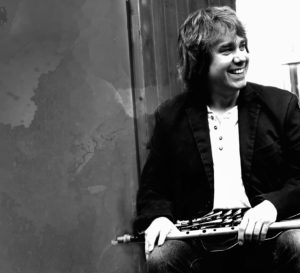
Since being awarded the title of “Best Up and Coming Artist of 2009″ at the MG Alba Scots Trad Music Awards, The Paul McKenna Band have gone from strength to strength touring extensively throughout USA, Canada and Europe.In 2012 Paul was named “Scots Singer of the Year” and the band nominated for “Folk Band of the Year” at the same awards ceremony.
Combining their love for Folk and Traditional music, as well as original songs and tunes; The Paul McKenna Band from Scotland has been captivating audiences with live performances of their potent original compositions and arrangements at both home and abroad.
Concert highlights of 2012 include performances at The Edmonton Folk Festival Canada, Celtic Connections Glasgow, Summerfolk Canada and Fylde Folk Festival England.2013 began with a sold out show at the world famous Celtic Connections in Glasgow and with a new album being released in the summer the band will be returning to Austria for their second tour there as well as dates in North America and the UK.
With a contemporary approach to songs, although not straying too far from their roots, their arrangements are both fresh and innovative. The exciting sound of The Paul McKenna Band is created through outstanding Vocals, driving Guitar and Bouzouki, intense fiddle playing, a warm pairing of flute and whistles and dynamic bodhrán and percussion.
Credit: Yann Orhan
“A finer gift hasn’t come from France since the Statue of Liberty was delivered,” said Irish American News about Doolin’s self-titled 2016 Compass Records debut.
After three years of breakout touring at some of the biggest roots festivals in the United States and Canada, and another three years locked out of the live performance world they have so ambitiously cultivated, Doolin’, France’s premiere practitioners of Irish and Celtic music, return in early 2023 with a new album entitled CIRCUS BOY.
Recorded in part in the US (Chicago, Kansas City and Pittsburgh) during their 2019 tour, the album was completed at the legendary Studio Ferber in Paris, France, under the direction of two legendary producers, Olivier Lude and Patrice Renson, both of whom have collaborated with some of the biggest names in French music.
While their 2016 album drew its inspiration from the fusion of traditional Irish music, French chanson, and American roots music, CIRCUS BOY is resolutely more adventurous, as evidenced by their original compositions (“Circus Boy”, “When I’m Gone”, “A Place Where We Belong”), as well as by the added punch and sonic elements that were brought to the project by producers Lude and Renson.
WilfriedBesse’s vocals are supported as usual by the driving rhythm section of Josselin Fournel (percussion), Sébastien Saunié (bass) and Nicolas Besse (guitars), and the trad-Irish influence remains evidenced through the whistles of Jacob Fournel, the bodhran of his brother, Josselin, and the nimble accordion playing of Nicolas’ brother, Wilfried. But CIRCUS BOY represents a more powerful and bigger musical vision for the band, made possible by the introduction of piano, drums, and brass as new sonic elements. That said, the Irish music tradition is not complete without the presence of a fiddle or two, and on CIRCUS BOY Doolin’ includes three of the best European fiddlers of the genre: Niahm Gallagher, Niall Murphy, and Guilhem Cavaillé, himself a founding member of the band.
CIRCUS BOY is at its core an exploration of the recurring feelings and themes experienced during the group’s US tours: the friendship and solidarity on the road (“Circus Boy”), the personal and artistic encounters gained through extensive touring, and the exploration of a new country with a dizzying musical culture. It is also the acknowledgement of a sometimes difficult world (“Top Of The Mountain”), as well as the recent challenging times and the topics we’ve all been forced to reckon with; to this Doolin’ have included a necessary and heartfelt tribute to women (“Man Smart, Woman Smarter”). On the latter — a Calypso standard first brought to mainstream attention by Harry Belafonte, and later by Robert Palmer — they are joined by the female triumvirate of the Diver sisters, aka The Screaming Orphans and Ashley Davis (Lunasa, The Chieftains) on backing vocals, and Niahm Gallagher (Lord Of The Dance) on violin.
CIRCUS BOY is simultaneously Doolin’s declaration of love for their region of France (in particular their hometown of Toulouse [“L’Amour Sorcier”]), for those at home who miss them when they are away (“When I’m Gone”, “A Place Where We Belong”), and for their many friends and newfound fans (“Thank You”).
Powerful, full of emotion, and eminently appealing, Doolin’ is poised to take their career to the next level with the release of CIRCUS BOY.



 “The sweetest voice of Ireland.” —Nanci Griffith