
Andy Irvine is quickly achieving the status of folk legend, having already been hailed as a folk hero. It’s Andy’s turn for heroes, however, as he tells the stories, in song, of his own heroes through history — heroes like Raoul Wallenberg, who saved thousands of Hungarian Jews from the Nazi death camps, and James Connolly, famous Irish labor leader who was severely wounded during the uprising of 1916 and subsequently executed, and of course, Woody Guthrie himself. Featuring such artists as Davy Spillane,Arty McGlynn, and Rude Awakening rank this as the most eloquent album of 1991, if not the decade.

1. Lúnasa: Meitheamh: Fleaur De Mandragore/Ash Plant/Siobhan O’Donnell
2. Sharon Shannon: A Costa De Galica
3. Paul Brady: Arthur McBride and the Soldier
4. Paddy Keenan & Tommy O’Sullivan: O’Rourke’s/The Spike Island Lassies/Lord McDonald’s
5. John McCusker: The Big Man/Waiting For Janet
6. The Poozies: Another Train
7. Éamonn Coyne: Mazurka & Jigs
8. Niall & Cillian Vallely: Malfunction Junction
9. Cathal McConnell: There’s a Day
10. Tony McManus: Lady Ann Montgomery’s Reel/Eilish Brogan/Paddy Fahey’s
11. Bill Jones: Loving Hannah
12. Alan & John Kelly: The One That Was Lost/The Hag’s Purse/The Black Rogue
13. Michael McGoldrick & John McSherry: Rolling Waves
14. Kate Rusby: I Wish

Tom Doherty, born in Mountcharles, Co. Donegal, in 1913, was one of the last of the great melodeon players in America who played in the old-country style long since vanished from the Irish traditional music mainstream.
Both of Tom’s parents were musicians; his mother played the fiddle and his father, who was a farmer, played the single-row melodeon. His area of Donegal was filled with music, particularly fiddle and accordian. People would get together for music and singing at house parties during the winter and during the summer the musicians would play for crossroads dancing.
Doherty started on the fiddle but was much more successful with the melodeon. He never had any formal lessons on the instrument, but picked it up on his own, putting in long hours of practice, and from listening to other players. In 1948, Tom emigrated to New York City because there was no work in Donegal. He got a full-time job in the cold storage business and on weekends played music, often appearing at some of the famous Irish dance hall in New York. In 1952, Tom married Mary Philbin, from Castlebar, Co. Mayo, and they settled in Brooklyn where he lived until he passed away.

East Galway and East Clare-a region rich in Irish traditional music and players of legendary caliber. Three of East Galway and East Clare–a region rich in Irish traditional music and players of legendary caliber. Three of those players–Woodford, Galway, flutist Jack Coen, Eyrecourt, Galway, button accordionist Martin Mulhaire, and Killaloe, Clare, fiddler Seamus Connolly — join forces to celebrate the native Irish musical heritage they share.
Seamus Connolly
Killaloe, Co. Clare, fiddler Seamus Connolly, is the most successful solo competitor in the history of the All-Ireland Championships, winning an unprecedented ten fiddle titles. As a boy, Connolly traveled Ireland, learning from the topmost legends of Irish music, including Willie Clancy, P.J. Hayes, Padraig O’Keeffe, and Junior Crehan among others. As a youth,Connolly rose to national fame through Irish radio and television, and lateras a member of the Kilfenora and Leitrim Ceili Bands.
As member of the first Comhaltas Ceoltóirí Eireann (CCE) tour, Connolly visited the US for the first time in 1972. A few years later, he immigrated to Boston and taught at the local CCE branch, where his students flourished; going on to win the same awards he captured 25 years before. Connolly has represented Ireland on three “National Council for the Traditional Arts” tours, performed on the nationally broadcast NPR series “Folk Masters,” and has even played on the “Today Show.”
Highly involved with Boston College, the “Sullivan Artist in Residence,” directed the Gaelic Roots Summer School and Festival there from 1993 – 2003 and has since organized the Gaelic Roots Series of free concerts/lectures by visiting artists throughout the academic year. With Larry Reynolds, Connolly initiated, produced and co-hosted CCE’s ongoing weekly radio program of traditional Irish music.
Named the 2002 “Traditional Musician of the Year” by The Irish Echo, Connolly was subsequently inducted into the Comhaltas Ceoltoiri Eireann Hall of Fame.
His recordings include his two solo CDs and a trio with Green Linnet/Tayberry Records:Notes from My Mind and Here and There, and Banks of the Shannon, as well as the album Warming Up, with accordionist/composer Martin Mulhaire, flutist Jack Coen and pianist Felix Dolan. Connolly released The Boston Edge with Joe Derrane and John McGann, and later produced a book of tunes with two accompanying CDs with colleague Laurel Martin, Forget Me Not: A Collection of 50 Memorable Traditional Irish Tunes (Mel Bay Publications, 2004). As of 2009, Seamus was working on a book of tunes with recordings of over 300 new and rare compositions to be released at a later date.
Martin Mulhaire
Eyrecourt, Galway-born button accordionist and composer Martin Mulhaire was, like many of the great Irish musicians, born into a highly musical family. Mulhaire’s father was a fiddler and whistle player, and though Mulhaire began on the fiddle, he found his love for the accordion at the age of fourteen. Largely self-taught through recordings and listening to friends, Mulhaire eventually went on to win All-Irelands in the 1950s.
In 1958, Mulhaire visted the U.S. with The Tulla Ceili Band and “stayed on.” Mulhaire’s album Warming Up (Green Linnet, 2006), features seven of his compositions, and many of his tunes have found their way into session on both sides of the pond.
Jack Coen
Born in 1925 in Co. Galway, flautist, teacher, and flutemaker Jack Coen began his musical instruction on the tin whistle, graduating to the fife, and then to the wooden flute by young adulthood. In 1949, Coen moved to the US with the intention of returning soon to Ireland. However, once immersed in New England’s Irish music scene in the late 1950s, he became attached and joined the New York Ceili band, which won the 1960 All-Ireland championship.
In the 1970s, discouraged by his flute students’ attraction to the silver flutes, Coen began to carve wooden flutes for them, determined to keep the tradition alive.

JOANIE MADDEN is the Grammy Award winning whistle and flute player who has been the leader of Cherish the Ladies since its inception. Born in New York of Irish parents, she is the second oldest of seven children raised in a musical household; her mother Helen, a dancer of traditional sets hails from Miltown Malbay, County Clare and her father Joe, an All-Ireland Champion on the accordion, comes from Portumna in East Galway.
Joanie received her musical training early in life listening to her father and his friends play music at family gatherings and social events. She began taking lessons from Jack Coen, and within a few short years she had won both the world Championship on the concert flute and whistle. During that time, Joanie also became the first American to win the coveted Senior All-Ireland Championship on the whistle.
Throughout her stellar and luminous career, she has amassed a plethora of awards and citations to her credit including; the youngest member inducted into the Irish-American Musicians Hall of Fame, voted twice as one of the Top 100 Irish Americans in the Country by Irish America Magazine, recipient of the Wild Geese Award, named the top traditional musician of the year by the Irish Echo Newspaper, and recently she became the youngest person – and only the second female to be inducted into the Comhaltas Traditional Musicians hall of fame, all for her contributions to promoting and preserving Irish culture in America.
She is in constant demand as a studio musician and has performed on over a hundred albums running the gamut from Pete Seeger to Sinead O’Connor. Joanie has played on three Grammy award-winning albums and her involvement on the Hearts of Space labels’ “Celtic Twilight” CD led to a platinum album with over 1,000,000 sales. In the past years she has toured with the Eagles’ Don Henley and was also a featured soloist on the final Lord of the Rings soundtrack.
In addition to being considered a character, Joanie is also the top selling whistle player in history having sold over 500,000 albums. She has recorded three highly successful solo albums; “A Whistle on the Wind”, “Song of the Irish Whistle” and “Song of the Irish Whistle 2”.

For nearly a decade, Wolfstone’s music has brought its Highland spirit and youthful exuberance to the soul of Scottish tradition. What began as a traditional dance band has evolved into a Celtic rock extravaganza, crossing musical, cultural and age boundaries and winning fans around the world.
Fiddler Duncan Chisholm and guitarist Stuart Eaglesham first met in the late 1980s at a pub session in Inverness, Scotland, and formed a band for ceilidhs (Scottish dances). In 1989, they performed at the Highland Traditional Music Festival in Dingwall, fusing drums and bass with keyboards, pipes, guitar and fiddle. The combination was a hit. They were soon offered local gigs that expanded into tours up and down the length and breadth of the Highlands and the Islands.
Within two years, Wolfstone recorded its first album, Unleashed (GLCD3093), produced by Silly Wizard accordion virtuoso Phil Cunningham. During this time, the band was offered a support slot for the popular Scottish crossover group Runrig at Loch Lomond near Glasgow. The exposure and experience of playing for such a large audience catapulted them into a new circuit. They began playing larger venues and festivals, not only in the UK, but also increasingly in Europe, North America and Canada.
The follow-up album The Chase (GLCD3088) built upon their success and brought new members to their line-up. In 1992, drummer Mop Youngson, from Aberdeen and bassist Wayne Mackenzie, from Inverness, joined the pack. The thrill of the Highland bagpipes was added with piper Alan Wilson, later succeeded by the talented Stevie Saint from Pitlochry. In the meantime, Unleashed and The Chase went silver and gold, respectively, in Scotland.
In 1993, Wolfstone signed with Green Linnet Records and released Year of the Dog (GLCD1145) , marking their third collaboration with Phil Cunningham. They began a hectic touring schedule on both sides of the Atlantic, thrilling crowds at festivals and concert halls with their high-energy performances. Highlights included appearances at such major American festivals as Telluride, Strawberry, the Philadelphia Folk Festival and the Milwaukee Irish Festival, and in Europe at Tönder (Denmark), L’orient (France), and Cambridge (England).
As their recognition increased, so did the demand for their presence, until they spent more time on the road than they did at home. After recording The Half Tail (GLCD1172) in 1995, keyboardist Stuart Eaglesham departed the band for a quieter life, and Youngson followed suit. The remaining Wolfstone members took this opportunity to limit their appearances to festivals and take a new direction with their music. In the meantime, a best-selling compilation Pick of the Litter (GLCD1180) was released in 1997.
In early 1998, Green Linnet released This Strange Place (GLCD1188) , an album featuring the accomplished acoustic guitarwork and introspective songs of Ivan Drever. Co-produced by Drever and Wayne Mackenzie, the recording represented a departure from their previous work and offered proof of the band’s versatility.
Since then, keyboardist Andy Simmers and drummer Tony Soave have stepped in, and Ivan Drever has moved on to pursue other projects. Stuart Eaglesham now leads the pack as vocalist, as well as penning four cuts on the group’s latest outing, Seven (GLCD1198). A diverse mix of Celtic pop and folk with a touch of rock & roll, the album marks new territory for the band. With a two year break from heavy touring, the sextet is charged with renewed energy, and looks forward to electrifying audiences around the world again in the coming months.
Band Members
- Stuart Eaglesham (lead vocals, guitar)
- Duncan Chisholm (fiddle, backing vocals)
- Wayne Mackenzie (bass, backing vocals)
- Stevie Saint (pipes, whistles)
- Andy Simmers (keyboards)
- Tony Soave (drums)
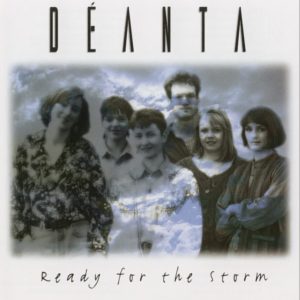
Deanta (pronounced: Jaunt-a) was formed in the early 1990’s in County Antriam, Northern Ireland. The original line-up featured Katie O’Brien, who played fiddle and viola, and her brother, Eoghan, who played guitar and harp. Paul Mullan (flute, whistles), Clodagh Warnock (bouzouki, fiddle, bodhran, percussion) and Mary Dillon (vocals, synthesizer, guitar, harp) rounded out the group although Deidre Havlin later replaced Mullan, and Rosie Mulholland (keyboards, fiddle) was added.

Joe Derrane electrified the world of Irish music back in the late 1940s when as a high school senior he recorded eight solo 78-rpm shellac discs for Boston’s Copley Records on the D/C# two-row button accordion. Through his recordings and performances, this native Bostonian defined the state of the art in Irish-American button accordion playing.
The Boston-born son of Irish immigrants, Joe Derrane is among the finest button accordionists in the history of Celtic music. He is also a somewhat elusive legend in the genre. After recording during the 1940s and ‘50s, he disappeared from the traditional music circuit for thirty-five years, popping up again in 1994 at the Irish Folk Festival at Wolf Trap. Since his career’s resurgence he has proved wrong F. Scott Fitzgerald’s famous quote “there are no second acts in American lives”. Over the past 16 years, Derrane has written 22 tunes and his current writing and recorded output is the most imaginative and inventive of his career.
In 2004 Derrane received one of the highest honors for a traditional musician: the National Endowment for the Arts’ National Heritage Fellowship.

Brilliantly conceived, refreshingly diverse, faultlessly produced, and expertly played, Moving Cloud will first get you up on your feet, and then sweep you off them. Based mainly in Ennis, Co. Clare, this quintet is a stellar concert band as well.
Moving Cloud featured five highly accomplished Irish musicians: Paul Brock (button accordion), Maeve Donnelly (fiddle and viola), Manus McGuire (fiddles) Kevin Crawford (flute and percussion), and Carl Hanson (piano). Moving Cloud’s standard of music was extraordinary, its variety surpassed only by its virtuosity.
Moving Cloud released two albums on Green Linnet; its self-titled 1994 debut earned “Album of the Year” from the Irish Echo, and was deemed “Brilliant from first to last track,” by Earle Hitchner. Bill Whelan, composer of Riverdance, heralded Moving Cloud as “a traditional album of rare grace, subtlety and integrity that also makes a connection with other traditions in a surprising way.” Their sophomore release, Foxglove, earned praise as a “worthy sequel,” featuring guests Trevor Hutchinson on double bass, Johnny “Ringo” McDonagh on the bones, guitarist Garry O’Briain, and banjo player Gerry O’Connor to create a tight, precise sound perfectly suited for set dancers and audiences alike.

Born in county Sligo, Seamus McGuire grew up in a family that valued both classical and traditional music. He began taking classical violin as a child, and by the time he was a young teenager, he was proficient in both classical violin and traditional Irish fiddle. At the age of fifteen, McGuire won the Fiddler of Dooney competition, soon followed by the Oireachtas (Regionals) senior Irish Traditional fiddler title. As a young adult, McGuire played with the Dublin Symphony, and in 1983, he and his brother, Manus, formed the band Buttons and Bows with Jakie Daly and Garry O’Briain, a group that would prove to be one of the most influential in Ireland at the time.
Buttons and Bows took traditional Irish melodies and mixed them with traditional music from Canada, Scandinavia, and the Shetland Islands, creating a poignant, multi-dimensional sound. The band recorded three albums, all of which were widely acclaimed, and together the quartet toured all over the United States and Canada.
In 1995, McGuire got together with guitarist Arty McGlynn and flautist John Lee to produce an album of “forgotten” flute and fiddle tunes deriving from Co. Leitrim, titled The Missing Reel. Also in that year, McGuire released a solo album titled The Wishing Tree, 1995, wherin he bridges the gap between classical violin and traditional world music.
One of the contributors on The Wishing Tree was Belfast cellist and composer Neil Martin. Together with violinist Niamh Crowley and violist Kenneth Rice, they went on to found the West Ocean String Quartet in 1999, which has gone on to “effortlessly to combine tradition and innovation like nothing on earth.” The West Ocean String Quartet has released two albums and has gone on to collaborate with some of the most prestigious Irish traditional artists of the age, including Dervish, Tony McMaus, Maighread Ni Dhomhnaill, Cathal O’Searcaigh, and Mary Black, among others.

Reeltime is a charismatic Irish quartet that combines stellar instrumental skills with a genius for arranging. Their music has that incredible energy and lift found only in the very best Irish music, but goes even further, with percussive jazz guitar and complementary instrumentation more often found in jazz than trad groups.
Centered around the virtuoso duet and unison playing of accordion and fiddle, Reeltime infuses their music with unquenchable energy and humor. Moving easily between Irish traditional, Texas swing, and ragtime, Galway fiddler/vocalist Mairin Fahy and guitarist Chris Kelly debuted their self-titled album with Green Linnet in 1994, followed by Live It Up, (Green Linnet, 1998).
The group’s debut earned “Best New Group” and “Best Female Vocalist” by the Irish American News. Their follow-up featured the artistry of Eilis Egan and Luke Daniels on accordions, John Flatley on keyboards, Yvonne Fahy and Jimmy Higgins on percussion, Brendan Power on harmonica, and additional production by Johnny Cunningham.
Multi All-Ireland winner Máirín Fahy was playing and dancing by the age of three, and in 1996, Fahy was asked to join the world-touring Irish music and dance phenomenon Riverdance. For the next decade, Fahy was hailed by critics as, “an athlete of the bow,” and “a joy to watch…simply breathtaking,” as she played for princes and kings around the world.
Featured in the major motion picture “Devil’s Own”, Empire magazine described her performance as as “haunting with a wicked fiddle solo.” In 2004, Fahy joined with her family to create the musical “Tara”, which premiered to a sold-out Luxor Theter. A regular guest with the Chieftains, Fahy has performed with them across North America, Europe, and Australia. Her own show, “Trad on the Prom”, was hugely successful, and she joined once again with the Chieftans for their 2007 tour before returning to her show.
Guitarist, vocalist, keyboardist, percussionist, producer, engineer, and photographer Chris Kelly has lent his talents to several Celtic collections and Irish musicians as well as acts such as Sister Machine Gun, Charlie Hunter, Josie Kuhn, All Chrome, and Rare Bird. In the band Reeltime, Kelly specialized in percussive guitar accompaniment, using rock and jazz chords to accentuate the Irish trad, though his finger-style picking on the band’s slow airs is equally compelling.

In the rich and fertile world of Celtic music, three names stand out at the very pinnacle of the genre. Playing under the name Trian, fiddler Liz Carroll, accordionist Billy McComiskey, and guitarist/singer Dáithí Sproule already established their legendary status with their first album. Trian 11 is their Green Linnet debut. It is captivating, intricately played, and uplifting. Sproule (also a member of Altan) is at the top of his form, delivering four great songs (one in Irish) and accompanying his bandmates on guitar with all the subtleties and shadings for which he is known and imitated. Carroll and McComiskey, both as soloists and together, are without equal as players and tunesmiths. Special guest Tríona Ní Dhomhnaill joins them on keyboards and bodhrán. There is no better trio in Celtic music than Trian.
-->


