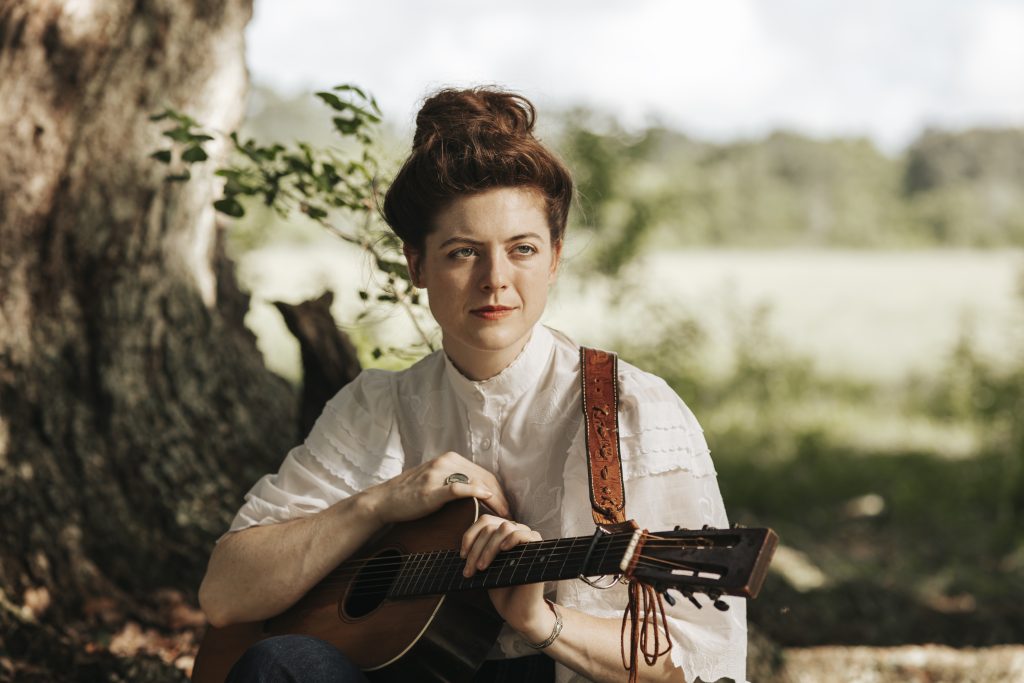
Meredith Moon’s third album, From Here To The Sea, finds the Canadian-born songwriter and instrumentalist taking a slight detour from the Appalachian old-time roots of the album’s predecessor, Constellations. Produced and recorded in Ontario and Nashville by Colin Linden (Lucinda Williams, T-Bone Burnett, Bruce Cockburn) and featuring Rebecca Lovell (Larkin Poe), Lillie Mae Rische & Dominic Davis (Jack White), Julian Taylor, George Receli (Bob Dylan), and Jerry Douglas, among others, the album explores avenues of blues, folk, and folk-rock while even incorporating elements of old-time jazz. Moon’s signature instrument—the banjo—still makes an appearance, along with the roots music that shaped her sound, but instead of being the anchor to the sonic palette, it creates a subtle backdrop as she allows her songwriting to take center stage.
The album kicks off with “East City Blues,” a loping modern-day folk/blues that showcases Moon’s nimble vocals and fingerstyle guitar. Producer Linden adds electric Dobro on the haunting “Poseidon,” and Moon’s clawhammer banjo is featured on the minor key ballad “Lulu Gal.” “Sapphire Blue,” the album’s first single, is an acoustic-based, mid-tempo groover that evokes a feeling of mystery in the search for an escape from a ’dark force’ of sorts, telling the story of driving across the continent looking for the light to lift it, with Moon’s plaintive vocals answered by Linden’s vibey electric guitar. The album’s closer, “Freight Train,” is a moody, late-50s-style 6/8 waltz adorned by Jim Hoke’s saxophones and Linden’s verby electric guitars.
Meredith Moon started writing songs at the age of eight. Growing up immersed in folk music, including the music of her father, Gordon Lightfoot, she became a self-taught guitar player by the age of fourteen. A few years later, she found her sound as a busker on sidewalks from Halifax to Vancouver. She spent years traveling across Canada and the world by road and rail, finding inspiration for her unique style of songs, which are crafted in a true storyteller’s fashion.
Meredith has been described as a ‘gem’ in both the old-time and contemporary folk music scenes for her unusual expression of the genres, combining influences of folk-punk with traditional Appalachian sounds. Besides playing traditional tunes often ‘non-traditionally,’ Meredith presents a powerful voice and a highly contemporary clawhammer banjo style, which has earned her acclaim in the international roots music community. She is a multi-instrumentalist, incorporating fingerstyle/Travis picking guitar, piano, and lap dulcimer, among other instruments, into her performances.
Watch
Critically acclaimed and Americana Award winning Singer-songwriter Mindy Smith’s sixth studio album, Quiet Town, brings a treasured musical voice back into the spotlight.
For Quiet Town, her first album of new material in 12 years, Smith called on producer and musician Neilson Hubbard, alongside engineer Dylan Alldredge. Hubbard enlisted guitarists Will Kimbrough, Megan McCormick, and Juan Solorzano, bassist Lex Price, Danny Mitchell on keys and horns, and a host of acclaimed vocalists for the background vocals, including Maureen Murphy, Nickie Conley, Jodi Seyfried, Matraca Berg, Kate York, and Park Chisolm.
Smith’s talent for expressing the most human of vulnerabilities is in full display on the new album. Beyond the title track, other album highlights include “Jericho,” co-written with esteemed artist and Nashville Songwriters Hall of Fame songwriter Matraca Berg, which gives voice to anticipation of impending life changes of monumental import; “I’d Rather Be a Bridge,” a plea for compassion and connection; and “Farther Than We Should Have,” co-written with Natalie Hemby and K.S. Rhoads. The latter is a song about overcoming the deck stacked against kindred spirits who together trek through a difficult journey and find footing beyond beating the odds.
Arguably, Smith’s wisdom and insight grew out of the challenges of her youth. Most longtime fans know she was raised on Long Island by her adoptive parents: her non-denominational minister father and her mother, the choir director at their church. However, in 2014, Smith connected with members of the birth family she had never known, living in the Blue Ridge Mountains of Southwest Virginia. She also found her newly discovered relatives to be musically inclined, a discovery that helped her make sense of her innate attraction to Americana music. That connection inspired several of the songs on Quiet Town, most notably in the sense of gratitude and reassurance that she offers in “Hour of My Departure,” a duet and co-write with longtime writing partner Daniel Tashian.
The spirit of gratitude is the note on which Smith concludes the album. The song “I Always Will,” holds out the promise of an abiding love that can transcend whatever troubles life may bring. “I write for one purpose and that’s to figure out how to live in the world I am in” Smith has been quoted as saying. Responding to her comment from years past with a laugh, Smith says “I hope I never do figure that out, because if I did, I don’t think I’d know what I’d write about.”
Smith’s 2004 debut, One Moment More, sold over 400,000 copies and put Smith squarely on the list of artists defining Americana and roots music. A defining element of her music has always been the powerful simplicity of her straight-to-the-heart vocals, rejecting so much fussiness that often characterizes pop music, whether country, pop, R&B, or rock. Although she has carved a path for herself in Americana music, it is telling that she has cited jazz singer Sarah Vaughan as her favorite vocalist. And the Los Angeles Times raved, “Her voice exudes the gentility and grace of [Alison] Krauss, while musically she can evoke an electronics-drenched moodiness of latter-day Emmylou Harris, which can indeed leave a listener yearning for one moment more.”
Singer/songwriter Kelly Hunt’s new album, Ozark Symphony, is the fruit of many journeys. Set against a backdrop of the Midwest prairie, Ozark Mountains, and Mississippi river delta which have shaped the contours of her life most intimately, its songs chart a course through universal stories of life’s peaks and valleys. Taken as a whole, this album establishes Hunt as a vital voice in Americana music, standing shoulder to shoulder with modern-traditionalist songwriter/poets such as Anaïs Mitchell and Gillian Welch.
For Hunt, making Ozark Symphony was a journey in and of itself, one which led her to producer Dirk Powell and his Cypress House studio in Breaux Bridge, Louisiana, on the banks of Bayou Teche. Powell, whose musical pedigree runs deep in Celtic, Cajun, and old-time music, drew from a diverse community of musicians across the US and UK—including Natalie Haas on cello, multi-instrumentalist virtuoso Mike McGoldrick on Irish flute and Uilleann pipes, and Kai Welch on trumpet and accordion—to cultivate a lush sonic landscape around the album’s 12 tracks.
The album’s title track was born on a twilight drive through the stretch of Ozarks that connects Hunt’s former home in Missouri to her native home in Memphis, TN. Hunt reflects: “While I’ve never lived squarely in the Ozarks, they seem to have served as a passageway between the defining destinations of my life. When choosing a title track for this record, ‘Ozark Symphony’ stood out to both Dirk and me as the clear choice. That phrase seems to embody the spirit of the story I’ve set out to tell while also expressing, in a broader sense, the way I see myself and the music I make—an uncanny cross between the earthy and classical influences of my upbringing.”
The song “Evangeline” is a thematic centerpiece of the album. It is a dramatic reimagining of the Evangeline story—a folktale inspired by true events and immortalized by the 19th-century Longfellow poem. It is the story of an Acadian exile whose search for her long-lost love takes her on a harrowing journey across the American frontier, down through the Ozark Mountains, and ultimately to Louisiana, where she settles at journey’s end. Hunt felt a powerful connection to the Evangeline story long before she discovered that her ancestors were among those Acadian wayfarers, and long before she knew that her own journey would lead her on a parallel path across the Ozarks down to Louisiana, where she now resides. The three verses of the song are written from the perspective of three different characters in the story. Hunt is joined on the track by one of her favorite vocalists, Rachel Sermanni.
The song “On the Bayou” is also inspired by the Evangeline tale. Hunt recalls it bubbling up just a couple weeks before recording the album. Its chorus is an invocation of sorts: “Evangeline, tell me what you know…” A plea for guidance across time and space from one lovelorn woman to another, and a summoning of the same lodestar that led Evangeline to the live oak on the banks of Bayou Teche where her search was fulfilled.
Other songs explore Hunt’s Southern roots. On a road trip back to Tennessee to visit her folks one summer, Hunt chanced upon a compilation of Hank Williams Sr.’s greatest hits at a truckstop and took a deep dive into his catalog. Sitting on the front porch of her childhood home with banjo in hand, Hank’s classic gospel tune “Lost Highway” still fresh in mind, she decided to take a walk down the driveway, her tenor banjo still strapped to her. “It was a perfect late summer’s day, golden hour,” she remembers. “My dad had a bonfire going, and the smoke was coming through the trees, catching the long shafts of sunlight. It was a rarefied moment. Just then I heard a rustling of leaves at my feet and looked down to see a big brown snake just a few inches away. I stopped, it stopped, neither of us moved. For whatever reason, I started nervously plucking my banjo…just a simple, spontaneous riff.” And thus Hunt’s own “Lost Highway” unfurled.
Another stand-out track is the simple duet, “What About Now?” The spare arrangement is the perfect vehicle for Powell’s mandolin and harmony vocals. Together Hunt and Powell tease out the playfulness of this song—light-hearted and tender with a touch of melancholy—while simultaneously evoking a sense of restless urgency, which Hunt says she was feeling keenly at the time.
The album closes with a cappella song, “Over the Mountain,” which Hunt wrote on a gorgeous summer morning en route to a funeral. She explains that it was a charged moment—equal parts grief and gratitude, beauty and sadness—which called to mind something a friend’s grandmother used to say: “There’s a comin’, there’s a goin’.” On their first meeting, deep in the heart of the Ozarks, just as dusk was falling and the cicadas struck up their chorus, Powell made an impromptu recording of Hunt singing this song inside of an ancient cave which once served as a Native American ceremonial site. He later spliced this live version into the studio track (featuring harmonies by Rachel Sermanni and Powell’s daughter, Amelia Powell), bringing the album full circle with a veritable Ozark symphony, as timeless and true as the mountains themselves.
Kelly Hunt is a native of Memphis, TN. From an early age, she was exposed to music spanning from Rachmaninov to Joni Mitchell to Mississippi John Hurt. She grew up singing in choirs, poring over poetry books, and writing her own music as a matter of course, first on piano, then banjo. After being introduced to the banjo in college while studying French and visual arts, Hunt began to develop her own improvised style of playing, combining old-time picking styles with the percussive origins of the instrument. After graduation, Hunt embarked on a rambling path through career pursuits in farming, culinary arts, and graphic design, ultimately landing in Kansas City, where she recorded her 2019 debut release, Even The Sparrow, which received a nomination for the International Folk Music Awards “Album of the Year.” No Depression describes her songs as “the musical equivalent of a book you can’t put down, one you’ll want to revisit again and again to catch every nuance and turn of phrase.” She is now based out of New Orleans, LA.Hunt has inspired praise from a wide range of critics including Rolling Stone Country, which wrote that “Kelly Hunt sings with the lilting cadence of a folksinger born somewhere far away, sometime long ago.”
Renowned producer, songwriter, fiddler and sideman Dirk Powell has achieved near legendary status in the international roots music scene. His bonds with Louisiana and with the mountains of Kentucky are unmistakable, but so is his far-reaching vision and ability to translate the essence of tradition for modern audiences that need the timeless and sustaining messages that tradition brings. Powell’s new album, WHEN I WAIT FOR YOU contains 13 tracks, all but one of which are original. The songs showcase Powell’s gritty vocals—reminiscent of Levon Helm in one moment and his mentor and former father-in-law, Cajun legend Dewey Balfa, in the next—and penchant for catchy melody set against a soundscape of fiddles, accordion, whistles, harmonica, and rhythm section. Donald Shaw (Capercaillie) co-produced the album, which was recorded in Louisiana and Scotland and features special guests Rhiannon Giddens, Sara Watkins, Sean Watkins, Mike McGoldrick, and John McCusker.
The album title addresses the listener directly. “My hope is that the phrase ‘when I wait for you’ feels personal to whoever listens to the record—that this is the music I write and create in those moments,” Powell explains. “I want the listener to feel that phrase addresses them personally.”
The album art, an assemblage of objects meaningful to Powell assembled on his home piano, provides more clues to the meaning behind the title. Especially the playing cards.
“I have found two jacks in my life, from decks of cards, randomly, just lying alone,” Powell says. “For me, these are symbolic. I still can’t believe that I found them—a jack of diamonds on the street in Dublin, completely alone, laying face down on a dark, urban sidewalk, and a jack of hearts in Germany, in a field on an island in the middle of the Rhine. It is the German jack, so it has a B on it rather than a J. I identify with what the jack represents in many ways. Not a king, necessarily, but someone who is often tasked with bringing out the best in others, being in service in creative ways. Perhaps someone moving more in the shadows than declaring things from a throne. So in the cover art there are these jacks, particularly the jack of hearts, in the space of goddesses whose energy I feel and for which I’m grateful. The shadow on the Jack of Hearts is something like a yin yang pattern… half in shadow and half in light. These are feelings that resonate with me, tied to this project.”
Dirk brought Shaw, McGoldrick and James Mackintosh from England and Scotland to his Louisiana studio. With his mother ill at the time, he couldn’t drive the three hours from Lafayette to New Orleans when they flew in; they settled for a Greyhound trip. “That was diving into the Louisiana experience, directly and fully, in the most real way,” Dirk says with a laugh. Immersed in his studio, located on the banks of the Bayou Teche, they worked on the songs. “It was beautiful to feel their Celtic sounds merge with the old cypress wood of the walls, and the humid air, and settle into the energy of this place,” he says.
Other friends were brought in to help take things a little further—Sara Watkins, who adds her soulful energy, talent, and virtuosity, and Rhiannon Giddens, who is one of Powell’s closest friends and musical collaborators. (Powell co-produced her 2017 release FREEDOM HIGHWAY and her 2019 collaboration with Leyla McCalla, Allison Russell and Amythyst Kiah, SONGS OF OUR NATIVE DAUGHTERS.) He even enlisted his daughters, who grew up with a lifelong love of harmony, to add background vocals.
“Creating with them in the studio, and letting all the music we’ve listened to over the years flow into new art together, was a beautiful thing.”
Powell says that WHEN I WAIT FOR YOU is a less “aggressive” album than his previous releases, not in intensity but meant more as a “magnet” to audiences rather than something projected to the listener. It’s an intimate group of songs presented as an invitation into his world – his studio, friends, family and home, realized not as a “concept” but as something that grew naturally in a warm and present way.
Over the course of his career, Dirk Powell has recorded and toured with Eric Clapton, Joan Baez, Rhiannon Giddens, Linda Ronstadt, Jack White, Loretta Lynn, and many others. His work in film, including Cold Mountain, found him collaborating with producers including T Bone Burnett, and directors like Anthony Minghella and Ang Lee. He was a founding member of the important Cajun group Balfa Toujours and has been a regularly featured artist in the award-winning BBC series THE TRANSATLANTIC SESSIONS. WHEN I WAIT FOR YOU is the follow up to his 2014 Sugar Hill release WALKING THROUGH CLAY.
Blending his deep understanding of American roots music with a unique ability to weave traditional sounds into a contemporary musical tapestry, Powell has delivered one of the freshest and most engaging folk and roots albums of the year.
Blending his deep understanding of American roots music with a unique ability to weave traditional sounds into a contemporary musical tapestry, Powell has delivered one of the freshest and most engaging folk and roots albums of the year.
Watch
Adam and David Moss began hearing Everly Brothers comparisons long before they officially joined their voices together as folk duo The Brother Brothers. But not even the late Phil and Don Everly, one of the greatest DNA-sharing duos in modern music history, could claim the kind of vocal symmetry Adam and David create. Harmonies just don’t get any closer than those sung by siblings who came from the same egg.
The twins, raised in Peoria, Illinois, weren’t much older than toddlers when they started singing along to the Everlys, The Beach Boys, and other artists their dad played for them. Lulled to sleep nightly by The Beatles’ White Album, they made up their own harmonies to accompany Paul McCartney’s vocal on “I Will” when they were 6.
That song was one of the first they chose for their third Compass Records release, Cover to Cover, on which they pay homage to formative influences and favorite songwriters with a mix of beloved classics and songs they want more people to hear — each filtered through the brothers’ unique musical mix of folk, bluegrass, jazz and other idioms.
Among their eclectic picks: Tom T. Hall’s “That’s How I Got to Memphis,” Jackson Browne’s “These Days,” James Taylor’s “You Can Close Your Eyes,” Hoagy Carmichael’s “I Get Along Without You Very Well (Except Sometimes),” Robert Earl Keen’s “Feelin’ Good Again,” Richard Thompson’s “Waltzing’s for Dreamers,” Judee Sill’s “Rugged Road” and Tom Waits’ “Flowers Grave.” They also chose Harley Allen’s “High Sierra,” popularized by Dolly Parton, Emmylou Harris and Linda Ronstadt on their Trio II album, and “If You Ain’t Got Love,” by Chas Justus of Lafayette, Louisiana dance band the Revelers.
Of course, they didn’t just choose tunes based on popularity or admiration. Each has a story, a connection. Some, like “I Will” and “Feelin’ Good Again,” represent fond memories — the latter of their years in Austin, Texas, during which they caught many REK shows when they weren’t performing (Adam in Green Mountain Grass and David in Blue Hit). Others, like “That’s How I Got to Memphis” and “Rugged Road,” were discoveries, products of their own or someone else’s rabbit hole dives.
“We are, first and foremost, music scholars; we are always learning, exploring, figuring out who played on what and who wrote this and who wrote that,” explains David.
They’re not just casual scholars, either; both hold music degrees from the University of Illinois Urbana-Champaign. Their formal music education began when they entered an arts magnet school, where they started studying piano and violin in second grade.
“David switched to the cello in third grade because he didn’t want to be playing the same instrument as me,” Adam relates. “We wanted to learn other stuff, but our mom was pretty adamant that we not play horns in the house. No drums.” (He still holds that against her, he jokes.) David has since added guitar; Adam plays violin/fiddle, keyboards and banjo, though Cover to Cover features Alison Brown’s banjo work. It also features Lake Street Dive vocalist Rachael Price and her sister, Emily, on “I Get Along Without You”; Sarah Jarosz, who plays mandolin on fellow Texan Keen’s song and harmonizes on “You Can Close Your Eyes”; Jarosz’s bandmate, Jeff Picker, who plays lead acoustic guitar and bass on “These Days”; and Michaela Anne, who adds high harmonies to “High Sierra.” The Brother Brothers have toured with Lake Street Dive and Jarosz, as well as Keb’ Mo’, Shakey Graves, Big Thief and others. But in several cases, their collaborations grew from friendships first. They’ve made many while following each other to Austin, Boston and New York.
For six of his 10 years in the Big Apple, David shared a house with Lake Street Dive bassist Bridget Kearney. That’s where the brothers figured out they should quit “orbiting around each other” and actually come together as a musical unit. After releasing their first EP in 2017, they signed with Compass. Both their 2018 debut album, Some People I Know, and 2021 follow-up, Calla Lily, earned wide praise and a large streaming audience.
Thethoughtful selections and beautiful arrangements on Cover to Cover will undoubtedly earn them more — as well as comparisons to contemporaries the Milk Carton Kids and Secret Sisters (the twins like to mention David Rawlings and Gillian Welch as reference points).
Surprisingly, they didn’t have a hard time deciding which songs made the final cut. According to David, “These are other people’s songs, but we really needed to make them our own. We didn’t want to be singing somebody’s song that we didn’t fully identify with and didn’t feel like us. In the end, we just picked the ones that we enjoyed doing the most.”
Some of that decision-making occurred long-distance, after both chose to escape New York rents during COVID. David and his fiancée bought a camper and traveled until she was offered a job at Miami City Ballet School. Adam’s then-new girlfriend, who had just moved to the city and didn’t know many people, suggested hanging temporarily at her mom’s place in Santa Barbara, California. But they liked the vibe so much, they stayed.
As for how they got to “…Memphis” — and the rest of these songs, they traveled some interesting routes. Adam did a deep Tom T. Hall dive after hearing some of Americana’s most revered singer-songwriters praise him during a song-pull performance. He wasn’t all that moved, but years later, David discovered “That’s How I Got To Memphis.” Then Adam started hearing it everywhere, and got hooked.
“It’s so well written and so meaningful,” David says. “It’s everything a country song should be.” Their slightly more upbeat version has a soulful, bluesy groove.
Regarding “These Days,” on which they mesh crystalline harmonies and gorgeous guitar interludes, Adam says, “This song is possibly the reason we got together as a duo. We soundcheck with it every show, and drive down the road marveling at the fact that Jackson Browne could have written this song with such a wise sentiment at such a young age.”
Adds David: “I was watching some St. Vincent videos and heard her doing Nico’s version, and I was just so transfixed. So I set out to learn it, but I learned St. Vincent’s version. Then I heard Nico’s and got super into Jackson Browne — not that I hadn’t already been. But I probably heard the original long after I’d heard about five different other versions. So this is kind of a conglomerate.”
Ryan Scott’s slide guitar gives “You Can Close Your Eyes” a slightly mournful vibe, appropriate for a line like “you can sing this song when I’m gone” — in what they call “one of the greatest choruses ever written.”
“If You Ain’t Got Love,” a rock ‘n’ roll jam with a twang and straight-outta-Memphis Wurlitzer electric piano, is included because they love the band. “What’s a cover record without a song by one of your friends?,” they note. “This one transports us to the two-stepping dance parties we’ve come to love and miss.”
After a friend turned them on to late songwriter Judee Sill, the pair became obsessed. Though they found “Rugged Road” a challenge to make their own, they wanted to recognize “one of the unsung heroes of the female-songwriter ’70s.”
They’re not sure how they came across “I Get Along Without You,” but claim Chet Baker’s version “is a dream — maybe one of the most perfect performances by any musician.” They were thrilled to arrange an a cappella version with the Price sisters.
Of their delightful bluegrass arrangement of “Feelin’ Good Again,” they note, “This song speaks for itself as the feel good song of the century.”
They plucked Thompson’s “Waltzing’s for Dreamers,” delivered with melancholy elegance as a stately waltz, from deep in his catalog. “Thompson songs are so legendary, but nobody I know has heard that song and it’s so beautiful,” David says. “Even if only my friends listen to this album, they’re gonna get to know this song.”
Their older brother recommended “High Sierra” — which proved perfect for third harmonies by their friend Michaela Anne, in a simplified arrangement that give the lovely melody, lyrics and harmonies the emphasis they deserve.
“Blue Virginia Blues,” one of Adam’s favorite bluegrass songs, apparently is also favored by the Punch Brothers’ Chris Eldridge, who would call it out during bluegrass jams they played in New York. “He has the best taste in bluegrass music of anybody I’ve ever heard,” Adam praises.
They weren’t sure they could do justice to Waits, a major influence, with “Flowers Grave,” but once they created their exquisite violin and cello arrangement, they knew they nailed it. “It’s not the radio hit of the album,” Adam notes. “But I think it’s our smartest arrangement for sure.”
On an album full of so many, that might be debatable. Fortunately, listeners won’t have to choose, because all 12 are sparkling gems.
At a time when hope and forgiveness seem in short supply, roots singer-songwriter Amy Ray gives us all a shot in the arm with her ninth solo album, Holler, due September 28 from Daemon Records.
Still thriving as one half of GRAMMY-winning folk duo Indigo Girls, Ray has also produced a vital body of solo work over five studio albums and three live records (beginning with 2001’s Stag) that explores more deeply her roots in punk and classic country music.
2014’s Goodnight Tender delved into the rich sonic tradition of old-style country music-making that had long-captured Ray’s imagination, but never fully made it into her work—equal-parts Appalachian gospel and late-night honky tonk.
That song cycle navigated themes of darkness and heartbreak, calling to mind the words of Southern greats like Hank Williams and Eudora Welty. American Songwriter called it “beautifully well-done” and PopMatters called it “wise” and “vulnerable.”
But, while many of those reviews rightly focused on Ray’s ability to embody her songwriting, few focused on the impressive work of her backing musicians. Finding their spark on Goodnight Tender, Ray’s firecracker backing band has evolved into a tight unit over four years of on and off touring.
Critics are unlikely to miss them on Holler.
Led by shape-shifting multi-instrumentalist Jeff Fielder on guitars, dobro, bass, and mandolin; Ray’s band—Matt Smith on pedal steel, dobro, and guitar; Adrian Carter on fiddle and guitar; Kerry Brooks on upright bass and mandolin; Jim Brock on drums and percussion; Alison Brown on banjo, and Kofi Burbridge of Tedeschi Trucks Band on keys—has long since fused into a level of cohesion more typical of a family band.
With the group’s intuitive chops serving as a foundation, Ray, together with producer Brian Speiser, takes things further with Holler.
She was partially inspired by Jim Ford’s 1969 cult-classic country album Harlan County, “I had that in my mind, musically. I knew I wanted horns and strings to bump it up to that level, to get that swagger into it.”
To boot, she’s called upon the masterful slide guitar of Derek Trucks (Tedeschi Trucks Band, the Allman Brothers), and vocal harmonies from Vince Gill, Brandi Carlile, the Wood Brothers, Lucy Wainwright-Roche, Phil Cook, and Justin Vernon.
The bulk of Holler was tracked live over an intensive nine-day period at Asheville, North Carolina’s Echo Mountain Recording studio. Ray turned once again to Goodnight Tender producer Brian Speiser, who has also worked with Indigo Girls and Tedeschi Trucks Band. Alongside Speiser behind the board was engineer, (Tedeschi Trucks Band). Working mostly fourteen and eighteen-hour days with the band, a full string and horn section, and reels upon reels of analog tape, the team beautifully captured what is indisputably Ray’s most sonically ambitious solo record to date.
Indeed, all of her musical interests blend beautifully on Holler, from the emotionally gripping title track, which she finished writing during the week of recording in Asheville, to the punk frenzy and brass-section blast of “Sparrow’s Boogie,” and beyond.
Fans of Goodnight Tender will love Brown’s banjo on “Dadgum Down,” the pep talk to indie artists on “Tonight I’m Paying the Rent,” and the Elizabeth Cotten-influenced “Fine with the Dark.”
But Ray’s greatest skill has always been her knack for straddling the line between the personal and the political. Ray tackles Southern identity and racism in “Sure Feels Good Anyway,” and “Didn’t Know a Damn Thing,” while in “Bondsman (Evening in Missouri)” she paints a scene of poverty and hardship in the Ozark mountain region.
So does “Jesus Was a Walking Man.” Though she wrote it well before the crisis of family separations at the Southern U.S. border, the song bears a timely message for the listener: “Jesus would’ve let ‘em in.” To cap off the track, she called on the oratory prowess of former SNCC Freedom Singer Rutha Mae Harris, driving several hours to Albany, Georgia, just to capture Harris’s voice, field recording-style.
Indeed, it’s that kind of artistic commitment that has made Ray’s career so full of unforgettable songs, and Holler feels like a culmination. We can only hope for more.
Fronted by acclaimed violinist Jeremy Kittel (formerly of the GRAMMY award-winning Turtle Island Quartet), contemporary string quintet Kittel & Co. has announced their ethos-centric debut album Whorls, out June 29 on Compass Records. Inhabiting the space between classical and acoustic roots, Celtic and bluegrass aesthetics, folk and jazz sensibilities, Whorls is an 11-track compilation of visceral, yet precise musicianship—accompanied on one track by the ghostly harmonies of Sarah Jarosz.
Kittel demonstrated a similar scope as a composer-arranger-collaborator for such diverse artists as My Morning Jacket, Yo-Yo Ma & the Silk Road Ensemble, and Béla Fleck & Abigail Washburn. Now, the Brooklyn-based artist has built his own repertoire of music for a wholly original new group.
Comprised of Kittel, mandolin phenom Josh Pinkham (named “the future of the mandolin” by Mandolin Magazine), genre-bending guitarist Quinn Bachand (a presidential scholar at Berklee College of Music), transcendent cellist Nathaniel Smith (as heard with Sarah Jarosz and Kacey Musgraves), and hammer-dulcimer wizard Simon Chrisman (acclaimed for bringing a new tonal flexibility to the instrument), Kittel & Co. captures a sonic landscape that is equally as unpredictable as it is captivating.
The group’s debut record Whorls refers to patterns of spirals, an apt metaphor for the undulation between the outsize skills and free-spirited instincts that drive its sound. The album’s first single “Pando” was originally written for the Detroit Symphony, and it was driven by a compelling violin melody that evolves from its timid entrance to urgent plight. The record’s scope ranges from buoyant rhythmic undercurrent of tracks like “The Boxing Reels” to the longingly bittersweet “Home in the World”—a song named in honor of the late journalist Daniel Pearl and a collection of his writings.
The concept of bringing people together underlies much of Whorls. “These instruments have a rich tradition of playing dance music; they were the way everyone got down, say, 150 years ago. Acoustic string bands in a room,” says Kittel. “Locking this in rhythmically and sonically, finding the balance of intensity—that’s been really exciting.”
Laura Cortese and the Dance Cards have a vision for their band’s sound: bold and elegant, schooled in the lyrical rituals of folk music and backed by grooves that alternately inspire Cajun two-stepping and rock-n-roll hip swagger. Cellist Valerie Thompson (cello/vox), fiddler Jenna Moynihan (fiddle/vox), and bassist Natalie Bohrn (bass/vox) pair their sophisticated string arrangements and rich vocal harmonies to band leader Laura Cortese’s poignant and powerful singing. For their forthcoming album, the band is exploring their special and less common instrumentation with the support of Sam Kassirer, album producer of folk-pop favorites like Lake Street Dive and Joy Kills Sorrow.
The new record has a wide emotional and sonic scope. The four voices are just as much instruments as they are providers for lyric and harmony. At times its rowdy, delicate and cinematic. The result is a sound that can start as a string band, and morph into a string quartet, female acappella group, or indie band; all while staying honest and true to their identity as folk instrumentalists. Watching them on the main stage at a summer folk festival, or tearing it up late-night at a club, you get the sense that they might snap some fiddle strings or punch a hole in the bass drum. This is post-folk that seriously rocks.
Cortese grew up in San Francisco and moved to Boston to study violin at Berklee College of Music. She has since immersed herself in the city’s vibrant indie music scene and enjoyed a busy sideman career, which has included appearances with Band of Horses at Carnegie Hall, Pete Seeger at Newport Folk Festival, and Patterson Hood and Michael Franti for Seeger’s ninetieth birthday celebration at Madison Square Garden. Her vocals and fiddle have been featured prominently on numerous albums including Rose Cousin’s Juno award winning album “We have Made a Spark”, Arc Iris fronted by Jocie Adams (Formerly of the Low Anthem) and on “Wild Flowers” the newest release by Belgium based Bony King.
Jenna Moynihan is an acclaimed fiddler at the forefront of a new generation of acoustic musicians and is a graduate of Berklee College of Music. Her unique style is rooted in the Scottish tradition, with influences from the sounds of Appalachia. Jenna’s love of the music has taken her across the U.S., Canada, France & Scotland, performing with various groups including Darol Anger, The Folk Arts Quartet, Atlantic Seaway, Matt Glaser, Våsen, Hamish Napier (Back of the Moon), Maeve Gilchrist, Bruce Molsky, Fletcher Bright, Courtney Hartman (Della Mae), at Festival InterCeltique (Brittany, France), Grey Fox Bluegrass Festival, and as a soloist with Hayley Westenra (Celtic Woman) at Symphony Hall in Boston.
Cellist-songwriter-composer, Valerie Thompson, grew up a classical cellist in a household filled with the music of Bach, The Beatles, The Chieftains and the blues. Entranced by dance music in her teens, she supplemented her formal cello studies by attending summer folk camps and studying Irish step-dance and American clogging. She graduated with honors from the Berklee College of Music and holds a Masters of Music in Contemporary Improvisation from New England Conservatory with honors. She has shared the stage with acclaimed jazz pianist, Fred Hersch; indie-rock icon, Amanda Palmer; multimedia artist, Christopher Janney; and CMH Records’, Vitamin String Quartet (including a guest appearance on CW’s TV show, Gossip Girl.) In addition to performing with the Dance Cards, Valerie has toured nationally and internationally with musical projects Fluttr Effect (world music-infused progressive rock,) Long Time Courting (neo-traditional Irish/ American quartet) and Goli (songdriven chamber duo).
Natalie Bohrn is a 2014 graduate of Brandon University’s School of Music. In 2012 Natalie was included among the Women of Distinction at Brandon University, selected by her teachers for her outstanding contribution as a musician to the school and to the province of Manitoba. Before obtaining her degree in 2014, Natalie Bohrn toured professionally across Canada, including points as disparate as the Gulf Islands in British Columbia, Yellowknife in the Northwest Territories and St. John’s, Newfoundland. Supporting Canadian post-folk band Fish & Bird, she has played in California, Boston and New York. Graduating from Brandon University “With Great Distinction” in May, 2014 and moving to Winnipeg, Manitoba, Natalie now fronts her own project, records as a session bassist, and plays electric and upright bass for a host of Winnipeg-based bands, including internationally touring folk-blues outfit, The Crooked Brothers.
I Draw Slow is one of the most unique bands on the Americana scene. Fronted by brother/sister songwriting team Dave Holden (guitar/vocals) and Louise Holden (vocals), this Dublin, Ireland-based group sits squarely at the crossroads of Irish and Appalachian music and has received critical praise for an original sound that bridges the gap between traditional Irish and American roots music.
But as the pandemic closed in and touring came to a halt in 2020, the group was forced to put their burgeoning career on hold. It was a time of tremendous personal upheaval, with the loss of loved ones to COVID and subsequent months of grief for the Holdens. The dark days were made even more challenging by their isolation from each other and from their band mates Konrad Liddy (upright bass), Colin Derham (banjo), and Adrian Hart (fiddle). Without the panacea of music and the joy of creating and playing together to help them heal, they were left in their separate worlds to ride out the pandemic alone.
The trauma wrought by the pandemic is ultimately what defines I DRAW SLOW, the band’s new self-titled release. The process of writing and recording the album was completely unlike any of the band’s previous albums. They each wrote and rehearsed separately and, by the time they finally convened in a farmyard studio in the Dublin mountains to record, they found they had undergone a fundamental shift in their outlook on music and on life. Sonically, the traditional Irish and Appalachian influences that inform I Draw Slow’s prior releases were augmented by a much wider range of influences, including sixties pop, cinematic soundscapes and the funereal jazz of New Orleans. Lyrically, the new tracks pulled storytelling and tradition apart. As Louise says: “The new music represents tradition in the mixed up way that people live now, with the stories we tell to stop ourselves from going crazy and the false memories we build ourselves upon.”
I DRAW SLOW starts with the arresting opener “Bring out Your Dead”, a track that would not be out of place on Fleetwood Mac’s album TUSK (if the Mac played trad Irish music), with vocal echos of The Mamas & The Papas thrown in for good measure. The band then channels New Orleans trad jazz on the track “Trouble”, replete with rudimental snare and mournful brass. And on the duet “Queen of the Wasteland”, adorned by clawhammer banjo, fiddle and acoustic guitar lines, IDS draws upon Ireland’s long folk song and storytelling tradition to create a neo-folk classic that is both timely and timeless.
But it is perhaps the track “Dearly,” with its evocative lyric: “Sunburnt sienna, oxidised copper, the colours discovered by harm” that best describes the culmination of this project. Ultimately, this album captures a pivotal moment in a shared human tragedy and offers a stunning portrait of the beauty that I Draw Slow salvaged from their collective pain.
With the release of their new album, I Draw Slow further cements their reputation as one of the most interesting groups on the Americana/roots scene. Coaxing the past into the present, they have created a very personal sonic tapestry that has drawn fans on both sides of the pond and earned them slots on some of the most important festival stages across North America including MerleFest, Edmonton Folk Festival, Rocky Grass and Wintergrass. With the expansive musical platform of their newest release as a launching point, the possibilities for where I Draw Slow’s musical journey will take them next is limitless.
Mr. Sun brings together four of the most virtuosic musicians in acoustic music. Led by Darol Anger, an iconic fiddler and founding father of new acoustic music, the four musicians in the band span three generations and offer some of the most jaw-dropping instrumental prowess to be found in any genre. Their sophomore release EXTROVERT picks up where their much-lauded debut left off, exploring the grooves and melodies that exist at the intersection of bluegrass, jazz and swing. In spite of their technical chops, Mr. Sun never loses sight of the light-hearted, musical playfulness that has made them a must-see act on the roots music scene.
EXTROVERT opens with the funky, blues-inflected “Tamp ‘Em Up Solid,“ which offers a tongue-in-cheek tip of the hat to the classic “Muleskinner Blues,” and which features mandolinist Joe Walsh on lead vocals. Anger offers a sweet re-imagining of Lennon and McCartney’s “Blackbird,” and guitarist Grant Gordy and newest member, bassist Aidan O’Donnell, get a chance to stretch on the angular “A Real Dragon.” The swinging “Just a Little Loving” gives each soloist a chance to play the perfect instrumental foil to Anger’s fiddlistic flights of fancy and the Anger original “Breaker’s Bakedown” showcases the quartet’s mastery of the fiddle tune tradition. At the end of the day, more than the chops and instrumental prowess on display, it’s the pure joy emanating from Mr. Sun’s music that will keep EXTROVERT on repeat.
Missy Raines & Allegheny announce the release of their new album Love & Troubleon Compass Records. Working again with producer Alison Brown, the new album showcases a band at the peak of its powers on an inspired set which includes re-workings of traditional songs, contemporary covers and Missy Raines’ originals.
Following on the heels of 2024’s Highlander, the new project firmly establishes Missy Raines & Allegheny as one of the most vibrant bands on the bluegrass scene. Talking about the new project, Missy says: “We had lots of shows under our belt and there was an overwhelming feeling of connection you can only get from a lot of time on stage together. I knew I wanted to try and capture the magic again and I think we did.”
Love & Trouble opens with a driving trio of banjo, fiddle and mandolin on “Yanceyville Jail,” which Missy wrote about a true event. She recalls: “At a bluegrass festival in the 70’s, I was in the audience when the promoter, Carlton Haney, came out on stage to address the crowd. In his very thick North Carolina accent, Carlton said, ‘Now I know that you folks are looking forward to hearing Jimmy Martin tonight. But you’re not gonna hear Jimmy sing tonight cause Jimmy’s gonna spend the night in the Yanceyville jail.’ I was a kid but I was old enough to know this wasn’t a good day in the life of a storied entertainer. So I decided to write a song to tell a version of what might have been going through Jimmy Martin’s head that day.”
From the traditionally-influenced opener, the album segues into “Claude Allen,” a veritable traditional Appalachian ballad that the band discovered on a search through the Library of Congress archives. With Missy on lead vocals, each of the players shines in their ability to instrumentally color this tale of love gone wrong. Fiddler/vocalist Ellie Hakanson is featured on the Hazel Dickens classic “Scraps from Your Table,” a crowd pleaser from the band’s live shows and an homage to Dickens’ 100th birthday this year. And, mandolinist Tristan Scroggins steps into the vocal spotlight on “Future on Ice,” a classic country song recorded by Jimmy Martin more than 50 years ago about drowning the sorrows of unrequited love, featuring special guest Deanie Richardson (Sister Sadie) on fiddle.
The album’s first single, “Anywhere the Wind Blows,” was culled from the repertoire of The Good Ole Persons and penned by Kathy Kallick. Kallick and Laurie Lewis join Missy and Ellie on lead vocal and harmony duties on this driving re-arrangement. Missy comments: “Laurie and Kathy were among the first women to front their own bands and write songs and have influenced generations of musicians including both Ellie and me.”
Love & Trouble closes on the Earl Klugh instrumental “Vonetta,” a staple of the band’s live performances, which gives banjoist Eli Gilbert, guitarist Ben Garnett and the rest of the members a chance to showcase their instrumental versatility on an arrangement that reflects the influences of new acoustic pioneers Tony Rice and David Grisman.
Taken as a whole, Love & Trouble is a strong musical statement from a band at the top of its game. Missy Raines & Allegheny show the possibilities for traditional bluegrass in a contemporary context, expanding the genre’s roots even as they cultivate them. And the result is an ear-opening pleasure.
Love & Trouble is available now via Compass Records.
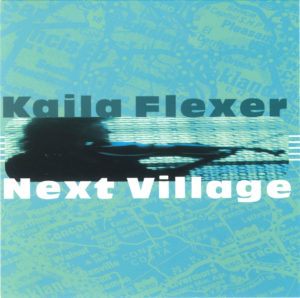
Kaila Flexer is a violinist, composer, producer and Artistic Director of Worldview Cultural Performances, an Oakland-based non-profit arts organization. She is best-known locally for having founded and produced Klezmer Mania!, a much-loved annual Bay Area Jewish music event for over 10 years (1989-2002). She has been at the helm of bands such as Third Ear, Next Village, The Klezmer Maniax and Kaila Flexer’s Fieldharmonik, ensembles that feature Flexer’s original material. As a composer, her work reflects her deep respect for folk music, while showcasing her ability to forge new and expansive musical landscapes. She has performed both nationally internationally with her own ensembles as well as with groups including The Hollis Taylor-Kaila Flexer Duo , The Flexer-Marshall Duo, Club Foot Orchestra, The Composer’s Cafeteria, The Bay Area Jazz Composer’s Orchestra and KITKA (Bulgarian Women’s Vocal Ensemble). She has recorded two CD’s of original music for Compass Records (Nashville) to critical acclaim. Flexer, along with collaborating organization The Crowden School, were recipients of a 2005-2006 Creative Work Fund grant (link to Current and Past projects page—Xylem Folkestra). Her current project is Teslim, (link to Teslim page) a duo that performs Turkish and Greek folk music as well as original music by Hegedus and Flexer. In addition to performing, Flexer loves teaching both violin and composition and has a thriving studio in Oakland, where she lives with her seven-year-old daughter.





 Adam and David Moss began hearing Everly Brothers comparisons long before they officially joined their voices together as folk duo The Brother Brothers. But not even the late Phil and Don Everly, one of the greatest DNA-sharing duos in modern music history, could claim the kind of vocal symmetry Adam and David create. Harmonies just don’t get any closer than those sung by siblings who came from the same egg.