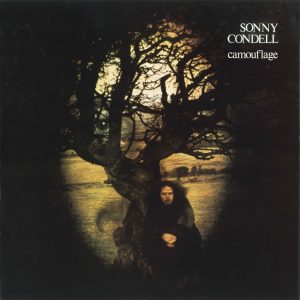
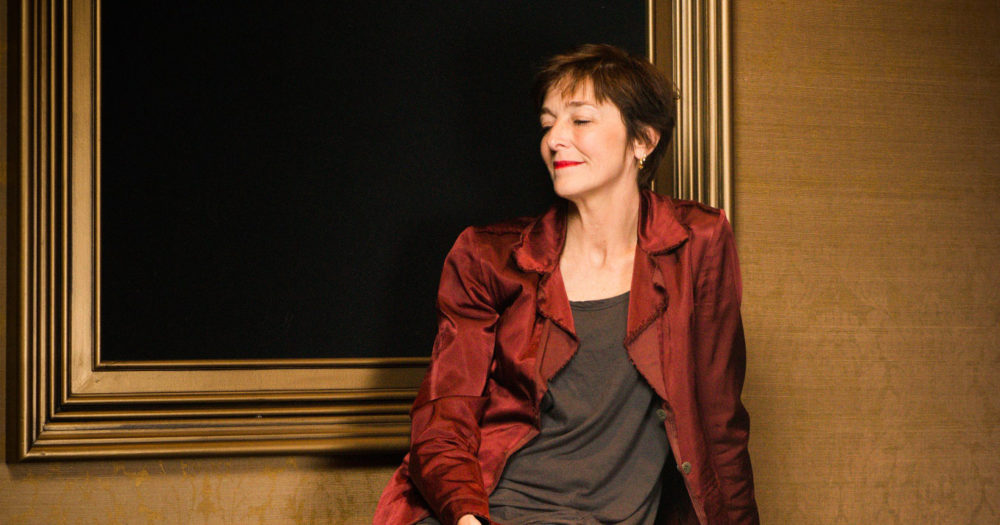
In a musical career spanning 35 years, from the heady days with Irish musical trailblazers Tir Na Nog, which landed him on the biggest stages in the world, to the truly fantastic Scullion, numerous solo albums, to his current incarnation with the band Radar, Sonny Condell is recognized as one of Irelands greatest songwriters. Originally released in 1977 on Mulligan Records, CAMOUFLAGE was Condell’s solo debut and is now regarded as a standard in Irish music. CAMOUFLAGE showcases Condell’s formidable abilities on the acoustic guitar, saxophone, percussion and as a vocalist and features guest musicians Paul Barrett (trombone), Greg Boland (acoustic and electric guitar, bass guitar), Fran Breen (drums, percussion), Ciaran Brennan (double bass), Brian Dunning (flutes), Jolyon Jackson (keyboards, cello), and Rosemary Taylor (backup vocals).
With a poet’s heart and a rockster’s soul, Luka Bloom is regarded as one of Ireland’s best-respected contemporary folk artists, having produced 20 albums since the 1970s, Bloom continues to push the boundaries of what his music can do, and the 2012/13 Heartman Tour proves he is still making provocative, poetic music that delves deep into the intricacies of the human soul and pulls out the nuggets and puts them in a song.
Like many who write songs, Luka’s orchestra of choice is the guitar. What makes his career a little different is his constant search for a new voice within the guitar. The guitar is the landscape on which the song is created, and he is forever probing that landscape for new inspiration. No effects, no gadgets. Time, effort and a whole lot of love bring forth new voicings within the instrument, and bit by bit, the songs come to life. And eventually they fly, bringing Luka with them to be heard in Byron Bay, San Francisco, Hamburg, or even Doolin.
Luka Bloom writes and performs songs and has done for four decades now. For a man of limitless passion for music, change, tradition and its lessons, he says of it all that “It’s all about the Song”.
That summer of love in 1969 was the first time Luka Bloom (known then by his birth name Barry Moore) set to the stage to support his older brother and renowned Irish singer Christy Moore and since then he has been bringing his unique, passionate sound to indigenous and international audiences on stages from the United States to Australia, and through every venue imaginable in his native Ireland (in turf bogs, record stores, up on a bike and on protest sites) Belgium, Germany, Switzerland and Holland (to name a few of the countries with avid fans) playing atop mountains, cycling onto stage and even supporting His Holiness The Dalai Lama in 2011 in Australia. Brought about by sharing a stage in his native Kildare with the Dalai Lama during his visit to Ireland. It was here the Tibetan Leader heard Bloom’s dedication song to his plight “As I Waved Goodbye” from Between the Mountain and the Moon.
The song was written to capture the moment in 1959 the Dalai Lama said farewell to his beloved city of Lhasa, his country Tibet, and his beloved people. Luka could never have imagined that this song would bring him to sing for three weeks with His Holiness in Australia. This has given Luka a simple motto for life; ‘Follow the song’.
Kevin Barry Moore, as he was named in the beginning, came from the land of St Brigid in Co. Kildare, Ireland. It was in a musical family he was brought up and his journey began through traditional music and the all important Song. It was soon clear that he was developing his own sound, one that centres around place and standing up for the rights of the land, yet is grounded in the poetry of the old traditional Irish Folk songs.
He moved from Ireland, first to Holland and then to Washington DC and New York City, USA and his song changed somewhat to a new sound for the Irish Emigrant as the sense of displacement in his lyrics mingled with a positive delight to be exploring the world outside the boundaries of Ireland.
On his way to New York in 1987 he decided to embrace fully the change of leaving the home land and became officially for the first time Luka (from Suzanne Vega’s song of the same name) Bloom (Joyce’s great Dubliner from Ulysses). Bloom by name and bloom by nature, the music and the man blossomed in New York and songs of love and loss such as Dreams in America and songs with humour and vivaciousness, with a nod to a new beginning such as An Irish Man in China Town sprang forth and Luka Bloom was firmly on the scene.
Luka Bloom has the power to bring audiences to a hush as his poetic lyrics bounce over melodies in a beautiful, captivating way. The same artist can rouse the spirit of the audience to the ceiling when he changes the tempo. His latest tour Heartman has been coupled with the release of the new album This New Morning which features songs such as You Survive and leave an everlasting message of strength and a celebration of the will and power of us mere humans.
Watch
“The definitively Canadian duo has an ear for pop hooks, but writes songs that sound warm and comfortable.” —NPR
Dala, the award-winning duo of Amanda Walther and Sheila Carabine, are releasing their fifth studio record, Best Day this June on Compass Records. With lush intertwining harmonies, the duo underscores the folk-pop album’s “life is short” message with accompaniment from piano, guitar, ukulele and minimal drums. The title track of the album is available as a single exclusively on iTunes with an accompanying video.
Throughout their career the duo have toured tirelessly, building their following the old-fashioned way, turning first-time listeners into instant, die-hard fans, winning 5 Canadian Folk Music Awards and a Juno nomination. Dala has played all over North America and for the highest profile music festivals, among them New Orleans Jazz Fest, Philadelphia Folk Festival, Denver’s Swallow Hill, the Lowell Summer Concert Series, Strawberry Music Fest, Sisters Folk Festival the and 50th Anniversary of the Newport Folk Festival in 2009 – where Dala were the only Canadian act invited to play. Last summer Dala hosted a PBS special primetime concert entitled “Girls From The North Country” which aired all over North America with multiple plays in Los Angeles, Chicago, Philadelphia, Boston Portland, Austin, Cleveland, Charlotte and more.
Dala is grateful, but they tend to measure the success of their records according to more personal benchmarks, such as how well a given record reflects their friendship and how it might enable them connect more effectively with their diverse audience of both the young and young at heart. Best Day is no exception. “We really feel this album represents all of the aspects of our personalities, individually and together,” Carabine says. Walther and Carabine underline their message beautifully by bracketing Best Day with ‘Life on Earth’ and ‘Still Life’; two songs that encourage listeners to view their lives as masterpieces in the making, regardless of the materials they’re given to work with.
Lyrically, many of the songs on Best Day tread a fine line between uncertainty and hope, often finding Carabine and Walther asking questions both believe can never be answered completely. “They’re the things we’re always grappling with, regardless of life’s highs and lows,” Carabine says, “but that’s the thread that ties all our music together.”
Nowhere is that more evident than on Walther’s, ‘Father’ and Carabine’s, ‘Good as Gold’, both of which deal with the most complex, yet assuredly impermanent relationship – the relationship between parents and their children. But even playful tracks, like ‘First Love’ and ‘Lennon McCartney’, carry the kind of emotional weight that whether a listener is passing from the wooly comforts of childhood into adulthood or recalling memories long since buried, the songs will stop them in their tracks.
What drew Dala together initially was their shared love of the absurd – a quirky, irreverent and occasionally self-critical brand of humor that comes out as clearly in their music as it does their onstage banter. “We go to some emotional places in our music,” Walther says, “Humor serves as a relief from that, and a way to give the audience permission to laugh.” The more spontaneous the dialogue between songs, Carabine adds: “The better the performance and the more memorable the evening.”
That’s exactly the quality Dala hope to capture with every song they write and record – a high standard, perhaps, but one they credit producer, Mike Roth, for holding them in the studio. Roth shares many of their most treasured influences, The Beatles, Joni Mitchell and Bob Dylan among them. Additionally, having produced all of their records to date, he’s uniquely suited to help the duo capture their evolving vision as more recent influences, American folk singer, Eliza Gilkyson, Radiohead and Fleet Foxes, for example, come to bear on their music.
Watch
Songwriting has always been a soul-baring exercise for British singer-songwriter Bobby Long. From the dark themes of his earliest work through to the thought-provoking subject matter he has traversed since then, his body of work is at its core captivating and emotionally raw. Whether mining the depths of despair and alienation or exploring spirituality, apathy and even more mundane topics like love and passion, his songs are word pictures that transfix and transport.
For his fourth album, Sultans, Long has chosen a somewhat different approach, from conceptualization through the recording process itself. Rather than working within the confines of a producer’s tight schedule, he chose to work with multi-instrumentalist and close friend Jack Dawson, with whom he had toured and collaborated on the 2012 EP The Backing Singer, and they took their time. “Usually with other producers I have worked with, we would meet just before recording. The relationship blossoms just as we record and work together, and by the end, we are really close. With this album, working with Jack especially, the friendship was already so deep, and there isn’t another musician I have played with as much as Jack, so everything was intertwined.”
As a result, Sultans as a whole is unlike Long’s three previous releases, A WINTER TALE (2011), WISHBONE (2013) and ODE TO THINKING (2015), beginning with the songwriting and preparation. “I started writing the songs a year before and did a lot more pre-production than usual,” he explains. “When I write, I usually just record my vocals and guitar, but this time I ended up using drum loops, played bass lines and spent a long time working on guitar parts and harmonies. I usually don’t go into too much detail because I would want whoever played bass or drums to come up with something naturally, but this time, I really wanted to work on the greater detail. When it came time to record, Jack (the producer) and Dave Lindsay (sound engineer) were incredibly respectful of the demos I had concocted. They honoured the originals and advanced them. Dave, who played drums on the album, actually liked some of the drum loops so much that he copied some of the fills. His drumming is a really important part of the album. It sets the tone and drives us forward.”
The trio recorded at Lindsay’s Country Club Studio in Brooklyn over a one year period. “We became a little band during the recording,” says Long. “I played guitar and sang, Dave played drums and Jack played bass. We basically recorded those parts as a band live. We would jam songs out and work things out. We then built the song up by adding parts and using other musicians/magicians to play different instruments. Having the record based around the natural feel of a live performance really added a human element to the album and set the earthy feel, which I really felt was important. As much as I wanted to experiment and feel the freedom to add anything and everything, we all felt it was incredibly important to stay true to our own playing and build from there. Just like the Beatles would have done.”
The Beatles actually loomed large in this project according to Long. “Me and Jack are massive Beatles fans and other bands like ELO and other psychedelic music really was a huge factor in our approach,” he explains. .”We would set up each day to do a new song, play it through a bunch, smoke, drink and then attack it. The results were always so varied and dynamic. It was a very liberating feeling. We made playlists and spoke about different techniques used on albums we loved from the 60s to present day. Nothing was off the table. No music was too weird or too un-cool.
“When you write a song, you always have the greater picture in your head. Your imagination runs over the tracks, and the songs take on all sorts of forms. The sounds of this record are the closest to my imaginings that I’ve ever come before, and this record is without doubt the closest I’ve come to matching what is in my head. Ironically, it came through working with a great friend of mine and feeling free to experiment because of our closeness before we went in the studio.”
Sultans takes its name from the first and last tracks on the album—essentially “Sultans Part 1” and “Sultans Part 2.” “It was a song that was originally just drums, ukulele and a sample that Jack gravitated towards,” Bobby explains. “I feel it sets the tone for the entire album and ends it quite nicely as well. We were obviously inspired by Sgt. Pepper when coming up with the idea of the same start and end point. It gives the album a concept, and although the songs are quite similar, there are differences in dynamics and playfulness.
“Also, vocally this album was different for me. I was really inspired by John Lennon’s vocals and the rawness he would get, especially on early Beatles records or his solo stuff. Letting emotion get in the way and kind of showing my true colours. I wanted to be brave, especially on the deeply personal songs so I just left it all out there.”
The songs that embody the album are varied in subject matter, some mining universal themes Long has touched on since the beginning like love and death, while other topics can be found on the 6PM news on a daily basis. “Some of the songs are from the standpoint of watching from the outside and putting myself in that situation,” he explains. “Being displaced and trying to understand others in certain situations creates patience and brotherhood not only in a song, but in real life. I think I wrote these songs with greater imagination. I was feeling a lot of frustration towards religion and religious establishments for one thing. I didn’t understand the depth of my frustration until I noticed the same issues arising again and again. My wife was expecting our first child during most of the making of the album, and my son was born pretty much right as we finished. Maybe that had something to do with certain frustrations—I don’t know. I do know that the lyrical content of the songs came from my experiences throughout my life, rather than just from the year before recording it like usual. I suppose my outlook has changed, but my writing is always in some sort of evolutionary stage. At the moment, I’m just harboring ideas. In the past, I’d write a song a day. I’m always changing it up.”
If you’re looking for some truth,
you’ve lost it,
get saved,
take the furthest thing that you can’t prove,
believe it,
you’re spared,
or try to make some sense of it all
from “Mazerati”
Bobby Long was born in Wigan, near Manchester in Northern England and moved with his family when he was two years old to the town of Calne in the countryside of southwest England known where he grew up. Dyslexic as a kid, his learning disability kept him from fully expressing the thoughts in his head until an observant teacher introduced him to the poetry of Dylan Thomas and suddenly the world of literature was his playground. His musical parents provided a constant flow of music in the house, from the Beatles to Bob Dylan to the blues, but he resisted the music bug until he was 16 when he was given a guitar and began writing songs.
At 18, he enrolled at London Metropolitan University where he studied sound and media for film (another passion) and became a regular on the local open mic circuit. Often playing five shows a week, he worked at developing his own unique guitar style and learned how to sing while showcasing his original songs. There he also fell in with a tightly-knit community of fellow musicians and actors who would become his close circle of friends. Among them was musician Marcus Foster, with whom he wrote a song called “Let Me Sign,” and soon-to-be movie star Robert Pattinson, who would sing their song in the 2008 blockbuster film Twilight.
The notoriety surrounding the film gave him the opportunity to come play his music in America, and he essentially never left, settling in New York City as home base for his life and career. Long headlines his own shows and has supported major artists, among them Steve Winwood, Iron & Wine, Rodrigo y Gabriela and Brett Dennen, as well as playing high profile festivals like Bonnaroo, Austin City Limits, the Dave Matthews Caravan, Bamboozle and England’s venerable Glastonbury Festival.
In between albums, he channels his writing skills into poetry and has now published two volumes of his work, Losing My Brotherhood (2012) and Losing My Misery (2016). For Losing My Misery he also created the original illustrations. “I feel like a better songwriter after I write poetry,” he says. As for another book, he says, “I have a few things I’m stuck with or half way through. Sometimes you’ve got to wait for a bit of inspiration or timing.”
Sultans represents Bobby Long’s continuation of his commitment to creating music that both challenges and entertains. “It’s about the whole body of work for me. It’s all part of the greater. I don’t think you can define anyone by one album. I certainly cannot. The good, bad, successful, underappreciated–it doesn’t matter. It’s about expressing yourself and feeling better for it. I want to do many more albums…no matter what.”
Watch
“Susan Greenbaum’s voice is a delight…strong, clear, and drenched in pleasing harmonies. A startlingly adept writer…ripe for national airplay.”–Billboard
Susan Greenbaum committed the first sin of musicians: She quit her day job. After working as a corporate executive in Fortune 500 companies, she traded her power suits for performing and songwriting. Since then, the Harvard graduate is poised for success, having won several national songwriting awards, including the Smithsonian Songwriters Award, The Philadelphia Songwriters Project and released four albums independently. Now, Greenbaum is releasing This Life, her most insightful and engaging songs to date, distributed by Compass Records Group on January 31st. Not only were the songwriting trophies a boost to Greenbaum’s career change, she won a national competition to be the opening act for Jewel and enjoyed overwhelming success on the tour, welcoming thousands of new fans. Prior to This Life, her most recent album of all-original songs, Hey, Hey, Hey! was lauded by Billboard for having songs with “hooks that drill into your brain; smart, organic production; and lyrical substance to make the music an interactive experience.” Her success has not come without sacrifice, as the tragedy of personal loss lends itself to the depth to Greenbaum’s songwriting. The album-opening “This Life” is a reflective letter to her brother who passed away from brain cancer; she wrote the song a week before her wedding. “I was thinking about how he wasn’t going to be at my wedding but maybe he was, maybe he is somewhere safe and healthy and not in pain and able to at least look down on all of us. That’s the whole idea of the song—a conversation with him.” Greenbaum instills a glimpse of hope and recovery in her music, even in songs inspired by tragedy.
The album is far from somber and includes high-energy singles such as “Big,” a lively recipe for fame and fortune. “It’s very me, it’s funny and cynical and it’s unafraid to really look at things and be blunt and honest and there’s positivity in it and there’s reflection in… It’s like, ‘Chop chop! Let’s get to it, let’s get famous!’” The album includes lighthearted love songs like “Penny on the Sidewalk” and even a novelty bonus track lamenting the consequences of the indecision of squirrels.
Recorded in Nashville at Compass Sound Studios and produced by Garry West and Alison Brown, This Life includes such esteemed musicians as multi-instrumentalist Stuart Duncan on fiddle, Todd Phillips on upright bass, and the banjo of Alison Brown on the tracks “Virginia, the Home of My Heart” and “The Squirrel Song.” Says Greenbaum of the recording process, “Garry and Alison are very right-brained as well as very left-brained, and I am too, so we worked very well together. I had no idea what was going to happen, but it was one of the smartest risks I’ve ever taken!” Greenbaum draws big, enthusiastic audiences who delight in her lively, diverse and powerful performances. Greenbaum has toured as a solo artist, playing such storied venues The Bottom Line and The Bitter End in NYC, The Birchmere, Bethlehem Musikfest, Floyd Fest and Rams Head Tavern. In addition to touring with Jewel, she performed an acoustic set with Dave Matthews Band violinist Boyd Tinsley; sharing bills with Jill Sobule; and opening for Kenny Loggins, Patty Griffin, Dar Williams, Janis Ian, Jim Messina, Todd Snider, Tuck and Patti, Iris DeMent, Lucy Kaplansky, Lloyd Cole and Catie Curtis. Susan also endorses W.L Gore’s Elixir Strings.
Unafraid, brazen and under five feet tall, the dynamic Greenbaum shares an empowering message: “If you have something you know you love to do and you want to do it, you can do it! Follow your dreams!”
When Maria Quiles (vocals and guitar) and Rory Cloud (vocals and guitar) met in 2011, both were adrift. Maria had quit her job, given up her San Francisco apartment, and moved in with her uncle in order to pursue music full-time. Rory had left behind a stable schedule of gigs and music lessons in Southern California to seek a new music community elsewhere. He eventually wound up living out of his Toyota Corolla in San Francisco, where he first heard Maria at an open mic. “As a lead guitar player, I could immediately hear myself in her songs.” Rory remembers.
Several years of touring and spending nearly every day together allowed Quiles & Cloud to develop a unique sound—one that is characterized by soulful melodies, close harmonies, and interweaving guitar lines that owe as much to jazz and classical music as to folk and bluegrass. The addition of Oscar Westesson (upright bass) in 2013 pushed them even further as songwriters, resulting in darker, more complex, and more dissonant arrangements.
Their sound has struck a chord with audiences all over the country. Folk Alley has lauded the group’s “continued ability to combine subtle precision with stark grit and creative exploration.” Acoustic Guitar has called them “a compelling new voice on the Americana scene.” Quiles & Cloud have now played hundreds of shows, won the 2014 FreshGrass Duo Award, and caught the attention of GRAMMY Award-winning banjo player Alison Brown—who produced their third album SHAKE ME NOW, which comes out on Compass Records 3/17/17.
SHAKE ME NOW is stripped-down, yet dense. There are musical and lyrical traces of the blues, bluegrass, folk, rock, soul, and classical music. Their songwriting stands out on the title track, “Shake Me Now” as well as the upbeat and hopeful “One My Way Tonight”. In addition to their original songs, there are reinterpreted versions of the traditional blues number “Deep Ellum Blues”, the traditional folk tune “Worried Man Blues”, and Bob Dylan’s “You Ain’t Goin’ Nowhere”. One gets the feeling of being on a widescreen road trip through America’s past and present, with multiple eras and traditions folding in upon each other. The result sounds familiar and roadworn, yet completely new—a quality that Quiles & Cloud share with some of American music’s greatest innovators.
Quiles & Cloud have already traveled far. As they see it, though, this is only the beginning of a lifelong journey—one of exploring connection, deepening their partnership, and examining the threads that tie us all together.
Darden Smith is a singer-songwriter based in Austin whose thirty-year career redefines what it means to be a musician. In addition to fifteen critically acclaimed albums, Smith continues to break new ground using the craft of songwriting in education, entrepreneurship, and in service to others. He is the founder and creative director of SongwritingWith:Soldiers, a nonprofit that pairs award-winning songwriters with veterans and service members in retreat settings to craft songs about combat and the return home.
Smith began writing songs the age of ten, and has been recording since 1986. His music remains rooted in the songwriting traditions of his home state of Texas, while reflecting influences of rock, folk, and Americana rhythms and melodies. Described by All Music Guide as “a singer-songwriter blessed with an uncommon degree of intelligence, depth, and compassion,” Smith continues to write songs and tour across the U.S. and Europe. His latest album, Everything, will be released in April 2017 on Compass Records and features musicians Roscoe Beck (bass), JJ Johnson (drums), Charlie Sexton (guitars), Michael Ramos (keyboards) and David Mansfield (mandolin, pedal steel and strings), with vocal help from James House, Beth Nielsen Chapman, Bonnie Bishop, and Kelly Willis. Recorded in Austin during August 2016, the collection features songs written by Smith and with collaborators House, Radney Foster, Matraca Berg, Bruce Robison, and Jay Clementi.
About Everything, songwriter Mary Gauthier says, “Darden Smith has made a beautiful new record, filled with hope and love and heartfelt tenderness. These songs are medicine for a world gone wrong. Give a listen, let them wash over you, receive the balm. This music is magic, and who doesn’t need a little magic right now?”
Smith’s career evolved in unexpected directions when he began to explore the creative potential in what he calls “writing songs with people that don’t write songs.” He founded The Be An Artist Program in 2001, encouraging students in the US and Europe to discover their own creativity and passions. After a decade spent tapping the transformational possibilities of collaborative songwriting in a range of contexts—from homeless youth at Covenant House to HIV-affected villagers in South Africa and Botswana—Smith founded SongwritingWith:Soldiers in 2012.
The collaborative songwriting process at the heart of SongwritingWith:Soldiers offers veterans “a creative means to cathartic healing” (Anne Marie Dougherty, Executive Director of the Bob Woodruff Foundation). To date, the program has held more than thirty events at locations in Texas, New York, New Jersey, California, Maryland, Florida, Colorado and Virginia, and has expanded to include retreats for military families, military couples and student veterans. The music created during retreats and one-day workshops is shared online and through social media and concerts to raise awareness and help bridge the divide between military and civilian communities.
Smith served as Artist-In-Residence at Oklahoma State University’s Institute for Creativity and Innovation and the Riata School of Entrepreneurship (2011–2013), exploring the connections between art and business thinking with students and faculty. He leads songwriting workshops in the US and the UK, and works with major companies in key areas (conflict resolution, team building, innovative thinking) using songwriting to inspire creativity and collaboration within the traditional work environment. Smith has delivered keynote speeches, contributes to Huffington Post’s Arts & Culture Blog, and has recently completed a book manuscript called The Trick: Surviving a Life in Creativity.
One of the most musically adventurous bands to come from the roots scene in the past decade, The Duhks return to the stage is definitely a cause for celebration. Hailed by The New York Times as one of the artists at the forefront of the neo-folk movement, The Duhks (pronounced Ducks) have won admirers as diverse as David Crosby, Dolly Parton and Doc Watson.
No band epitomizes the polyethnic strands of modern folk music better than The Duhks. Since forming in Winnipeg in 2001 The Duhks have created a dynamic blend of old-timey, French Canadian and Celtic music punched up with shades of blues, soul and driving Afro Cuban rhythms that leaves festival crowds on their feet. Over the course of 4 critically-acclaimed albums the band has earned Juno and Grammy awards and nominations and have played a significant role in the neo-folk revival.
On Beyond the Blue The Duhks are in the best form of their 13 year career. Rejuvenated by a two year hiatus and energized by the return of vocalist Jessee Havey and the addition of new members, fiddler Rosie Newton, drummer/percussionist Kevin Garcia, and guitarist/bouzouki player Colin Savoie-Levac, The Duhks founder Leonard Podolak found an amazing pallet of inspiration for the new project. “All of the people who have been in the band over the years, including non-touring founding members Tania Elizabeth and Jordan McConnell(who both appear on the album) have had a hand in shaping our sound and direction. The goal with the new record was to draw on everything we’ve learned over the years and everything we know about where we want to take the music now and create something as fresh, exciting and forward thinking as possible.” Toward that end, the band turned to the rising production team of Mike + Ruthy (Mike Merenda and Ruth Unger of The Mammals), who brought a progressive approach to production that was still firmly rooted in the traditions of folk music.
Musically, the new project is reminiscent of 2006’s Grammy-nominated Migrations, but with a sound that is even more dense and grittier than 2008’s Fast Paced World. The album opens with the title track, a gorgeous song by Beth Nielsen Chapmanand Gary Nicholson that begins with the bell-like drone of Leonard’s claw hammer banjo and the ethereal sound of guest Charlie Rose’s lap steel before giving way to Jessee’s expressive alto, perfectly complemented by Tania’s harmonies. On “Banjo Roustabout” electric guitar and drums bring out the more aggressive side of the band’s sound while “Suffer No Fools” is a beautifully rendered acoustic waltz ornamented by banjo, strings and percussion and beautifully sung by Jesse and Tania. Taken as a whole, Beyond the Blue represents a group of musicians at the peak of their powers, the music shaped by their collective experience of years on the road and driven by the sheer joy and inspiration that comes from reuniting and rediscovering that magic that drew them together in the first place.
“The inventive Canadians in The Duhks are widely beloved for their smooth blend of traditional roots music, bluegrass and soul which they inject with well-placed Afro-Cuban and Celtic influences” —NPR
Love and fear are two of life’s greatest motivators. Both played a key role in taking Hilary Perkins (aka Nell Robinson) back to the musical passions of her youth and on to pursue a recording and performing career.
Described variously as “a modern-day Patsy Cline” and one of the “freshest voices in roots music,” and compared to early Emmylou Harris, Dolly Parton, and Hazel Dickens, Perkins has come full circle on her musical journey. Singing since she was a young child in Alabama, whether in the church choir or the colorful backyard musicals she orchestrated with her friends, Perkins paid homage to her Southern roots by taking the name of her grandmother, Nell Robinson, when she moved on to professional stages and studios.
Those roots were two-edged. One side was rich with storytelling, old world traditions, and a time-out-of mind way of life that Perkins found resonant and enchanting; the other bound by social mores rewarding conformity and discouraging self-expression–whistling women, cackling hens; speak when spoken to; skeletons belong in the closet. Plus, despite very progressive parents, she was raised on military bases where there were serious consequences for not toeing the line. “At a certain age,” she recalls, “ I just went underground.”
Consequently, singing ultimately became a private endeavor, an emotional outlet, and something she did alone, on her own. “It was a way for me to be completely myself, completely authentic, and free myself from certain emotional messages.”
While Perkins went on to work in political organizing and fundraising, she never lost sight of her love of music. In her mid-40s, after “25 years of singing by myself in my car,” she became “intrigued by fear, by what I was afraid of, and exploring it,” Perkins says. “I didn’t want it to get in the way of living.”
Bracketing that motivation was one of love, a force Perkins found even more powerful. On the verge of celebrating an important anniversary with her husband, she mustered the courage to hire a local country band and sing a special tune for him in front of friends and family. “I was terrified; it was like an out of body experience;” she recalls. Her husband got up and joined her for the last chorus and their friends went nuts. “And what happened to me was I didn’t want to stop.”
Not only didn’t she stop, but in moving forward found a deep connection with her audience and a remarkable onstage charisma that served to forge and foster it.
And so with love and fear as powerful fuel, Perkins closed the gap and returned to a place of farmhouses and country stores, backwoods wisdom and back porch ghost stories, fireflies and family spirit that echoes with the sounds of Hank Williams and Johnny Cash.
The result is what one critic calls “a timeless, sepia-toned world at the intersection of bluegrass, country, folk, and Americana.”
Inspired by tradition but not bound by it, she finds value in the past, in the lives of her elders and those they knew, in the rich tapestry of tales they told and which she in turn re-tells in her own fashion as Nell Robinson. Perkins speaks of stories that “foster this deep connection to people and place, so much so that sometimes I miss a past I wasn’t even present for. These histories occupy me and music is a voice for expressing that part of myself.”
“Singing is my current mode of subversion. There are all sorts of things I still I feel I am ‘not supposed to do,’ and at this point in time, I relish breaking free of limits I have felt all my life.”
Whether playing with musical partner Jim Nunally or backed by her All-Star band of John Reischman and the Jaybirds, Perkins is equally at home. Her side-projects, from the poignancy of Soldier Stories to the whimsy of The Henriettas, further attest to the breadth and ambition of the youthful musical passions she let flower.
In performance, she’s interested in bridging worlds and breaking down the barriers between performers and audience. She invites fans and ghosts alike to be part of the show. Everyone is welcome.
A fiddle prodigy who received a GRAMMY nod for his Compass Records release, PORTRAITS IN FIDDLES, Mike Barnett returns with a new album of 14 duets he’s titled + 1. The album, originally slated for a fall 2020 release, was delayed when Mike suffered a brain aneurysm last summer at his Nashville home. Friends and fellow musicians rallied, and Mike’s friend and fellow Kentucky Thunder band-member Jeff Picker started a GoFundMe to assist Mike and his wife, violinist Annalise Ohse, through two successful surgeries and an initial round of rehabilitation in Atlanta. Annalise and Mike are currently doing an intensive round of rehabilitation in Chicago, where, he tells The Bluegrass Situation, he is working to “reconnect his brain to his fingers,” and is “excited about getting the music on ‘+ 1’ to the fans and community that have offered him so much support.”
Mike says: “Here’s a good old Bill Monroe classic… oh wait, except for the ‘A’ part. I put one note per ping pong ball and played lottery bingo for that part… just kidding, though it might sound that way. I sometimes enjoy taking tunes outside the box, but still maintain some semblance of where it came from. This is a hybrid of ‘outside’ and ‘in’ based on Bill Monroe’s ‘Wheel Hoss.’ Grounding this in the tradition of banjo/fiddle seemed appropriate. Cory Walker’s instincts and diverse musical pallet make him one of very few people who could tackle this.”
Though he’s a Nashville native who became a professional player at a young age as part of Jesse McReynolds’ band, Barnett can still be considered among the recent crop of breakout talents from the Boston roots music scene that produced the likes of Lake Street Dive, I’m With Her and The Deadly Gentlemen, a newgrass outfit where he held fiddle duties from 2011 to 2014. Now relocated to Nashville where he holds down fiddle duties as a member of Ricky Skaggs and Kentucky Thunder, Barnett has been working on +1 over a period of four years. He started recording when he was still living in NYC and was collaborating with fellow artists from his years in the Berklee Music Scene, including Sarah Jarosz; later tracks came once he moved to Nashville and include duets with fellow Nashvillians Sierra Hull, Molly Tuttle and Dominic Leslie in addition to Skaggs.
Drawing on the deep virtuosic talents of the cast of players, the album’s tracks flow seamlessly from traditional American tunes to newgrass with elements of Celtic music, pop and jazz-tinged improvisation thrown in for good measure. From an instrumental sea shanty performed on fiddle and saxophone (“The Breath and the Bow” featuring Eddie Barbash) to “hopped up bluegrass with a little extra thrown in” (“Hybrid Hoss” featuring Cory Walker) to the plaintive vocal melodies of “Righteous Bell” and “Hollow City,” both featuring Sarah Jarosz, + 1 is a dynamic collection that spans cities, countries and genres.
Barnett always intended + 1 to be a studio project. Inspired by some of his favorite duet albums, including two Compass Records releases from the early 2000s – Darol Anger’s DIARY OF A FIDDLER and THE DUO LIVE: AT HOME AND ON THE RANGE with Mike Marshall – coupled with the realization that he enjoyed the musical freedom the duo configuration offers, Barnett began plans for the album. A lot of the music grew out of the time Barnett spent living in Brooklyn.
It was living and gigging in New York City that Barnett started playing a lot as a duo. “The nature of playing around the city is that there are a lot of small venues and I had a lot of friends I enjoyed playing with who were in and out of town,” he says. “It’s one of my favorite contexts to play music in, but it’s a challenging context to record in, especially for a fiddle, which in general, in band context, plays the role of the melodic instrument. In a duo context, when another person is soloing, you have to fill out the music in a different way and get creative there. It was something I thought would be nice to write some music specifically for.”
While in NYC, Barnett’s girlfriend, now wife, got a job offer in Austin, TX. “I decided to follow her but I wanted to stay connected to my NYC friends, so I used writing tunes in these duo contests and going back up there to record, as a way to keep in touch with my friends and keep making music in that scene From there I got a call from Ricky Skaggs to audition for his band.”
Relocating to Nashville, Barnett soon began playing with other young players in the area, including Sierra Hull and Molly Tuttle, and brought them into the project.
“I was playing with different folks around Nashville – old friends and new friends,” says Barnett. “I got to a place with a nice cohesive list of songs that represented different genres of music that I’ve spent time digging into and that I love so much, and a collection of people that I feel proud to know and be friends with.” The project lives as “a nice snapshot in time, a time capsule,” he says. Barnett also includes a gorgeous duet featuring Ricky Skaggs on clawhammer banjo and vocals on the hauntingly beautiful medley of old time tunes cleverly dubbed “Little Sisters Melodies.”
With the perspective of having completed the project, Barnett muses, “There’s always the feeling as an artist of looking back on something you started long ago where you want to redo this – it’s kind of nice to look back and see it as a moment in time and let it be at a certain point.”
+1, with its musical breadth, stunning virtuosity and deep musicality, is an album that is sure to stand the test of time and assert Barnett’s place as one of acoustic music’s greatest fiddle players and musical visionaries of his generation.