
Pierce Pettis, adored by both critics and public alike, is one of this generation’s most masterful songwriters. His music is distinguished by his uncanny ability to capture universals in human experience by drawing on the humor and trials in daily life. Beautiful melodies, strong guitar work, and Pierce’s rich vocals are a constant throughout his body of work.
Pettis has performed in 49 of 50 states as well as in Canada and Europe, appeared on American Public Radio’s Mountain Stage, been featured on National Public Radio’s E-town, Morning Edition and World Cafe … appeared on VH-1, CBS News, and the Nashville Network.
During his long career Pettis has been a writer/artist at the legendary Muscle Shoals Sound Studios in Alabama and a staff songwriter for Polygram/Universal Music in Nashville. Artists covering his songs range from Garth Brooks, Art Garfunkel, and Dion to Clair Lynch, Tim O’Brien, and Joan Baez. After three critically acclaimed albums on Windham Hill/ High Street, Pettis joined Compass Records in Nashville, releasing five albums —including “That Kind of Love” (2009), which received rave reviews from XM/Sirius Satellite Radio, Paste Magazine, Performing Songwriter, American Songwriter, The (London, UK) Sunday Express . . . to name a few. In 2014, he joined a co-effort with Kate Campbell and Tom Kimmel to release “New Agrarians —Songs and Stories of the Southland”. Pettis also appeared on the 2013 release, “A Very Blue Rock Christmas” along with Ruthie Foster, David Wilcox, Terri Hendrix, Sara Hickman … and many others. “Father’s Son”, his new solo project for Compass Records Group was released in January of 2019 to widespread critical praise in the US, UK and Europe.
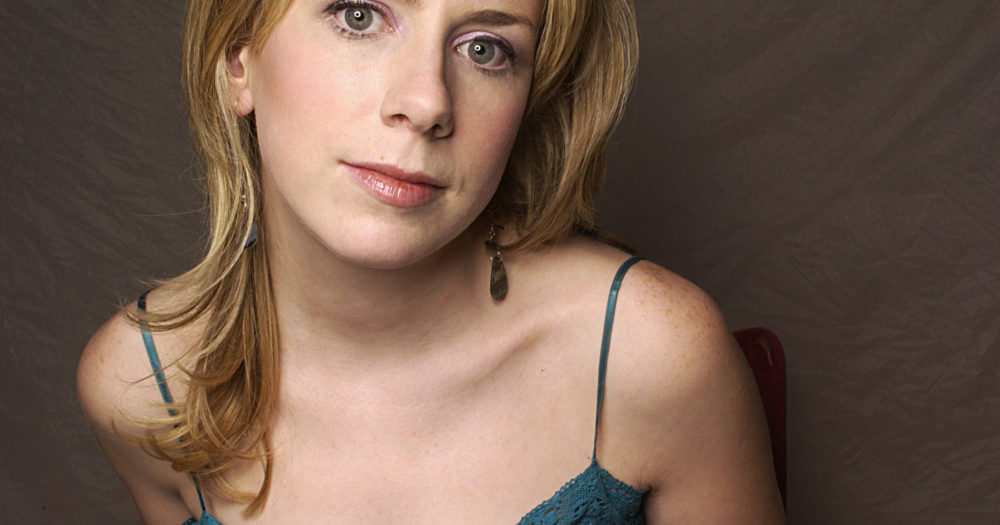
Star quality is a rare phenomenon — a bewitching magnetism impossible to define, yet when present, we recognize it instantly. Singer and traditional musician Muireann Nic Amhlaoibh possesses that level of magic, mesmerizing audiences world-wide since she joined forces with scintillating Irish music ambassadors Danú in 2003.
The Cork Evening Echo’s Paul Dromey hailed Muireann as “a real find,” and the Danú albums which feature her — The Road Less Travelled (2003) and When All Is Said And Done (2005) — drew lavish praise from critics in Ireland and beyond. “An accomplished vocal talent in both Gaelic and English, her singing has a rich fluent quality,” said John O’Regan of Irish Music Magazine. Reviewing Danú in concert for The Irish Times, Siobhán Long singled out “the balance Nic Amhlaoibh achieves, armed with one of the earthiest and most distinctive voices, not just in traditional circles, but anywhere.”
March 14th marks the US release of Daybreak: Fáinne An Lae, Muireann Nic Amhlaoibh’s enchanting debut solo album on Compass Records. This exciting and eclectic 12-track collection showcases Muireann’s sparkling vocal talent, along with her consummate artistry on both flute and whistle. Most of all, it casts light on her intuitive ability to research and tastefully select from both the traditional and contemporary music repertory, re-interpreting and delivering her chosen songs and tunes with heart-warming eloquence.
Contemporary compositions from Richard Thompson (“Persuasion”) and Gerry O’Beirne (“Western Highway” and “Isle of Malachy”) flow seamlessly into traditional songs such as “Free and Easy” (learned from the singing of Róisín White), “Slán le Máigh”, “The Emigrant’s Farewell,” “An Spealadóir,” “Banks of the Nile,” the lovely lullaby “Seoithín Seothó,” and a heartfelt rendition of “The Parting Glass.” Muireann’s flair as a traditional instrumentalist is showcased on two sets of tunes.
Musicians making guest appearances on Daybreak include Danú colleagues Oisín McAuley and Eamon Doorley; guitarists Gerry O’Beirne, John Doyle, Tony Byrne, and Shane McGowan; Scottish singer Julie Fowlis; and percussionist Billy Mag Flohinn.
A native Irish speaker, Muireann Nic Amhlaoibh spent her formative years steeped in the music, song, and culture of the West Kerry Gaeltacht, where her fiddle-playing father Feargal was a major early influence. As a Fine Arts student in Dublin, and later Limerick (she holds an M.A. in Traditional Music Performance from the University of Limerick), she was a familiar and sought-after participant on the traditional music session circuit there. Now a regular contributor to television and radio programmes at home and abroad, Muireann Nic Amhlaoibh was featured prominently in the recent “Highland Sessions” BBC television series, which celebrated the best of Irish and Scottish traditional music and song.
Self-produced, Daybreak is an engaging and expressive debut, crystalline in clarity and dazzlingly beautiful from beginning to end. Even amidst the current widespread renaissance in traditional Irish music, the work of Muireann Nic Amhlaoibh shines out like a beacon. Her approach to her craft is thorough, fashioned from sterling technique and a comprehensive understanding of the music’s roots.

Many ties bind our own musical traditions to those of Appalachia and points west. The Unwanted is a beautifully loose-limbed celebration of those cross fertilizations, with an inquisitive ear cocked towards the future too. – Irish Times
“It is the best of the barley from both the Old World and the New, a first class and sometimes a very particular interpretation of a great selection of songs (and some tunes).” – Folkworld
The Unwanted is a group consisting of Cathy Jordan, Rick Epping and Seamie O’Dowd. Between them, they encompass a vast range of the music of Ireland, America, and other places geographically and culturally linked to these lands that encircle the Atlantic Ocean. From the rich traditions of both sides of the Atlantic have come the source and inspiration of the music of The Unwanted—three Sligo-based musicians, each with exceptional talent and a lifetime dedication to their music.
The songs and tunes of the Atlantic Fringe—the combined traditions from Ireland to Appalachia and beyond—are the result of generations of movement and migration, of leave-taking and homecoming, back and forth across the ocean in an endless tide of cultural exchange. Lyrics and melodies borrowed from one land wash ashore on another, only to return again later transformed, peopled with new characters and set in different modes.
Roscommon born Cathy Jordan, lead singer for acclaimed group Dervish, moves effortlessly and with soaring voice between Sean-nós, Appalachian ballad and contemporary folksong, lending rich accompaniment on bodhrán and tenor guitar. Her engaging stage presence and easy interaction with the audience turns a simple concert into an evening at home among good friends. Sligo native Séamus O’Dowd (guitar, fiddle, harmonica) grew up steeped in the tradition of Sligo fiddling, early on expanding his repertoire to include the New World traditions and today he is as accomplished playing blues on slide guitar as he is playing jigs and reels. Seamus is well known both from his years with Dervish and from his performing with the best of Irish traditional musicians such as piper Liam O’Flynn and accordionist Máirtín O’Connor.
Rick Eepping (harmonica, concertina, banjo, jaw harp), a native of California, has been moving back and forth between Ireland and the United States for over 35 years and has been playing the music of both lands since childhood. Having played with musical greats as varied as Bill Monroe, Texas bluesman Mance Lipscomb and Irish accordionist Joe Cooley, Rick brings to the group a wealth of experience and authentic style.
Together, The Unwanted demonstrate a deep understanding and appreciation of the music of both the Old World and the New, and together they have created a seamless fusion of these traditions, showing that the process of transformation arising from the musical ebb and flow along the Atlantic Fringe continues today. Wherever they perform, The Unwanted are finding that they are welcome and very much wanted, indeed.

“A voice that’s both awestruck and tender”
—The New York Times
‘Angels Without Wings’ is an album of original compositions glowing with special guests from the worlds of folk, pop, rock and bluegrass. Featuring collaborations with Mark Knopfler, King Creosote, Jerry Douglas, Tim O’Brien, Karine Polwart, Louis Abbott (Admiral Fallow) Julie Fowlis and more.
When Mark Knopfler and Jerry Douglas offered to play on Heidi Talbot’s new album, they thoughtfully recorded their parts in several different styles – some were instantly recognisable, others more low-key. Talbot’s husband, producer and bandmate John McCusker joked, “you’ve got the best guitar players in the world and we’re blending them in?” But both musicians knew that for Talbot, the song always comes before the name.
Subtlety is Talbot’s magic ingredient – from her gossamer voice to the delicate re-working of traditional and contemporary material that earned her rave reviews for her 2008 breakthrough In Love And Light. The girl from Ireland’s Co. Kildare, who spent several years in New York as a member of the Irish-American supergroup Cherish The Ladies, slips effortlessly between musical worlds but retains a personal modesty rooted in traditional folk.
Talbot began writing songs on her 2010 album The Last Star. In just two years she’s become a master of the art, sometimes composing alone, sometimes with McCusker and Boo Hewerdine (who form her touring band). Kenny Anderson (King Creosote) became a new creative foil after the pair discovered a mutual admiration:
“He was asked to pick his fantasy band for The Independent and he picked me and Morten Harket from A-ha on joint lead vocals,” Heidi laughs. She conceived the melody for Button Up – a brooding, urgent acoustic love song – with Anderson in mind, and he sent back his own lyrics.
“At home we listen to Belle And Sebastian and Teenage Fan Club as much as we do The Fureys and Mary Black,” she says, of her song-writing’s broad appeal. The best modern folk music gets right to the heart of human drama while remaining oblique about time and place: ‘Wine & Roses’ is a poignant contemporary reminiscence about young lovers “holding hands and rubbing noses”; I’m Not Sorry is a mini-psychodrama written from a single moment of reflection – “I felt it so it can’t be wrong to sing about it.”
And while the timeless language of traditional folk will always be an inspiration, there are traces of Americana in ‘When The Roses Come Again’ (feat. Mark Knopfler), a delicate country-tinged duet with bluegrass legend Tim O’Brien, and Parisian romance in the unforgettable title track by Boo Hewerdine, laced with vintage accordion.
Talbot and McCusker were keen to capture the spontaneity of performance: the album was recorded live in Glasgow’s new Gorbals Sound Studios with her regular team Ian Carr (guitars), Phil Cunningham (accordian), Michael McGoldrick (flutes/whistles), James Mackintosh (percussion), Boo Hewerdine (acoustic guitar) and Ewan Vernal (bass). “If people made mistakes we’d just keep going,” says Heidi. “On some of the tracks you can even hear the harmonium creaking. These guys are friends, they all give their opinion. They’ll say, “that’s it! That’s the take!’”
Talbot’s close-knit creative environment has fostered her confidence as a songwriter while allowing her to welcome in surprising new collaborators. These ever-evolving musical relationships can be heard on this, her most sophisticated and vibrant recording to date.

Irish vocalist Karan Casey and guitar virtuoso John Doyle were founding members of traditional supergroup Solas, a band known for rousing, furious tunes and striking renditions of traditional songs. In Exile’s Return, the two former bandmates reunite to create a stripped-down CD that showcases the power of those songs. Since Solas, each has carved out a unique and acclaimed place in contemporary Irish and folk music.
Karan Casey has recorded five solo albums, has won Best Irish Female Vocalist twice, Best Irish Folk album and a GRAMMY for her collaboration with Paul Winter. She has been nominated for the BBC Folk Awards and has performed with Peggy Seeger, Liam Clancy, James Taylor, and Tim O’Brien. On her 2008 CD Ships in the Forest, Casey’s evocative, haunting, and often imitated voice was accompanied by piano and cello. USA Today has called her work “shiver-inducingly excellent”.
John Doyle’s rhythmic guitar chops and effortless harmonies make him much in demand as a musical partner. He currently tours with Joan Baez as her musical director, and with virtuoso fiddler Liz Carroll. Doyle and Carroll played for President Obama in March 2009, and their CD Double Play received a 2010 GRAMMY nomination. Doyle also received a nomination for the 2009 “Tommy Makem Award” by the Irish Music Association. He’s played with Kate Rusby, Alison Brown, Mick Moloney and Linda Thompson, among others, and worked as a producer for Billy McComiskey. Irish Edition calls him a “dream guitarist.”
Casey describes the CD as a way of “pushing back a bit” to shine a bright light on the songs. Simplicity “takes a lot more depth,” she says. “You have to be a lot more confident in your playing and singing to take an honest, direct, simple approach. You can’t hide anywhere. It’s a very exposed album.” The spare arrangements on Exile’s Return cut right to the heart of the music, and that was the point. “A song is very intimate,” says Doyle, “even if it’s a very traditional song. Each song has a personal meaning.” On this CD, he says, “all the songs have an element of loss and yearning. At the end of the day songs are what carry stories of love, and all human emotions.”
All of the songs are Irish, Scottish and English, though the CD was produced by Appalachian multi-instrumentalist Dirk Powell. Powell brought his own “tendencies toward simplicity and seeking the soul in the music” to the table.” The twelve songs feature only Casey and Doyle on vocals, with Mike McGoldrick joining in on flute and whistle, Powell adding some banjo and double bass, and Doyle on guitar, mandola, bouzouki. The sparse sound highlights the words.
Recording this CD has been something the pair have talked about for over seven years. Playing together in the studio created “A feeling of coming home,” says Casey. “John in his guitar playing really does catch me, almost like he knows what I’m thinking.” Doyle says, “Karan’s soul is in the music. We fit together, like hand in glove.”
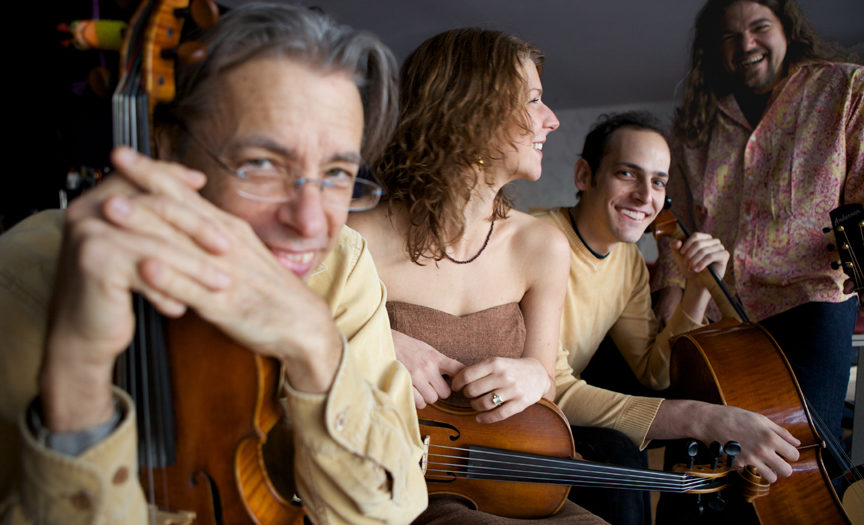
Somewhere beyond or behind all musical borders lies a creative terrain where bluegrass, jazz, classical, pop, and various world musics mingle, played by musicians who care more for inspiration than they do for genre. If that place has a name, it’s surely the Republic of Strings, for no one knows its contours better than veterans Darol Anger, Scott Nygaard, and a wave of young brilliant string players. They have created the visionary musical landscape of Generation Nation, the group’s second album for Compass Records.
Drawing from an array of sources that includes Ornette Coleman, Scandinavian string bands, Aretha Franklin and the quartet’s own members, Generation Nation documents a unique intergenerational exchange. Compelling musical textures, elegant solos and vocals all emanate from a startlingly diverse group of guests. “There’s a lot of respect and love going on among the players,” says Anger, “and I think it comes out in the music”. One listen proves that he’s exactly right.
Generation Nation’s music emerges from the deep empathy that has developed among its members over nearly three years of concert appearances and informal exchanges. “We’ve got a bit of telepathy going,” says cellist Rushad Eggleston, while Anger notes that “we’ve been in the trenches for awhile now, and like in a jazz group that’s been playing together for a long time, you develop an extra-sensory perception of what the other person is going to do. And it’s the deep nature of string band music to foster this.”
“Everybody is so tuned into each other,” says Anger, “that sometimes it seems that we’re just one big instrument playing. There are meticulously arranged moments all over this record and everyone’s a highly trained musician, but often we just went by feel.” Adds Nygaard, for whom Generation Nation marks a return to full-time music after a long stint as editor of Acoustic Guitar, “Everyone’s playing is so rhythmic that I don’t usually need to take a time-keeping role, and so I can play off what everyone else is playing without worrying that anything is going to fall apart. It’s an indefinable band, and that allows me to define my own role for the guitar.” And, Eggleston concludes, “We all cover for each other, it’s nice for me, being a low badger-like animal, that if I go out for a stroll, so to speak, someone’s always going to mind my den. I can feel secure knowing my cubs are safe at home!”
If Generation Nation relies on intuition for its coherence and wit, it is built on the technical foundation of New Acoustic Music, a style that Anger helped to pioneer during the 1970s and 1980s with groups such as the David Grisman Quintet and the Turtle Island String Quartet as well as on his own groundbreaking solo projects.
“I love traditional music of all sorts, but I’m more interested in using all my musical ideas when I play,” says long-time collaborator Nygaard, who was among the musicians attracted by the work of Anger and his colleagues. Scott’s statement serves well as a concise articulation of the New Acoustic credo. Yet over the years, this music’s breadth and difficulty served as a deterrent to younger musicians — until now.
“There’s this phenomenon of music camps,” Anger explains in accounting for the new wave of interest in New Acoustic Music that gave rise to the Republic of Strings — and that has made a huge difference. These musical kids now have somewhere to go, and they have a community’a real one, not just a virtual one, which stretches across many of these camps — it’s largely the same crowd of kids! I’m lucky to be able to teach at these things, so I’m pretty connected, and what I’ve seen is just beautiful. Kids are always going to be competitive about music, but because everybody’s there to learn, you see people steeped in a spirit of cooperation; they’re getting the idea that if we make something together, and we really focus, when we come out the other end it’s going to have this amazing feeling.”
Drafting Eggleston and fiddler Brittany Haas — two of the brightest youngsters to emerge from that scene — Anger set about creating a group that would meld the experience he and Nygaard had accumulated with the inquisitive energy and enthusiasm he had seen in the new generation. And on Generation Nation, the group has taken the next step, inviting as guests more young musicians who bring their own talents and perspectives to their appearances.
Some of these youngsters who appear on the recording are Aoife O’Donovan (one of the four vocalists on the recording and Eggleston’s band mate in the acclaimed roots band Crooked Still) to cellist and fiddler Tristan Clarridge, (the youngest person ever to win the National Fiddle Championship three times). They are musicians who, as O’Donovan says, see figures like Anger as “an idol and a peer at the same time”. The generational theme is continued with songs like “Bluebird”, a Buffalo Springfield pop hit from the “60”s, in Anger’s words “re-traditionalized” and featuring the most wildly generational lineup: Darol’s old friend Terry Pinkham on vocals, with her phenomenally talented son Josh on mandolin. The final perfect twist to this story is that Terry is the granddaughter of the great Texas fiddle champion Benny Thommasson, who taught Mark O’Connor and inspired Darol in the 1970’s.
The combination of generation-spanning, close-knit community and wide-ranging musical freedom helps define the Republic of Strings and Generation Nation. “I feel that working with musicians of all ages keeps it real. Each generation, brings different influences into the music,” O’Donovan says, adding that “it’s amazing to be in the presence of musicians like Darol and Scott who always have incredible ideas, but are also open to the ideas of musicians like Rushad and myself.”
The Republic of Strings has created a work which, while rooted in the near and distant past, points to an exciting future. “The music seems to be a way for people to connect with something real,” Anger says with tangible excitement. “As consumer culture “that sort of fakery aspect of it” takes over, people get hungrier for something that seems to speak to something real. There’s a spiritual element in music that’s very strong, and music also exemplifies community. It works for these kids, and it works for adults, too” it’s worked for me for 30 years.” And judging by the sound of Generation Nation, it can work for everyone who’s willing to listen.
Written by Jon Weisberger

First emerging amid the creative fervor of the 1960s British Isles folk renaissance, singer, songwriter, and raconteur Gibb Todd continues to be one of the scene’s most beloved and respected figures. Constant international touring – both solo and with such groups as the legendary Dubliners, the Fureys, and Cherish the Ladies – has made this Scotsman (now based in Australia) welcome around the world and added intriguing layers of international influence to his songwriting and repertoire.
Astonishingly, Goin’ Home is only Todd’s second solo album in a career that now spans over four decades. Recorded in Nashville with an international cast of folk, Celtic, and bluegrass luminaries, it reflects Todd’s wide musical range over a program of aching ballads, rousing shanties, and several compelling originals. Joining Todd are innovative Irish guitarist John Doyle (ex-Solas), maverick banjoist Alison Brown, bluegrass fiddler Stuart Duncan, double bassist Danny Thompson (Richard Thompson Band, Pentangle), Nashville fiddler Andrea Zonn (Vince Gill Band, James Taylor), and vocalist and multi-instrumentalist Tim O’Brien.
With such fine support, Gibb Todd shines as never before – his vocals rugged but nuanced, his performances focused and moving. His greatest gift, his effortlessly affable give-and-take with an audience of any size, takes center stage throughout Goin’ Home. Fittingly considering his reputation as a live performer, Todd will premiere songs from Goin’ Home this February at Glasgow’s massive Celtic Connection festival, where he is a longtime fixture and festival favorite.

Orkney-born and son of singer-songwriter Ivan Drever (Wolfstone), Kris Drever emerges from within the surging folk scene with Black Water, a debut album that is “as marvelous as it is timeless.” (Maverick) . Produced by John McCusker and featuring constant conspirators and collaborators Kate Rusby, Donald Shaw, Roddy Woomble and Eddi Reader, Black Water gives a modern washing to folk standards such as “Braw Sailin’ On the Sail” and “Patrick Spence”. “I like either to do songs that haven’t been covered much before,” Drever says, “or folky standards that are open to a different interpretation. I try to steer clear of that kind of typical folk-singer sound, and put my own mark on things.”
Drever admittedly spent most of his youth listening to Metallica and Pantera, all the while learning the guitar and ruining other people’s sessions at the Orkney Folk Festival. At seventeen, Drever left home for the mainland, eventually gravitating towards Edinburgh’s burgeoning session scene and The Tron Ceilidh House, which was then (late 1990’s) the place to be. It wasn’t long before Drever was a regular at this Scottish musicians haven, playing several nights a week.
After a temporary switch to the double bass, Drever subsequently returned to the guitar and began honing his highly individual style – a blend of rhythm and harmony, folk, jazz, rock and country inflections – that now finds him in near-constant demand as a session player. Drever’s earlier live and recorded work includes collaborations with Cathy Ryan of Irish-American supergroup Cherish the Ladies, Scottish fiddlers John McCusker and Bruce MacGregor, Irish accordionist Leo McCann and Gaelic band Tannas, as well as tours of the US and South America with the Irish dance show Celtic Fusion. Drever was also a member of the highly acclaimed trio Fine Friday which released two albums on the Foot Stompin’ label and toured the UK, Europe and Australia before the three went their separate ways to concentrate on individual projects.
In February 2007, Kris Drever was honored with the prestigious Horizon Award at the 2007 BBC2 Folk Awards. Drever recently toured the UK with Eddi Reader and Roddy Hart and will release an album with the band Lau (Aidan O’Rourke on fiddle, Martin Green on accordion) on Compass Records summer 2007.

Over twenty years ago, two of contemporary string music’s greatest masters joined forces for the first time, setting in motion a partnership that would take them all over the world, exciting acoustic music lovers along the way. Mike Marshall and Darol Anger began making music together in 1978 as members of The David Grisman Quintet and continued stretching from solo and duo records for Kaliedoscope, Rounder and Windham Hill, through the Montreux Band, Psychograss and The Anger/Marshall Band. They have consistently been at the center of the acoustic music scene and can be heard on hundreds of recordings in the acoustic music world. Marshall’s mastery of mandolin, guitar and violin and his ability to swing gracefully between jazz, classical, bluegrass and Latin styles is rare in the community of American vernacular instrumentalists. Anger’s ability to be at home in a number of musical genres, some of which he helped to invent, have put him at the top of his field.
These two major forces in contemporary string music once again join talents to explore a musical world stretching from Brazil through the Appalachian hills, by way of Manhattan and the Florida Swamps. Their brand new release, At Home and On The Range, continues their journey together, begun in 1978. This live cd, recorded during a tour of the U.S. eastern seaboard during which the duo played The Community Church in Chapel Hill, the Prism Coffeehouse in Charlottesville, VA, the Arden Club in Delaware, Acoustic Stage in Hickory, North Carolina and the Zirinsky Home in Long Island, is engaging and sheds light on this duo that The Oakland Tribune called “Some of the most gifted and amazing players in the field”. At Home and On The Range features the duo’s mind-bending improvisations, eclectic instrumental compositions and tight synergistic relationship on tunes like Down In The Willow Garden and Fiddles of Doom Medley (Old Dangerfield/Big Mon). Marshall and Anger have mastered the powers of simple virtuosity and once again careen their musical backhoe straight across the backyards of jazz, newgrass, rock and world music, cutting a deep trench filled with tunes so exuberantly personal that it can’t be mistaken for anyone else .
At Home and On The Range reflects the journey and growth of this longtime partnership as they continue their musical odyssey together. This duo is at the edge of the world of modern American string bands in the 21st century and ready to fly once again.

When Bill Jones won the Horizon award as Best New Artist at 2001’s BBC Radio 2 Folk Awards, it suggested the arrival of a major new English folk talent. Since then, Jones has nurtured that potential beautifully, continuing to challenger herself while staying true to own idiosyncratic vision of the English folk tradition. A disarmingly pure and unaffected vocalist and multi-instrumentalist (piano, flute, accordion, and various recorders and whistles), Ms. Jones (Bill being short for Belinda), with the release of her third studio album Two Year Winter, stands at the forefront of England’s rich folk renaissance.
The vitality and freshness of Jones’ music stems in part from the fact that she has only been performing professionally for a couple of years. Although her father played fiddle in a ceilidh band, Bill came to folk music relatively late and purely by accident, as part of a university project.
Bill was born and brought up in Staffordshire, England. Her part-Indian mother sang Buddy Holly songs around the house, and though she heard folk songs through her dad she paid little attention. “I just thought they were songs old people sang; they didn’t seem to be anything I should be interested in.” Instead she seemed destined to pursue a career in classical music as a concert pianist. She spent five years at music school, dropped out of an arts degree course at Middlesex University and then took on a course in music at London’s City University. That course changed her life and played a big role in shaping her career. Bill studied music from all over the world, including England, and as part of school project, she put on a concert of traditional music.
The concert was a huge success and friends persuaded Bill that she had a natural aptitude for singing traditional songs. She’d never previously thought of herself as a singer, limiting her party pieces to coy interpretations of Kate Bush and Beverly Craven songs, though she also played keyboards with predominantly female band The Wise Wound, and appeared with them twice at Glastonbury Festival. When she was 20, The Wise Wound who christened her Baby Bill and she took up the accordion as an alternative to dragging keyboards to remote festivals, where she often discovered there was no electricity anyway. All she had was a huge antiquated accordion from her Grandmother and a book of Karen Tweed tunes.
After leaving university at 22 Bill enrolled in a Folkworks summer school and became involved in the Newcastle folk scene. She started working in a duo with guitarist Steve Moffatt and, after they split, took a big gulp and went on the road as a solo artist. Word spreadabout her music fast and in response to requests from her audience, she made her first (cont.) album, Turn To Me, in 2000. It was an imaginative mix of mainly traditional songs, from “Long John Moore” to “Handsome Cabin Boy,” “Mist Covered Mountains,” and “Ye Mariners All.” Her impassioned interpretations may sound so fresh because she’s a recent convert to them. She says she still hasn’t heard many of the classic performers, mostly because she was always too broke to buy their records. The album also features a radical interpretation of the old Buffy Sainte-Marie anti-war classic “Universal Soldier” (a hit for Donovan). When she recorded it, Bill had not even heard Buffy Sainte-Marie’s version; she’d found the song on the internet and because she couldn’t hear the tune properly, set it to the tune of “The Birmingham Boys.”
Bill’s second album and first US release Panchpuran was produced by Karen Tweed (The Poozies, Swap). The album’s title (pronounced “ponch pure on”) is a Hindi expression that literally means ‘five spices’. Bill picked the name to suggest the idea of many different things all mixed up together. This concept applies well not only to the cd and Bill’s musical influences, but to her family’s background as well. Throughout Panchpuran, Bill’s open-minded approach to folk music informs the songs, arrangements and choice of guests. Guests include Kathryn Tickell on fiddle, Kellie While (E2K, the Albion Band) on harmony vocals, Paul Jayasinha on cello and flügelhorn, Keith Angel (The John Tams Band) on percussion, and David Wood on guitar. A brass band from County Durham also joined in on one track, and a beautiful Finnish string quartet fill out the arrangement on two songs.
Released on August 12, 2003, Two Year Winter is the next step forward for Ms. Jones, bringing the adventurous impulses of Panchpuran into sharper focus, yet retaining the accessible immediacy of her debut. Jones’ own songwriting has grown richer and increasingly detailed, while collaborations with American singer/songwriter Anne Hills are achingly poetic laments given a sense of urgency by Jones’ unadorned, visceral vocals. The instrumental palette is equally luscious, ranging from sparse a cappella interludes to jazz-inflected flugelhorn intermingling with classic fiddle, accordion, and recorder. Joining Bill are two members of her touring band (Keith Angel, percussion and Miranda Sykes, double bass and vocals) alongside Stewart Hardy (violin), Paul Jayasinha (flügelhorn), David Wood (guitar), and Sarah Wright (flute).
By turns stark, haunting, elegant, and playful, Two Year Winter finds Jones freshly energized by two years of constant touring throughout the US, UK, Japan, Denmark, and Belgium. “It was my first time in the States since my honeymoon,” she jokes. Existing at the intersection of heritage, contemporary experience, and Jones’ own unbridled senses of adventure and curiosity, Two Year Winter is up to the daunting task of following her previous two triumphs. The result is stunning, beguiling music that resonates with timeless echoes while expanding the boundaries of traditional music.

Cara Dillon seems to have seduced the entire nation in just a few short, breathtaking, eventful years. Make that several nations, for among the rare ingredients of her irresistibly natural personality and mesmerising ability to relate a great story in song, is an all-embracing quality that defies borders, cultures, and even languages.
Born in 1975 in Dungiven, Co. Derry, Ireland, Cara demonstrated her striking vocal ability in winning the All Ireland Traditional Singing Trophy at the tender age of 14 and a year later she was in her first band, Oige. They were pretty successful too. She went on to sing with De Dannan and then folk supergroup, Equation, joining the latter in 1995 as a replacement to Kate Rusby.
Equation (signed to Blanco Y Negro, WEA) seemed to be heading for the top, but the album they recorded ’Return To Me’ didn’t get a release. However, Cara had found her soulmate Sam Lakeman in the band and the pair decided to try their luck as a duo. They re-signed to Blanco and there followed a long and frustrating period as they experimented with writing and recording songs with a succession of top producers and songwriters around the world. However, none of the projects and collaborations seemed to fulfill the inner visions that Cara and Sam had developed, so after six years of being tied to a major label, they decided to abandon ship and set sail on their own. The world is glad they did.
“Cara Dillon, is without exaggeration, amongst the very finest to be heard today.”
– Folk Roots
“Blessed with a voice of unearthly beauty” – Sunday Herald
“Every so often a singer comes along and stops me in my tracks making me look at music in a slightly different light.”- The Living Tradition
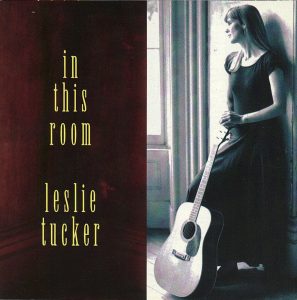
Featuring Jerry Douglas, Tim O’Brien, Make Marshall, Stuart Duncan, and Clive Gregson, Leslie Tucker’s debut is an sincere, earnest masterpiece of confident, genuine songwriting.
“I would pay to hear Leslie sing from the index of a computer manual.” – Tim O’Brien
“That kind of honesty can’t be made up – it has to be lived.” – Pierce Pettis
-->


