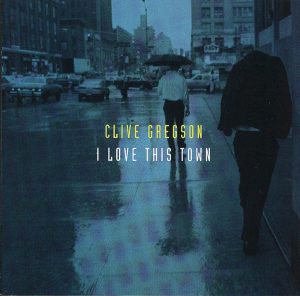
Clive Gregson and Christine Collister were the most moving and memorable U.K. folk-rock duo to emerge since Richard and Linda Thompson. Gregson’s wry tales of the ins and outs of love, sung in Collister’s heartbreaking voice have earned the duo (and subsequent solo work) respect and a devoted following, though commercial success and mainstream recognition have eluded them. Gregson (born January 4, 1955) was the founder of Any Trouble, a pub-rock/new wave quartet, in Manchester in 1975. The band’s sound, and Gregson’s songwriting and singing, reminded some of Elvis Costello, and Any Trouble was signed by Stiff, Costello’s label. The band made several well-remembered but poor-selling albums, then split up in 1984.
In 1984, Gregson discovered Collister singing in a folk club and, impressed by her talents, he offered to work with her on future projects. Gregson had already begun an association with Richard Thompson, initially singing backup on the classic Shoot Out the Lights album in 1982. While working on Thompson’s Hand of Kindness, Gregson suggested using Collister for additional backup vocal duties. The formula worked and the two continued for years as integral parts of the Richard Thompson touring band — arguably the finest live band he’s assembled. In 1985, Gregson made a solo album, Strange Persuasions, with Collister singing backup on a few tracks. The two began performing as a duo on the folk club circuit shortly thereafter. The duo’s first release was a homemade tape sold at gigs, later released as Home and Away. It was followed by their first formal album, Mischief, in 1987, and by a Change in the Weather in 1989. Love Is a Strange Hotel, released later the same year, was an album of cover versions of Gregson and Collister’s favorite songs. By 1992, the stress of constant touring and working together without substantial success finally took its toll on them. The two decided to go their separate ways after one parting shot, The Last Word, and on final tour. They both continued on as solo acts.
Gregson eventually relocated to Nashville and has been the more active of the two, releasing the live “official bootleg” Carousel of Noise on his own label in 1994, People & Places in 1995, and I Love This Town in 1996 for Compass Records, in addition to various production work and side collaborations with Boo Hewardine. Christine Collister continued to play the folk circuit, releasing a live album, Live, in 1995 and a new studio album, Blue Aconite, in 1997. In 1998, after a brief stint in the group Plainsong, Gregson returned with Happy Hour, and launched a successful tour of the UK with Hewardine and Edie Reader. Gregson’s 2002 release Comfort and Joy was followed by extensive touring, including rare jaunts to the United States and Japan, but in 2003 his career was put on hold for several months after a fall from a ladder resulted in a broken shoulder and arm. Thankfully, Gregson fully recovered, and returned with a low-key solo set, Long Story Short, in late 2004.

When looking for expressive and uncommon sounds, Dolly Parton, Neil Young, Dan Seals, Hank Williams, Jr., Iris Dement and Glen Campbell all turned to the evocative sound of Gove Scrivenor’s autoharp. When Gove released early albums on Flying Fish Records, his friends, Doc Watson, John Hartford, Marty Stuart, Buddy Emmons…all lined up to contribute to his recordings.
Now joined by John Prine, Nanci Griffith and Lari White for his first Compass Records release Shine On, Gove has created a collection of five self-penned and selected favorites of fellow artists. Gove, once again, introduces songs that are full of life and energy and his very personal, soulful sound.
Gove moved to Nashville in the early 70’s after a four-year stint as a submarine sonar technician in the Navy. This move proved to be a wise one, as he was signed by the largest music publishing company in the world, Acuff-Rose. Wesley Rose saw in Gove the qualities that his struggling TRX record label needed, and Gove was soon signed to a recording contract as well as a songwriter agreement. Things began to happen. Scrivenor signed a management and booking deal with the Don Light Talent Agency in Nashville. During his years with Don Light, Gove toured with fellow agency artists Delbert McClinton and Jimmy Buffett and the Original Coral Reefer Band.
These successes opened doors for opportunities and he was soon performing on the popular PBS series Austin City Limits, where he appeared with The Amazing Rhythm Aces. His performance was splendid and he was asked to return again the following year for a show with Doc Watson. Bookings at colleges, festivals and clubs poured in and Gove soon found himself playing all over the US and Australia. Standing ovations and rave reviews were the order of the day, and then the bottom fell out of the Folk and Blues circuit with the advent of “alternative music” in the early ’80s.
Not one to be brought down, Scrivenor kept his optimistic attitude alive and settled right into Nashville. He established himself as a highly sought after sessions player and he met with continued success by singing many jingles, including the early Opryland campaigns for TV and Busch Beer.
Shine On follows the success of Gove’s two prior releases on Flying Fish Records. Shady Gove featured such masters as Doc Watson, John Hartford, Buddy Emmons and a host of others. It was the first of two highly regarded albums for the label. Coconut Gove, his second release, drew participation from such favorites as Marty Stuart, Ben Keith, and Dave Loggins. Solid Gove was re-released as a compilation on Rounder Records in February of 1998.
Gove Scrivenor’s music has been described as “high energy folk blues,” with inventive slide work and powerful vocals, tempered with singular work on the autoharp and beautiful ballads of his own writing. He’s well know for his magical rapport with audiences of all ages.
Scrivenor has experienced his share of luck, but this time, we’re the charmed ones. We’re provided with another unique opportunity to hear this master at work. To once again experience the thumping of our hearts dancing with joy to the rhythm of his beat.
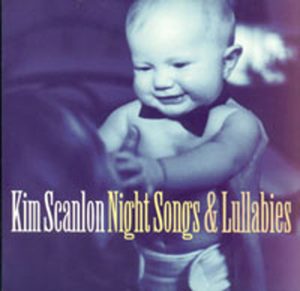
Kim Scanlon, one of the Seattle acoustic music scene’s most popular vocalists, makes her solo debut with Nightsongs & Lullabies. Scanlon has gained respect as a powerful interpreter of songs from all genres, including her favorites – vintage pop and jazz – which form the basis of Nightsongs & Lullabies. Scanlon recorded the album while pregnant with her first child and the direction of the music was shaped by her experience with first-time motherhood and interest in creating a recording that parents and children could share.
Nightsongs & Lullabies is a complex yet soothing album, much different than most children’s albums. Scanlon recalls, “When I became pregnant, I decided to make an album as a kind of farewell to my more free-wheeling days. I’ve listened to a lot of children’s CDs and found many of them to be high & sparkly — as if children can’t take texture or deep sounds. The opposite of course is true. Children learn about the world by listening to the music of their parents’ voices. They are tonal sophisticates from day one.”
The album contains a wonderfully cohesive collection of classic songs from the American songbook, covering repertoire by some of America’s most beloved 20th century songwriters including Duke Ellington, Johnny Mercer, Harold Arlen and James Taylor. The songs themselves share strong melodic qualities and a playful tone and create the perfect vehicle for Scanlon’s warm, clear and limber soprano vocals. She explains, “To me Nightsongs & Lullabies is for the young and old. The sound is old yet new and fresh and the music is elegant and playful yet joyous and intimate.” Guest musicians on the album include West Coast luminaries Rebecca Kilgore (vocals), Nina Gerber and Scott Nygaard (guitar), Bob Brozman (steel guitar), John R. Burr (piano) and producer Cary Black (bass).
Scanlon’s career as a vocalist began at an early age; as a child, she was active in the church choir. She has been a fixture in the Seattle acoustic music scene since the 80s, working with a variety of groups including Slow Learner (with Jo Miller and guitarist Scott Nygaard) and the nationally acclaimed alternative country group Ranch Romance. Much in demand as a harmony vocalist, Scanlon was a member of the house band on the nationally syndicated NPR radio show Sandy Bradley’s Potluck and has performed and recorded with a variety of other artists and groups including Uncle Bonsai, Kathy Mattea, Pete Seeger, Rumors of the Big Wave, Kathy Kallick, Laurie Lewis, Ferron and The Laura Love Band.
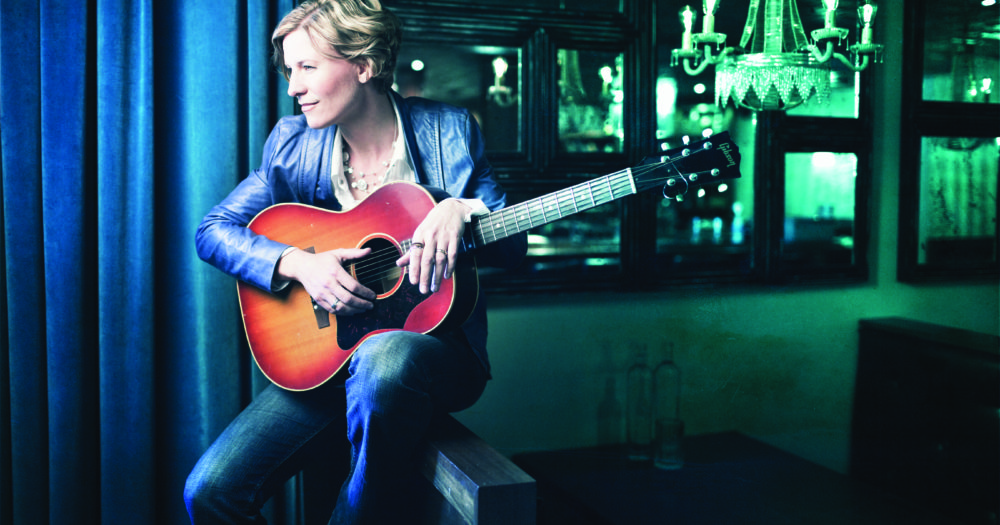
The Boston-area folk music scene is a vibrant one, boasting a variety of diverse artists. But if pressed to name the region’s defining musician, it would have to be singer-songwriter Catie Curtis, who has called it home for nearly all of her twenty-year music career. Since the release of her last album in 2009, Curtis has toured extensively, playing a number of diverse venues ranging from Chicago’s legendary Old Town School of Folk Music to the White House. She’s also spent that time writing and testing out new material, developing a collection of masterfully written lyrics that serve as the heart of her newest record, Stretch Limousine on Fire (out August 30).
On the new album, Curtis, a Lilith Fair alum who’s been dubbed a “folk-rock goddess” by The New Yorker, delivers some of the finest material of her career: ten original songs that push at her own musical boundaries and explore “the difficult edges of passing events” in life, harsh realities that are tempered with moments of fleeting beauty. This temporary nature of life is a theme that pervades the album from the first notes. Opening song “Let It Last, which features folk powerhouse and former tour mate Mary Chapin Carpenter singing harmony, finds Curtis pleading, “I know it can’t last/And all I ask is let it last a little longer.”
The sound, like the subject matter, is more raw than Curtis’ previous work, which has been featured on episodes of Grey’s Anatomy, Dawson’s Creek and several other hit shows. “There’s a lot of texture that makes you feel like you’re really close to it,” she explains. Recorded live in Los Angeles’ Stampede Origin Studio, Stretch Limousine on Fire harnesses the energy of her concerts, thanks in part to a fiercely talented band featuring drummer Jay Bellerose and bassist Jennifer Condos, both of whom are currently touring as part of Ray LaMontagne’s Pariah Dogs. “When Jay Bellerose plays the drums, he’s so tuned in that he’s basically an extension of the guitar; sometimes you’ll hear a wood knocking sound [on the record] and you don’t know if it’s me knocking on the guitar or Jay playing something on the drums that’s very sympathetic with what I’m playing.”
“My singing was inspired by their playing,” says Curtis of her backing band. “It felt like a live performance, and engineer Ryan Freeland kept it sounding very present. [Producer] Lorne Entress and I put a lot of faith in the idea that if we brought together the right people…we would have the vibe that we wanted.”
That vibe is spirited, unique, and best embodied by the album’s title track. “Stretch Limousine on Fire” is an infectious song whose central image takes on the idea that “when bad things happen, you sometimes take comfort in realizing they happen to everybody.” It’s this portrayal of universal life experiences, wrapped in Curtis’ brand of evocative songwriting that won her the 2006 International Songwriting Competition that appeals to her legions of dedicated fans.
With her Aspire to Inspire Endowment providing musical instruments to seven youth-oriented music organizations, a busy schedule officiating nontraditional weddings, and the fulltime job of raising two daughters with her partner, Catie Curtis is stretching her own boundaries to ensure that, despite the rough edges in life, there will always be those moments of beauty.

Accordionist Tweed (Poozies, Bill Jones) and guitarist Carr (Kate Rusby, John McCusker) meet for an engaging, thoughtful session that encompasses not only their English roots but influences from the world over.
The medleys that Tweed and Carr weave from contemporary compositions and traditional dance tunes are simultaneously modern in conception and rooted in tradition…Tweed is an inventive accordionist who manages to pull music of remarkable depth out of an instrument that is not generally known for its subtlety…Carr stretches the boundaries of folk guitar with unusual chord voicings, quirky melodic lines and playful rhythms….the music of Tweed and Carr brings together the best parts of ancient and modern music. – TipWorld.com

Catriona Macdonald (pronounced “Catrina”) is a proud bearer of one of the world’s great fiddle traditions, that of the Shetland Isles. A cluster of islands located in the North Sea, closer to Norway than Scotland, the Shetlands have offered some of Scotland’s finest and most beloved traditional musical exports including the legendary fiddler Aly Bain. Steeped in this tradition, Catriona Macdonald at once embodies the strength and spirit of her musical heritage and the freshness and diversity of a thoroughly modern performer. Her superb playing and charisma have established her a worldwide reputation.
Catriona began playing as a child back in 1981 under the masterful musical tutelage of Dr. Tom Anderson MBE. Less than two years later, she took both the title of Young Fiddler of the Year in the annual Shetland Folk Society competition and the deputy leadership of a new fiddle group, Shetland’s Young Heritage. Young Heritage was set up to help preserve Shetland traditional music and to help teach Shetland traditional fiddle to local school children. In 1991, her dexterity and presence became acknowledged on a wider stage when she won the prestigious BBC Radio Two Young Tradition Award, a high profile competition featuring the cream of Britain’s young traditional players. At the age of eighteen, she found she could sing and was whisked away for some enjoyable and instructive years training in opera at the Royal College of Music in London (where she met former playing partner Ian Lowthian). Even given all of these experiences, Catriona has still been lucky to focus her musical career on her first love, that of the Shetland fiddle.
On her new album BOLD, Catriona flourishes as a progressive performer in her own right, offering a wealth of exciting, original musical ideas while still firmly holding hands with the past, a part of the ever-evolving tradition. The gorgeous aires, reels and jigs on the album attest to her mastery of the Shetland fiddle styles while the expert accompaniment provided by her guest musicians leaves little doubt that the future of traditional music is in able hands. Bassist Conrad Ivitsky and pianist David Milligan, 2/3 of Catriona’s touring trio are on hand, as well as top percussionist James Mackintosh (also a member of Shooglenifty, in addition to his regular high-profile appearances with Capercaillie and the Afro-Celts Sound System); much sought-after Norwegian church organist Iver Kleive (a Winter Olympian musician, and lynchpin of the renowned Kirklige Kulturverkstad label) and former playing partner Ian Lowthian, (whose wizard piano accordion playing offers continuity in sound from ’opus blue’, Catriona’s previous album), and guitarist Tony McManus, one of the most distinctive celtic guitarists of this age.
In addition to her solo work, Catriona is well known for her splendid duo with piano accordion wizard Ian Lowthian. The superb technical mastery and beautiful evocative arrangements for which they were critically acclaimed (amongst their fans is Mark Knopfler, former frontman of Dire Straits) led them to play for audiences throughout the world…always purveying a unique spirit, enjoyment and charisma on any stage. She is also involved with the wildly energetic Highlands and Islands fiddle ensemble, Blazing Fiddles (also featuring Iain McFarlane, Allan Henderson, Aidan O’Rourke, Bruce MacGregor, Duncan Chisholm, Andy Thorburn & Marc Clements) and does occasional work with Norwegian Hardanger fiddle player, Annbjorg Lien (Catriona herself has studied Hardanger fiddling with Norway’s foremost player Knut Buen.) The two women play exciting contemporary sounding music celebrating the many musical links between their respective traditions, which are rooted back in the 15th century.
Catriona’s commitment to the promotion of her Shetland Island heritage through education is also an important part of her work. She is currently acting as visiting tutor as part of the Scottish Music Degree (the first of its kind!) at the Royal Scottish Academy of Music and Dance in Glasgow. She is also personally researching a book and CD of whole archives of previously unknown/untranscribed Shetland tunes due for release in the next year or so. Catriona also teaches Shetland fiddle on a regular basis, particularly at many of the country’s summer schools such as Folkworks, Burwell House (in Cambridge), Stirling and her own Shetland Fiddle School in Vementry, Shetland.

Glasgow native Eddi Reader embraces her Scottish roots on this stunning folk/pop song-cycle drawn from the tunes of the great bard Robert Burns. This ambitious project is Reader’s crowning achievement, a savvy translation of Burns’ classic songs into a modern setting, joined by a host of the finest British and Scottish musicians around (John McCusker, Kate Rusby, Ian Carr, Phil Cunningham, and more). Some of the songs are rendered faithfully, others are re-envisioned, all of them are marked by Reader’s trademark mix of swagger, tenderness, and sincerity.
USA Today: “Reader’s elegant renderings of such songs as My Love is Like a Red Red Rose and Jamie Come Try Me seem fresh and magical.”
Time Out NY: “Haunted hearts, unguarded affections, and drunken benders have long littered Reader’s musical landscape, so it’s not surprising that she would discover a kindred spirit in Burns…Devotees will welcome this warming balm against the bitterest of winter winds.”
Seattle Post-Intelligencer: “Reader brings new vitality to the songs of Robert Burns in this lovely collection. Reader’s voice is flawless…a magnificent gift from the heart of Scotland.” Grade: A
Irish-American News: “The most creative, wonderful, and difficult-to-describe album we have heard in years…a masterpiece. Flat out.”
Boston Herald: “Her enlightening tribute is a glorious set of towering romantic odes, sprightly jigs and reels, and poignant anti-war ballads.”
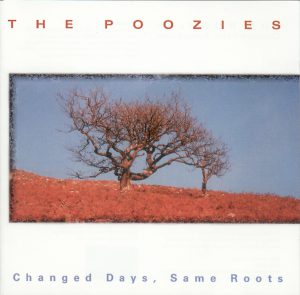
Currently celebrating their tenth anniversary as the UK’s finest all-female folk group, the Poozies continue to expand their sound their latest project, Changed Days, Same Roots. Deftly integrating Scandinavian, contemporary folk, Broadway, and Polish influences into their seasoned British Isles folk sound, Changed Days, Different Roots is marked by the same lush vocal quality, innovative arrangements, and superb instrumental performances that first distinguished the band.
Composed of founding members Karen Tweed (accordion, vocals), Patsy Seddon (electro-harp, clarsach, fiddle, vocals) and Mary MacMaster (electro-harp, clarsach, vocals) along with new arrival Eilidh Shaw (fiddle, vocals), the Poozies have been individually and collectively featured on recordings by Kathryn Tickell, Swap, The Two Duos Quartet, the May Day project, Sileas, Clan Alba, Caledon, and Harem Scarem, as well as many other live projects and guest sessions of artists including Roy Bailey, Lal and Norma Waterson, Dick Gaughan, June Tabor and Eliza Carthy.
“With their combined backgrounds, their ability is beyond question.” – Allmusic.com
“The Poozies deserve to be known beyond the confines of the British folk and roots scene…a delight.” – Q Magazine
“This is a band at the height of its powers. Forget their prestigious past. The future looks very bright for the Poozies.” – BBCinteractive
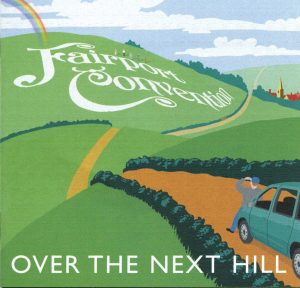
Fairport Convention is:
Gerry Conway: drums
Chris Leslie: mandolin, fiddle, bouzouki, vocals
Simon Nicol: guitar, vocals
Dave Pegg: bass, mandolin, vocals
Ric Sanders: fiddle, mandolin
“Fairport Convention has always been a working band,” muses bassist Dave Pegg. “We don’t like being held up in the studio. We need to be on the road. We still love doing that – getting in the van and going.”
It is this resolute drive and devotion, both to themselves and their legions of fans, that has steered folk-rock architects Fairport Convention through periods of uncertainty and transition that would have leveled lesser bands. Not only do they survive – they grow stronger, translating their experiences into consistently inventive art. Now entering their 37th year, the source of Fairport Convention’s unyielding momentum is twofold. Part if it stems from their roots in English traditional song, the noble nomadic legacy of the troubadour is indeed deep in their collective bloodstream. The other key to their longevity is something few other groups can lay claim to: having persevered for nearly four decades, Fairport Convention has created their own tradition. They are the inheritors of their own legacy, a sound that is distinctly theirs but, like all traditions, thrives on innovation and reinvention.
The title of Over the Next Hill reflects their enduring commitment to continue on in the face of adversity. “The title sums up the record perfectly,” says Pegg, who over the years has emerged as Fairport’s shepherd and unofficial ringleader. “Even though this was a very difficult album to make,” he continues, “the title implies a grand optimism.”
Trials are nothing new to Fairport Convention, having been defined early on for their ability to emerge renewed from a variety of unfortunately circumstances. “There was a time,” laughs Fairport biographer Nigel Schofield, “when Melody Maker magazine seemed to have the headline ‘Phoenix Fairport’ permanently typeset!” Beginning life in 1967 under the auspices of visionary bassist Ashley Hutchings (later of Steeleye Span, the Albion Band, the Etchingham String Band, and many others), Fairport shared bills with Sid Barrett’s Pink Floyd and other early rock radicals. Their first sound was an inventive hybrid equally influenced by the American underground of the time, electric blues, and traditional and contemporary folk music.
The arrival of folk-steeped vocalist Sandy Denny in 1968, along with the blossoming of guitarist Richard Thompson’s songwriting ability, pointed the future direction of Fairport Convention. Their two early 1969 releases, What We Did On Our Holidays and Unhalfbricking, saw traditional British ballads like “Nottamun Town” and “A Sailor’s Life” sharing space with compositions from Thompson, Denny, and contemporary lights like Bob Dylan. A horrific motorway crash in May of 1969, which killed drummer Martin Lamble and Thompson’s girlfriend Jeannie Franklin, sent the band into a sudden, reclusive spiral. Deciding for the first of many times to carry on, they returned in December of 1969 with Liege and Lief, one of the defining albums of British folk-rock. Epic traditional ballads were embroidered with electric fury, original compositions at last achieved the depth and weight of the folk tunes that inspired them, and fiddle – courtesy of new member David Swarbrick – was introduced to their sound.
What followed was decades of re-alignment, as members departed and returned with confusing frequency. The current lineup an ideal balance of seasoned vets and musicians young enough to have been originally inspired by Fairport’s early albums, and has been in place for 6 years now. Bassist Hutchings left in 1970, allowing Dave Pegg to assume the role which he continues to hold to this day. Guitarist and vocalist Simon Nicol, present at the earliest gigs in 1967, is the band’s link to its earliest days. Drummer Gerry Conway, a longtime fixture of the British folk-rock scene (that’s him bashing the skins on Fairport spinoff group The Bunch’s 1972 album Rock On), joined officially in 1998. Fiery fiddler Ric Sanders (previously of Soft Machine and Ashley Hutching’s Albion Band), signed on in 1985, while multi-instrumentalist, vocalist, and songwriter Chris Leslie hopped aboard in 1997.
This new lineup shone brightly on 1999’s The Wood and the Wire and 2002’s anniversary collection XXXV, but truly assert themselves on Over the Next Hill. The album was born amid much strife, as upheavals in Dave Pegg’s personal life (addressed candidly on the band’s website, www.fairportconvention.co.uk) forced him to sell Woodworm Studios: the band’s home base for over 20 years. Along with the studios, Pegg was forced to dissolve the management and record companies that had handled the band’s annual Croperdy Festival, casting that treasured ritual into uncertainty. The creation of Over the Next Hill demanded that the band to overcome once again.
“It was done under the cloak of some very strange things,” reflects Pegg, “We pulled the band together and went into Woodworm one last time to prove that we still had a future. Over two and a half years of touring, we arrived at a great unity: the sound that came out was a very different Fairport.”
Despite the difficulties surrounding its completion, Over the Next Hill is a refreshingly ebullient collection – palpably conveying the optimism inherent in the title. It’s Fairport at their most rock-tinged, sporting a ragged, bracing overall sound. “It was recorded quickly,” says Pegg, “mostly live in the studio, without any click tracks or anything. We went back and revised some things, but that live spirit shines through. It’s up and rocky.”
“The first thing that comes to mind about Over the Next Hill,” Pegg continues, “is that Chris Leslie’s songwriting has hit a whole new level. He is writing about true events and people – in effect creating real, modern day folk songs.” Leslie’s contributions, “I’m Already There,” “Over the Falls,” and “The Fossil Hunter” are detail-rich narratives that are still profoundly musical. He also takes lead vocal on Ben Bennion’s “Wait for the Tide to Come In,” an item unlike anything in Fairport’s catalog: a streamlined, pulsating Lydian pop song. Muscular and melodic in turn, it is already turning heads in Fairport’s set. “That’s Chris on electric mandolin,” Pegg says, beaming. “Sorry guitar fans.”
Simon Nicol is featured on several lead vocals, while underpinning the band with tasteful rhythm guitar throughout. His is the first voice heard, on Fairport friend Steve Tilson’s title track. The song’s positive, forward-looking message is balanced by a series of sly musical and lyrical allusions to the past (“So far I’ve found 19,” says Nigel Shofield) acknowledging the roads traveled before while still looking ahead. Tilson’s other contribution also features Simon. “Willow Creek” is a charged retelling of the classic folk tale of the girl on the nut brown mare. “That one is very percussive,” chuckles Pegg. “We’re still taken folk-rock in strange new directions!”
Fiddler Ric Sanders contributes a suite of instrumental themes called “Canny Capers,” which begins with Pegg and Leslie dueting on mandolins, followed by Sander’s entrance on fiddle, all with tasteful percussion in the background. The song soon builds to a thrilling series of instrumental breaks, with charged drumming from Conway pushing Sanders to ever-more daring flights of virtuosity. Sanders goes in the opposite direction with his other composition, “Some Special Place.” “Ric has lost several people close to him in the past months,” says Pegg. Clearly their memory inspired this lovely, touching twin-fiddle instrumental.
While traditional themes work their way into several of the original songs, “The Wassail Song” is the sole purely traditional tune on Over the Next Hill. Debuted on the last Fairport tour, it is a typically stunning revision. “People may have heard ‘The Wassail Song’ before,” says Pegg, “but they haven’t heard it in 5/4 time!” Brisk and rich with tricky meter shifts, it sports a daring and musicianship reminiscent of Fairport’s early years. Speaking of, they do revisit one chestnut from their past…
“Ah yes,” says Simon Nicol, “our re-interpretation of our ‘hit,’ ‘Si Tu Dois Partir.’” Originally recorded in 1969, the song is a curious translation of Bob Dylan’s “If You Gotta Go, Go Now” into an ersatz Cajun romp. It remains one of Fairport’s best known songs, having reached #21 in the charts of the day. “I never expected we’d be re-recording this,” Nicol continues, “but, but it seemed to go so well on the winter tour that we had to give it a go. Don’t tell Island Records, but I nicked a sample of Martin Lamble kicking over a pile of plastic chairs and smashing some milk bottles from the original version, and I’ve slotted it in. Shame on me – but nice to have him back,” says Nicol of Fairport’s first drummer, who was killed in that tragic motorway crash of 1969, “What a life he would have had.” It is the life that the current members of Fairport Convention have inherited: the sum of their tragedies and their persistence, blended with their own musical ingenuity and the bottomless well of tradition.

The resurgence of traditional Irish music has been called a renaissance – awakening a yearning for identity with a deeply rooted culture of oppression, war, courtship and love, liquor worship and emigration stories honored through song. Dublin-born guitarist and singer-songwriter John Doyle has honored this tradition even as he cultivates it on his latest release Shadow and Light Compass Records.
Doyle was exposed to music at an early age through his family. A dare from a childhood friend and lack of formal training allowed him to develop his signature left-hand finger picking style – a style that informed the sound of the first Irish-American super-group Solas. Since then, Doyle has continued to hone his craft on the road and in the studio, earning a Grammy nomination for his collaboration with fiddler Liz Carroll in 2010 on Double Play (Compass Records). He has also collaborated with some of the most revered names in the genre including Heidi Talbot, Tim O’Brien and fellow Solas founder Karan Casey and, from 2008-2010, served as band leader for folk icon Joan Baez on her worldwide tour.
On Shadow and Light, Doyle pays tribute to Irish musical tradition while forging a path of his own on a set of largely original songs characterized by his rhythmic and harmonic genius. History and stories pervade the album’s eleven tracks from the first lyrics of the album opener “Clear the Way” – a translation from the old Gaelic “Faugh A Ballagh” which was the rallying cry of the Irish Brigade in the American Civil War. The song tells the story of the “Fighting 69th,” and their tragic battle at Fredricksburg, Virginia where their numbers were reduced from over 1600 to less than 300 by another predominantly Irish Confederate Regiment.
Another stand out track is “The Arabic,” named for the ship Doyle’s grandfather boarded to immigrate to America. A German submarine attacked the SS Arabic and Doyle’s grandfather was plucked out of the flotsam by a rescue boat and sent back to Ireland. “It’s all true, as far as I know,” smiles the boyish Doyle. Another family ode, “Tribute to Donal Ward/ The Curraghman” is an instrumental homage to Doyle’s rustic uncle Donal Ward and serves as the perfect showcase for Doyle’s virtuosic finger picking style. Family is a recurring theme; the album also includes “Little Sparrow,” a song for Doyle’s daughter that has been regularly featured in his live set. Throughout the album Doyle is accompanied by a cast of some of the most stellar players in acoustic music including Tim O’Brien (vocals, mandolin), Alison Brown (banjo), Kenny Malone (percussion), Stuart Duncan (fiddle), Todd Phillips (bass), John Williams (accordion), Pete Grant (lap steel) and Michael McGoldrick (uillean pipes and flute).
When not at home in Asheville, NC, Doyle tours globally, and has appeared frequently at many of the taste-maker festivals in acoustic music including Celtic Connections in Glasgow, the Dublin Irish Music Festival in Dublin OH, MerleFest, Milwaukee Irish Festival, Sebastopol Celtic Festival, and the All-Ireland Fleadh. In addition to his work as a solo artist, he also performs regularly with other starts of the genre Andy Irvine, John Williams, Karan Casey, Liz Carroll and others. Doyle has also appeared on nationally syndicated radio shows including Prairie Home Companion and Mountain Stage and, in 2009, performed for President Obama in honor of St Patrick’s Day.

In a heartwarming display of international musical cooperation and human solidarity, scores of artists from England, Scotland, Wales, Ireland and the United States have joined hands to create Compass Records’ Hands Across The Water. Produced by Andrea Zonn and John Cutliffe, the CD’s proceeds will go to programs assisting Southeast Asian children whose lives were uprooted by 2004’s devastating tsunami. Yet beyond its tangible contribution to disaster relief, the project gives another rare gift to those who hear it—an entire set of unprecedented, compelling collaborations between some of the finest performers of Celtic and American roots music.
There is no “short list” of Hands Across the Water contributors, for all are among the most respected and preeminent artists in their fields: the 16-track CD features Darrell Scott with Muireann Nic Amhlaoibh, Oisin McAuley and Paul Rodden; Jim Lauderdale with Maura O’Connell; Karen Matheson with Donald Shaw, The Duhks and Bryan Sutton; Jon Randall with Máirtín O’Connor and Alison Brown; Tim O’Brien with Lúnasa; Sharon Shannon with Jackson Brown; Solas with Mindy Smith; John and Fiona Prine with Dermot Byrne; Beth Nielsen Chapman with Christina Quinn, Bonnie Raitt, Michael McGoldrick and Donald Shaw; Paul Brady with Rodney Crowell; Blue Merle with Pauline Scanlon; Altan with Vince Gill; Cerys Matthews with John Jorgenson and Stuart Duncan; Andrea Zonn with Flook and Bill Shanley; John Cowan with the Brock McGuire Band; Jerry Douglas with Ciaran Tourish—and adding still more depth to the album depth is an equally lengthy and stellar array of backing musicians.
While some of these collaborations bring together masters of a particular genre, the CD also features many top artists working outside their usual styles and formats. Vince Gill’s English-language version of a traditional Irish song reworked by Altan is one such highlight; as is “An Occasional Song,” a traditional Welsh number performed by European rock star Cerys Matthews with help from Stuart Duncan and John Jorgenson.
Hands Across the Water was born in a phone conversation between Zonn and Cutliffe last December. Cutliffe, a transatlantic presence in the Irish music world, both behind the scenes and as a player, was horrified by the destruction caused by tsunamis in Southeast Asia. Zonn, an accomplished solo artist and one of Nashville’s busiest fiddlers (regular player with James Taylor, Vince Gill, Alison Brown, Lyle Lovett), suggested that between the two of them, they knew some “pretty good musicians” who “wouldn’t mind helping out if we were to set something up to ease the suffering caused by the Tsunami.” Both remarks turned out to be vast understatements. Cutliffe emailed Garry West of Compass Records, who responded from vacation within an hour, throwing his full support behind the idea. In under a year, Hands Across the Water brought together many of acoustic music’s biggest names, all of whom gave very generously of their work, making time in homes, buses, and hotel rooms to contribute to the project.
Recording the album was truly a trans-national effort, employing the services of 27 studios, 29 studio engineers, and over 100 musicians from Nashville to Sydney, Australia. As Cutliffe wrote, “I myself have driven more than 10,000 miles and we can’t even begin to count the thousands of emails and hours of phone calls that have kept lines buzzing worldwide. We have uploaded and downloaded gigabytes of session tracks and mixes.” Contributing artists chose their own tracks, offering songs and
pieces for Cutliffe and Zonn to mould by adding additional collaborators. The resulting collection is a unique blend of the very best in American roots and Celtic music, an achingly beautiful soundscape that affirms the spirit of working together which made it possible.
FEATURING: Altan • Blue Merle • Paul Brady
• The Brocke McGuire Band • Alison Brown
• Jackson Browne • Dermot Byrne
• Beth Nielsen Chapman • John Cowan
• Rodney Crowell • Jerry Douglas
• The Duhks • Stuart Duncan • Flook
• Vince Gill • John Jorgenson
• Jim Lauderdale • Lúnasa • Oisín McAuley
• Michael McGoldrick • Karen Matheson
• Cerys Matthews • Muireann Nic Amhlaoibh
• Tim O’Brien • Maura O’Connell
• Máirtin O’Connor • Fiona Prine • John Prine
• Jon Randall • Paul Rodden
• Pauline Scanlon • Darrel Scott
• Sharon Shannon • Donald Shaw
• Mindy Smith • Solas • Bryan Sutton
• Ciaran Tourish • Andrea Zonn
-->

