
Alter Ego is comprised of two former members of the French/Breton group, Ad Vielle Que Pourra; Alain Leroux and Jean-Louis Cros. Both musicians sing and play several different instruments — classically trained Leroux focuses on mandocello, bouzouki and fiddle, while Cros displays a variety of cultural influences in his playing on acoustic, electric and bass guitars, drawing from classical, jazz, blues, bossa-nova, Renaissance and Celtic styles.
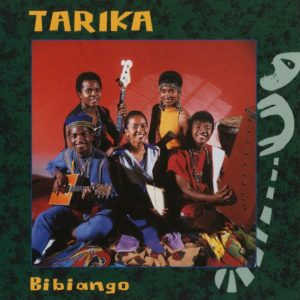
Tarika is a groundbreaking group on every level: a world music ensemble fronted by sisters Hanitra and Noro, a folk group with the drive and intensity of a rock band, and a Malagasy group that cross blends regional musical styles, instruments, and rhythms. Tarika has, in many was, become synonymous with the music of Madagascar.
“Not since the days of Bob Marley has social commentary come wrapped in so many seductive colours,” wrote the UK’s Sunday Times. Tarika is known for combining political subject matter with accessible, infectious dance music. Time Magazine voted Tarika one of the top ten best World Bands alongside U2, Ziggy Marley, and Radiohead, and is considered to be Madagascar’s most successful musical export.
After spending the 1990s on the world music festival circuit, Tarika took a break before coming back as Tarika Bé. Tarika’s discography includes Xenophile releases Bibiango (1994), Avelo (1997), and Son Egal (1997).
Boukan Ginen stands for “Fire from Africa” in Haitian creole. Founded in 1990, the 10-member group is at the forefront of the mizik rasin (roots music) movement that has captivated Haiti both musically and politically. Fronted by former Boukman Eksperyan’s lead singer, Eddie Francois (called “Haiti’s best male vocalist” by the Village Voice), Boukan Ginen plays a blend of powerful rara rhythms and group chanting of voodoo-inspired passion. The battery of hand-drummers rumble with African and reggae spirit.
Boukan Ginen won the prize for best carnival song at the 1991 Carnival in Port-au-Prince, for their performance of “Pale Pale W”, a song later released on their debut album, Jou a Rive. The song title means “talk” and includes lyrics widely interpreted as supporting the presidency of Jean-Bertrand Aristide. The band’s music was suppressed by the military authority of the junta led by Raoul Cadras that ruled the country from 1991 to 1994. In 1994, Boukan Ginen became the third Hatian musical group to receive the Prix DAcouverte from Radio France International.
ABOUT THE BAND
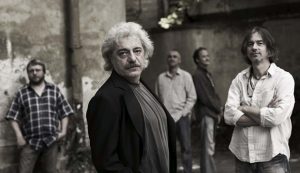
Druha Trava (which means “Second Grass”) was formed in 1991 by singer-songwriter Robert Krestan, banjo and wind instrumentalist Lubos Malina, dobro player Lubos Novotny and other veterans of the Czech acoustic music scene.
Its distinctive sound is based on exceptional musicianship combined with Krestan’s gritty vocals and original songs.
DT “uses American roots music as a launching pad for its own synthesis of jazz, pop, folk and even classical motifs,” stated an article about the band in The New York Times. “In doing so it transforms a quintessential American idiom into a richly textured, highly personal statement that defies genre classification.”
The winner of multiple Czech music awards, DT has a loyal following at home and in the United States. It first performed in the U.S. in 1993 and since 1994 has toured North America every year except 2008.
The band has recorded more than a dozen albums, including collaborative CDs with American stars Peter Rowan and Charlie McCoy.
The legendary Czech band Druha Trava returns to America in the fall of 2010.
Famed on both sides of the Atlantic for its “Czechgrass” fusion of acoustic, bluegrass, folk and rock, Druha Trava will introduce U.S. fans to a new addition to its line-up — award-winning bass player Tomas Liska, who took over in April from long-time DT bassist Petr Sury.
Liska, 31, is well known in the Czech and European jazz scene and also performs with other top artists such as Lenka Dusilova and David Doruska.
“We are excited to introduce Tomas to our American fans,” said DT banjo player Lubos Malina. “He is a phenomenal musician and also brings a youthful style to the stage.”

For nearly a decade, Wolfstone’s music has brought its Highland spirit and youthful exuberance to the soul of Scottish tradition. What began as a traditional dance band has evolved into a Celtic rock extravaganza, crossing musical, cultural and age boundaries and winning fans around the world.
Fiddler Duncan Chisholm and guitarist Stuart Eaglesham first met in the late 1980s at a pub session in Inverness, Scotland, and formed a band for ceilidhs (Scottish dances). In 1989, they performed at the Highland Traditional Music Festival in Dingwall, fusing drums and bass with keyboards, pipes, guitar and fiddle. The combination was a hit. They were soon offered local gigs that expanded into tours up and down the length and breadth of the Highlands and the Islands.
Within two years, Wolfstone recorded its first album, Unleashed (GLCD3093), produced by Silly Wizard accordion virtuoso Phil Cunningham. During this time, the band was offered a support slot for the popular Scottish crossover group Runrig at Loch Lomond near Glasgow. The exposure and experience of playing for such a large audience catapulted them into a new circuit. They began playing larger venues and festivals, not only in the UK, but also increasingly in Europe, North America and Canada.
The follow-up album The Chase (GLCD3088) built upon their success and brought new members to their line-up. In 1992, drummer Mop Youngson, from Aberdeen and bassist Wayne Mackenzie, from Inverness, joined the pack. The thrill of the Highland bagpipes was added with piper Alan Wilson, later succeeded by the talented Stevie Saint from Pitlochry. In the meantime, Unleashed and The Chase went silver and gold, respectively, in Scotland.
In 1993, Wolfstone signed with Green Linnet Records and released Year of the Dog (GLCD1145) , marking their third collaboration with Phil Cunningham. They began a hectic touring schedule on both sides of the Atlantic, thrilling crowds at festivals and concert halls with their high-energy performances. Highlights included appearances at such major American festivals as Telluride, Strawberry, the Philadelphia Folk Festival and the Milwaukee Irish Festival, and in Europe at Tönder (Denmark), L’orient (France), and Cambridge (England).
As their recognition increased, so did the demand for their presence, until they spent more time on the road than they did at home. After recording The Half Tail (GLCD1172) in 1995, keyboardist Stuart Eaglesham departed the band for a quieter life, and Youngson followed suit. The remaining Wolfstone members took this opportunity to limit their appearances to festivals and take a new direction with their music. In the meantime, a best-selling compilation Pick of the Litter (GLCD1180) was released in 1997.
In early 1998, Green Linnet released This Strange Place (GLCD1188) , an album featuring the accomplished acoustic guitarwork and introspective songs of Ivan Drever. Co-produced by Drever and Wayne Mackenzie, the recording represented a departure from their previous work and offered proof of the band’s versatility.
Since then, keyboardist Andy Simmers and drummer Tony Soave have stepped in, and Ivan Drever has moved on to pursue other projects. Stuart Eaglesham now leads the pack as vocalist, as well as penning four cuts on the group’s latest outing, Seven (GLCD1198). A diverse mix of Celtic pop and folk with a touch of rock & roll, the album marks new territory for the band. With a two year break from heavy touring, the sextet is charged with renewed energy, and looks forward to electrifying audiences around the world again in the coming months.
Band Members
- Stuart Eaglesham (lead vocals, guitar)
- Duncan Chisholm (fiddle, backing vocals)
- Wayne Mackenzie (bass, backing vocals)
- Stevie Saint (pipes, whistles)
- Andy Simmers (keyboards)
- Tony Soave (drums)
Inti-Illimani – pronounced “Inte-E-gee-mane”
In Ayamara dialect: Inti – “sun,” Illimani – a mountain near La Paz, Bolivia
For over three decades the music of Inti-Illimani has intoxicated audiences around the globe. Wedded in traditional Latin American roots and playing on more than 30 wind, string and percussion instruments, Inti-Illimani’s compositions are a treasure for the human spirit. Their mellifluous synthesis of instrumentals and vocals captures sacred places, people’s carnivals, daily lives, loves and pains that weave an extraordinary cultural mural.
Known for their open-minded musical approach, the “Intis” had a much different mission in mind when they met in the 1960’s at Santiago Technical University — to become engineers. Luckily for the world, their love of music encouraged their restless souls to explore the indigenous cultures of Chile, Peru, Bolivia, Ecuador and Argentina. In some of the poorest, purest and most ancient cultures they discovered Andean music and in a sense their roots. Inti-Illimani’s music became Latin America’s visceral link between pueblo and people, vivified in Nueva Canción.
In 1973, Chilean President Salvador Allende was deposed while Inti-Illimani was on tour in Europe. The young musicians found themselves without patria or passport. Italy became their home for the next 14 years. In 1988, they were warmly welcomed back to Chile, moving home permanently in 1990. Inti-Illimani became, and remains, South America’s ambassadors of human expression. Their unique sound – forged with passion and poetry – is a mantra for peace in the world and within ourselves.
They have appeared on Amnesty International stages with Peter Gabriel , Bruce Springsteen, Mercedes Sosa, Sting, and Wynton Marsalis and at benefit concerts for the Victor Jara Foundation (London, Dortmund, Glasgow) with Peter Gabriel, Paco Peña, John Williams, Emma Thompson, Karen Matheson, Maria Farantouri, Salsa Celtica, and the Rambert Dance Company.
Jorge Coulon, a founding member, in an interview stated: “We have never been so political that it was propaganda. We are not a political group in that sense, but we have always been politically engaged. We have a concept of society and about the relationships between human beings, and we try to translate our ideas into our sound, not to be part of one political party or another but in the sense to bring about a better world.”
In 2000, Inti-Illimani signed a worldwide license agreement with Warner Brothers Latin America. To date Warner has released The Best of Inti-Illimani: 1973-1987, Inti-Illimani performs Victor Jara (a selection of works by the late Chilean composer, singer, poet, actor and close friend of the Intis) and Inti-Illimani: Antologia en vivo (live tracks spanning 33 years). Xenophile Records also released The Best of Inti-Illimani (XENO4055) with works from the four titles they did with Xenophile during the 1990s.
During 2001, Inti-Illimani toured throughout South America, Italy, Spain, Mexico and North America, ending the year with a tour of Chile and Argentina with John Williams and Paco Peña. Inti-Illimani continues to be the most nominated group at the annual Entertainment Journalist Association Awards Ceremony in Santiago.
Recently Inti-Illimani has welcomed three younger musicians into the fold — Manuel Merino, Juan Flores and Christian Gonzalez — and they’ve brought a new energy and passion into the group. This line-up debuted in America in 2002 to great acclaim, and shortly thereafter went into studio in Santiago, Chile, to record.
In April 2003, the group released Lugares Comunes (XENO4056) “common places” on Xenophile Records, their first studio album in five years. The album is alive with a spirit of musical resurgence and rejuvenation for the band. Now in its 35th season, Inti-Illimani’s music, influenced by their numerous encounters with other cultures, has illustriously evolved with powerful poetry and provocative instrumental textures.
Band Members
- Jorge Coulon (guitar, hammered dulcimer, harp, rondador, tiple, vocals, zampona)
- Marcelo Coulon (bass, flute, guitar, piccolo, quena, vocals)
- Daniel Cantillana (bass, violin, vocals, zampona)
- Horacio Duran (charango, cuatro, percussion, vocals)
- Juan Flores (bass, cajon, charango, cuatro, guitar, quena, vocals)
- Manuel Meriño (bass, guitar, tiple, vocals)
- Christian González (bass, cajon, flutes, quena, siku, vocals, zampona)
- Efren Manuel Viera (bongo, clarinet, congas, saxophone, timbales, vocals)

Catriona Macdonald (pronounced “Catrina”) is a proud bearer of one of the world’s great fiddle traditions, that of the Shetland Isles. A cluster of islands located in the North Sea, closer to Norway than Scotland, the Shetlands have offered some of Scotland’s finest and most beloved traditional musical exports including the legendary fiddler Aly Bain. Steeped in this tradition, Catriona Macdonald at once embodies the strength and spirit of her musical heritage and the freshness and diversity of a thoroughly modern performer. Her superb playing and charisma have established her a worldwide reputation.
Catriona began playing as a child back in 1981 under the masterful musical tutelage of Dr. Tom Anderson MBE. Less than two years later, she took both the title of Young Fiddler of the Year in the annual Shetland Folk Society competition and the deputy leadership of a new fiddle group, Shetland’s Young Heritage. Young Heritage was set up to help preserve Shetland traditional music and to help teach Shetland traditional fiddle to local school children. In 1991, her dexterity and presence became acknowledged on a wider stage when she won the prestigious BBC Radio Two Young Tradition Award, a high profile competition featuring the cream of Britain’s young traditional players. At the age of eighteen, she found she could sing and was whisked away for some enjoyable and instructive years training in opera at the Royal College of Music in London (where she met former playing partner Ian Lowthian). Even given all of these experiences, Catriona has still been lucky to focus her musical career on her first love, that of the Shetland fiddle.
On her new album BOLD, Catriona flourishes as a progressive performer in her own right, offering a wealth of exciting, original musical ideas while still firmly holding hands with the past, a part of the ever-evolving tradition. The gorgeous aires, reels and jigs on the album attest to her mastery of the Shetland fiddle styles while the expert accompaniment provided by her guest musicians leaves little doubt that the future of traditional music is in able hands. Bassist Conrad Ivitsky and pianist David Milligan, 2/3 of Catriona’s touring trio are on hand, as well as top percussionist James Mackintosh (also a member of Shooglenifty, in addition to his regular high-profile appearances with Capercaillie and the Afro-Celts Sound System); much sought-after Norwegian church organist Iver Kleive (a Winter Olympian musician, and lynchpin of the renowned Kirklige Kulturverkstad label) and former playing partner Ian Lowthian, (whose wizard piano accordion playing offers continuity in sound from ’opus blue’, Catriona’s previous album), and guitarist Tony McManus, one of the most distinctive celtic guitarists of this age.
In addition to her solo work, Catriona is well known for her splendid duo with piano accordion wizard Ian Lowthian. The superb technical mastery and beautiful evocative arrangements for which they were critically acclaimed (amongst their fans is Mark Knopfler, former frontman of Dire Straits) led them to play for audiences throughout the world…always purveying a unique spirit, enjoyment and charisma on any stage. She is also involved with the wildly energetic Highlands and Islands fiddle ensemble, Blazing Fiddles (also featuring Iain McFarlane, Allan Henderson, Aidan O’Rourke, Bruce MacGregor, Duncan Chisholm, Andy Thorburn & Marc Clements) and does occasional work with Norwegian Hardanger fiddle player, Annbjorg Lien (Catriona herself has studied Hardanger fiddling with Norway’s foremost player Knut Buen.) The two women play exciting contemporary sounding music celebrating the many musical links between their respective traditions, which are rooted back in the 15th century.
Catriona’s commitment to the promotion of her Shetland Island heritage through education is also an important part of her work. She is currently acting as visiting tutor as part of the Scottish Music Degree (the first of its kind!) at the Royal Scottish Academy of Music and Dance in Glasgow. She is also personally researching a book and CD of whole archives of previously unknown/untranscribed Shetland tunes due for release in the next year or so. Catriona also teaches Shetland fiddle on a regular basis, particularly at many of the country’s summer schools such as Folkworks, Burwell House (in Cambridge), Stirling and her own Shetland Fiddle School in Vementry, Shetland.
“If you like moody, sometimes dark, folk music, punctuated by beautiful musicianship and artistry, then you will find nothing to dislike here.” —PopMatters
“Lien’s spectral fiddling proves hauntingly absorbing as it introduces the past to the future.” —The Washington Post
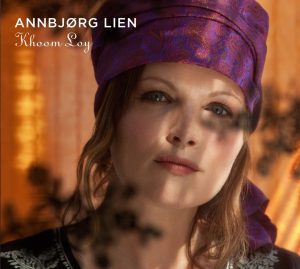
A virtuoso of Norwegian traditional music deeply inspired by the music of other cultures, fiddler Annbjørg Lien crosses musical borders as a pioneer for true “world music.” Khoom Loy, Thai for “Paper Lanterns,” is Lien’s eighth solo album and explores a broad spectrum of traditions ranging from her traditional Norwegian folk to Irish and Asian music, with Lien playing her native Hardanger fiddle as well as the keyed fiddle. Lien says of the album, “this is a tribute to a lovely ritual of the East: releasing lanterns in remembrance of the dead, or as a prayer for a good life. They serve as bridges connecting us to the past and the future, the east and the west, tradition and innovation.”
Steeped in the music of other cultures, Khoom Loy also represents a first for Lien—her world vocal debut to stunning and haunting effect, notably on the title track and “Den Storste Daarlighed,” which also offers a unique fusion of the Indian tabla with Celtic whistles. The album features Bjørn Charles Dreyer, Hans Fredrik Jacobsen, Bjørn Ole Rasch, Per Elias Drabløs, Per Hillestad, Orsa Spelmän, Kristiansand String Quartet, and Pat Broaders.
Winner of the Garmeleng Prize for classical folk and the Hilimar Award in her native Norway, Lien is also is a member of the world music fiddle group String Sisters (Mairéad Ní Mhaonaigh, Liz Knowles, Catriona MacDonald, Liz Carroll and Emma Härdelin) and has collaborated with American fiddler Bruce Molsky amongst many others. Lien comes from a musical family and learned traditional music from her father and classical music at the music school in Ålesund. She has since been teaching privately with other top musicians, as Hauk Buen from Telemark.

In a heartwarming display of international musical cooperation and human solidarity, scores of artists from England, Scotland, Wales, Ireland and the United States have joined hands to create Compass Records’ Hands Across The Water. Produced by Andrea Zonn and John Cutliffe, the CD’s proceeds will go to programs assisting Southeast Asian children whose lives were uprooted by 2004’s devastating tsunami. Yet beyond its tangible contribution to disaster relief, the project gives another rare gift to those who hear it—an entire set of unprecedented, compelling collaborations between some of the finest performers of Celtic and American roots music.
There is no “short list” of Hands Across the Water contributors, for all are among the most respected and preeminent artists in their fields: the 16-track CD features Darrell Scott with Muireann Nic Amhlaoibh, Oisin McAuley and Paul Rodden; Jim Lauderdale with Maura O’Connell; Karen Matheson with Donald Shaw, The Duhks and Bryan Sutton; Jon Randall with Máirtín O’Connor and Alison Brown; Tim O’Brien with Lúnasa; Sharon Shannon with Jackson Brown; Solas with Mindy Smith; John and Fiona Prine with Dermot Byrne; Beth Nielsen Chapman with Christina Quinn, Bonnie Raitt, Michael McGoldrick and Donald Shaw; Paul Brady with Rodney Crowell; Blue Merle with Pauline Scanlon; Altan with Vince Gill; Cerys Matthews with John Jorgenson and Stuart Duncan; Andrea Zonn with Flook and Bill Shanley; John Cowan with the Brock McGuire Band; Jerry Douglas with Ciaran Tourish—and adding still more depth to the album depth is an equally lengthy and stellar array of backing musicians.
While some of these collaborations bring together masters of a particular genre, the CD also features many top artists working outside their usual styles and formats. Vince Gill’s English-language version of a traditional Irish song reworked by Altan is one such highlight; as is “An Occasional Song,” a traditional Welsh number performed by European rock star Cerys Matthews with help from Stuart Duncan and John Jorgenson.
Hands Across the Water was born in a phone conversation between Zonn and Cutliffe last December. Cutliffe, a transatlantic presence in the Irish music world, both behind the scenes and as a player, was horrified by the destruction caused by tsunamis in Southeast Asia. Zonn, an accomplished solo artist and one of Nashville’s busiest fiddlers (regular player with James Taylor, Vince Gill, Alison Brown, Lyle Lovett), suggested that between the two of them, they knew some “pretty good musicians” who “wouldn’t mind helping out if we were to set something up to ease the suffering caused by the Tsunami.” Both remarks turned out to be vast understatements. Cutliffe emailed Garry West of Compass Records, who responded from vacation within an hour, throwing his full support behind the idea. In under a year, Hands Across the Water brought together many of acoustic music’s biggest names, all of whom gave very generously of their work, making time in homes, buses, and hotel rooms to contribute to the project.
Recording the album was truly a trans-national effort, employing the services of 27 studios, 29 studio engineers, and over 100 musicians from Nashville to Sydney, Australia. As Cutliffe wrote, “I myself have driven more than 10,000 miles and we can’t even begin to count the thousands of emails and hours of phone calls that have kept lines buzzing worldwide. We have uploaded and downloaded gigabytes of session tracks and mixes.” Contributing artists chose their own tracks, offering songs and
pieces for Cutliffe and Zonn to mould by adding additional collaborators. The resulting collection is a unique blend of the very best in American roots and Celtic music, an achingly beautiful soundscape that affirms the spirit of working together which made it possible.
FEATURING: Altan • Blue Merle • Paul Brady
• The Brocke McGuire Band • Alison Brown
• Jackson Browne • Dermot Byrne
• Beth Nielsen Chapman • John Cowan
• Rodney Crowell • Jerry Douglas
• The Duhks • Stuart Duncan • Flook
• Vince Gill • John Jorgenson
• Jim Lauderdale • Lúnasa • Oisín McAuley
• Michael McGoldrick • Karen Matheson
• Cerys Matthews • Muireann Nic Amhlaoibh
• Tim O’Brien • Maura O’Connell
• Máirtin O’Connor • Fiona Prine • John Prine
• Jon Randall • Paul Rodden
• Pauline Scanlon • Darrel Scott
• Sharon Shannon • Donald Shaw
• Mindy Smith • Solas • Bryan Sutton
• Ciaran Tourish • Andrea Zonn
Born of a long-standing partnership stretching back over a decade, Raven is an album of assured, fully-realized performances that confidently, nonchalantly distort and dissolve boundaries. Lesser musicians adhere righteously to the lines separating tradition from innovation, soloist from accompanist – but the duo of multi-instrumentalist John Williams and guitarist Dean Magraw interact so effortlessly, and draw from such a wide range of traditions and techniques, that existing borders cease to be relevant. With one listen, the insight and instrumental skill that went into creating Raven is immediately apparent. Repeated listenings reveal a host of subtle musical undercurrents that speak of Williams and Magraw’s profound empathy and endless musicianship.
John Williams and Dean Magraw first met in St. Paul, brought together by the city’s thriving Irish music scene. The twin cities area is home to Magraw, though he is often away performing for audiences around the U.S. and the world. While he has an extensive background in contemporary jazz, Magraw’s passions have lead him to perform in an extraordinary range of contexts, from Celtic and bluegrass to jam band and avant-garde. His solo guitar albums draw from those experiences, synthesizing them via his impeccable technique into soundscapes both moody and tranquil. Hailing from a musical Chicago Irish-American family with its roots in County Clare, John Williams is the first and only American to have won the All-Ireland concertina title. He was a founding member of the group Solas, a band whose unrelenting drive and precision reawakened musicians on both sides of the pond to the potential of Irish traditional music. Upon leaving Solas, Williams has released a series of acclaimed solo albums and served as the traditional musical director for the Dreamworks film Road to Perdition.
“Irish music is our common ground, and the fiddler Martin Hayes was a mutual friend of ours,” explains Magraw. “About ten years ago, Martin and I were doing a show at the Cedar Cultural Center in Minneapolis. We had John come out and do a 45 minute encore – a 45 minute tune set, one after another!” The audience’s reaction was overwhelming, encouraging Williams and Magraw to pursue their partnership, setting aside a few weeks each year to perform as a duo. “We recognized that the possibilities of playing as a duo were intriguing,” says Williams, “and we always get a huge response, year after year. As time went by, there was a lot of pressure from audiences and presenters to make a recording.”
Recorded outside of Chicago, the eleven core tracks of Raven “either took four days or ten years to record,” says Williams, “depending on how you look at it.”
They chose to not bring in outside musicians, keeping the focus on the duo’s well-honed interplay and an intriguing range of original, traditional, and outside material drawn from their concert sets. “You can get more textures the more people you have, of course,” Magraw explains, “but the duo is a special combination that fully exploits each member, yet you really have to listen closely to the other guy. In the future we may bring in guests, but it was really great to explore the sounds we make together…”
Magraw and Williams delight in attacking the material on Raven from a variety of angles. Some tracks find the duo stating the melody straightly in a fine, traditional fashion. Others feature them approaching it more expansively, letting the song arise gradually from the mists of their improvisations. Williams’ work in film-scoring comes to the fore on several cuts, particularly the evocative “Perdition Piano Duet,” which derives from Williams’ contributions to Road to Perdition. A slow-smoldering intensity, such as heard on “Lianna” and the haunting title track, betrays the influence of master Argentine tango composer Astor Piazzolla.
Far from merely accompanying Williams (who contributes whistles, flute, and piano in addition to accordion and concertina), Magraw is an equal partner in the music – engaging in tight unison passages, shaping the tracks’ unfolding with deft counter-melodies and chord voicings, and taking exhilaratingly fleet solos.
The importance of the live experience to their collaboration is apparent in the album’s coda – three songs recorded live at the Cedar Cultural Center in Minneapolis. “The Cedar was the first place we played together,” Magraw says, “and a place we play together every year. They have always been very supportive of our whole musical journey.”
“We originally sequenced the album to conclude with ‘The Raven,’ which is a very smoky, atmospheric track,” says Williams, “but then we decided it needed to end on an exclamation point. Luckily our shows had become popular with a Grateful Dead, newgrass audience, and were being recorded and traded among those fans. So we went back through all the live tapes people had given us, and found that set.”
With the release of Raven, Magraw and Williams plan to expand their annual duo tours and continue to cultivate their rewarding partnership – a partnership whose range Williams feels is well-documented on the album. “A lot of Irish CDs,” Williams concludes, “linger on the same vibe through the course of the entire program. This album unfurls – it doesn’t stay on one flavor for very long. That said, we didn’t feel the need to reinvent the wheel every time. But we do want to take it for a good spin.”

Departing from an Irish pub circa 1962 and passing through Hungary for a chance encounter with a blue-eyed beauty before stopping in the Virginias for an old-fashioned hoedown, Mozaik’s Changing Trains is a musical journey hindered not by genre, place or time signature. Recorded in 2005 in Budapest, Mozaik’s first studio album explores and celebrates the fusion of Irish, European and American folk music. While Changing Trains is a “unique cross-cultural exercise” (Irish Music Magazine), the strength of this album lies within each individual member’s deep respect and understanding of their own musical traditions.
Mozaik are Ireland’s Andy Irvine and Donal Lunny (both original members of Planxty), American born old-time musician Bruce Molsky, Dutch guitarist Rens Van Der Zalm, and Hungarian multi-instrumentalist Nikola Parov. Together they form the ultimate global stringband with a legendary lineage. It was on a lengthy drive through Australia that the great Irish singer, songwriter, and multi-instrumentalist Andy Irvine first envisioned Mozaik. According to Irvine, “The Muse said ‘Get a bunch of your favorite musicians together and do a tour of this beautiful country.’” He continues, “I pondered for not very long before emailing the suspects I had in mind. To my delight they were all into it and thus emerged Mozaik – a band to die for…”
ANDY IRVINE
Born to Irish-Scottish parents in London, Irvine began his artistic career as a young child, trying his hand in acting, acoustic guitar, and traditional music. He moved to Dublin to further develop his Irish trad musical talents, playing such instruments as the guitar, bouzouki, and mandolin. Irvine collaborated with several talented musicians, and formed such bands as Sweeny’s Men, Planxty, and Mosaic. After Mosaic, Irvine began producing music with fiddler Kevin Burke, guitarist/vocalist Gerry O’Beirne, and accordionist Jackie Daly as Patrick Street. Mozaik (a revamped version of the old name) is the most recent culmination of Irvine’s diverse musical experience and visionary propensity.
DONAL LUNNY
Irishman Donnal Lunny’s thirty years of musical prowess is the stronghold of Mozaik. He has been hailed by Irvine as one of the most innovative musicians that Ireland has ever produced. Multi-talented Lunny acts as not only a close friend to Irvine, but also as a professional musician and master arranger for the group. He hears each band member’s niche flavor and acts as the glue that holds the sound of Mozaik together.
BRUCE MOLSKY
Bruce Molsky and Irvine met at a house party Molsky was hosting in Atlanta, Georgia. Irvine first became aware of Molsky’s incredible talent when he first heard him perform “I Truly Understand.” Molsky’s talents with the guitar and 5-string banjo in combination with his old-time musical style contribute a unique zest to the group. Intricate string arrangements perfectly complement Molsky’s plaintive vocals.
NICOLA PAROV
Irvine first met Parov in Budapest twenty years previously, playing with his Balkan band Zsaratnok. Irvine has commented that Parov’s musical propensity is so extensive that an instrument that Parov cannot play has not yet been invented. When Irvine and Parov played together in The East Wind Trio, Parov wielded not only the gadulka, gajda, kaval, and other traditional Bulgarian instruments, but also the guitar, bodhran, and clarinet. As if Parov’s instrumental talents were not astounding enough, he was additionally involvemed with the finest Irish musicians through his performance with Riverdance.
RENS VAN DER ZALM
Rens Van Der Zalm and Andy Irvine first met in Slovenia on the road immediately after Van Der Zalm had graduated. Ver Der Zalm’s style is inventive and creative, incorporating such instruments as the mandolin, fiddle, guitar, accordion, bass guitar, tin whistle, and many other zany gadgets.

Unless you’ve heard them before, you’ve never quite heard anything like the Deighton Family. And if you are familiar with them, then you know that they really are a family of mixed South Moluccan/ English heritage who combine folk, Celtic, Cajun, bluegrass, rock, and everything else around to introduce some of the most refreshing and uplifting music this side of heaven.
-->

