
Orkney-born and son of singer-songwriter Ivan Drever (Wolfstone), Kris Drever emerges from within the surging folk scene with Black Water, a debut album that is “as marvelous as it is timeless.” (Maverick) . Produced by John McCusker and featuring constant conspirators and collaborators Kate Rusby, Donald Shaw, Roddy Woomble and Eddi Reader, Black Water gives a modern washing to folk standards such as “Braw Sailin’ On the Sail” and “Patrick Spence”. “I like either to do songs that haven’t been covered much before,” Drever says, “or folky standards that are open to a different interpretation. I try to steer clear of that kind of typical folk-singer sound, and put my own mark on things.”
Drever admittedly spent most of his youth listening to Metallica and Pantera, all the while learning the guitar and ruining other people’s sessions at the Orkney Folk Festival. At seventeen, Drever left home for the mainland, eventually gravitating towards Edinburgh’s burgeoning session scene and The Tron Ceilidh House, which was then (late 1990’s) the place to be. It wasn’t long before Drever was a regular at this Scottish musicians haven, playing several nights a week.
After a temporary switch to the double bass, Drever subsequently returned to the guitar and began honing his highly individual style – a blend of rhythm and harmony, folk, jazz, rock and country inflections – that now finds him in near-constant demand as a session player. Drever’s earlier live and recorded work includes collaborations with Cathy Ryan of Irish-American supergroup Cherish the Ladies, Scottish fiddlers John McCusker and Bruce MacGregor, Irish accordionist Leo McCann and Gaelic band Tannas, as well as tours of the US and South America with the Irish dance show Celtic Fusion. Drever was also a member of the highly acclaimed trio Fine Friday which released two albums on the Foot Stompin’ label and toured the UK, Europe and Australia before the three went their separate ways to concentrate on individual projects.
In February 2007, Kris Drever was honored with the prestigious Horizon Award at the 2007 BBC2 Folk Awards. Drever recently toured the UK with Eddi Reader and Roddy Hart and will release an album with the band Lau (Aidan O’Rourke on fiddle, Martin Green on accordion) on Compass Records summer 2007.

Nuala Kennedy is a celebrated traditional Irish musician and internationally acclaimed flute player and singer. Touted as “spellbinding” and “a delight,” by the Irish Times, her live performances over the last few years inspired her return to the studio to record Noble Stranger (Compass, avail Aug. 28), a road-tested collection of innovative originals and traditional songs recorded with her touring band. Kennedy uses her traditional music background as a springboard for the new album which offers a 12 song set on which her adventurous instrumentation and progressive instrumentation shine.
Noble Stranger was recorded over a week in the beautiful rolling hills near Biggar, a little town nestled between Edinburgh and Glasgow by Kennedy, her percussionist Donald Hay, 10-string mandolinist Iain Macleod, guitarist Mike Bryan and guest vocalist AJ Roach. Their stage camaraderie translated seamlessly to the studio and this third album is a natural byproduct of their energetic and spontaneous live shows. “The tracks were laid down live, all together, with generally sparse overdubs. The band has been touring together for so long that there’s no other way I could imagine having made Noble Stranger,” comments Kennedy. “The whole album is a real reflection of our live sound.”
Accompanied by the spirited interplay between Bryan’s guitar and Macleod’s mandolin and supported by the tasteful percussion of Hays, tracks on the album intimately connect Kennedy’s own interests in traditional music and her neo-folk composition style. “Spending time in America has given me a greater appreciation of my own traditional musical heritage, and this renewed appreciation is reflected in the choices of some of the older material on the album. Classic traditional songs such as “My Bonny Labouring Boy” and the bonus track “Matt Hyland” are songs I have known for a long time and they seemed to re-emerge as a natural part of this record.” Not all is tradition here, a vintage Casio keyboard given to Kennedy by Norman Blake of the Glasgow band Teenage Fanclub inspired several album tracks, including the light and groovy album opening “Gabriel Sings.” “I was immediately drawn to the simplicity and transportability of the instrument and it strongly influenced the direction of the arrangements.”
Kennedy has recently been calling New York City a home-away-from-home, absorbing and contributing to the City’s growing neo-folk scene. She was raised playing and singing traditional music on the East coast of Ireland – an artistic area steeped in mythology with long historical ties to Scotland. Captivated by the traditional Irish and Scottish repertoire, she went on to study at the Edinburgh College of Art, mentored under fellow Irish expatriate Cathal McConnell and formed her first trio with guitarist Kris Drever and fiddler Anna-Wendy Stevenson and released two critically acclaimed albums. Her first two solo albums, The New Shoes and Tune In, were released through Nashville-based roots music company Compass Records Group and were universally well received. She has performed and recorded with Will Oldham (Bonnie ‘Prince’ Billy), Norman Blake (Teenage Fanclub), Norwegian musicians Frode Haltli and Vegar Vårdal as well as the late Canadian composer Oliver Schroer. Kennedy is also a member of the traditional music group Oirialla performing music of her native North-East area of Ireland alongside Gerry ‘fiddle’ O’ Connor and Martin Quinn and she holds a Masters Degree in Music Performance and Composition from Newcastle University.
“Noble Stranger, you have ventured to me from the land of your fathers,” sings Kennedy on Noble Stranger‘s final track “Napoleon’s Dream,” a sentiment that reflects the underlying theme of the album. In joining the burgeoning New York folk music scene, she has also imported her distinct virtuosity and strong sense of traditional Irish identity—an identity that, inspired by her many influences, continues to evolve and define new boundaries for her tradition.
Kaila Flexer is a violinist, composer, producer and Artistic Director of Worldview Cultural Performances, an Oakland-based non-profit arts organization. She is best-known locally for having founded and produced Klezmer Mania!, a much-loved annual Bay Area Jewish music event for over 10 years (1989-2002). She has been at the helm of bands such as Third Ear, Next Village, The Klezmer Maniax and Kaila Flexer’s Fieldharmonik, ensembles that feature Flexer’s original material. As a composer, her work reflects her deep respect for folk music, while showcasing her ability to forge new and expansive musical landscapes. She has performed both nationally internationally with her own ensembles as well as with groups including The Hollis Taylor-Kaila Flexer Duo , The Flexer-Marshall Duo, Club Foot Orchestra, The Composer’s Cafeteria, The Bay Area Jazz Composer’s Orchestra and KITKA (Bulgarian Women’s Vocal Ensemble). She has recorded two CD’s of original music for Compass Records (Nashville) to critical acclaim. Flexer, along with collaborating organization The Crowden School, were recipients of a 2005-2006 Creative Work Fund grant (link to Current and Past projects page—Xylem Folkestra). Her current project is Teslim, (link to Teslim page) a duo that performs Turkish and Greek folk music as well as original music by Hegedus and Flexer. In addition to performing, Flexer loves teaching both violin and composition and has a thriving studio in Oakland, where she lives with her seven-year-old daughter.

1. Lúnasa: Meitheamh: Fleaur De Mandragore/Ash Plant/Siobhan O’Donnell
2. Sharon Shannon: A Costa De Galica
3. Paul Brady: Arthur McBride and the Soldier
4. Paddy Keenan & Tommy O’Sullivan: O’Rourke’s/The Spike Island Lassies/Lord McDonald’s
5. John McCusker: The Big Man/Waiting For Janet
6. The Poozies: Another Train
7. Éamonn Coyne: Mazurka & Jigs
8. Niall & Cillian Vallely: Malfunction Junction
9. Cathal McConnell: There’s a Day
10. Tony McManus: Lady Ann Montgomery’s Reel/Eilish Brogan/Paddy Fahey’s
11. Bill Jones: Loving Hannah
12. Alan & John Kelly: The One That Was Lost/The Hag’s Purse/The Black Rogue
13. Michael McGoldrick & John McSherry: Rolling Waves
14. Kate Rusby: I Wish

Kate Campbell has been described as one of the most literate songwriters in music today. She embraces many styles in her writing: folk, contemporary acoustic, rock, alternative country, and touches of soul and blues. CD Review wrote “(Kate Campbell) is an important voice that brings literary focus — devoid of pretension — to music that bridges the gap between country and folk”, Campbell has found a musical home in her writing that falls somewhere between Memphis and Muscle Shoals. Still moved by the experiences that shaped her as a child growing up in the South, Campbell’s music has grown to encompass every aspect of the human experience, connecting with all those who hear it and gaining her a large circle of admirers in the U.S. and around the globe.
On Rosaryville, her fourth release on Compass, Campbell reflects on the pursuit of art and devotion in everyday life. With a deep respect for where she came from, Campbell says, “Something told me I had to make sense of how I was connected to the world I came from before I could go on to connect to the world at large.” On Rosaryville, Campbell has found that worldly connection on such songs as Rosa’s Coronas where she writes about the dignity and devotion of a woman who rolls cigars for a living in Cuba. “The woman thinks about her daughter and grand-daughter who have fled their native country for America while the lector in her factory reads to her about the violence happening there.” Campbell contemplates the mysteries of life in New Orleans on the song Porcelain Blue and reflects on the changing relationships between mothers and daughters on In My Mother’s House. The album represents Campbell’s first time out as producer and features the legendary Spooner Oldham. “I’m interested in the fact that different places have their own unique traits and that the people who live there share them.”
Songs From the Levee, Campbell’s highly acclaimed debut, earned her features on Prime Time Country and NPR’s All Things Considered. In 1995, Farm Journal, the nation’s premier and most widely circulated agricultural magazine, presented her with the prestigious Farm Song of the Year award for “Bury Me in Bluegrass”. The same year, Campbell was voted Best New Artist by the listeners of Boston’s WUMB Radio, and received an Indie Award nomination for Best Singer/Songwriter from the Association for Independent Music (AFIM).
On her second solo outing Moonpie Dreams, Campbell continued to evoke a strong sense of place and timeby creating vibrantly alive characters. Moonpie Dreams received a Nashville Music Award nomination for Folk Album of the Year, was voted Country Album of the Year by MOJO Magazine, and was featured in the now legendary and critically acclaimed Southern Music Issue of the Oxford American. Both Songs from the Levee and Moonpie Dreams climbed into the Top Five.
On Visions of Plenty, Cambell’s third release, she talked about the changing Southern landscape and included themes of land, race and religion. The album was nominated for a Nashville Music Award and featured guests Emmylou Harris, Anthony Crawford, Bo Ramsey, Kevin Gordon and Spooner Oldham. It touched on such subjects as school bussing and integration (Bus 109), the civil rights movement in the turbulent 60’s (Crazy in Alabama), economic disparity (Visions of Plenty), the declining steel industry and its environmental aftermath (Deep Tang), the commercialization of religion (Jesus and Tomatoes), as well as grief and loss (Sing Me Out). The album was highly acclaimed and American Songwriter said, “this Cd is a celebration of Campbell’s unique vision”.
Campbell also saw success as a songwriter when The Nashville Bluegrass Band included her haunting song, Signs Following on their 1998 Grammy nominated album, American Beauty. Galaxy 500 was featured on NPR’s Car Talk and she was a featured songwriter in the book, Solo, along with Sheryl Crow, Sarah McLachlan, Shawn Colvin, Suzanne Vega, Jewel and others.
Rosaryville is an album that is destined to catapult Kate Campbell into the realm of great Southern writers. “I’m going to write songs no matter what. Whether I’m making records or not. It doesn’t matter whether the people who listen are from Mississippi or that they’ve even seen Mississippi. I’ve had people in England who say, “I’ve never been to Mississipi but I know what it’s like from your songs. When I get that kind of response, I’m completely gratified. That’s what art and humanity is all about — making that connection.”

Joe Derrane electrified the world of Irish music back in the late 1940s when as a high school senior he recorded eight solo 78-rpm shellac discs for Boston’s Copley Records on the D/C# two-row button accordion. Through his recordings and performances, this native Bostonian defined the state of the art in Irish-American button accordion playing.
The Boston-born son of Irish immigrants, Joe Derrane is among the finest button accordionists in the history of Celtic music. He is also a somewhat elusive legend in the genre. After recording during the 1940s and ‘50s, he disappeared from the traditional music circuit for thirty-five years, popping up again in 1994 at the Irish Folk Festival at Wolf Trap. Since his career’s resurgence he has proved wrong F. Scott Fitzgerald’s famous quote “there are no second acts in American lives”. Over the past 16 years, Derrane has written 22 tunes and his current writing and recorded output is the most imaginative and inventive of his career.
In 2004 Derrane received one of the highest honors for a traditional musician: the National Endowment for the Arts’ National Heritage Fellowship.
Passion and precision, authenticity and diversity: these are the hallmarks of Ireland’s traditional music quintet, The Brock Mcguire Band. They are steeped in tradition and perform it with abiding respect and rousing creativity. The band’s tight, tenacious blend of instruments often reaches fever pitch on stage, and their repertoire runs wide and deep, emphasizing mostly Irish music but also sprinkling in exciting arrangements of Shetland, French-Canadian, and other Celtic traditions.
Founding members button accordionist Paul Brock and fiddler Manus McGuire are two of Ireland’s most celebrated traditional musicians, and have been at the forefront of Irish music for many years through their joint work with the group Moving Cloud. Manus is also a founding member of Buttons & Bows, and both bands, ranking among Ireland’s finest, have helped to introduce international audiences to the virtuosity of their playing.
A multiple All-Ireland champion born in Athlone, County Westmeath, and now residing in Ennis, County Clare, Paul has many albums to his credit, including the classic Omós do Joe Cooley with fiddler Frankie Gavin, and his solo album Mo Cairdín called “a master piece of accordion playing” by the Rough Guide to Irish music, 2001. Manus was raised in Sligo Town and now lives in East Clare. His solo album Saffron and Blue was placed in many overseas top-ten music polls and was also named best album of 2000-and Manus, best male musician of the same year-by the Irish American News.
Performing with the Brock McGuire Band are two highly-rated musicians on the traditional music scene: young Galway player Enda Scahill, a five-time All-Ireland champion on tenor banjo and a senior All-Ireland champion on mandolin, and his brother Fergal Scahill, a superb multi- instrumentalist who has an all-Ireland senior fiddle title to his credit and who drives the rhythm section of the band on guitar and keyboards.
Manus McGuire
Growing up in Sligo in the 1960s when fiddle music had regained popularity in its native home, the Northwest of Ireland, Manus McGuire was ideally placed to carry on a tradition made legend by fiddlers Michael Coleman, James Morrison, and Paddy Killoran thirty years previously. From an early age, he learned various dance tunes by his father’s knee and followed his older brother, Seamus, into the national traditional music arena that was steadily gathering momentum. In 1970, at the young age of 14, Manus won Sligo’s prestigious Fiddler of Dooney competition. Since then, he has toured extensively in North America and Canada.
Manus has recorded eight albums, including The Humours of Lisadell (Folk Legacy, 1980), and Carousel (Gael Linn, 1984),with Seamus; Buttons & Bows (Green Linnet, 1983), First month of Summer (Green Linnet, 1987) and Grace Notes (Gael Linn, 1991), all with the group Buttons & Bows; Moving Cloud (Green Linnet, 1994) and Foxglove (Green Linnet, 1997), with the group Moving Cloud; and a solo debut, Saffron & Blue (Green Linnet, 2000) This last recording was placed in the Top Ten polls of the Boston Globe and Irish Echo newspapers. It was also named Best Album of 2000–and Manus, Best Male Musician of the same year–by the Irish American News.
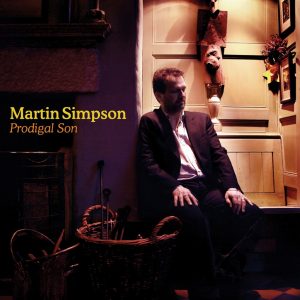
“A guitar god in the US, Simpson has been blending folk and country blues for four decades. Danny Thompson and Radiohead’s Philip Selway are among his helpers on this tasty mix of trad and original material.” – Q Magazine
“A very different animal to Prodigal Son, but in its own way, equally formidable. He sweeps from down’n’dirty to tender reflection in the blink of an eye.” – MOJO
“Martin Simpson returns with an album that confidently walks a tightrope over the gulf between tradition and contemporary songwriting—this is folk at its finest.” – Sunday Mercury
“His performances elicit powerful emotions and subtle, understated beauty.” – Guitar Player Magazine
English folk singer and guitarist Martin Simpson’s last album Prodigal Son was a universally acclaimed, career high for the five time BBC Folk Award winner. His follow up release True Stories is even better. The album features some of England’s finest musicians including bass legend Danny Thompson, Radiohead drummer Philip Selway, pedal steel legend BJ Cole, Bellowhead frontman Jon Boden and many others. The tracks are evenly split between traditional tunes and Martin’s original compositions. Add this to the superb guitar work and vocals from Simpson and you have yet another exceptional disc from this most celebrated British folk icon.
Like the best musicians, Martin Simpson deploys a control of pace and dynamics to his playing that touches the heart, regardless of whether the listener has a bit of Lincolnshire, Mississippi or Ganges beneath their manicured or careworn nails. Martin’s career has included collaborations on stage and in the studio with Kelly Joe Phelps, Danu, Cara Dillon, David Lindley, Dick Gaughan and David Hidalgo (of Los Lobos). He’s a regular nominee at the BBC Radio 2 Folk Awards and was named Musician Of The Year in both 2002 and 2004 and won both Best Original Song for “Never Any Good” and Best Album for Prodigal Son in 2008.

On his debut solo album entitled Far From the Hills of Donegal, Oisin McAuley embraces the opportunity to express musical ideas in a manner that reflects his highly individual and progressive style of fiddle playing. “You’ll probably hear a lot of stuff that is not very traditional, that reaches a bit beyond that,” says McAuley, who has been a member of the award-winning band Danú since 2001. “Danu is known for being a traditional band, but playing music that reaches out from the traditional has been part of my life for a long time, longer than I’ve been with Danú.”
This collection of songs shows McAuley’s approach to tradition is an eclectic one. It begins with the many flavors of Donegal music, moving through Sligo to Brittany to Quebec, and back to Western Ireland. McAuley infuses his traditional musical styling with jazz, bluegrass, and classical.
McAuley grew up in a quiet, rural part of Western Ireland, speaking Irish as his primary language and honing his craft in the wide-ranging and experimental style of famed fiddle player John Doherty. “You’ll hear a lot of John Doherty on this record, both his music and his style,” McAuley says. “He mixed up and changed things a lot, so in a way it was easier for me to mix up different types of tunes.” On this project that mix includes Port Na Bpucai (or Tune of the Fairies), a piece that reaches back into the tradition, Swing and Tears from Breton composer and guitarist Gille Le Bigot, and a set including Paddy Fahey’s My Former Life/Paidin O’ Raifertaigh/The Rumors of a Dart. The last tune is McAuley’s own composition, as are several other pieces on the disc. “The Scottish or Irish tunes that you hear on there are ones that I’d picked up along the way, that are special to me, and ones that I hadn’t heard many other people play, except for the people they came from. I wanted to include some tunes that I had composed myself, too. That’s something I love to do,” McAuley says.
McAuley has been involved with music from an early age, starting with the fiddle when he was nine and living in Carrick County, Donegal. “My grandfather played the fiddle, and he’d often give bed and board to fiddlers, just to hear tunes in the house,” he recalled. Traditional music took a back seat to classical when McAuley moved to Belfast to earn a music degree at Queen’s University, and followed that with a series of gigs (including time with Cran and Stockton’s Wing), some teaching, and a year in Brittany playing with a band and learning tunes before later going on to join Danu. McAuley is now based in Boston, where the sounds and rhythms of bluegrass and newgrass, as well as his love for jazz, attract his ear and his interest in discovering new sounds. “I can never get enough tunes. I love Charlie Parker and Bill Evans and newgrass, too.”
McAuley is rooted and grounded in the West Ireland musical tradition, a tradition that is known for taking influences from other lands and building upon them. For McAuley, reaching beyond traditional Irish music is as much a part of preserving tradition as well as extending it. “There’s no doubt that part of me comes through,” he says. “And it was a great for me to get my ideas down the way I wanted to. It was very freeing for me.”
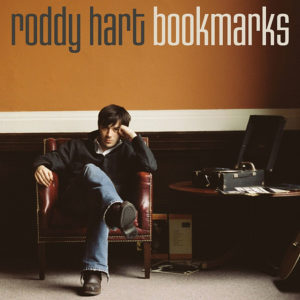
“The voice, like a fledgling Willie Nelson, captivates” – UNCUT
“Echoes of a young Jackson Browne or Ron Sexsmith…Outstanding.”
– THE DAILY EXPRESS
“All the makings of a classic…timeless…a well crafted, stunning album”
– THE SUNDAY MAIL
Twenty-six year old Scotland native Roddy Hart’s mature, self-assured voice is in direct contrast to the songwriter’s youthful appearance. While it typically takes most singer/songwriters considerable time to shape their individual voices and their ability to write with a sense of self, Roddy Hart has done so at a noticeably young age and with relatively little live performance or studio time. One could attribute Hart’s remarkably mature songwriting to his propensity for assimilating his rootsy Americana influences, namely Bob Dylan, Bruce Springsteen and Kris Kristofferson, the latter of which has embraced the young songwriter and contributed to his debut release, Bookmarks. Although Hart was predestined to become a musician, it was not until after a five-year stint at law school (which resulted in a first class honors degree) did he focus his efforts on song craft. “I never had any intentions of doing anything other than music, but I just wanted to broaden my horizons – I felt I was too young and unqualified to write about things I hadn’t experienced yet,” Hart says. Like a fine wine, Hart waited to uncork his gifts until they had fully matured, a sense of restraint that is apparent in his vocals. “The first thing I did when I graduated was record eight songs on an old four-track machine, put together some homemade covers, and sent them off to anyone who would listen.” Despite instantly picking up management and attracting some record company interest, Hart opted to develop his stage craft first – “I felt relatively inexperienced, hadn’t sung in public before, so would just play to anyone, anywhere to get some idea of an audience and how best to play the songs live” – and embarked on a number of shows where he quickly built up a reputation as a promising songwriter and performer, landing him opening spots for John Prine, Ray Lamontagne, and Kris Kristofferson and collaborations with Ryan Adams, Brad Pemberton, and the Trashcan Sinatras.
For a kid from Glasgow, Hart has produced an incredibly fresh piece of American sounding music. Bookmarks, to be released spring 2007 on Compass Records, is colored with the nostalgia-inducing twang of the pedal steel, driven by the harmonica’s gutsy tones and filled with weathered yet inspiring melodies delivered in Hart’s tremulous and timeless voice. The first track, “The Life & Times of Joseph Rowe” is a tune of resignation, sustained by the harmonica-filled “She Is All I Need.” Kris Kristofferson and former Fairground Attraction vocalist Eddi Reader join Hart’s rich vocal timbre on the surefire hit “My Greatest Success,” an unabashedly naked confessional, bristling with truth. On “Suffocate,” Hart dips in and out of falsetto while delivering the lines “rip it up and tear it down/burn it to the ground/do you suffocate when you hold me/do you live for the day that I leave,” marking the song as one of the albums gems, and drawing comparisons to Ryan Adams. The final track, fittingly titled “Journey’s End,” echoes the first song, and helps to tie together the record’s prevailing theme of loss, renewal, and loss again, closing an album of memorable songs, stunning collaborations, and moments of rare musical beauty.
Roddy Hart currently resides in Glasgow, Scotland and is planning a tour of the US later this year once he completes a UK tour in support of Kris Kristofferson.

LAU has been described as “a formidable union of three of the finest and most innovative exponents of modern traditional music in Scotland today”; Kris Drever (guitar and vocal), Martin Green (piano accordion) and Aidan O’Rourke (fiddle).
Recorded in the winter of 2006, Lau’s debut album, lightweights & gentlemen, sound like men willing to redefine how a trio can sound. Arming themselves with both highly original repertoire and some superb takes on traditional song, their fearless appetite for improv, dig deep into a wild array of genres taking in their influences from around the world and spitting them out as a perfect folk -jazz stew.
The album is a testament to the skills of all three members: Kris Drever’s amazing guitar work and formidable vocals showcases the talents that won him the BBC Folk Awards “Horizon Award”; Aidan O’Rourke’s playing shows you why he won “Instrumentalist of the Year” at this seasons Celtic Music Awards; Martin Green takes the Piano Accordion to places your ears can only dream about visiting. No guests, No frills just three of the finest young artists working in traditional music today showing us what can be done when you keep one ear to the past and an eye on the future.
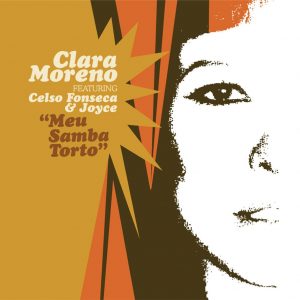
Clara Moreno is the daughter of the famous Brazilian singer/songwriter/guitarist Joyce and composer Nelson Angelo. Born in Brazil in 1971 Moreno recalls her early musical experiences with great fondness: “Every night my mother would rehearse and we use to go to all her concerts – I grew up listening to music from an early age.”
Moreno’s career began soon after she learned to talk, performing backing vocals in children’s choirs for artists such as Milton Nascimento, Egberto Gismonti, Joyce, Originais do Samba and Trem da Alegria amongst others. In 1989, aged 18, Moreno went to study music in France and it was in Paris where she both recorded her first single and first performed solo. She performed regularly at the Lionel Hampton Jazz Club beneath the Le Méridien Etoile hotel – one of the city’s most distinguished jazz venues. In 1991 at Paris’ Théâtre de La Ville, she appeared onstage alongside her mother. Moreno fondly remembers her time in Paris and on her new album, she pays tribute to Edith Piaf, “the French singer who thrilled me most”, with a wonderful cover of “Mon Manege A Moi”.
When she was 23, Moreno returned to Brazil in 1994 and launched straight into a music career, guesting on the track “Minha Gata Rita Lee” on Joyce’s CD Revendo Amigos. This followed guest appearances alongside other artists such as Nelson Ângelo and Robertinho Silva. Her first solo show in Brazil was in 1995 at the Au Bar in Rio in a tribute to the famous Brazilian singer Rita Lee. In 1996, Moreno opened for Paulinho Moska at the Garota de Ipanema park in Rio and recorded her eponymous debut CD.
In 1997, Moreno went to Japan where she appeared in the Gets Bossa Nova show in Tokyo, Japan. That same year she contributed a recording of “Só Danço Samba” for the tribute to Bossa Nova CD 40 Anos de Bossa Nova which solidified her standing as a Brazilian singer in her own right. Her third album Mutante was recorded in 1999, and picked up for worldwide distribution by UK based Timewarp Distribution. At this point, her name was brought to the attention of Brazilian music fans the world over.
2002 saw the release of Morena Bossa Nova – her fourth CD where she experimented with electronic music to create an album with a contemporary take on bossa nova. It was recorded while Moreno was pregnant with the child of producer Rodolfo Stroeter (the producer of Joyce’s most recent CDs Just a Little Bit Crazy and Rio Bahia). Morena Bossa Nova features the Norwegian keyboard player Bugge Weseltoff as well Teco Cardoso, Robertinho Silva & Nailor Proveta – all regular contributors to Joyce’s recent albums.
With Meu Samba Torto, Moreno felt the urge to strip things down and pay tribute to the musical heritage of the city she is from: “Bossa nova has always played a very important role in my life, and I decided to go for it with this CD and really search for the feeling of what it’s like to be a “carioca”. Having listened to this music all my life I had no trouble of thinking of songs to cover and my mother Joyce, suggested some nice songs, as did Celso. I feel that the album has a 60’s bossa nova feeling, which is great, but at the same time, the music that we have done is up to date and reflects a modern view through the roots of Brazilian music.”
Meu Samba Torto features a stellar line-up of Brazilian musicians including Moreno’s mother, the legendary Brazilian singer-songwriter Joyce, and the celebrated songwriter and guitarist Celso Fonseca. It’s Moreno’s most personal album yet and this is something she’s proud of: “The album has a certain level of spontaneity that I don’t think is very common these days. With the exception of the songs arranged by Joyce, the arrangements were all decided once we all arrived in the studio. Everything was recorded live and I was lucky to be blessed with the involvement of Celso Fonseca, Joyce, Tutty Moreno, Rodolfo Stroeter, Diego Figueiredo and Ricardo Mosca – all of them very creative and stylish musicians who helped create an end result of modern music yet steeped in tradition. The album was simply constructed around guitar/bass/drums and the idea was to bring a certain degree of intimacy between myself and the listener“.
Meu Samba Torto features two new compositions written especially for Moreno by Joyce (“Sabe Quem”) and Celso Fonseca (“Litorânea”). In fact with it’s “live” sound, Joyce’s influence runs through Meu Samba Torto. This was a challenge for Moreno: “I had never recorded a “live” album before yet as we began recording, I started to gain more and more self-confidence.” According to Moreno though, there are other amazing musicians besides Joyce who are influential artists on Meu Samba Torto: “João Gilberto is the greatest influence on this album – he is the main root of the cd. I have been listening to him all my life, but during the process of creating this album, I dived deeply into his mood and I recorded many of the songs using João Gilberto’s light – his inspiration was a gift to me”.
Vanguard of the new bossa nova movement, Celso Fonseca plays guitar and sings on three songs on the new album, and the blend of his and Moreno’s voice create some of the albums highlights. There are interpretations of classic bossa nova tracks such as “Moça Flor”, originally recorded by the Tamba Trio, “Vem Morena Vem”, from Jorge Ben’s debut album, and “Morena Boca de Ouro”, made famous by the one and only João Gilberto.
-->

