Michael Black’s self titled album includes a music hall song from the 1930s, a traditional song sung in Irish, a ballad about war and the costs of it from New Zealand, a sea shanty, and a song to dance the baby on your knee. What makes it a cohesive whole is Black’s voice and his love of and natural ability to convey a good story.
Dublin born Michael Black grew up in a family of singers. Mother, Patty, and father, Kevin, filled their home with music and their children clearly took up that love, with all five of them following music professionally at various points in their lives. Black has often performed with his brothers Shay and Martin as The Black Brothers, and he is older brother to Irish superstar Mary Black and top solo artist Frances Black. All five have also recorded three albums together as The Black Family.
“The music’s in my blood, you know, I don’t think there’s anything I can do about it,” he reflects, laughing. With a doctorate in sociology, Black has taught at the university level in San Francisco where he now lives but, “really, my job is a dad. I have three small kids, three girls. My wife works a professional career, and when they came along we made the decision that I’d care for them. I’ve been a teacher, been around kids all my life, so it was a natural decision.” With his daughters growing up, it was time to turn more of his attention to his music. One of the results is his first solo album.
Each of his siblings add vocals to various cuts on this collection, but it is very much Black’s voice, style, and ideas which are the driving force of the album. There’s his ebullient sense of humor on “My Father Loves Nikita Kruschev”, the lively trip he leads around Irish tradition, fun and landscape with “Little Pack of Tailors” / “I’ve Got a Toothache”, a thought provoking look at a soldier’s choice in “The Deserter”, and a heartfelt ballad of the coal miner”s life on “The Coming of the Roads”. “Celt’s very representative of what I do when I’m performing,” Black says. I don’t stick to just that one genre of traditional Irish music, I select from things that suit me and that I like. I needed to make an identity for myself,” he says. “People would say well, we know the name, but we don’t know you. And I wanted to make something I was proud of musically.” To that end, he recruited producer John Doyle, “and I was really lucky. John’s a great guitarist, and a great producer, he’s got a really quick ear, and he understands acoustic music.”
The family pitched in to add outstanding harmonies to the tracks, too. Black’s brothers and sisters Shay, Martin, Mary and Frances all sat in, as did members of the next generation of the Black family, including rising pop star Danny O’Reilly and up and coming singers Eoghan Scott and Roisin O’Reilly. “They’re even more amazing singers than we are,” Black says. “All the family can sing, so why not have them all along?” he adds with chuckle. In addition to John Doyle on guitar and bouzouki, others who support Black on the recording include fiddlers Liz Carroll and Liz Knowles, Solas’ Seamus Egan on whistles, Chico Huff on bass and Dirk Powell on piano.
It’s Michael Black’s voice and influences that hold the center around which these voices and instruments work. Being Irish is part of who he is musically, and he incorporates that into his music always “but I don’t stick to just one genre,” he says. “I’m rooted in roots music, music of the people.” His beloved roots music, from Appalachian ballads to Irish jigs to songs of reflection, is what’s celebrated on this recording. “I’m singing this stuff, and people are enjoying it. This is what I do. This is what I sing.”
Athena Tergis hails from San Francisco where she released her first album at age 16. Shortly after, she moved to Ireland to follow her musical passions where she lived for over 3 years playing with groups such as the Sharon Shannon Band. Her musical journey brought her to London and then on to New York where she starred in Riverdance on Broadway for the full year and a half run of the show. Her talent for many genres of music attracted the attention of Bruce Springsteen’s sax player, Clarence Clemmons with whom she toured for over a year.
In 2001 Athena joined up with Mick Moloney, John Doyle and Billy McComiskey in the Green Fields of America playing Traditional Irish tunes and songs at they’re best while exploring the music’s journey to America. The Green Fields of America’s self-titled album was on Compass records, as was Absolutely Irish! a documentary about 2 special concerts produced by Paul Wagner for PBS. Also on Compass records, Athena Tergis’ solo album ‘A Letter Home’ was produced and accompanied by John Doyle.
In 2009, Athena performed as a featured soloist in a 49-city tour of the Dublin Philharmonic Orchestra. With a tour of China scheduled for 2010, Athena began composing, working with several top classical composers and arranger.
Now living in the village of Montalcino in Tuscany, central Italy; Athena and husband Mario Bollag have built a state of the art recording studio called TerraLuna Studios in the hills of Tuscany www.terralunastudio.it . While still touring regularly, Athena is also very involved in running their winery, Terralsole.
Armagh-born Niall Vallely has established himself in recent years as one of the most original and distinctive voices in Irish music. A former member of Cork-based band NOMOS, he has been acclaimed throughout the world as one of Ireland’s greatest concertina players. Niall began learning the concertina at the age of seven, taught by his parents Brian and Eithne Vallely, founders of the Armagh Pipers’ Club, and over the years he has developed a unique approach to playing the instrument.
A resident of Cork since 1988, Niall completed a degree in music at U.C.C. in 1992. As a student he was involved in various musical projects with composer/pianist Mícheál Ó Súilleabháin.
In 1992 Niall was featured on the highly acclaimed BBC/RTE television series ’A River of Sound’, and had a track included on the Virgin album and BBC video that accompanied the series. In 1990 Niall formed NOMOS who went on to become internationally recognised as one of the most important Irish bands of recent times. They recorded two critically acclaimed albums, before splitting up in 2000.
In more recent years Niall has been performing in a solo capacity and with musicians such as Karan Casey, Tim O’Brien,
Mícheál Ó Súilleabháin, Paddy Keenan, Mel Mercier, and others. In 1999 he released his debut solo album, BEYOND WORDS, and in 2003“Callan Bridge”
(Compass Records) with his brother Cillian on pipes.
Paul Meehan
Paul grew up and started learning Irish music in Manchester in the midst of a flourishing scene which also produced the likes of Mike McGoldrick and Dezi Donnelly. In his early teens Paul moved back to Middletown, County Armagh with his family. He quickly established himself as a rising star on the banjo, while more recently spending a lot of time on the guitar.
He spent a few years living in Cork City where he became a member of the highly acclaimed North Cregg, with whom he recorded three albums. He has also spent a number of years touring and recording with Dorsa and the Karan Casey Band. He is currently a member of one of Ireland’s foremost traditional bands, Lunasa. In recent years Paul has also appeared on stage with the likes of Altan, At the Racket, Paddy Keenan, Tommy Peoples and Liz Carroll.
Caoimhín Vallely
Like his older brother, Niall, CaoimhÃn grew up in Armagh and began tin whistle lessons at the Armagh Pipers Club before moving on to learn the fiddle. He also started classical piano lessons at this time. On leaving school he went to University College Cork to study music. From there he moved on to the University of Limerick where he studied for an M.A. in Traditional Music Performance.
He has played and recorded with many different bands and individuals over the past ten years including North Cregg, Upstairs in a Tent (along with Brian Finnegan now of Flook, and Kathryn Tickell), Nomos, The Karan Casey Band, Alan Kelly, Mícheál Ó Súilleabháin and Mel Mercier, Barry Kerr, and Martin Meehan. In late 2005, he released his debut solo piano album, entitled “Strayaway”.
Watch
“She suggests the future of the Celtic fiddle.” – The Washington Post
“Her originality and rhythmic swing well provide the bridge Irish music needs to break through to a mainstream audience.” – The Los Angeles Times
”She electrifies the crowd with a dazzling show of virtuoso playing” – The Irish Times
It is a rare grade of artists whose work is so imaginative and virtuosic that it alters the medium. It has been said that the task of respectfully exploring the traditions and progression of the Celtic fiddle is quite literally on Eileen Ivers’ shoulders.
Over the past 15 years, fiddler Eileen Ivers has established herself as the pre-eminent exponent of the Irish fiddle in the world today. Well known as a nine time All-Ireland Fiddle Champion, founding member of Cherish The Ladies and musical star of Riverdance, Eileen Ivers has performed with The London Symphony Orchestra, The National Symphony at The Kennedy Center, The Boston Pops, The Chieftains, Hall and Oates, Afrocelts and Patti Smith. Ivers’ recording credits include over 80 contemporary and traditional albums and numerous movie scores including “Gangs Of New York” and “Some Mother’s Son”.
The daughter of Irish immigrants, Eileen Ivers grew up in a culturally diverse neighborhood in the Bronx, New York. Rooted in Irish traditional music since the age of eight, Eileen proceeded to win nine All-Ireland fiddle championships, a tenth on tenor banjo and over 30 championship medals.
Being Irish-American, the intrigue of learning more about the multicultural sounds of her childhood took hold. After graduating magna cum laude in mathematics from Iona College and while continuing her post-graduate work in mathematics, Eileen fully immersed herself in the different genres of music she experienced growing up in New York. Perhaps it was the mathematical mind coupled with her passion for seeking parallels in certain traditional music styles which contributed to what has become the signature sound featured in much of Eileen’s recordings since the late 1980’s.
The release of Ivers’ latest CD, An Nollaig: An Irish Christmas, coincides with her annual Christmas tour and Christmas symphony shows. It is a truly joyous, animated and at times contemplative Christmas collection composed equally of beautiful airs, traditional carols, dance tunes and holiday classics. An Nollaig: An Irish Christmas continues to display why Ivers, while always staying respectful to the tradition, is hailed as one of the great innovators and pioneers in the Celtic and world music genres.
Watch
Karan Casey is one of the most influential and imitated vocalists in Irish and American folk music; a natural innovator, she proves that the ancient and the modern make excellent bedfellows. On Ships in the Forest, her fifth solo album and debut with the Compass Records Group, Casey’s warm, soulful voice ebbs and flows around ballads both timely and timeless. Produced once again by Donald Shaw (of Capercaillie fame), the album was recorded at Casey’s home in County Cork and features the members of her current touring band, Caoimhín Vallely (piano), Kate Ellis (cello) and Robbie Overson (guitar) along with special guests Kris Drever, Niall Vallely and Cillian Vallely.
The songs found on Ships in the Forest range from fresh arrangements of tried and true folk standards (“Black is the Color of My True Love’s Hair” and “Johnny I Hardly Knew Ye”) to “The Fiddle and the Drum”, Joni Mitchell’s 1969 anti-war madrigal and Martin Furey’s newly-composed “The Town of Athlone”. Casey says of the album: “I feel that this is by far my most ambitious album to date. I think it has taken me all my years as a singer to come to the point of feeling confident enough to tackle the big songs within the traditional repertoire.”
As well as touring extensively with her own band, over the past two years Karan has performed with Peggy Seeger, Liam Clancy, Solas, Lunasa, Breton guitarist Gilles le Bigot, Mícheál Ó Súilleabháin, Iarla Ó Lionáird, Karen Matheson and Donald Shaw and was involved in Mick Moloney and Paul Wagner’s Absolutely Irish film project which will be screened on PBS in 2008.
New ventures for 2008 include The Vallely Brother’s Big Band, Karan and Seamus Egan’s new project involving Aoife O’Donovan and Lau, and Niall Vallely’s “Turas na dTaoiseach/Flight of the Earl’s” event, which was premiered in Belfast’s Grand Opera House in November 2007 and is to be repeated during 2008 in Louvain, Belgium.
Casey began 2008 with critically acclaimed appearances at the renowned Celtic Connections festival in Glasgow and will be touring North America throughout February and March.
Watch
Talking to Jeb Loy Nichols about his life is like watching a road movie. The restless pursuit of an unnamed goal, the constant search for something just out of reach. “It’s true”, he says, walking through the fields of his Welsh farm, “I’ve done some moving.” It’s all there in his music. The country, bluegrass, and pop of his early years, the rebel music of punk and reggae, the deep grooves of the south. “It’s all a road”, Nichols says, “one connecting to the other, all of them intersecting and crossing over.”
Born in Wyoming and raised in Missouri, Nichols absorbed the sounds of both rural America and the records played around his house. “We got it all”, he says, “my mom played jazz records, Don Shirley and Ella Fitzgerald, while my dad played bluegrass and Hank Williams.” But it was from the radio that Jeb received his most lasting education. Through the day and late into the night Jeb would listen and take to heart the disparate sounds of the airwaves. “The main station I listened to was out of Kansas City and played country music all day, then at nine o-clock at night they’d switch and become a soul station. It was magic, all this great music; Bobby Womack, Al Green, Curtis Mayfield, The Staples Singers, all of it right there, in my bedroom, for free.”
When Jeb was fourteen the family moved to Austin, Texas. “The best thing I learned in Austin”, Jeb says, “was how great live music could be. I saw everything from Funkadelic to Bob Marley to George Jones to The Ramones.” It was in Austin that he first heard, and was knocked out by, The Sex Pistols. “That was all new, the sound, the fury, the politics, all of it.” And it led straight to the road again, this time to New York. “I was seventeen”, recalls Jeb, “and New York was like nothing I’d ever seen. I’d always felt like an outsider and then there I was, in a town of outsiders. I thought I’d died and gone to heaven.” In New York he was awarded a full scholarship to study painting at Parsons School of Design. He also started hanging out at clubs like Tier 3, The Loft and the Mudd Club where he became friends with members of the Slits and Neneh Cherry. “It was a great time to be in New York, the whole scene was so wide open.” It was the emerging hip hop scene that was most fascinating for him. “It was 1979 – and nothing in the world was more exciting than rap. The Treacherous Three, Funky Four Plus One, Grandmaster Flash – that stuff was so great! And then you had DJs like Larry Levan, it was fantastic.”
After three years in New York, Jeb hit the road again, this time to London. He shared a house with Ari Up from the Slits, Neneh Cherry and producer Adrian Sherwood, and, as he had in NYC, dove into London’s artistic community. “I formed a country band with Joe Brack and we played every kind of show you can think of. We did some bluegrass, some country, a lot of old protest songs.” In 1990 a tape of songs ended up at OKra Records, a small label in Columbus, Ohio. OKra offered Jeb a deal, and Jeb put together a band that included his wife Loraine Morley, On-U Sound man Martin Harrison, and jazz trombonist John Harbourne. The Fellow Travellers merged country-tinged, acoustic-based songs with a dub bottom. “It was fun”, says Jeb “it just worked. We all played what we wanted and stayed out of each others way, and it sounded great. I’ve never had more fun.” The Fellow Travellers released three more albums and were described in Spin as “the lonesome children of Merle, Marley and Marx”.
In 2000, after releasing three solo records, Jeb Loy and Loraine Morley moved to Wales where they’re slowly reclaiming ten acres of neglected scrub land, renovating a barn and putting in a large garden. “I’m sure I’ll move again”, he says, “but not just yet. This feels good, feels like something close to home.”
Alan Dargin was born and raised in an Aboriginal tribe in Australia’s northeast Arnhemland and is an internationally acclaimed didgeridoo player as well as having roles in a number of feature films. Dargin began studying the didgeridoo at age five. Dargin’s grandfather taught him how to play, passing on secret techniques which have been passed dow
Dargin’s primary didjeridu is over 100 years old and was given to him by his grandfather. It is made from the branch of a eucalyptus tree which is naturally hollowed out by ants that hatch under the bark and burrow into the wood. The didgeridoo is decorated with Aboriginal tribal markings and was originally used in tribal ceremonies to induce Dreamtime.
Dargin toured extensively in Australia and the US and has performed with the London Symphony Orchestra at the Royal Albert Hall. He toured Korea on behalf of the Australian Foreign Affairs Department. Alan appeared in over 30 feature films and earned a science degree from the University of Toronto.
Watch
Dusk is a bittersweet time of day. There’s no other point in the sun’s arc that captures the imagination quite like it. Maybe the Nashville-based alternative folk-pop trio the Bittersweets can’t literally splash a sunset across the sky, but they can bring the same striking contrast of shadow and luminescence to the ears.
The Bittersweets—Chris Meyers (guitar, keyboards, vocals) and Hannah Prater (vocals, guitar)—live up to their name. They fuse yellows and blues, sunniness and melancholy, with evocative lyrics and lush arrangements, transcendent melodies and Prater’s alluring voice. On every track of their new album, Goodnight, San Francisco, their recent live set, Long Way From Home, and their 2006 full-length debut, The Life You Always Wanted, the Bittersweets weave a captivating tension between hope and poignancy that rings true.
“I think the name fits us because a lot of the songs talk about life’s tensions and that you can’t just have happy or just dwell on the sad,” Prater explains. “I feel like a lot of the songs embrace both, the beautiful and the ugly, happy and sad—life’s paradoxes.” And the Bittersweets are well-equipped for that sort of musical alchemy.
There’s a reason why Prater’s singing is such a satisfying pleasure. Both of the California native’s parents are music teachers; she sang in jazz groups and musical theatre productions; and she pursued a degree in vocal performance before discovering a different style of vocal expression in Joni Mitchell and Over the Rhine. Prater drew the best from each approach to hone her sumptuous vocal instrument.
“Hannah has so much vocal control,” says Meyers. “That’s a rarity for pop
vocalists. The technical stuff just seems like second nature to her.”
Before the Massachusetts-born Meyers ever picked up a guitar in his late teens, he was an accomplished jazz pianist. His musical epiphany came during college. As he dug into the history of American roots music and wrote at length about how country music made its way from front porches to radio airwaves, his musical palette was forever changed. Of his college studies, Meyers says, “They turned me on to a bunch of artists that I never really listened to before—everything from bluegrass to Johnny Cash or Gram Parsons, the whole spectrum.”
Meyers is the Bittersweets’ primary songwriter. He crafts poetic, often abstract lyrics and the kind of melodies that send shivers of sensory pleasure down the spine. “He keeps everything so interesting,” says Prater. “He keeps me thinking, he keeps me on my feet and having to interpret, and that’s something I’ve always loved to do.”
The chain of events leading up to Goodnight, San Francisco reads like a fairy tale. Meyers and Prater discovered their musical kinship in the Bay area after college. The manager of a teenage musician Meyers was tutoring got the Bittersweets’ demo into the hands of taste-making San Francisco station KFOG, and KFOG’s instant embrace of the Bittersweets built so much buzz that 200 people came out for their very first show—on Superbowl Sunday, no less. By only their third performance, the head of Virt Records was flying in to see them, and their first record deal soon followed. When the band arrived in Nashville two years later, Compass Records was ready to sign them the moment they breathed a word about starting a new album.
That new album, Goodnight, San Francisco, flows seamlessly through eleven gorgeous mood pieces. Lex Price—Mindy Smith producer and sideman—lent his delicate producing touch, and brought in a perfectly sympathetic team of players: steel guitarist Russ Pahl (Don Williams), bassist Dave Jacques (John Prine), drummer Steve Bowman (Counting Crows), guitarist Doug Lancio (Patty Griffin), cellist David Henry (Ben Folds), organ player John Deaderick (Emmylou Harris) and others. GRAMMY nominee Jason Lehning (Guster) also lent his mixing and playing abilities to the project.
Goodnight marks the end of the Bittersweets’ season in San Francisco and the beginning of a new one in Nashville with a leaner lineup (the Bittersweets recorded The Life You Always Wanted as a quintet). “Basically we were all going through various personal struggles the last year we were there, even as a band,” says Meyers. “One of the band members went to law school and another one had a baby—both of which are wonderful things.” But that meant shifting from their five-person lineup—which included bassist Daniel Schacht and multi-instrumentalist Jerry Becker—into a duo, a change that’s ultimately made the Bittersweets even more versatile.
The album’s title track, a slow-burning R&B ballad, captures the bruising and beauty of embarking on a new journey as no one but the Bittersweets can. It eases in with piano and Prater’s breathy lilting and swells into a full-band catharsis, stoked by B-3 organ and an eruptive guitar solo. The lyrics move between past and future, pain and hope: “Goodnight all you dreamers / Goodnight all you refugees of hope / Get on home, it’s getting real late / And time stands like a chorus calling my name out loud / from behind the curtain / The voices in my head say, ‘You’re gonna be a rock and roll star, someday.’”
The fine-grained meditation “When the War Is Over” is another song that
captures the uncertainty of change with devastating accuracy, picking up the story after the leap has already been taken. Like many of the songs on Goodnight, there’s a question ringing at its core: “When the war is over/is it ever over?”
Just like dusk, the Bittersweets’ songs have a stirring, not-neatly-sewn-up
quality that’s hard to shake. And that’s just the point. Says Meyers, “I think art is at its best when it’s asking questions rather than giving answers.”
Watch
Aidan is a fiddle player and composer from the Oban on the West Coast of Scotland. He has toured extensively in Europe and North America from the age of 15 and has made his name as one of Scotland’s most expressive and dynamic musicians. Aidan is much sought after as a session musician, having performed on over 60 albums, ranging from projects by Runrig to Michael McGoldrick and Karen Matheson. As a composer his tunes have been performed and recorded by Flook and Wolfstone among many others. Sirius is Aidan’s first solo album and has evolved from a commission by the Celtic Connections festival in 2003. A vast piece of work, Sirius incorporates a wide variety of musical styles from ultra-traditional folk to jazz, roots and groove, all of which have had an influence on Aidan’s musical style and expression.
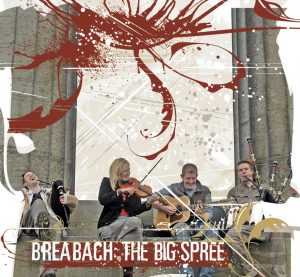
Breabach is one of the most talked about new acts on the Scottish folk scene. Their innovative celtic style, blending double bagpipes, whistle, fiddle, song and Scottish step-dance, brings to the stage, flair, excitement and diversity rarely seen from such a young group. Winners of Scotland’s Danny Kyle Open Stage Award in 2005, and nominated for Best Up and Coming Artist at the Scots Trad Music Awards in 2006, Breabach has gone from strength to strength.
Watch
Recorded at Dublin’s Vicar Street during The Moving Hearts’ sold out four-night stand in February 2007, Live In Dublin captures some of Ireland’s finest instrumentalists at the very top of their collective game. Percussionist Noel Eccles says: “There’s unfinished business! When we last played it was as an instrumental band and we always felt we hadn’t finished exploring the possibilities of our unique line up.” This the first release from Moving Hearts in over 20 years and sees the band play a blistering set to a packed house in one of Dublin’s most intimate venues.
Directed by Philip King the DVD features music from the influential fourth album The Storm. Played by a group of musicians who are all veterans of the Irish and world music stage, it features Donal Lunny, Davy Spillane, Keith Donald, Eoghan O’Neill, Noel Eccles, Matt Kelleghan, Anto Drennan, Graham Henderson, and Kevin Glacken.
Moving Hearts started playing together in The Baggot Inn, Dublin on February 1981. That first line-up comprised Christy Moore, vocals, guitar and bodhran, Donal Lunny on bouzouki and synthesizer, Declan Sinnott on electric guitar, Eoghan O’Neill on bass, Brian Calnan on drums and percussion, Davy Spillane on pipes and low whistle and Keith Donald on various saxophones. The band attracted huge attention for its blending of musical influences – folk, Irish traditional, rock, funk and jazz – as well as its commentary in the songs sung by Christy Moore on issues of concern in the areas of human rights and political skulduggery. In addition to songs about Ireland, Christy sang about the nuclear industry, thieving landlords, the US-engineered coup in Chile that replaced the elected Allende with Pinochet and his cronies and the dark side of organized religion.
After many changes of personnel – nineteen people have played or sung in the band – the decision was made to concentrate on instrumental music and to follow on from The Storm, the influential album of 6 instrumentals that was recorded after the band ceased regular gigging in 1984. After reforming to tour in 1987, the band went their several ways for most of two decades and watched as the world caught up with their music. Unlike many bands that stop working together, all the core members of Moving Hearts went on to have successful careers as musicians and bring huge depth and range of experience to a band that never stopped playing.
Watch
“Scottish harper Catriona McKay’s latest collection Starfish is a thing of extraordinary beauty…Layered delights reveal themselves with each successive exposure: a sure recipe for longevity.” – The Irish Times 2007
2007 Scottish Traditional Awards “Instrumentalist of the Year” Catriona McKay’s new solo CD, Starfish is a gorgeous and mesmerizing album of adventurous and mysterious contemporary Scottish music that features the harp on noticeable lead. Catriona’s music blends elements of folk, jazz, classical, and Scottish traditional music and presents a delightfully sexy exploration of the limits of the Celtic harp. On Starfish, Catriona is backed by solid guitar, fiddle, bass, and string work, as well as subtle electronic treatments.
Well known on the Scottish music scene as a member of the leading Shetland band Fiddlers’ Bid, Catriona McKay has recently began touring in the US and has been featured at several key festivals including Boston’s Irish Connections and Milwaukee’s Irish Fest. She is a fearless contemporary explorer on the Scottish harp, having collaborated with a wide array of folk, jazz, classical and experimental artists, as well as co-designing the new Starfish McKay harp, featuring an alternative tuning pattern and featured extensively on Starfish.
Featuring Donald Grant, Fionan “Fionomenal” De Barra, Matt Baker, Alistair MacDonald, Seamus Egan, and Red Skies.


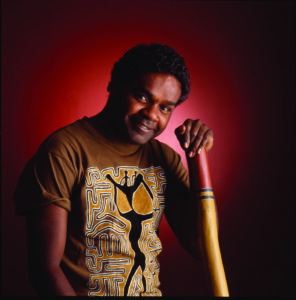 Alan Dargin was born and raised in an Aboriginal tribe in Australia’s northeast Arnhemland and is an internationally acclaimed didgeridoo player as well as having roles in a number of feature films. Dargin began studying the didgeridoo at age five. Dargin’s grandfather taught him how to play, passing on secret techniques which have been passed dow