
Five years after their critically-acclaimed debut Tripswitch, John McSherry (uilliean pipes), Dónal O’Connor (fiddle, keys), Francis McIlduff (bodhran, whistles)—three of Celtic music’s most virtuosic instrumentalists—reunite again as At First Light and deliver one of the year’s most exciting neo-traditional albums. Through masterful musicianship, the trio explores fresh perspectives on the living tradition in Irish music. Their album is aptly titled IDIR—Gaelic for between and among—and reflects the trio’s growing status as leading luminaries on the international stage. Featuring special guests: Tony Byrne, Ruben Bada, Michael McCague and Ciara McCrickard.
These ten tracks include delicious slow airs without vocals, namely the traditional “Máire an Chúil Ór Bhuí” and Finbar Furey’s piping tour de force “Roy’s Hands” with other tunes ranging from the eerily melodic “Song of the Chanter,” to the albumopening triple-time “The Magnificent Six”—tunes that are a testament the band’s dynamic presence in the traditional Irish music scene.

“Susan Greenbaum’s voice is a delight…strong, clear, and drenched in pleasing harmonies. A startlingly adept writer…ripe for national airplay.” –Billboard
Susan Greenbaum committed the first sin of musicians: She quit her day job. After working as a corporate executive in Fortune 500 companies, she traded her power suits for performing and songwriting. Since then, the Harvard graduate is poised for success, having won several national songwriting awards, including the Smithsonian Songwriters Award, The Philadelphia Songwriters Project and released four albums independently. Now, Greenbaum is releasing This Life, her most insightful and engaging songs to date, distributed by Compass Records Group on January 31st.
Not only were the songwriting trophies a boost to Greenbaum’s career change, she won a national competition to be the opening act for Jewel and enjoyed overwhelming success on the tour, welcoming thousands of new fans. Prior to This Life, her most recent album of all-original songs, Hey, Hey, Hey! was lauded by Billboard for having songs with “hooks that drill into your brain; smart, organic production; and lyrical substance to make the music an interactive experience.”
Her success has not come without sacrifice, as the tragedy of personal loss lends itself to the depth to Greenbaum’s songwriting. The album-opening “This Life” is a reflective letter to her brother who passed away from brain cancer; she wrote the song a week before her wedding. “I was thinking about how he wasn’t going to be at my wedding but maybe he was, maybe he is somewhere safe and healthy and not in pain and able to at least look down on all of us. That’s the whole idea of the song—a conversation with him.” Greenbaum instills a glimpse of hope and recovery in her music, even in songs inspired by tragedy.
The album is far from somber and includes high-energy singles such as “Big,” a lively recipe for fame and fortune. “It’s very me, it’s funny and cynical and it’s unafraid to really look at things and be blunt and honest and there’s positivity in it and there’s reflection in… It’s like, ‘Chop chop! Let’s get to it, let’s get famous!’” The album includes lighthearted love songs like “Penny on the Sidewalk” and even a novelty bonus track lamenting the consequences of the indecision of squirrels.
Recorded in Nashville at Compass Sound Studios and produced by Garry West and Alison Brown, This Life includes such esteemed musicians as multi-instrumentalist Stuart Duncan on fiddle, Todd Phillips on upright bass, and the banjo of Alison Brown on the tracks “Virginia, the Home of My Heart” and “The Squirrel Song.” Says Greenbaum of the recording process, “Garry and Alison are very right-brained as well as very left-brained, and I am too, so we worked very well together. I had no idea what was going to happen, but it was one of the smartest risks I’ve ever taken!”
Greenbaum draws big, enthusiastic audiences who delight in her lively, diverse and powerful performances. Greenbaum has toured as a solo artist, playing such storied venues The Bottom Line and The Bitter End in NYC, The Birchmere, Bethlehem Musikfest, Floyd Fest and Rams Head Tavern. In addition to touring with Jewel, she performed an acoustic set with Dave Matthews Band violinist Boyd Tinsley; sharing bills with Jill Sobule; and opening for Kenny Loggins, Patty Griffin, Dar Williams, Janis Ian, Jim Messina, Todd Snider, Tuck and Patti, Iris DeMent, Lucy Kaplansky, Lloyd Cole and Catie Curtis. Susan also endorses W.L Gore’s Elixir Strings.
Unafraid, brazen and under five feet tall, the dynamic Greenbaum shares an empowering message: “If you have something you know you love to do and you want to do it, you can do it! Follow your dreams!”

Little House on the Prairie, the autobiographical book series by Laura Ingalls Wilder, holds in its pages a comprehensive review of 19th-century American folk music via the very real character of Charles “Pa” Ingalls (1836-1902), a highly acclaimed fiddler of the time and Laura’s own non-fictional father. For the first time, in January 2012, a concert based on this music was performed before a live audience at the Loveless Barn just outside of Nashville, TN for broadcast by the PBS television network. PA’S FIDDLE: THE MUSIC OF AMERICA, the PBS special broadcast—an effort co-produced by Dean Butler (“Almanzo” on the Little House on the Prairie TV show) and esteemed musicologist Dale Cockrell (President of Pa’s Fiddle Recordings)—will air throughout the nation this June during pledge-drive season and will be available for national broadcast over the next two years.
Éamonn Coyne grew up shaped by the traditions of Roscommon and Donegal, in Ireland, while Kris Drever had his first musical learning in the Orkney Islands, off the far northeast coast of Scotland. Joining forces on the album Honk Toot Suite, these two multi instrumentalists go beyond their traditional backgrounds to point a new path that both encompasses tradition and moves it forward.
“The Edinburgh scene whirlpooled us together and we have enjoyed the result,” says Coyne, who moved to Scotland’s capitol about ten years ago. He is best known as a banjo player, having worked with artists on both sides of the Atlantic, including Sharon Shannon, Tommy Peoples, John Doyle, Dermot Byrne (of Altan), Stockton’s Wing, the Alison Brown Quartet and Russell’s House. Currently he is a mainstay of the unique Scots Latin fusion band Salsa Celtica. In 2003 he released the solo album Through the Round Window to critical acclaim.
The tunes on Honk Toot Suite range from original compositions by each man to traditional music from Donegal, Roscommon, Cavan, Orkney, and Brittany. Fitting right in with the mix are the strutting 1920s song “Cock a Doodle”, and another visit to 1920s tradition, “The Lakeside Barndances”. “The Lucy’s Swamp” set shows the versatility and originality of the duo’s playing and ideas, as Coyne’s banjo and mandolin set a dance for Drever’s double bass and guitar and John Joe Kelly of Flook to join in, on a pairing of the traditional “Lucy Farr’s” with avant garde banjo master Bela Fleck’s tune “Down in the Swamp”. Whatever he’s working on “My writing is mostly influenced by traditional music forms,” says Coyne.
The eleven tracks on Honk Toot Suite, be they traditional, modern day covers, or original material, are collaborative arrangements between Coyne and Drever. “We know each other’s influences and backgrounds really well so arrangements come quickly and easily,” Coyne explains, citing their experiences playing together in the band Russell’s House and on gigs with material from Through the Round Window. “Things fell into place very quickly and naturally – nothing was forced,” he continues. ”Kris chose the vocal songs but we both arranged what we played on them. Kris came up with the set of tunes that is Twenty Quid which was a new thing for us as a duo and was quite exciting for me,” he says of the set of three reels which finds the banjo steady leading the way as tenor guitar, guitar and double bass weave around in rhythmic conversation. “Kris also brought other tunes to the recording which meant some learning for me which is always fresh and good,” Coyne adds.
Kris Drever split his early learning of music between the traditions of Orkney, the Celtic rock of his father, Ivan Drever, a member of the internationally known group Wolfstone, and as he admits, Metallica and Pantera. Moving to Edinburgh, he began to focus more on folk and traditional skills. He and Coyne met when Drever filled in as a replacement with the band Russell’s House, and then continued on playing together when that group ceased performances. As a guitarist, double bass player, and harmony singer, Drever has toured with folk superstar Kate Rusby and worked with leading Celtic artists John McCusker, Tim O’Brien, John Doyle and Cathie Ryan. Drever recorded two albums with Fine Friday before they split in 2006 and is currently a member of bands Session A9 and Lau. Drever just recently released his first solo recording Black Water to critical acclaim including receipt of the 2007 BBC Radio 2 Horizon Award. As does Coyne, Drever draws on an eclectic mix of traditional and not so trad rhythms and ideas in his music. “A guitar’s like a portable piano, in terms of its range. I like to try always to use interesting colours in the chords and harmonies I play, rather than just doing the obvious,” he says. Drever is a singer, as well, on Honk Toot Suite adding his voice to the jazzy swing of Cock a Doodle and the Norse ballad style song “The Viking Bride”, composed by his father, Ivan Drever. “I like either to do songs that haven’t been covered much before,” he says, “or folky standards that are open to a different interpretation. I try to steer clear of that kind of typical folk-singer sound, and put my own mark on things.”
Éamonn Coyne and Kris Drever have put their own distinctive and collaborative mark on the music of Honk Toot Suite, from lively Roscommon reels to Breton tunes to Norse laments to their own fusions of those traditions. It is ever changing music, and as Éamonn Coyne explains, that’s what you hear on Honk Toot Suite. ”The arrangement work was done in various places: the studio; some came from informal pub music sessions (’jams’) which was remembered and revised at a later time; some came from rehearsals; and others came from gigging using the ’what works’ method.” It is a method of collaborating and carrying forward tradition that is as old as the sharing of music and as new as tomorrow: the end result is one of the most enjoyable duet records to be released in recent years.

Highly regarded as one of bluegrass music's finest high lead and tenor vocalists, Larry Stephenson has been a torchbearer for the original traditional sound for over twenty years and now, for the first time with Compass Records, Stephenson presents one of the finest albums of his career on What Really Matters, available May 29th. The album is a fitting follow-up to the Larry Stephenson Band’s win at the 2010 International Bluegrass Music Awards, his bluegrass star-studded previous effort, 20th Anniversary taking the prize for Recorded Event of the Year.
On this new release, armed with 12 outstanding tracks and surrounded by a road-tested band that includes Kenny Ingram (banjo), Kevin Richardson (guitar) and Danny Stewart (bass), Stephenson’s distinctive vocals are showcased to great effect, setting a distinct standard of clarity, melody and insightful storytelling.
The overall album represents a personal reflection for Larry and the songs feature his grounded perspective as well as his musical maturity. "The songs fits my life to a tee, my wife Dreama and I have a three year old daughter so now I see "what really matters," shares Stephenson regarding the title track, a new song written by the late Harley Allen and John Wiggins. The rest of the album spans plenty of the familiar bluegrass themes that “really matter:” love lost (“The Blues Don’t Care”), love found (“I See Love”), love riding on trains (“Big Train”) and the quintessential uplifting spirituals (“God Will,” “Jericho Road”) as well as a lively classic instrumental (“Bear Tracks”).
Special guests appear on special tracks as Stephenson called upon Sam Bush to record fiddle and harmony vocals their version of “Philadelphia Lawyer.” “I’ve always been a fan of Sam’s, love his mandolin playing and singing. Every time I see him he’s so complimentary to my music and me. When I called him and told him about “Philadelphia Lawyer” he said, “I’ll have to get my Red Allen record out…” I knew I had the right man for the job! Ben Surratt came up with the idea. That I know of, it has never been done as a duet.”
Longtime producer and friend Surratt was again enlisted for What Really Matters. “Ben’s the best! This is our 8th album together and he’s co-produced four with me. He always comes up with great songs and arrangements and he makes the whole process enjoyable.”
This veteran performer continues to deliver new and fresh material while never straying far from his deep traditional roots. Inducted into the Virginia Country Music Hall of Fame in 1996, Stephenson is considered by many to be one of the premiere torchbearers for the traditional bluegrass sound created by first generation legends Jimmy Martin, Mac Wiseman, Jim & Jesse and The Osborne Brothers. Throughout his now over twenty-year career fronting his own band, and almost forty years as a major, touring performer, Larry Stephenson has been well-recognized and awarded by fans and his peers in the recording industry. He's been named Male Vocalist of the Year at SPBGMA (The Society for the Preservation of Bluegrass Music in America) five times.

When Maria Quiles (vocals and guitar) and Rory Cloud (vocals and guitar) met in 2011, both were adrift. Maria had quit her job, given up her San Francisco apartment, and moved in with her uncle in order to pursue music full-time. Rory had left behind a stable schedule of gigs and music lessons in Southern California to seek a new music community elsewhere. He eventually wound up living out of his Toyota Corolla in San Francisco, where he first heard Maria at an open mic. “As a lead guitar player, I could immediately hear myself in her songs.” Rory remembers.
Several years of touring and spending nearly every day together allowed Quiles & Cloud to develop a unique sound—one that is characterized by soulful melodies, close harmonies, and interweaving guitar lines that owe as much to jazz and classical music as to folk and bluegrass. The addition of Oscar Westesson (upright bass) in 2013 pushed them even further as songwriters, resulting in darker, more complex, and more dissonant arrangements.
Their sound has struck a chord with audiences all over the country. Folk Alley has lauded the group’s “continued ability to combine subtle precision with stark grit and creative exploration.” Acoustic Guitar has called them “a compelling new voice on the Americana scene.” Quiles & Cloud have now played hundreds of shows, won the 2014 FreshGrass Duo Award, and caught the attention of GRAMMY Award-winning banjo player Alison Brown—who produced their third album SHAKE ME NOW, which comes out on Compass Records 3/17/17.
SHAKE ME NOW is stripped-down, yet dense. There are musical and lyrical traces of the blues, bluegrass, folk, rock, soul, and classical music. Their songwriting stands out on the title track, “Shake Me Now” as well as the upbeat and hopeful “One My Way Tonight”. In addition to their original songs, there are reinterpreted versions of the traditional blues number “Deep Ellum Blues”, the traditional folk tune “Worried Man Blues”, and Bob Dylan’s “You Ain’t Goin’ Nowhere”. One gets the feeling of being on a widescreen road trip through America’s past and present, with multiple eras and traditions folding in upon each other. The result sounds familiar and roadworn, yet completely new—a quality that Quiles & Cloud share with some of American music’s greatest innovators.
Quiles & Cloud have already traveled far. As they see it, though, this is only the beginning of a lifelong journey—one of exploring connection, deepening their partnership, and examining the threads that tie us all together.

Belfast-born uilleann piper John McSherry and Detroit natives Tyler Duncan and Michael Shimmin have been dreaming of .the olllam. for the last decade. With a name inspired by the king’s own ollam bards of Irish lore, the trio wanted an ensemble that naturally represented their combined experiences in a multiplicity of styles. McSherry, one of the best uilleann pipers in the world and a founding member of legendary Irish group Lúnasa, has been dubbed “a true master” by Irish Music Magazine and is well known for his current work with his group At First Light as well as his ’90s stint with Donal Lunny’s Coolfin. Duncan and Shimmin have also been busy in the United States performing and recording with their award-winning Irish-jazz crossover group Millish with Duncan doing double-duty in the dance-rock group My Dear Disco/Ella Riot. It seemed that the right moment for collaboration between the three musicians would never present itself.
However, in February 2012 during the calm before the summer festival season, the trio finally wrote and recorded an original album together, overcoming the Atlantic divide by means of the internet — they rehearsed and composed live on Skype and built the tracks back and forth one part at a time between emails. The result, their eponymous debut .the olllam., available Sept. 25 on Compass Records, is lush with trance-like melodies, stunning instrumental virtuosity and a magical marriage of tradition and technology, finding the listener somewhere between Radiohead and Planxty with the ambient emotionalism of Nick Drake or Explosions in the Sky.
Simplicity is key for the trio. They wanted their musical ideas to mature organically in a controlled environment, rather than produce anything contrived or over-composed. It is their collective sense for arrangement—Duncan (uilleann pipes, whistles, guitar, Rhodes) and Shimmin (drums and percussion) both hold degrees in jazz performance, and the legendary McSherry (uilleann pipes and whistles) has performed and written with a wide variety of artists, from Ornette Coleman to Nanci Griffith—that gives the album its distinct style and form.
The trio’s approach to composition is unique in Irish music as well, foregoing the familiar jigs and reels. “We really wanted to investigate the melodies but focus on simplicity and memorability. Everything had a purpose with no excess,” comments Duncan. “Together we created a feeling of a narrative, each song is highly personal and tells a story. There are verses, pre-choruses and bridges instead of the traditional Irish tune forms.”
These 7 adventurous instrumental tracks are fully engaging, whether the rhythm section gradually adds and builds to a powerful climax as on “the belll” or energetic eighth note bass lines interplay with Duncan’s Rhodes piano and McSherry’s catchy melody as on “the follly of wisdom.” Subtle fuzz bass guitar from guest Joe Dart and stripped-down driving percussion of Shimmin compliment the complex and beautiful tone of both McSherry and Duncan. “Conceptually we took a more pop approach but really wanted to make sure it sounded totally organic at the same time. Basically, I was thinking more as a composer and less as a drummer,” comments Shimmin.
Mysterious and masterful as the legendary ollam Irish bards from which they draw their name, McSherry, Duncan and Shimmin have discovered a synergy within their diverse musical backgrounds – introducing a new Irish crossover group rife with creative brilliance and progressive appeal. Reflects McSherry, “I think we were all nicely surprised at how quickly and easily our ideas merged together and manifested into the music – everything seemed to fall into place right from the start. It was like we all knew instinctively that this was to be a special musical journey”
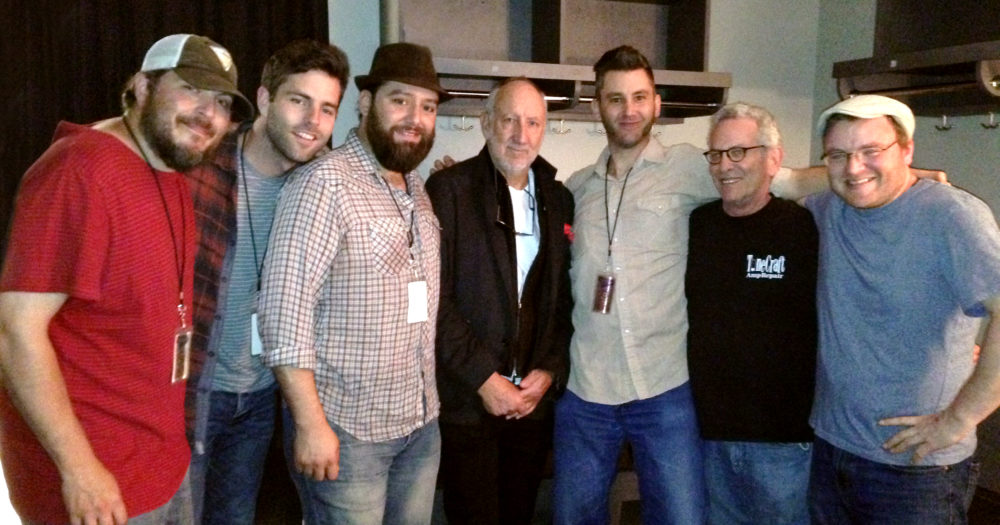
The HillBenders’ SXSW 2015 Live Performance of TOMMY: A BLUEGRASS OPRY Earns High Praise From Music Critics:
“Still, two shows stood out well above all else. The silver medalist was the aforementioned bluegrass “Tommy,” performed by a Missouri quintet called Hillbenders. I half-expected a “Pickin’ On”-style gimmick, but it was a phenomenal and brilliantly executed homage to the classic rock opera. It was amusing to see how they replicated various flourishes from the original with bluegrass instrumentation—slide Dobro riffs standing in for French horn, choked mandolin strums for drum beats—but it transcended novelty, thanks to frontman Nolan Lawrence’s vocals.” —David Menconi, The News & Observer
“You haven’t heard “Acid Queen” until you’ve seen it sung by a bearded man with a mandolin. Covering the Who’s Tommy in its entirety as a “bluegrass opry”…They faithfully replicated the songs… embellished them with banjo, mandolin and dobro to give the music an extra moonshine kick. The HillBenders, a talented five-piece band from Missouri, proved to be the perfect group to execute this “Whograss” concept” — Billboard
“Ever since I was a young boy I played the silver ball”
Forty-five years after its initial release, The Who’s rock opera TOMMY has been transformed by The Hillbenders into a full-length bluegrass tribute with all of the original record’s energy, instrumental showmanship, and rock star vocals in tact. Originally recorded with a full rock band, the dynamic bluegrass quintet recreated the legendary album with a banjo, Dobro, mandolin, bass, and guitar. The “Bluegrass Opry,” as its been dubbed, brings a new perspective to TOMMY while paying homage to its creators.
SXSW co-founder and musician/producer Louis Jay Meyers conceived the idea of a “bluegrass opry” and felt he’d found the right band to pull off this high-wire approach to the record when he met The Hillbenders, a band known for its ability to bridge the gap between musical genres and fans. The live performance is a full 75-minute show covering the original album from start to finish with special video accompaniment and audience participation.

A decorated vocalist, prolific songwriter, and innovative bandleader, Claire Lynch can now add ‘diplomat’ to her list of accomplishments. North by South, her newest album, opens a window into America’s northern neighbor that will widen your eyes if all you know aboot Canada is maple syrup and using ‘eh?’ as punctuation. The record pays homage to Lynch’s favorite Canadian songwriters, interpreting tracks from greats above the Great Lakes like Gordon Lightfoot and Ron Sexsmith. Backed by compatriot heavyweights Bela Fleck, Jerry Douglas, Stuart Duncan, David Grier, and produced by Compass co-founder Alison Brown, Lynch renders the songs into bluegrass and new acoustic styles, producing an elegant blend of foreign and domestic artistry.
Lynch’s Canadian leanings all started with a fan email suggesting places for her to play in Toronto. When she emailed back, it sparked a long correspondence about Canada’s culture, history, and diverse art scene. She eventually did score a gig in Toronto, but what’s better, she fell in love with her pen pal and went on to marry him in 2014. North by South is the product of a love for Canada now a centerpiece of Lynch’s life.
Dolly Parton praises Lynch’s voice as “One of the sweetest, purest and best lead voices in the music business today.” A crystal so exquisite takes time to grow, but the acclaimed singer has long shone the glint of distinction. Leading the Front Porch String Band in the 70’s, Lynch established herself as a premier interpreter of bluegrass music when women were rare even as participants in the genre, nevermind as leaders. On through the new millennium, the influential band met wide acclaim, receiving two GRAMMY nominations and earning Lynch the 1997 Female Vocalist of the Year award from the International Bluegrass Music Association (IBMA) – the first of 3 times she would receive this distinction.
Lynch’s tenure in the band also helped launch her career as both a songwriter and session vocalist. She has penned tunes for household names like Patty Loveless, The Seldom Scene, Cherryholmes, Kathy Mattea, and Stephanie Davis. A list of stars counting Emmylou Harris, Linda Ronstadt, and Pam Tillis has also sought Lynch’s elegant harmonies in the studio.
In 2012, The United States Artists Fellowship honored Lynch with a $50,000 grant given to 50 artists selected from a pool of 300 nominated by peers and field experts. The grant recognizes artists from areas diverse as architecture, dance, and mural painting, demonstrating Lynch’s ability to represent her craft outside the halls of bluegrass orthodoxy. She embodies the genre-transcendent power that can plead the case for bluegrass as cultural treasure to a public wider than the music’s usual discipleship.
The title track from Dear Sister, Lynch’s prior release on Compass Records, earned the IBMA’s Song Of The Year award. The track imagines a haunting letter written by a man to his sister before a battle in the Civil War. It’s this capacity for transportation across time and place that makes North by South such a natural sequel. For example, on her rendition of J.P. Corimer’s ‘Molly May,’ Lynch conjures the reminiscence of a haggard old sailor, whose sorrow we feel as presently as if ships still had wooden hulls.
Her version of Ron Sexsmith’s ‘Cold Hearted Wind’ expresses the twin strains of hope and melancholy comprising the record’s DNA. Singing: “Cold hearted wind is blowin in the face of love, but I’ll take you to a place I know, where the cold hearted wind don’t blow” Lynch recognizes the many disappointments that can obstruct happiness, but finds the hope to persevere through the power of love.
The upbeat ‘Kingdom Come,’ written by Old Man Luedecke, articulates a spirit of transience, of belonging both everywhere and nowhere. The track also bristles with instrument talent – Bela Fleck’s banjo, David Grier’s guitar – reminding us how well Lynch’s voice can unite a driving bluegrass sound.
‘Milo,’ Lynch’s self-penned contribution to the track list, offers a glimpse into the romance that inspired her interest in Canada. While light hearted and even humorous, the number still manages to reflect on the differences encountered in relationships that reach across cultural boundaries. The tune combines a ‘behind the scenes’ look into the album’s inspiration with a musicality far beyond the biographical.
Gordon Lightfoot’s ‘It’s Worth Believing’ might mark the record’s emotional high-water point. Reimagining the tune as a duet featuring the vocals of Lynch’s bandmate Bryan McDowell, the track portrays the uncertain nature of love, how we often have to believe not because we know, but because in some deep sense, we feel it’s worth it. The number becomes all the more powerful a love song because it works simultaneously as a statement of faith. Whether it’s the moon, the stars, the tide, or the tears, Lynch’s angelic tone brings the song’s imagery into eloquent bloom.
So much of the power in Lynch’s record stems from its ability harmonize opposites. The album finds a consummate artist giving song to love and loss, fact and fable, belonging and dislocation – and of course north and south – with a voice that could lay down the lion with the lamb. North By South celebrates life as both broken and whole, a mystery often beyond reason, but never beyond rhyme.

John Hartford won Grammy awards in three different decades, recorded a catalog of more than 30 albums, and wrote one of the most popular songs of all time, “Gentle On My Mind”. He was a regular guest and contributor on the Glen Campbell Good Time Hour and the Smothers Brothers Show. He added music and narration to Ken Burns’ landmark Civil War series, and was an integral part of the hugely popular O Brother, Where Art Thou? soundtrack and Down From The Mountain concert tour. But that hardly explains John Hartford.
John Hartford was an American original. He was a musician, songwriter, steamboat pilot, author, artist, disc jockey, calligrapher, dancer, folklorist, father, and historian.
Born John Cowan Harford in New York on December 30, 1937, John grew up in St. Louis. He was a descendent of Patrick Henry and cousin of Tennessee Williams. His grandfather was a founder of the Missouri Bar Association and his father was a prominent doctor.
At an early age, John fell in love with two things: music and the Mississippi River.
They were passions that would last his lifetime, and their pursuit would be his life’s passage.
In 1965 he moved to Nashville. The following year he was signed to RCA Records by the legendary Chet Atkins. It was Atkins who convinced John to add a “t” to his last name, becoming John Hartford. In 1967 his second RCA release “Earthwords & Music” featured the single “Gentle on My Mind”, a song Hartford wrote after seeing the movie Dr. Zhivago. That year, the song earned four Grammy awards. Hartford would take home two awards, one as the writer and one for his own recording of the song. The other two went to Glen Campbell who had heard Hartford’s version on the radio and decided to record it. Campbell’s rendition became an instant classic, and the song became one of the most recorded and performed songs of all time, covered by everyone from Elvis Presley to Aretha Franklin.
Hartford often said that “Gentle On My Mind” bought his freedom.
He used that freedom to explore his various creative curiosities, and was usually happy to take his friends along on the trip.
In 1968 John Hartford left Nashville for Los Angeles, where he played on the Byrds’ classic album, Sweethearts of the Rodeo. He became a regular guest and contributor on CBS’s Smothers Brothers Comedy Hour and later on The Glen Campbell Goodtime Hour. He would also earn his riverboat pilot’s license by the end of the decade.
John Hartford became mentor and mystic for a generation of pickers, singers, and songwriters. His landmark record, Aereo-plain (1971) documented his work with Vassar Clements, Norman Blake, and Tut Taylor. Rooted firmly in tradition but sprouting at the top with hippie hair, the group’s instrumental mastery and free-wheeling style bridged a musical gap between traditional bluegrass and a progressive new audience, making every song a cult favorite and every live performance the thing of legend. According to Sam Bush, “Without Aereo-plain, there would be no ‘newgrass’ music.”
In 1976, John won another Grammy award for his contemporary folk masterpiece, Mark Twang. The album featured a set of quirky river-centric original songs, presented in stripped down arrangements, typically featuring only Hartford accompanying himself on banjo, fiddle, or guitar while tapping his feet on an amplified sheet of plywood. The combination was magical, and would become his trademark sound for many years as a solo act.
Summer days might find him piloting the Julia Belle Swain on her afternoon run, before entertaining the passengers at night. During festival season, his amazing instinct for single-handedly captivating an audience would often have him leaving the stage and leading a processional of joyful dancers through the grounds, like a fiddle-playing pied piper.
Later in his career, he would revisit different ensemble configurations, recording and touring with his son, Jamie, and with various incarnations of the John Hartford String Band.
At his house overlooking the Cumberland River, John continued to write, record, and fill his hours with music. Already a published author (“Steamboat in a Cornfield” and “Word Movies”), Hartford also developed an extensive manuscript on the life and music of fiddler, Ed Haley.
In 2001, he was awarded a Grammy award for his contribution to the soundtrack of “O Brother Where Art Thou”. His bittersweet appearance on the subsequent “Down From The Mountain” tour was immortalized in the concert film. He died on June 4, 2001, after a long battle with non-hodgkin’s lymphoma.
“John Hartford was one of the rarest of musical birds. He had one foot deeply rooted in the past and the other always at least a few steps into the future- and both were dancing.”
Larry Groce, Mountain Stage
This summer, fans and musicians will again gather as festivals draw tens of thousands of music lovers. For many, it is like a family reunion….where the uninitiated, cousins, friends, and in-laws are always welcome. And while John Hartford no longer performs, his music and memory continue to permeate both stage and campground.
His influence is everywhere. From Merlefest to Telluride to Bonnaroo
Just ask Bela Fleck or Sam Bush, or Yonder Mountain, or Tim O’Brien….or the guy at the next campfire.

With their acoustic instrumentation and the anthemic thrust of their songwriting, the Farewell Drifters find themselves in the midst of what’s bound to go down in the annals of popular music history as an era-defining, youthful folk-rock boom. Although they share significant common ground with their folk-rock brethren the Avett Brothers and Mumford & Sons, the Drifters aren’t content simply to stomp, strum and sing with gusto. They bring a unique Brian Wilson-like sensibility to the movement, with intricately arranged harmonies and atmospheric, string-swathed studio shading that is newly showcased on Tomorrow Forever, the Nashville-based quartet’s fourth album and their first for their new label Compass Records.
When Zach Bevill, brothers Joshua and Clayton Britt and Dean Marold started making music together eight years ago, they aimed for the sweet spot between bluegrass and the Beach Boys’ artfully crafted, ‘60s studio pop. Their crisp, sophisticated arrangements and formidable instrumental prowess quickly made the band a crowd pleaser at multi-generational folk festivals and earned them a presence on Americana radio and Billboard’s bluegrass albums chart; their 2010 release Yellow Tag Mondays debuted at #10 and 2011’s Echo Boom debuted at #6.
But, with the release of Tomorrow Forever, the Drifters have delivered their most accomplished and fully developed album to date. The twelve songs demonstrate the band’s belief in the value of pop craftsmanship, and that couldn’t be further from the rustic, Depression-era musical styles that drove the Mumfords and Avetts of the world to pick up acoustic instruments. Instead, the authenticity that matters the most to the Drifters has nothing to do with eschewing finesse or escaping technology and everything to do with being true to themselves and their musical sensibilities.
“I’ve never felt like a very raw musician, personally,” explains Zach, the band’s formally trained lead singer and rhythm guitarist. “That’s just not who I am. I think my challenge has been figuring out how to let go a little bit; how to do that creative, intricate thing that I love, while at the same time being able to let go more vocally.” Together with band mates Joshua (mandolin and harmony vocals), Clayton (lead guitar) and Dean (jazz-schooled upright bass) the new album reflects the Drifters’ devotion to growth and possibility.
Collaborating with roots pop producer Neilson Hubbard (Matthew Perryman Jones, The Apache Relay, the Drifters’ 2011 Echo Boom) helped solidify the band’s sound, elevating their crystalline harmonies and acoustic foundation with gutsy electric guitar and orchestral-style drums. Clayton contributes Telecaster licks and 12-string acoustic runs, and the lion’s share of the tracks feature a standing approach to playing drum kit that studio ace Evan Hutchings developed in order to compliment the band’s intricate textures. Organ and piano parts played by Neilson and Zach help to fill out the sound, as do the ambient swells of Kris Donegan’s lap steel.
Describing the recording process Zach explains: “We allowed the studio to be more of a creative space than we ever have before, in terms of the way we view arrangements and the value we’ve always placed on them. So, instead of doing all that ahead of time, we thought we could come up with cooler stuff once we were in the studio when we had way more options. That was my favorite part of making the record. After we had cut the main tracks as a band, we took our time figuring out what else the songs needed.”
“I feel like a lot of modern albums have noise just for the sake of noise,” Josh adds. “Ours always had a point.”
Tomorrow Forever launches into that pointedness with stately, tolling chimes, a choir of unison voices and guest violinist Eamon McLoughlin’s handsome string parts amplifying the noble intentions expressed in the album-opening “Modern Age.” During “Bring ‘Em Back Around,” agitated guitar figures and a slow-building wave of distortion stoke the ferventness of the song’s plea to shake off complacency. The opening harmonies of “Brother” are both powerful and lush, and bring to mind modern indie folk bands like Fleet Foxes. The dynamics of “Neighborhoods Apart” lend both nuance and pathos to a saga of severed friendship. And album closer “Starting Over” boasts an arrangement after Brian Wilson’s own heart; the self-doubting early passages are cocooned in delicate harmonies; later a robust sing-along and sweeping strings add considerable heft to the song’s prophetic ending.
Even as they’ve upped the meticulousness of their music-making, The Drifters have reached the point in their lyric-writing where their chief aim is to translate personal struggle into anthems of communal uplift, to speak beyond the particularity of their experience and give voice to universal hopes, dreams and fears. “As we’ve written and learned over the past few years,” reflects Zach, “the parts of the songs that move us the most and seem the most true and honest, those are usually the parts that resonate with other people the most too.”
Song after song, they strive to acknowledge their coming-of-age disappointment and the specter of failure without allowing themselves to be paralyzed by it. “We’re sort of restless people,” Zach offers. “Maybe everybody’s restless. We’re always aspiring to something. We’re always in pursuit of something. If we don’t believe that whatever that is, is good and true, then we’ve got nothing.”
Josh, a self-described extreme introvert, concurs, “Without hope, I would give up. I would not be in relationships, because they’re hard. I would not go out; I would just stay home. There’s a pursuit of something there that’s powerful enough for me to keep putting myself out there.”
And when you get right down to it, putting themselves out there is exactly how the Farewell Drifters and their earnest kindred spirits throughout the folk-rock scene harness music’s power to unite fans around common desires. The Drifters also have something singular to offer: a sound that’s as richly layered as the emotional landscape it portrays, and catchy besides.
“I feel like we’re on the same trajectory we’ve always been on,” says Zach, “but now it feels like there’s a much larger audience out there that digs the kind of music that we’re making. And that gives me a lot of hope for this album.”
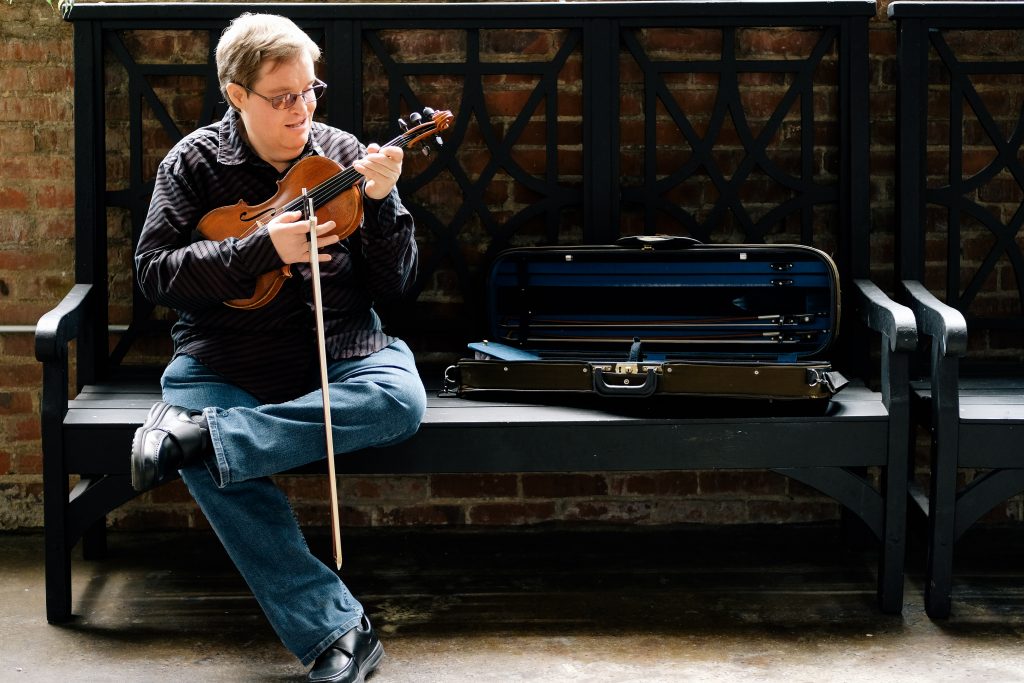
With the sweet and good things in life, there always comes darkness. This is a lesson that GRAMMY-winning fiddler, Michael Cleveland, knows all too well. In 2021, two of his dearest and oldest friends passed away. Bill Wolfe and Eddie Wells were two of the best local bluegrass musicians in his hometown in southern Indiana—they were two of the people who had inspired him to pick up the fiddle at just four years old, so their passing hit hard. “More than ever, losing both of them made me realize that life is short and is also what you make it,” says Cleveland. “It made me really stop and think of all the people in my life who have influenced me in life and music, and to not take anything for granted.”
With his sixth solo studio release, LOVIN’ OF THE GAME, veteran fiddle virtuoso Michael Cleveland seizes his opportunity at this one wonderful life and swings for the rafters. The album positively hums with energy. Not beholden to one specific genre or pigeonholed label, it showcases Cleveland’s inclusive musical nature—placing value in the process over the output. It is in this release of control that we find something truly sublime: the sound of artists working together in the act of creation without regard for any preconceived notion of what “should” be. The sound of genuine musicianship.
Built upon a rock-solid foundation of bluegrass prowess, LOVIN’ OF THE GAME showcases the power of fusion, bringing truth to the phrase “greater than the sum of its parts.” On each song, Michael Cleveland partners with the all-star community of musicians he has built, finding the tools to uplift the unique voices of each of his collaborators. In one moment, he takes us on a loopy dialogue between fiddle and guitar with two-time IBMA Guitar Player of the Year Billy Strings, delivering a spacey jamgrass rendition of 80s rock classic “For Your Love.” The next, he breaks our hearts with “I Wish I Knew Now What I Knew Then,” a jukebox-ready country waltz pining over lost love, with Cleveland’s lonesome fiddle accompanying Country Music Hall of Fame member Vince Gill’s crooning vocals.
Collaboration serves as the bedrock of the album, and that outreach towards community extends well beyond the studio. Though it may be the track that sounds the most like dust bowl-era Appalachia, in actuality “Sunny Days Are Comin’ Once Again”—featuring Jeff White and Dan Tyminski in tight vocal harmony—is as new as they come. Written in the heart of the COVID-19 shutdowns of 2020, this song came to Cleveland by way of the songwriter Greg Poulos, who hired Cleveland to produce and perform on his original recording. Cleveland credits sessions like these with keeping him grounded and motivated during the darkest days of the pandemic, and this song in particular stuck in his ear. When it came time for him to make his own album, he couldn’t resist taking the lead to record it himself.
Similarly, the instrumental “Contact” is the result of a connection Cleveland made with Matt Carson, another visually-impaired musician, who taught him how he could use the industry standard recording platform, ProTools. It was this knowledge of recording that allowed Cleveland to make this track with no live session or physical interaction between collaborators Cody Kilby, Barry Bales, and Béla Fleck. Rather, each musician was able to build on the previous artist’s work, with Kilby recording the guitar part first, then Bales bringing in the bass line, followed by Fleck filling in banjo, and finally Cleveland adding the dazzling top notes of fiddle and mandolin. Despite being recorded across time and space, the tune captures the vigor and ingenuity of each of its contributors.
“People know me as a traditional bluegrass fiddle player, which is what I love to do,” says Cleveland, “but this album is more than just the pure tradition. It’s a little bit of a departure for me.” Nowhere is that more pronounced than in the lonesome and moody “One Horse Town,” a cover of the 2012 release from Southern rock band Blackberry Smoke. Featuring vocals from Blackberry Smoke’s Charlie Starr and Cleveland’s longtime Flamekeeper bandmate, Josh Richards, and buoyed by the steady instrumental backing of Flamekeeper, Cleveland’s rendition coaxes out the tender melancholy of life in a town too small to sustain itself. Leaning into the weight of responsibility and the pain of hoping for more, Cleveland’s fiddle playing anchors the listener into the listlessness of an arrested life—it could almost drown you.
Thankfully, Cleveland releases the spell and grants reprieve with the eponymous final track, “The Lovin’ of the Game.” Inspired by The Johnsons’ up-tempo cover of the Judy Collins classic, Michael Cleveland & Flamekeeper put a joyful, hard-driving spin on the dreamy 70s folk ballad, delivered with the kind of vigor that makes audiences fall in love with bluegrass to begin with. “The song is about prospectors and gamblers,” says Cleveland, “but for me, the ‘loving of the game’ has always been loving being a part of the musical community and all that being a musician has brought to me.”
Michael Cleveland is the most awarded International Bluegrass Music Association Fiddle Player of the Year, with twelve wins to his name. He is a six-time winner of the IBMA Instrumental Performance of the Year and his band, Michael Cleveland & Flamekeeper, has won Instrumental Group of the Year seven times. In 2019, Cleveland was the subject of the documentary, Flamekeeper: The Michael Cleveland Story and his album TALL FIDDLER was awarded the GRAMMY for Best Bluegrass Album. Michael Cleveland was inducted into the National Fiddler Hall of Fame in 2018. He received the National Endowment for the Arts National Heritage Fellowship in 2022. His new album, LOVIN’ OF THE GAME, will be released by Compass Records on March 3, 2023.
-->


