
Irish vocalist Karan Casey and guitar virtuoso John Doyle were founding members of traditional supergroup Solas, a band known for rousing, furious tunes and striking renditions of traditional songs. In Exile’s Return, the two former bandmates reunite to create a stripped-down CD that showcases the power of those songs. Since Solas, each has carved out a unique and acclaimed place in contemporary Irish and folk music.
Karan Casey has recorded five solo albums, has won Best Irish Female Vocalist twice, Best Irish Folk album and a GRAMMY for her collaboration with Paul Winter. She has been nominated for the BBC Folk Awards and has performed with Peggy Seeger, Liam Clancy, James Taylor, and Tim O’Brien. On her 2008 CD Ships in the Forest, Casey’s evocative, haunting, and often imitated voice was accompanied by piano and cello. USA Today has called her work “shiver-inducingly excellent”.
John Doyle’s rhythmic guitar chops and effortless harmonies make him much in demand as a musical partner. He currently tours with Joan Baez as her musical director, and with virtuoso fiddler Liz Carroll. Doyle and Carroll played for President Obama in March 2009, and their CD Double Play received a 2010 GRAMMY nomination. Doyle also received a nomination for the 2009 “Tommy Makem Award” by the Irish Music Association. He’s played with Kate Rusby, Alison Brown, Mick Moloney and Linda Thompson, among others, and worked as a producer for Billy McComiskey. Irish Edition calls him a “dream guitarist.”
Casey describes the CD as a way of “pushing back a bit” to shine a bright light on the songs. Simplicity “takes a lot more depth,” she says. “You have to be a lot more confident in your playing and singing to take an honest, direct, simple approach. You can’t hide anywhere. It’s a very exposed album.” The spare arrangements on Exile’s Return cut right to the heart of the music, and that was the point. “A song is very intimate,” says Doyle, “even if it’s a very traditional song. Each song has a personal meaning.” On this CD, he says, “all the songs have an element of loss and yearning. At the end of the day songs are what carry stories of love, and all human emotions.”
All of the songs are Irish, Scottish and English, though the CD was produced by Appalachian multi-instrumentalist Dirk Powell. Powell brought his own “tendencies toward simplicity and seeking the soul in the music” to the table.” The twelve songs feature only Casey and Doyle on vocals, with Mike McGoldrick joining in on flute and whistle, Powell adding some banjo and double bass, and Doyle on guitar, mandola, bouzouki. The sparse sound highlights the words.
Recording this CD has been something the pair have talked about for over seven years. Playing together in the studio created “A feeling of coming home,” says Casey. “John in his guitar playing really does catch me, almost like he knows what I’m thinking.” Doyle says, “Karan’s soul is in the music. We fit together, like hand in glove.”

“A voice that’s both awestruck and tender”
—The New York Times
‘Angels Without Wings’ is an album of original compositions glowing with special guests from the worlds of folk, pop, rock and bluegrass. Featuring collaborations with Mark Knopfler, King Creosote, Jerry Douglas, Tim O’Brien, Karine Polwart, Louis Abbott (Admiral Fallow) Julie Fowlis and more.
When Mark Knopfler and Jerry Douglas offered to play on Heidi Talbot’s new album, they thoughtfully recorded their parts in several different styles – some were instantly recognisable, others more low-key. Talbot’s husband, producer and bandmate John McCusker joked, “you’ve got the best guitar players in the world and we’re blending them in?” But both musicians knew that for Talbot, the song always comes before the name.
Subtlety is Talbot’s magic ingredient – from her gossamer voice to the delicate re-working of traditional and contemporary material that earned her rave reviews for her 2008 breakthrough In Love And Light. The girl from Ireland’s Co. Kildare, who spent several years in New York as a member of the Irish-American supergroup Cherish The Ladies, slips effortlessly between musical worlds but retains a personal modesty rooted in traditional folk.
Talbot began writing songs on her 2010 album The Last Star. In just two years she’s become a master of the art, sometimes composing alone, sometimes with McCusker and Boo Hewerdine (who form her touring band). Kenny Anderson (King Creosote) became a new creative foil after the pair discovered a mutual admiration:
“He was asked to pick his fantasy band for The Independent and he picked me and Morten Harket from A-ha on joint lead vocals,” Heidi laughs. She conceived the melody for Button Up – a brooding, urgent acoustic love song – with Anderson in mind, and he sent back his own lyrics.
“At home we listen to Belle And Sebastian and Teenage Fan Club as much as we do The Fureys and Mary Black,” she says, of her song-writing’s broad appeal. The best modern folk music gets right to the heart of human drama while remaining oblique about time and place: ‘Wine & Roses’ is a poignant contemporary reminiscence about young lovers “holding hands and rubbing noses”; I’m Not Sorry is a mini-psychodrama written from a single moment of reflection – “I felt it so it can’t be wrong to sing about it.”
And while the timeless language of traditional folk will always be an inspiration, there are traces of Americana in ‘When The Roses Come Again’ (feat. Mark Knopfler), a delicate country-tinged duet with bluegrass legend Tim O’Brien, and Parisian romance in the unforgettable title track by Boo Hewerdine, laced with vintage accordion.
Talbot and McCusker were keen to capture the spontaneity of performance: the album was recorded live in Glasgow’s new Gorbals Sound Studios with her regular team Ian Carr (guitars), Phil Cunningham (accordian), Michael McGoldrick (flutes/whistles), James Mackintosh (percussion), Boo Hewerdine (acoustic guitar) and Ewan Vernal (bass). “If people made mistakes we’d just keep going,” says Heidi. “On some of the tracks you can even hear the harmonium creaking. These guys are friends, they all give their opinion. They’ll say, “that’s it! That’s the take!’”
Talbot’s close-knit creative environment has fostered her confidence as a songwriter while allowing her to welcome in surprising new collaborators. These ever-evolving musical relationships can be heard on this, her most sophisticated and vibrant recording to date.

Many ties bind our own musical traditions to those of Appalachia and points west. The Unwanted is a beautifully loose-limbed celebration of those cross fertilizations, with an inquisitive ear cocked towards the future too. – Irish Times
“It is the best of the barley from both the Old World and the New, a first class and sometimes a very particular interpretation of a great selection of songs (and some tunes).” – Folkworld
The Unwanted is a group consisting of Cathy Jordan, Rick Epping and Seamie O’Dowd. Between them, they encompass a vast range of the music of Ireland, America, and other places geographically and culturally linked to these lands that encircle the Atlantic Ocean. From the rich traditions of both sides of the Atlantic have come the source and inspiration of the music of The Unwanted—three Sligo-based musicians, each with exceptional talent and a lifetime dedication to their music.
The songs and tunes of the Atlantic Fringe—the combined traditions from Ireland to Appalachia and beyond—are the result of generations of movement and migration, of leave-taking and homecoming, back and forth across the ocean in an endless tide of cultural exchange. Lyrics and melodies borrowed from one land wash ashore on another, only to return again later transformed, peopled with new characters and set in different modes.
Roscommon born Cathy Jordan, lead singer for acclaimed group Dervish, moves effortlessly and with soaring voice between Sean-nós, Appalachian ballad and contemporary folksong, lending rich accompaniment on bodhrán and tenor guitar. Her engaging stage presence and easy interaction with the audience turns a simple concert into an evening at home among good friends. Sligo native Séamus O’Dowd (guitar, fiddle, harmonica) grew up steeped in the tradition of Sligo fiddling, early on expanding his repertoire to include the New World traditions and today he is as accomplished playing blues on slide guitar as he is playing jigs and reels. Seamus is well known both from his years with Dervish and from his performing with the best of Irish traditional musicians such as piper Liam O’Flynn and accordionist Máirtín O’Connor.
Rick Eepping (harmonica, concertina, banjo, jaw harp), a native of California, has been moving back and forth between Ireland and the United States for over 35 years and has been playing the music of both lands since childhood. Having played with musical greats as varied as Bill Monroe, Texas bluesman Mance Lipscomb and Irish accordionist Joe Cooley, Rick brings to the group a wealth of experience and authentic style.
Together, The Unwanted demonstrate a deep understanding and appreciation of the music of both the Old World and the New, and together they have created a seamless fusion of these traditions, showing that the process of transformation arising from the musical ebb and flow along the Atlantic Fringe continues today. Wherever they perform, The Unwanted are finding that they are welcome and very much wanted, indeed.
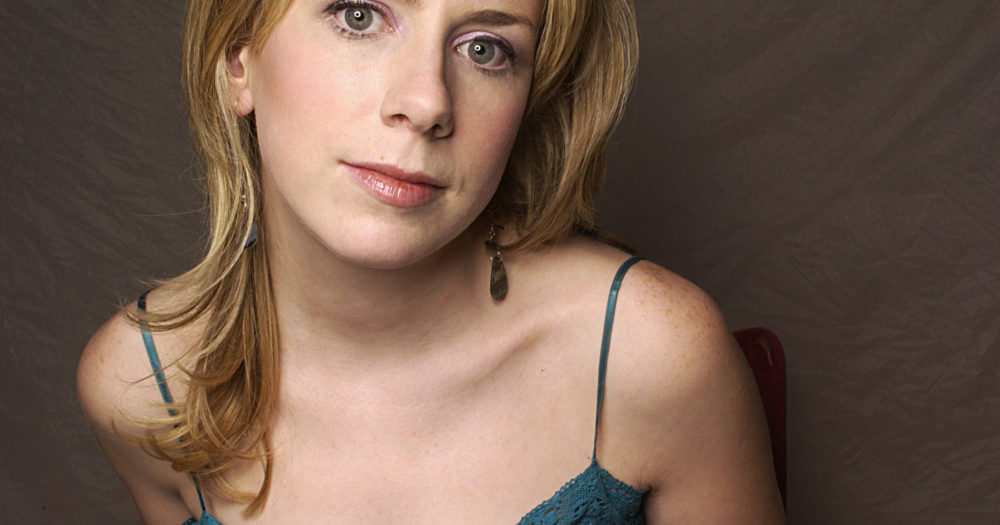
Star quality is a rare phenomenon — a bewitching magnetism impossible to define, yet when present, we recognize it instantly. Singer and traditional musician Muireann Nic Amhlaoibh possesses that level of magic, mesmerizing audiences world-wide since she joined forces with scintillating Irish music ambassadors Danú in 2003.
The Cork Evening Echo’s Paul Dromey hailed Muireann as “a real find,” and the Danú albums which feature her — The Road Less Travelled (2003) and When All Is Said And Done (2005) — drew lavish praise from critics in Ireland and beyond. “An accomplished vocal talent in both Gaelic and English, her singing has a rich fluent quality,” said John O’Regan of Irish Music Magazine. Reviewing Danú in concert for The Irish Times, Siobhán Long singled out “the balance Nic Amhlaoibh achieves, armed with one of the earthiest and most distinctive voices, not just in traditional circles, but anywhere.”
March 14th marks the US release of Daybreak: Fáinne An Lae, Muireann Nic Amhlaoibh’s enchanting debut solo album on Compass Records. This exciting and eclectic 12-track collection showcases Muireann’s sparkling vocal talent, along with her consummate artistry on both flute and whistle. Most of all, it casts light on her intuitive ability to research and tastefully select from both the traditional and contemporary music repertory, re-interpreting and delivering her chosen songs and tunes with heart-warming eloquence.
Contemporary compositions from Richard Thompson (“Persuasion”) and Gerry O’Beirne (“Western Highway” and “Isle of Malachy”) flow seamlessly into traditional songs such as “Free and Easy” (learned from the singing of Róisín White), “Slán le Máigh”, “The Emigrant’s Farewell,” “An Spealadóir,” “Banks of the Nile,” the lovely lullaby “Seoithín Seothó,” and a heartfelt rendition of “The Parting Glass.” Muireann’s flair as a traditional instrumentalist is showcased on two sets of tunes.
Musicians making guest appearances on Daybreak include Danú colleagues Oisín McAuley and Eamon Doorley; guitarists Gerry O’Beirne, John Doyle, Tony Byrne, and Shane McGowan; Scottish singer Julie Fowlis; and percussionist Billy Mag Flohinn.
A native Irish speaker, Muireann Nic Amhlaoibh spent her formative years steeped in the music, song, and culture of the West Kerry Gaeltacht, where her fiddle-playing father Feargal was a major early influence. As a Fine Arts student in Dublin, and later Limerick (she holds an M.A. in Traditional Music Performance from the University of Limerick), she was a familiar and sought-after participant on the traditional music session circuit there. Now a regular contributor to television and radio programmes at home and abroad, Muireann Nic Amhlaoibh was featured prominently in the recent “Highland Sessions” BBC television series, which celebrated the best of Irish and Scottish traditional music and song.
Self-produced, Daybreak is an engaging and expressive debut, crystalline in clarity and dazzlingly beautiful from beginning to end. Even amidst the current widespread renaissance in traditional Irish music, the work of Muireann Nic Amhlaoibh shines out like a beacon. Her approach to her craft is thorough, fashioned from sterling technique and a comprehensive understanding of the music’s roots.

Before Liz Carroll and John Doyle, Irish music in America struggled to compete with the music of the Old World. With a new generation of creative powerhouses living in the United States, however, the tables turned, and with John and Liz at the forefront, the US became a place for vibrant, forward-thinking Irish music. A match long in the making, Carroll and Doyle pursued remarkably parallel paths in becoming torch-bearers for the new Irish-American music.
Both fiddler Carroll and guitarist Doyle began their careers young, recognized as instrumental virtuosos. Carroll won the Senior All-Ireland Championship at age 18, not a small feat for an American. While Carroll traveled eastward across the Atlantic, Doyle moved westward, relocating from his family home in Dublin to New York. Introduced to Irish music by his grandfather Tommy, Doyle was playing professionally by age 16, and soon joined an energetic collection of New-York based Irish musicians, including Eileen Ivers and Seamus Egan.
Doyle’s partnership with Egan became Solas, the supergroup which would come to define Irish-American music. Doyle pioneered a rhythmic, sophisticated approach to Irish guitar accompaniment, setting a new standard for the instrument. The group recorded four tremendously influential albums together before splitting, and Doyle was dubbed “a master of his art with guitar” by The Celtic Café and “a master finger-picker” by Acoustic Guitar Magazine.
Meanwhile, Carroll continued to record, both as a solo artist and with the trio Trian. Like Doyle, the precocious fiddler became known not only for her facility with the tradition, but also for her innovative original contributions. Penning most of her own tunes, Carroll was termed “a fiddler reaching beyond herself” by noted critic and radio host Earle Hitchner. Her 1988 self-titled solo CD was chosen as a select record of American folk music by the Library of Congress.
The millennium was a milestone for both Carroll and Doyle. Already more than one decade into stable, successful careers, the fiddler and guitarist each broke new ground in their solo work — and also began contributing regularly to one another’s recordings. Both instrumentalists released two solo CDs between 2000 and 2005, and all four albums featured hints of a duo project to come.
Doyle, previously known as the “ex-Solas guitarist,” literally found his voice, recording several vocals for his debut solo release Evening Comes Early in 2001. Wayward Son, Doyle’s July 2005 follow-up, features more vocals, and has already garnered considerable critical acclaim in the month since its release.
Working without Solas for the first time, Doyle not only spread his wings with some singing, but also took advantage of the opportunity to feature one of his favorite players — and writers — on both discs. “Liz Carroll is a really good friend of mine and one of my favorite fiddle players in the world,” Doyle said in an interview following the release of Evening Comes Early “She is also my favorite composer of tunes.”
In 2000, Carroll released her first solo CD in 12 years, Lost in the Loop then followed that with Lake Effect in 2002. Co-producer Doyle was a conspicuous and highly influential presence, anchoring all but two of the tracks on Lake Effect with his trademark rhythmic style – and a softer side not often showcased in his work with Solas. The Irish Echo praised Doyle’s “spare, note-perfect accompaniment” on the Carroll slow air “A Day and an Age,” and Bill Margeson called the production of Lake Effect simply “perfection.”
Their debut duo album, In Play was lauded by fans and critics alike, bringing together three old friends — Carroll, Doyle, and Irish Music.

Pierce Pettis, adored by both critics and public alike, is one of this generation’s most masterful songwriters. His music is distinguished by his uncanny ability to capture universals in human experience by drawing on the humor and trials in daily life. Beautiful melodies, strong guitar work, and Pierce’s rich vocals are a constant throughout his body of work.
Pettis has performed in 49 of 50 states as well as in Canada and Europe, appeared on American Public Radio’s Mountain Stage, been featured on National Public Radio’s E-town, Morning Edition and World Cafe … appeared on VH-1, CBS News, and the Nashville Network.
During his long career Pettis has been a writer/artist at the legendary Muscle Shoals Sound Studios in Alabama and a staff songwriter for Polygram/Universal Music in Nashville. Artists covering his songs range from Garth Brooks, Art Garfunkel, and Dion to Clair Lynch, Tim O’Brien, and Joan Baez. After three critically acclaimed albums on Windham Hill/ High Street, Pettis joined Compass Records in Nashville, releasing five albums —including “That Kind of Love” (2009), which received rave reviews from XM/Sirius Satellite Radio, Paste Magazine, Performing Songwriter, American Songwriter, The (London, UK) Sunday Express . . . to name a few. In 2014, he joined a co-effort with Kate Campbell and Tom Kimmel to release “New Agrarians —Songs and Stories of the Southland”. Pettis also appeared on the 2013 release, “A Very Blue Rock Christmas” along with Ruthie Foster, David Wilcox, Terri Hendrix, Sara Hickman … and many others. “Father’s Son”, his new solo project for Compass Records Group was released in January of 2019 to widespread critical praise in the US, UK and Europe.

Shooglenifty is one of Scotland’s most unique musical exports. This six-man band is credited being the originators of ’acid-croft’, a fiery and infectious blend of Celtic traditional music and dance grooves that band members decribe as “hypno-folkadelic ambient trad.” The Chicago Tribune described their trippy blend as “a bit like a jam between the Tannahil Weavers, Phish and The Chemical Brothers.” While their sound is difficult to put into words, audiences from around the world have fallen under their musical spell.
A supremely dexterous and witty live band, their energetic live performances have kept them in constant demand around the world. The Evening News in London, England said of a Shooglenifty live performance, “This virtuoso band started building crescendos from the start, each one higher than the last, until the final, shuddering chord left the crown breathless and cheering wildly.“ Once some of those fans regained their composure, they began asking (or begging and pleading, depending on who you talk to) the band to record a live album. Shooglenifty, whose members include: Malcolm Crosbie, acoustic and electric guitars; Garry Finlayson, banjo and banjax; Angus A. Grant, fiddle; Luke Plumb, mandolin, banjo and bououki; Quee MacArthur, bass and percussion; and James Mackintosh, drums, machines and darabuka, happily complied.
Radical Mestizo, to be released on June 28, 2005 is the band’s third release on the Nashville, TN-based Compass Records. The ten tracks on Radical Mestizo were recorded in Mexico City, Mexico; Cumbre Tajin, Mexico; Glasgow, Scotland; Bloomington, Indiana; and Lochailort, Scotland. Now more than a decade old, Shooglenifty has played for Prince Charles and Nelson Mandela, British Prime Minister Tony Blair, has performed at the Bumbershoot festival in Seattle, WA alongside Cornershop and Beck, and back in 1996, became the first band ever to incite a stage invasion at Sydney Opera House.
Radical Mestizo features fan favorites, “She in the Attic.”, “Arms Dealer’s Daughter” and “A Fisful of Euro”, but each of the ten tracks marries traditionally based Scottish tunes with a rich pallette of influences including Africa, Arabic, funk, electronic and Latin sounds. Radical Mestizo displays the band at their very best: immediate, raw and inventive.

“The Old Blind Dogs play with a compelling energy and intoxicating rhythm,” says The Scotsman, “as players and audience seem to share a wild ecstasy of emotion.”
Fifteen years is a long time in the life of any band and most who reach that milestone are content to rest on the tried and true formulas that have worked in the past. Not so for Scotland’s Old Blind Dogs whose newly released Four on the Floor takes them bravely in many new directions.
The Dogs, one of Scotland’s most highly touted traditional folk bands, are not known for shying away from change. A strong, shared musical vision has allowed the group to ride out inevitable line-up changes to the extent that the only original member still with the band is Jonny Hardie (fiddle, guitar and vocals). The Dogs’ popularity has never dimmed though and the current foursome of Hardie, Aaron Jones (Bass, Bouzouki, Guitar, Vocals), Rory Campbell (Border (Reel) Pipes, Whistles, Vocals) and Fraser Stone (Drums, Percussion) have proven more than capable of carrying on the tradition of the band that the Montreal Gazette called “a Scots neo-traditional supergroup with a bracingly modern musical attack.”
Hardie who was classically trained, has recently been much in demand as a freelance producer and guitarist, and has solo and collaborative albums to his credit. Rory Campbell has been playing pipes and whistles since a young age and has fronted groups Deaf Shepherd and Nusa, as well as performing in a variety of ground-breaking traditional projects such as 2006’s The Blow Show. Aaron Jones who was voted Instrumentalist of the Year 2005 at the Scots Trad Music Awards is a past member of Craobh Rua and is a founding partner of www.tradmusic.com. He has appeared on many albums and continues to work regularly with some of the biggest names in traditional music, both as a performer and recently, as a producer with flute/fiddle player, Claire Mann. Fraser Stone brings his African-based percussion to both the Dogs and to highly-touted indie rock band Stereoglo.
Together, in varying line-ups along with past members Buzzby McMillan, Davy Cattanach (percussion), Fraser Fifield (saxophone, small pipes), Paul Jennings (percussion) and singers Ian Benzie and Jim Malcolm, the Dogs have released ten albums and have won numerous awards including the prestigious title of Folk Band of the Year at the 2004 Scots Trad Music Awards.
One aspect of Four on the Floor that might surprise even long-term Dogs fans is that instead of bringing in a new vocalist to replace Malcolm, who left to concentrate on his family and solo career, the remaining Dogs now share the singing duties, with admirable success. “For me,” says Hardie, “it was a matter of going back to thinking of the original sound of Old Blind Dogs. The band was a four piece for six years and, in many ways, I prefer the sound of four–with everyone having to work a little harder. We now have the ingredients for everyone to contribute songs rather than a front man and three backing singers. Because we all have a responsibility, we tend to focus on making sure the harmonies are right.”
The tracks on Four on the Floor run the gamut from contemporary songs such as Ewan McColl’s “Terror Time” and Davie Robertson’s “Star O’ The Bar” to tunes from Brittany and Galicia, to tunes found, as many a favorite Dog’s tune has been, in “dusty old books”. As to the title, Hardie claims that it “is just a reference to there being four of us on the stage now as far as I’m concerned–but everyone has there own theories (everything from manual gear boxes to us falling around a lot!) You decide.”
The Dogs have always been best known for their impassioned live shows and the inclusion of three classic Old Blind Dogs tracks, recorded live by the current line up, shows why. “Bedlam Boys/The Rights of Man”, “Branle” and “The Bonnie Earl O Moray” which span the Dog’s career, giving the listener a taste of what all the fuss is about. “It’s that live performance thing,” says Hardie. “There’s an honesty about it and we work hard on the stage. Perhaps we even err on the side of being too frenetic. We don’t really pace ourselves; we just go for it. I think ours is very immediate music.”

“Billy McComiskey is the finest and most influential B/C box player ever to emerge from the US. In that sense, Billy’s place within the transatlantic pantheon of Irish button accordionists is both high and secure, and Outside The Box will only strengthen that judgment.”
– Earle Hitchner, The Wall Street Journal / Irish Echo
Billy McComiskey is a highly regarded player and composer of Irish traditional music. A Brooklyn native, he started studying accordion with the late Sean McGlynn from Galway in his early teens. He won the All-Ireland Senior title in 1986. He formed and played with two legendary trios: Washington DC’s Irish Tradition and the internationally acclaimed Trian. He is known on both sides of the Atlantic as an indefatigable session player, teacher, and promulgator of the music. On Outside the Box, Billy’s first solo CD in almost 25 years, the listener is once again reminded why Billy is known as “the most accomplished B/C box player to emerge from Irish America”.

The Tannahill Weavers are one of Scotland’s premier traditional bands. Their diverse repertoire spans the centuries with fire-driven instrumentals, topical songs, and original ballads and lullabies. Their music demonstrates to old and young alike the rich and varied musical heritage of the Celtic people. These versatile musicians have received worldwide accolades consistently over the years for their exuberant performances and outstanding recording efforts that seemingly can’t get better…yet continue to do just that.
The Tannahills have turned their acoustic excitement loose on audiences with an electrifying effect. They have that unique combination of traditional melodies, driving rhythmic accompaniment, and rich vocals that make their performances unforgettable. As the Winnipeg Free Press noted, “The Tannahill Weavers – properly harnessed – could probably power an entire city for a year on the strength of last night’s concert alone. The music may be old time Celtic, but the drive and enthusiasm are akin to straight ahead rock and roll.”
Born of a session in Paisley, Scotland and named for the town’s historic weaving industry and local poet laureate Robert Tannahill, the group has made an international name for its special brand of Scottish music, blending the beauty of traditional melodies with the power of modern rhythms. The Tannahill Weavers began to attract attention when founding members Roy Gullane and Phil Smillie added the full-sized highland bagpipes to the on-stage presentations, the first professional Scottish folk group to successfully do so. The combination of the powerful pipe solos, Roy’s driving guitar backing and lead vocals, and Phil’s ethereal flute playing breathed new life into Scotland’s vast repertoire of traditional melodies and songs.
Three years and a dozen countries later, the Tannahills were the toast of Europe, having won the Scotstar Award for Folk Record of the Year with their third album, The Tannahill Weavers. Canada came the next summer, with thousands at the national festivals in Vancouver, Winnipeg and Toronto screaming an approval that echoed throughout the Canadian media. The Regina Leader-Post wrote, “The Tannahill Weavers personify Celtic music, and if you are given to superlatives, you have to call their talent ’awesome’.”
Since their first visit to the United States in 1981, the Tannahills’ unique combination of traditional melodies on pipes, flute and fiddle, driving rhythms on guitar and bouzouki, and powerful three and four part vocal harmonies have taken the musical community by storm. As Garrison Keillor, the host of “Prairie Home Companion”, remarked, “These guys are a bunch of heroes every time they go on tour in the States”.
Over the years the Tannies have been trailblazers for Scottish music, and their tight harmonies and powerful, inventive arrangements have won them fans from beyond the folk and Celtic music scenes. The Ithaca Journal writes, “Traveling overseas to perform always thrusts the artist into the role of cultural ambassador. If that is the case, the Tannahill Weavers make Scotland out to be a country to desire, one with an appreciation of the old, an acceptance of the new and a quick and playful wit.”
1994 saw the release to critical acclaim of Capernaum, which won the Indie Award in the USA for Celtic Album of the Year from the National Association of Independent Record Distributors and Manufacturers. Now with their 15th album, Alchemy (2000), the Tannahill Weavers are firmly established as one of the world’s premier Celtic artists. From reflective ballads to footstomping reels and jigs, the variety and range of the material they perform is matched only by their enthusiasm and lively Scottish spirit.
Quotes From the Press
“These guys are a bunch of heroes every time they go on tour in the States” – Garrison Keillor, Prairie Home Companion
“…world class musicians with passion and a healthy sense of fun, keeping alive and making accessible the very heart of the tradition itself.” – Mojo Magazine
“…as close to perfect as it gets in an imperfect world…there is no Celtic group which can match the enigmatic Tannahill Weavers for pure excitement.” – R. Weir, Sing Out
“…no band of their ilk has performed with more energy or authority than the Tannies, who blend guitar, mandolin, bouzouki, fiddle, whistles, bodhran and pipes into a lilting product as fine and enduring as the textiles woven by namesake weavers of their Scottish hometown, Paisley.” – Westword, Denver, Colorado
“…the Weavers’ unpretentious manner and superlative playing set them apart from most other Celtic groups. In a world where good taste has become a scarce commodity, the Tannahill Weavers are a wealthy bunch.” – Michael Lipton, The Charleston Gazette
“Versatility is their strong suit, backed up by instrumental brilliance and on-stage high spirit.” – Vancouver Press
“Past meets present for a heckuva future!” – St. Paul Pioneer Press
“If you haven’t yet discovered the emotional power and beauty of Celtic music, then you owe it to yourself to see firsthand one of the best traditional Celtic folk bands in the world – The Tannahill Weavers. No other group comes close to matching their musical style and breathtaking harmony. Whether they’re performing an a cappella ballad with beauty and precision, or a hard-driving Gaelic battle tune, this band is one of a kind, featuring stunning vocals, as well as the best guitar, pipes, fiddle, bodhran, and tin whistle players anywhere.” – Miami Valley Guide to Musical Diversity
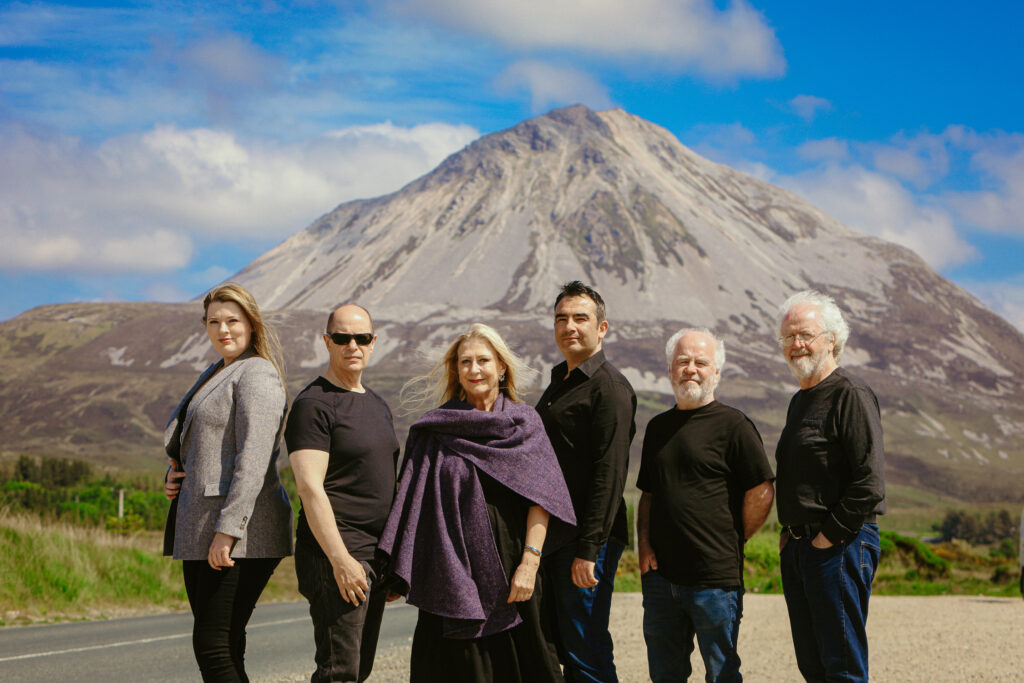
Altan is one of the most iconic bands in Irish music. The band delivers on their reputation as among Ireland’s most important cultural ambassadors with their new release DONEGAL. Irish-language songs and dynamic twin-fiddling, both hallmarks of Altan’s sound, framework the new album which tributes Altan’s native County Donegal and its rich musical heritage, breathtaking landscapes and vibrant culture.
Bandleader, lead vocalist and fiddler Mairéad Ní Mhaonaigh is in fine form thoughout, lending her angelic voice to “Liostáil mé le Sáirsint” and “The Barley and the Rye” and contributing “Port Árainn Mhór/Port Kitty Rua Mooney”, an outstanding set of jigs, to the project. Altan’s newest member, Clare Friel, shares vocal duties with Ní Mhaonaigh, most notably on the track “Faoiseamh a Gheobhadsa” and adds her fiery twin fiddle playing to great effect. Accordionist Martin Tourish brings his formidable chops and compositional sense to the medley “The House of Baoithín” which pays homage to the mid 6th century Saint Baoithín. Dáithí Sproule (guitar), Mark Kelly (guitar, harmony vocals) and Ciarán Curran (bouzouki, mandolin) round out the band which is augmented by special guests Jim Higgins (percussion), Steve Cooney (bass) and Graham Henderson (keyboards) on select tracks. Taken as a whole, the music transports listeners to a bygone time in rural Ireland while simultaneously forging a connection between the past and modern times.
Recorded by Manus Lunny at Stiúidió na Mara (“Seafront Studio”) in County Donegal, DONEGAL captures the essence of the region which has inspired Altan since the band’s inception and further cements Altan’s legacy as one of the great cultural treasures of Ireland.
No Irish traditional band in the last thirty years has had a wider impact on audiences throughout the world than Altan. Formed in County Donegal in 1987 by lead vocalist Mairéad Ní Mhaonaigh and her late husband Frankie Kennedy, the group’s music is influenced by traditional Irish language songs and tunes from Donegal. Over the course of their career, Altan has sold over a million records.
-->


