
Capercaillie is –
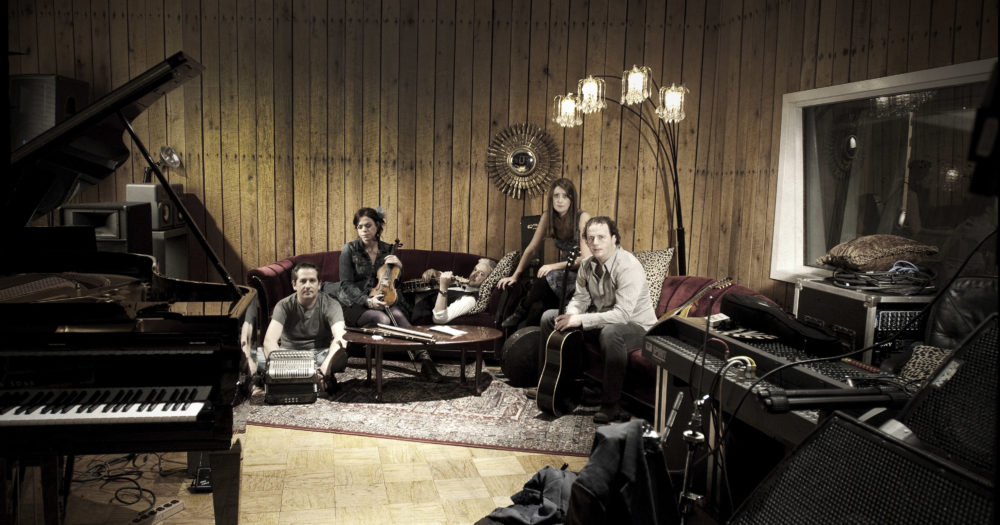
Throughout their career Capercaillie have drawn on two great strengths to inspire them. The first of these is the astonishing musical dexterity of the various fiddle, whistle, flute and pipe who have performed with them over the years, lead by the accordion and keyboards of band founder Donald Shaw. The other foundation of the band has been the peerless voice of co-founder Karen Matheson, described by Sean Connery as having “a throat that is surely touched by God”. Universally recognised as one of the finest Gaelic singers alive today, Karen’s exquisite voice has been at the centre of the band’s music, whether breathing new life into 400 year old Gaelic songs or bringing her luscious vocals to the band’s contemporary compositions…
There have been many milestones for a band who have sold over a million albums world wide. These include three silver and one gold album in the UK, the first Gaelic Top 40 single, writing the music for, and appearing in the Hollywood movie “Rob Roy”, and performing in over thirty countries including Iraq, Macedonia and the Sudan.
Capercaillie have been credited with being the major force in bringing Celtic music to the world stage, and their unique fusion of Gaelic culture and contemporary sound has always stretched boundaries in their quest to keep the music evolving.
It is a mighty long way from Oban High School to the Hanging Gardens of Babylon in Baghdad, but Capercaillie have made this journey and stopped off at many other exotic locations along the way . However, their greatest achievement has been to mould a central strand of their Gaelic heritage into a fresh, new sound, capable of reaching out to the ears and hearts of people all over the world.

Celebrating their 40th Anniversary this year, The Green Fields of America was the first group on either side of the Atlantic to bring together Irish vocal, instrumental and dance traditions on the concert and festival stage. The group continues to feature some of the most celebrated names in Irish American music and dance in including National Heritage Award Recipients Mick Moloney on Banjo, Vocals and Octave Mandolin, and Billy McComiskey on Button Accordion. The group also includes: legendary singer/songwriter Robbie O’Connell, Riverdance and Sharon Shannon Band alum Athena Tergis on 5-string fiddle, World Irish Step Dance Champion Niall O’Leary, acclaimed concertina player and singer Brenda Castles, Pianist and flute player Brendan Dolan and the riveting vocals and fiddle of Liz Hanley.
An evening with The Green Fields of America is an unforgettable experience. They perform a brilliant repertoire of Reels, Jigs, Barndances, Slow airs, and Hornpipes and Set Dances accompanied by exciting, virtuoso Irish dancing from World Champion step dancers, as well as a variety of traditional and contemporary songs in Gaelic and English. These include love songs, humorous songs, patriotic songs, songs of emigration and settlement, Irish American songs from variety theater and vaudeville and the myriad other themes that have made the Irish oral literature and song tradition among the richest in the Western world. All this is linked by the urbane, informative witty commentary which the group is renowned for. They have the rare capacity to appeal to folk and Irish music devotees and to general audiences of any age.
“The finest Celtic ensemble this country has ever produced…combines a deep empathy for the wild grace of traditional music with a savvy understanding of modern arrangement, creating a remarkably contemporary and timeless sound that led them immediately to Celtic superstardom…uniquely fluid, warmly melodic and robust.” – The Boston Globe
“Solas has electrified crowds everywhere it has played; it’s an Irish traditional band bearing all the marks of greatness.” -The Wall Street Journal
“One of the most exciting bands anywhere in the world.” – Irish Echo
Solas stepped out onto the world stage in 1996, when Irish music was poised at the brink of a new era of innovation and popularity. The five young musicians who made up the band at the time had no idea that they were to be a galvanizing element in the Irish music scene – a lightening rod of talent and inspiration that set new standards for musicianship, repertoire, and intensity. “We thought we were doing a one-off project,” says multi-instrumentalist Seamus Egan with a smile, ten years after the fact. Egan and fiddler Winifred Horan have remained with the band through a decade that has encompassed seven albums and endless international touring and critical acclaim. Inspired by an off-hand comment that 2006 marked ten years as a band, Solas reached out to past members (including John Doyle, John Williams and Karan Casey) to join them in a celebration concert in Philadelphia. After the almost impossible task of coordinating the schedules of touring musicians, the show went off without a hitch and the result became the CD/DVD Reunion: A Decade of Solas, one of the most highly praised Irish music outputs of 2006.
In 2008 vocalist Deirdre Scanlan made the difficult decision to step away from the road and Solas. With tours still on the books, Solas was joined by a myriad of the best folk and Irish vocalists on the scene today including Aoife O’Donovan (Crooked Still) to handle lead vocals until a final decision was made. Solas is excited to officially announce the discovery and addition of Kilkenny vocalist Mairead Phelan. Phelan is an All-Ireland champion on flute and whistle and has studied at the Royal Irish Academy of Music in Dublin. Beautifully filling the role carved out by founding vocalist Karan Casey, Phelan brings to Solas an enlivened sense of purpose and a new shine to Solas’ entire vocal repertoire. With Phelan, Solas is putting the finishing touches on a new album, For Love and Laughter due out on Compass Records September 2008.
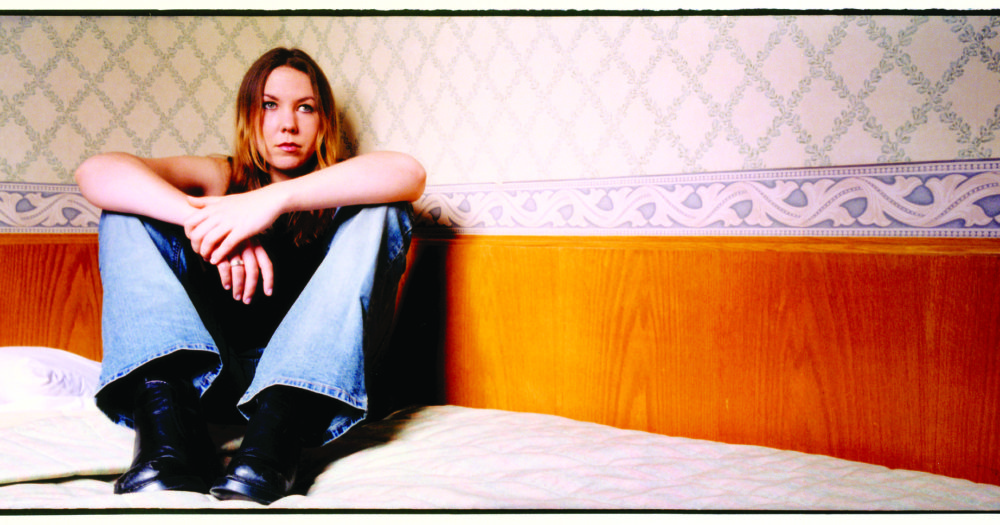
“One of the most promising and provocative singer/songwriters to emerge from England in years, Gilmore detangles sex, religion, and politics with a literate eloquence and defiance that recall the early poetic eruptions of Bob Dylan.” -USA TODAY
It is not unusual for a songwriter to stray from the beaten path as they mature, to experiment more intrepidly and find a thoroughly distinctive voice. But when this happens at age 25, people take notice.
It is fitting that Thea Gilmore conceived her Compass Records release, Songs From The Gutter, as part of a Bob Dylan tribute album. Like the obstinate American songwriter to whom she is frequently compared, Gilmore seemed unshackled by convention even in her early work, able to escape the confines of both genre and industry and give her creativity space to grow.
Gilmore believes that audiences don’t want to be pandered to and that people will respond to honest expression more than accessibility. The young Brit’s respect for music listeners paid off and accolades poured in from such respected sources as USA Today, Mojo, and Guardian. Gilmore was invited to appear on Radio 4 and at Glastonbury Festival, one of the UK’s largest musical events. In the fall of 2004, she toured the US with Joan Baez.
A steadfastly original lyricist generating recordings at a breakneck pace, Gilmore has kept her growing fan base almost satisfied with a new project nearly every year. While most of her peers spend years in the planning stages, Gilmore takes her ideas to the studio quickly, capturing the muse of the moment and allowing it to be whatever it is, whether that fits in with any larger trajectory or career plan — or not. Following the highly successful 2003 release of Rules for Jokers, Gilmore changed direction with 2004’s lush, Avalanche.
Songs From the Gutter is a textbook example of Gilmore’s method of creation. Invited to contribute to a Bob Dylan tribute CD sponsored by Uncut magazine, the ever-generating artist found herself in a studio in Cheadle Hulme in May of 2002. Five days later she emerged with ten tracks, which she promptly added to several older, unavailable cuts for an internet-only, double album release. Nigel Stonier’s production and a mastering job at Abbey Road polished the collection without taking away any of its nerve, and fans clamored for the disc at Gilmore’s live shows. Making its American debut on Compass Records this August, Songs from the Gutter glimmers with the immediacy and unpredictability of Gilmore’s performances, delving into her darker, grittier side. True to her varied and prolific form, Gilmore will follow Songs from the Gutter with Loft Music, an album of covers that will be released on Compass Records this fall.
Gilmore is best described as a gritty but lyrical poet, one who is frequently asked about politics and social issues because of her hard hitting lyrics. Her response to such a question in a recent See Magazine interview is classic take-no-prisoners Thea – “I just take a more social standpoint — personal politics rather than politician politics. My politics basically comes from trying to put a rocket up people’s asses and saying open your eyes a bit.”
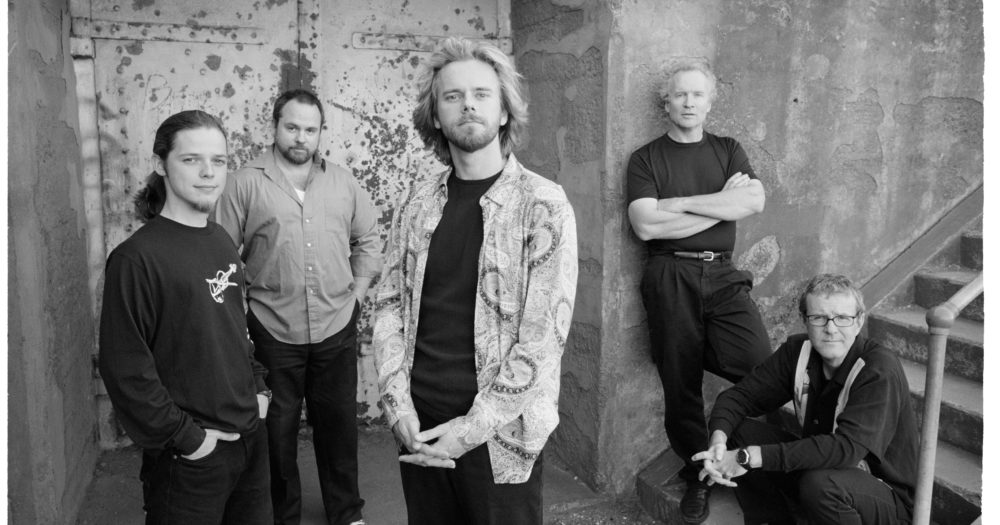
They draw freely from the old school and the old world, but The Waybacks are no throwback. They’ve been erroneously pigeonholed as a bluegrass band and celebrated as purveyors of “acoustic mayhem.” They are as uninhibited and unpredictable as the eclectic San Francisco Bay area that claims them, and for nearly a decade, their experiments have always proven sharp-witted and musically dazzling. They’re living proof that in music anyway, evolution and intelligent design are entirely compatible.
“The whole spirit of improvisation – that’s always been the cornerstone of this band for me,” says singer, songwriter and guitarist James Nash. “Through all the stylistic changes and regardless of the instruments we’re playing, to me the fun of this band has always been that in some ways I can do whatever I feel like doing at any moment.”
They’ve been through changes for sure. Now a four-piece with a full arsenal of acoustic and electric instruments, The Waybacks are releasing Loaded, the boldest, rangiest and most exciting album of their career. Produced by Nashville bassist, composer and consummate sideman Byron House, it’s a musical rebuke to anyone who would typecast true artistry.
The folk and roots underpinnings that have long been a Waybacks hallmark are still there, but after years of playing a huge range of venues and festivals, touring with Grateful Dead founder Bob Weir, and reconfiguring themselves around the hot guitar of James Nash and the fiddle virtuosity of Warren Hood, The Waybacks are enjoying a refreshed repertoire – one that’s touched by Memphis soul, honky-tonk, Parisian swing, classical music, vintage blue pop and much more besides. Nash and Hood have stepped forward as songwriters, allowing The Waybacks to assemble their first project of entirely original music. They’re finding a new collective voice, right before our ears.
Besides Nash, the Waybacks include drummer Chuck Hamilton, bass player Joe Kyle Jr. and the newest member, fiddler and mandolinist Warren Hood. Those who have followed the band’s progress over the past five years have had to bid good-bye to two long-time members, finger-stylist and singer Stevie Coyle and multi-instrumentalist Chojo Jacques. But in welcoming Hood (who sometimes refers to the revamped band as a power trio plus fiddle) and focusing around a more rhythmic, far-reaching sound. You might say The Waybacks have grown by shrinking.
“I just thought they were all very talented players,” says Hood about his attraction to The Waybacks. “I really couldn’t put them into a genre, but I guess that’s what I liked about it. I’d rather be in a band that plays a little of everything than a band that lives in one genre all night.”
The Waybacks were launched in 1999, when Nash, a guitar phenomenon raised in Nashville, was making a living in San Francisco playing solid-body electric guitar. His involvement in an acoustic side project was not supposed to change his life, but it did. “It was kind of a novelty to me,” he says. “It was a liberating, exciting thing where I kind of rediscovered that I love playing acoustic instruments.”
As they began touring, Nash was quickly recognized as a top-flight picker even in the rarified company that circulated at the world’s best folk, roots and bluegrass festivals. The Waybacks’ show was built around blazing instrumental skills and large doses of hilarity. They’d play traditional fiddle tunes with their own twist, original songs that fell into no category, and insanely difficult jazz tunes like Charlie Parker’s “Scrapple From The Apple.”
Fans loved it, and so did the critics. The Chicago Tribune’s David Royko praised their “near-ideal balance of irreverence, chops, discipline, and originality.” Bay Area writer Michael Miller admired their “exotic settings” and “mind blowing picking.” It led to major festival bookings and eventually a recording arrangement with Nashville’s roots label Compass Records.
The Bob Weir shows were one of the most recent validations that The Waybacks had tapped into something profound. The Grateful Dead co-founder has remained incredibly prolific over the years, and in The Waybacks he saw something he recognized. He and the band collaborated on several memorable shows in 2006, including much buzzed-about sets at Merlefest in North Carolina and Hardly Strictly Bluegrass in San Francisco. They translated some of the Dead’s electric repertoire into a newgrass format, while working up covers together from the likes of Johnny Cash and Led Zeppelin. So it should come as no surprise if you hear overtones of the Dead’s freedom and eclecticism in songs like “Good Enough” and “The River” on Loaded.
When they were getting ready to make the new album, Nash and company scheduled their longest-ever period of pre-production. It was a necessary step to finding out how to work as a four-piece and a productive investment in crafting an album that accomplishes a lot of things. “We were so much better prepared for the studio and we had a lot more fun this time,” says Joe Kyle. “Once we got to Nashville with the meter running we were able to get down to business at once. The vibe was strong in the studio. We were at once purposeful and focused and we were having a ball.”
Kyle also says that for the first time The Waybacks had more original material to record than they had space for. That’s because of the songwriting energy of Nash and Hood. Warren’s songs lean toward the vintage, and he shows chops beyond his 24 years in the complex chord changes and sophisticated melodies of tunes like “Savannah.” “Nice To Be Alone” sounds like something Sam Cooke might have recorded, and “Tired of Being Right” is a full-tilt roadhouse boogie. Hood also proves he’s a gifted singer and every bit the son of Champ Hood, whose seminal Uncle Walt’s Band is one good historical touchstone for The Waybacks.
Nash’s songs tend to jam out harder and tell great stories. The characters in “Loaded” and “City Boy” are palpable and have motivation. The proud-because-she-has-to-be girl in “Conjugal Visit” is no lighter weight for being the subject of a funny song. “Beyond the Northwest Passage” is a no-holds-barred sea shanty with a rousing sing-along chorus that features the band’s beer-fueled pals from the Greencards and the Infamous Stringdusters.
Drummer Chuck Hamilton says “each successive Waybacks recording project has been an improvement on the previous one – more fun, better musicianship, better production – and Loaded continues in that tradition. Somehow everything seems more authentic now. There’s a combination of freedom and pressure that I really like.”
When you think about it, that’s the essential tension behind all great music. One without the other just doesn’t work. It’s that balance that makes The Waybacks a real ensemble, one that transcends genres in the best possible way. As Hood says, “I’d like to hear them try to call us a bluegrass band now!”

“Paddy Keenan has few peers in the world of traditional Irish music.” —Tim O’Brien
“…one of the most exciting players of the last 50 years — in Irish music and in any genre.” —The Rough Guide to Irish Music
“…an impressively varied and highly satisfying program of modern and traditional Irish music that should satisfy traditionalists and modernists equally.”
From the dizzying spirals of the most intricate jigs to the aching wail of a slow aire, the piping of Paddy Keenan is one of Celtic music’s most identifiable and moving sounds. From his role in the ground-breaking Bothy Band to an acclaimed solo career, Keenan remains Ireland’s foremost piper—a disarmingly emotional player capable of greatness in any context. The Long Grazing Acre pairs Keenan with Tommy O’Sullivan, a soulful and empathetic guitarist and vocalist. The collaboration is an ideal one, with each musician reinforcing one another and pushing themselves to new heights. The Long Grazing Acre is testament not only to Keenan’s illustrious past , but to his ever-expanding vision for the continuing growth and regeneration of traditional Irish music.

It’s not a typical starting point for a new album, the band members asking each other to nominate the worst song they’ve ever written. Then again, there’s a lot about The Waifs that defies convention.
This unlikely scenario unfolded when Vikki Thorn, her sister Donna Simpson and Josh Cunningham got together in a studio in Western Australia last year. The three mainstays of The Waifs hadn’t seen much of each other since touring on the back of their last album, 2011’s Temptation. The reunion called for a break with tradition. Instead of writing separately, the formula that has served them so well for almost 20 years, it was time for total collaboration. The three musicians would work together as a unit until a bunch of songs emerged.
Much to their surprise, the three amigos drew a blank.
“It was all very exciting,” says Vikki. “We probably hadn’t sat together in a room like that for 15 years. We got out pens and paper and guitars. It felt like it should be an easy thing … but it wasn’t. We tried in earnest to jam and shape songs. We tried going through ‘what’s the worst Waifs song you’ve ever written?’ Even that became awkward because we couldn’t all agree which were the worst ones. It was all very intimate and personal. Then Donna one day got the shits and went off and wrote a song.”
We can be glad she did. That moment of frustration opened the floodgates to what has become The Waifs’ seventh studio album Beautiful You, an exquisitely crafted collection of songs from the three songwriters that bears all the hallmarks of a Waifs classic.
“I thought, ‘I’m just going to walk outside and write something’,” Donna recalls of that false start. ‘It just kind of comes to me that way. It came and just kept rolling.”
In January 2015, aided by their regular rhythm section of drummer Dave Ross Macdonald and bassist Ben Franz, The Waifs entered 301 Studios in Byron Bay, NSW with producer Nick DiDia (Bruce Springsteen, Rage Against the Machine, Powderfinger) and emerged several weeks later with Beautiful You. The emotionally raw but musically buoyant Beautiful You demonstrates the easy chemistry that has bound The Waifs together for more than two decades, as well as celebrating the depth of songwriting talent they have at their disposal.
The 12 new tracks – four from Donna, three from Josh and five from Vikki – play to the strengths of one of Australia’s most enduring and lauded folk, pop and roots outfits. There’s a familiar mix here of celebration and reflection, combined with that easy musical energy and intuition spawned from so many years of touring, whether in the pubs of rural Australia in the early days or on the road internationally ever since then. Beautiful You boasts abundant choruses, intoxicating instrumental exchanges and joyful harmonies, the characteristics that make so memorable the band’s noughties hits London Still, Bridal Train and Sun Dirt Water.
The title track, Donna’s aching vocal drifting over a simple guitar motif, has a deeply personal undertow, a plea to a friend struggling with addiction: “You gotta change the road you’ve been taking,” sings Donna, “lay down your weapons and surrender.”
Simpson’s shuffling, alt country ballad “When a Man Gets Down,” another personal account, this time of a relationship breakdown, is equally emotive. “I sat bawling my eyes out when I wrote that song,” she says. “It was something real that was happening in my life.”
Josh’s country stroll “Dark Highway” is a gentle prod at humanity inspired by the night his van broke down and no one stopped to help him. He wrote the song in the back of the van to kill time until assistance arrived (“obviously I eventually got out of there” he says).
Then there’s the overtly poppy “Blindly Believing,” complete with a killer hook that explores the fleeting nature of love. Vikki wrote the song with WA singer Bex Chilcott, better known as Ruby Boots, in a session in Utah that marked Vikki’s first attempt at co-writing and that produced several co-writes for Ruby Boots’ debut album, Solitude.
Donna’s “Rowena and Wallace” is a bluesy coming-of-age romp punctuated by Vikki’s harmonica stabs and Josh’s piercing electric guitar, while Josh’s “Born to Love” echoes the folk/blues swagger of his hit song Lighthouse from the band’s breakthrough, ARIA Award winning album Up All Night (2003).
Home has been in a variety of places for The Waifs during their career. Donna lives in Fremantle after spending eight years in Minneapolis, where the band recorded Temptation four years ago. Josh splits his time between California and the NSW south coast, where he’s building a house for his family. Vikki is based in Utah. It’s no accident that what inhabits Beautiful You most of all is that attachment to home, wherever that might be.
Twenty-three years after Donna and Vikki set off from Albany to play music across Australia to anyone who would listen, teaming up with Josh en route, the three have come to appreciate the places they left behind. It’s hardly surprising then that Vikki, who with her sister grew up at Cosy Corner Beach near Albany, WA, steeped in the simple, rural traditions of their salmon-fishing family, should reflect on and celebrate those things on the new album. This she does beautifully and longingly on the pulsing, heartfelt album opener, “Black Dirt Track.” “The longer I am away from Australia the more connected I feel to Australia and I keep writing songs about that,” Vikki says. “I grew up near the salmon camp where my grandfather fished, my father played there as a kid and when I go back there now I do the same things with my children. I physically feel connected to that place when I’m there. It’s almost a spiritual thing. It’s where I grew up. It’s where I learned to play guitar, where my husband proposed to me. I’ve had all these deeply personal moments and significant things happen in this one place.”
There’s a similar bent to “6000 Miles”, on which Vikki contemplates the distance between her old home and her new one.
The closing “February”, a sparse acoustic ballad that develops quickly into a full-tilt rocker, has Vikki anticipating warmer, brighter days: “February hitches up her skirt and rolls her stockings down,” she sings.
There are plenty of brighter days ahead for The Waifs. As Josh notes, “the relationship deepens”. Beautiful You is a powerful statement of the individual songwriters’ skills, their beliefs, their passions and their dreams. Bound together by expert musicianship and the love and respect that have developed between them since the early 1990s, it’s also a moving, entertaining and ultimately joyful statement from a group of musicians dedicated to each other and to their craft.
“It’s still great to look across at each other and know where we are going to go with the music,” says Donna. “That has never changed. And we get along better now than we ever have.”

Victor Lemonte Wooten is a unique human being. Born the youngest of five boys, he began learning to play music at the tender age of two. He started performing in nightclubs and theaters as the bassist with the family band at age five, and at age six, was on tour with his brothers opening shows for legendary soul artist Curtis Mayfield. Soon after, he was affectionately known as the 8-year-old Bass Ace, and before graduating high school, he and his brothers had shared the stage with artists such as Stephanie Mills, War, Ramsey Lewis, Frankie Beverly and Maze, Dexter Wansel, and The Temptations. But, this only begins to tell the tale of this Tennessee titan.
Wooten, now a five-time Grammy winner, hit the worldwide scene in 1990 as a founding member of the super-group Bela Fleck and the Flecktones. Continuing to blaze a musical trail with the band, Victor has also become widely known for his own Grammy nominated solo recordings and tours.
Among other things, he is a loving husband and father of four, a skilled naturalist and teacher, a published author, a magician and acrobat, and has won every major award given to a bass guitarist including being voted Bassist of the Year in Bass Player Magazine’s readers poll three times (the only person to win it more than once.) In 2011, Rolling Stone Magazine voted Victor one of the Top Ten Bassist of ALL TIME.
“I was born at the right place and the right time to a wonderful family.”
Victor Lemonte Wooten was born September 11, 1964 to military parents on an air force base outside of Boise, Idaho. Soon after, the family packed up and moved on as military families often do. It was during the years stationed in Hawaii that the brothers began performing as a five-piece band. With Regi on guitar, Roy on drums, Rudy on sax, Joseph on keys, and Victor on bass, the Wooten Brothers band was born. Performing in their front yard, the band immediately began honing their skills. Victor credits the brothers’ early ability to play a variety of musical genres to the experience of relocating frequently, the diversity of 1960’s radio stations, and the unwavering support of their parents who provided many opportunities and booked all of their performances.
My brothers, who were already playing music, knew they needed a bass player to complete the family band.
Regi started teaching me as soon as I could sit up straight,
and my parents let him do it.”
Victor has been heralded as “the Michael Jordan of the bass” and “one of the most fearless musicians on the planet.” These qualities were evident when, in 1981, his older brother, Roy, recommended him as a bluegrass fiddle player for a job performing at a nearby amusement park. Victor, having never played violin in his life, was thrilled to meet the challenge. He borrowed an instrument from his high school orchestra teacher and immediately began practicing. Quickly learning the most popular fiddle tunes and techniques, he took the job at Busch Gardens – The Old Country in Williamsburg, VA playing fiddle and bass in the Good Time Country Show
“I remember getting that call from Roy. He trusted me.
I had to learn to be a fiddler real quick – almost over night.
I don’t think the people who hired me ever knew I’d never played before.”
What they soon found out was that the brothers were quickly becoming star attractions. The Wooten Brothers rapidly became staple figures and star attractions at the park throughout the 1980’s working in the German, Italian, Country and Bluegrass, and Americana shows.
The years 1980 and 1981 found the brothers performing for US troops overseas as the band for the Busch Gardens USO show. Traveling the world was an eye-opening time of learning for young Victor, but it was one summer performing in the country show that, unbeknownst to him, changed his life forever. That was when he became aware of a unique banjo player named Béla Fleck.
“My brothers and parents were the foundation.
They prepared me for just about anything by teaching me to keep my mind open and to learn to adapt.”
While messing around with a friend’s banjo between shows, the friend commented on Wooten’s unique banjo sound. Because the instrument is tuned different from a bass, Victor’s lines came out sounding pretty strange when he played his friend’s instrument. With a thick southern accent, the friend told him that he sounded just like a banjo player named “Baylor Fleck”. Wooten couldn’t imagine anyone playing a banjo that way, so he sought out to find out who this Baylor guy was. When he finally heard a recording of Béla’s band New Grass Revival, he was hooked.”
In 1987, Victor traveled with his friend to Nashville, TN. During their short visit, he connected with the banjoist Fleck for the first time. After their initial meeting, Wooten and Fleck kept in touch and continued sharing musical ideas. In 1988, Wooten found himself living in Nashville. Later that year, Béla and Victor, along with Victor’s inventive brother Roy “Future Man” Wooten, and harmonica & piano wizard Howard Levy, formed the eclectic ensemble Béla Fleck and the Flecktones. With a dozen recordings under their belt, the band has created a completely new sound and has become known for its genre-defying music. Currently, over twenty years later, the band is still going strong.
“Musically, that means not being rigid and not having to play in a certain way.”
A few years after he began touring with the Flecktones, Victor released his first solo project, A Show of Hands. Recorded with only a 4-string bass, no multi-tracking, and a lot of groove and soul, this revolutionary CD was voted one of the most important bass records of all time.
Musicians wanting to learn Victor’s unique style and elusive techniques began seeking him out for lessons and seminars at music stores and schools around the world. These workshops became the training ground that lead to the formation of his acclaimed Bass/Nature Camp in 2000, which eventually expanded into Victor Wooten’s Center for Music and Nature. These “intensive” style programs, now in its thirteenth year, welcome all instrumentation and vocalists, and have helped thousands of people of all ages from all corners of the world enhance their musical and personal lives.
“People frequently thank us for sending their new spouses home.”
In 2009, Wooten Woods became the new home for all of Victor’s camps. The nearly 150-acre retreat, owned by Victor and his wife, is located on the beautiful Duck River west of Nashville, TN. This picturesque retreat center, largely built by the hands and hearts of past students, has provided many more opportunities for Victor and his staff to share their lifelong experiences with others.
“We give students the opportunity to completely let go and be themselves while congregating
in a peaceful non-competitive manner on an equal playing ground with each other and their instructors.
We’ve found this to be the best environment for learning.”
April 1st, 2008 marked the debut of two new releases by Victor Wooten. Palmystery (Heads Up) is his sixth solo recording and contains a collection of all new music. It features Bootsy Collins, Mike Stern, Keb Mo, Carl Denson, Jd Blair, Derico Watson, Saundra Williams, Anthony Wellington, Steve Bailey, Will Lee, Dennis Chambers, The Lee Boys, The Wooten Brothers, and others. The album showcases Wooten’s jazz composition and arranging skills with songs like “Two Timers”, “Flex”, and “Song for my Father”, but also brings to the forefront his artistically humble side with the celebratory track “Bass Tribute” and the thought provoking “I Saw God”.
On the same date, Victor released The Music Lesson – A Spiritual Search for Growth Through Music, a self-published novel about Life and Music. The book presold hundreds of copies before its release quickly becoming a “must-read” for musicians world-wide. The choice of using this unconventional approach to sharing unique ideas about music was a surprise to all. Offering an intriguing story full of anecdotes and mysticism, The Music Lesson has helped free the minds of musicians worldwide. Soon after its release, it was picked up and published by the Berkley Publishing Group/ Penguin USA Inc. Now translated into multiple languages, The Music Lesson is currently used as required reading and part of curriculums in study groups, schools, and universities including the prestigious Berklee College of Music and Stanford.
With the success of the book came the release of The Music Lesson audiobook (Tantor Audio). Victor lends his voice as the narrator and main character, but enlisted many of his friends and fellow musicians to read the parts of all the remaining characters. Victor also wrote and performed the musical score to the audio book, which was voted as a one of five finalists at the 2011 Audie Awards (the audio book’s equivalent to the Grammys) in the category of Personal Development.
“My mom always said the world needs more than just good musicians.
She said we need good people.”
Wooten’s sought-after skills and growing popularity have lead to recordings and performances with artists such as Chick Corea, The Dave Matthews Band, Bootsy Collins, Branford Marsalis, Mike Stern, Prince, India Arie, Keb Mo, Dennis Chambers, Susan Tedeschi, Gov’t Mule, Bruce Hornsby, Stanley Clarke, Marcus Miller, Frank Gambale, the legendary Moroccan group Nass El Ghiwane, and many others.
His respected reputation as a teacher and speaker/lecturer on the subjects of both Music and Nature have garnered invitations for him to speak and teach at schools, universities, classes and spiritual centers around the world. Some of these places include Strathmore College, Berklee College of Music, Stanford University, Harvard, Mississippi State, Miami University, Middle Tennessee State University, The Haven (Gabriola Isle BC, Canada), Various Nature Centers and camps, and The NYC “Y” with Dan Levitin, author of “This Is Your Brain On Music”.
Along with recording Grammy winning and Billboard charting albums with Béla Fleck and the Flecktones, Victor also spearheaded the formation of the super-group SMV with two of his childhood heroes, Stanley Clarke and Marcus Miller. He continues to record and tour with the Flecktones, various other artists, and as a solo artist. He also currently leads six to eight camps at Wooten Woods each year (which he takes part in all day every day). With all of this going on, it would seem like Victor Wooten would have no time for anything else, but that is not the case.
Taking matters completely into his own hands, Wooten has recently formed his own record label, Vix Records. Wooten’s self-proclaimed “Label of Love”, entered the scene in 2011 with a re-mastered version of his pioneering debut solo CD. The new version, A Show of Hands – 15, contains three bonus tracks and is also released on vinyl.
“If the world were to follow you today, where would you lead them?”
Continuing to grow and always willing to share his gifts with all who desire to learn, it seems that Victor Wooten has no plans of slowing down.
“I’m currently writing the sequel to The Music Lesson, and have at least three more books planned after that. I feel like we’re just getting started with the camps and Wooten Woods. Now that we are officially recognized as a not-for-profit organization (501c3), the door is wide open. Vix Records has already released multiple products and we’re not even a year old yet. Writing music for movies and television is the next logical step, and with the amazing team I have helping me, including my manager Danette Albetta, my assistant and web-master Dave Welsch, and my wife Holly, I’m sure we’ll accomplish all of our dreams and more. You know, my kids are actually starting to play gigs on their own now. Who knows, I may be able to retire soon and become their manager. I’m just happy that people like what I do and that I have a lot of support. You can’t beat that.”
 “I think everything you listen to has an influence over what you write and the way you play,” says Robbie McIntosh. “It all goes into the machine, and then comes out all minced up. People whom I’ve admired as writers over the years include Bob Dylan, the Beatles, Jimmy Webb, and Chrissie Hynde, but to say I wrote songs anywhere near as good as those guys would be presumptuous to the max.” McIntosh needn’t worry though. His solo debut album Emotional Bends was widely praised; Performing Songwriter Magazine called it “as stunning a debut as you’re likely to hear!” The album was a Top 10 hit on Gavin’s non-comm AAA chart (where it spent a total of 14 weeks) and earned him an appearance on the Late, Late Show with Craig Kilborn and features in a variety of national publications including Billboard, Stereo Review’s Sound & Vision, Blues Review and Gannett News Wire.
Robbie McIntosh returns with a vengeance on Widescreen, his sophmore release. McIntosh and company are in rare form, delivering another stinging set of rootsy, hard hitting songs with McIntosh’s raw vocals and mind bending electric guitar style front and center. McIntosh penned all 12 tracks on Widescreen and his writing style slips easily from folk-oriented guitar pop to stark balladry, Texas swing and whisky-drenched blues. Standout tracks include Fire and Flame, a longing love ballad featuring McIntosh’s former Pretenders boss Chrissie Hynde on harmony vocals and Separate Tables, featuring the vocal support of fellow Englishman Paul Young. Throughout the album, McIntosh Band members harmonica master Mark Feltham, pedal steel player Melvin Duffy and drummer Paul Beavis all deliver scorching performances. Not only are these guys some incredible musicians, it’s also clear that they have fun making music together. That energy shines throughout the album and perhaps nowhere better than on No Feeling for the Blues, a high energy blues shuffle with a nod to Bob Wills that gives the players a chance to step out.
But the core attraction here is Robbie McIntosh. While his guitar playing is sure to please fans from his Pretenders and McCartney days, it is his writing and singing on Widescreen that are likely to attract the most attention. He has a penchant for coming up with hook ladened pop music; take the opening track Rat in a Hole for example with its catchy chorus that’s likely to lodge itself in the listener’s mind for days. But McIntosh also gives the listener some lyrically introspective offerings as well, such as the moody Edge of the Same Old World which is a musical cross between Dire Straits and Fairport Convention. Throughout, he shapes his vocal delivery to suit the song and impresses with the versatility and expressiveness of his voice. That’s a rare feat for a musician who, prior to his debut release, was known only as a guitarist and sideman.
McIntosh began his career as a guitarist for the group Night in 1978 whose song Hot Summer Nights went to #18 in America. The group toured the U.S. supporting The Doobie Brothers in 1978-1979 which led to a relationship with producer Richard Perry and work with Littlefeat and Jackson Browne. He came to national attention when he joined the Pretenders in 1982. Since that time, he toured as a member of the Paul McCartney Band for 6 years and has appeared on countless recordings by a literal who’s who in pop music including Rod Stewart, Eric Clapton, George Martin, Paul Young, Joe Cocker, Mark Knopfler, Annie Lennox and Carl Perkins. He has performed in major venues all over the globe and has played at the Greatest Show on Earth – Live Aid. McIntosh currently resides in Dorsett, England, and tours regularly with The Robbie McIntosh Band.
 The latest release from folk-siren Kate Rusby, ’The Girl Who Couldn’t Fly’ is her most personal and revealing album to date. Now (in her own self-mocking words) a “sprightly old lady of 31, The Girl Who Couldn’t Fly is Kate’s sixth solo album. Her dedication to the most pure version of English folk music has transformed the genre. Because of Kate, “English Folk Music” is no longer considered a dirty phrase among fans and critics. She makes folk music for people who never thought they would like folk music. The Girl Who Couldn’t Fly is a blend of traditional folk tunes and new originals. The same graceful, timeless feel of the songs Kate digs out of dusty old books can be found in her own compositions. A casual listener would be hard-pressed to distinguish one from the other.
When Kate enters the studio, the unwavering test she sets herself is simple enough: how to make a record of music she adores. Critics who shriek for something different might as well whistle in a gale-force wind. “Some people will like it, and some won’t,” says Kate. “I’d never in a million years expect everybody to like my music. But anyone who tells me I need to change direction or whatever can bog off. This is the music I make, and I make it like this because I want to.”
Anyone who has followed Kate’s progress from her first solo album, Mercury Prize-winning ’Hourglass’ in 1997, to the accomplished maturity of ’Underneath The Stars,’ will quickly fall in love with ’The Girl Who Couldn’t Fly.’ From the infectious opener, a sultry arrangement of the traditional “The Game Of All Fours”, to the bonus track, “Little Jack Frost”, written for a BBC cartoon, it oozes quality, enthusiasm, and equal parts fun and heartbreak. Roddy Woomble from Idlewild, Kate’s current rock listening, was roped in to share vocal honors on an anguished ballad of breaking love, titled “No Names.”
Perhaps the album’s most striking feature is Kate’s development as a songwriter. Of the 12 tracks, she composed 7 of them, along with writing new tunes for 2 of the traditional ballads included on the album. Don’t get the idea that this represents a major departure. Although it may have crept up on some, Kate is no beginner at composing music. “I have written music for as long as I can remember,” she says. “In the past, most went in the bin. But there have been several of my own songs on different albums. My first love is the older, story songs. You really can’t beat a good, long murder ballad! That means most of the songs I write are story-based. I suppose that’s why they sound like traditional songs. I think ’Old Man Time’ (on ’Hourglass’) was the first I had written out of that mold, and there have been three or four since.”
The input on ’The Girl Who Couldn’t Fly’ from John McCusker, Kate’s producer and fiddle player, was crucial to her creative process. As well as playing fiddle, all manner of other instruments, and producing the album, John collaborated with Kate to arrange all its tracks. Between the two of them, they drew on the talent and passion of a brilliant team of musicians ranging from Ian Carr, ace guitarist and dab hand at table tennis (the band’s new therapy of choice when touring), to brass bandsmen from the Coldstream Guards.
After putting in the CD, many fans will take out the booklet. Once they’ve stopped gawking at the stunning artwork by former Blur guitarist Graham Coxon, will wonder about the album title.
Well wonder no more. The truth is, Kate really can’t…fly, that is. Or at least, not comfortably. Of the title, Kate said, “It just came out of my mouth one day, and it sounded nice. I hate flying as much as ever. Since the last time I toured in America, I have flown only once – a short flight to Spain when we hired a big villa for a family holiday. “It was the first time my nephews had flown, so I thought I might get carried along on their enthusiasm and not even notice that I was on a plane. They played with me lots to take my mind off it, but I still hated it.”
Kate has tried hypnotherapy, read books about planes and their safety records, but none of it seems to help. The girl who couldn’t fly feels lucky that her music can travel the world without her.

The first album by enchanting young Irish vocalist Pauline Scanlon, 2004’s Red Colour Sun, introduced the world to a singer with a disarmingly pure tone, ravishing interpretive abilities, and a wide-ranging set of influences that had already coalesced into a mature, unique sound. Available August 15 on Compass Records, Hush is a powerful, impressive step forward. Throughout Hush, Scanlon further explores elements outside of her native Irish tradition, while simultaneously reaffirming her roots in that tradition and illuminating the vast influence Irish music has had on other genres. Scanlon’s musical partner, former Lúnasa guitarist Donogh Hennesy, ingeniously shapes the instrumental landscape, bridging formidable musical gaps with endless facility and grace. “This album,” Scanlon says, “is as much his as it is mine.”
Pauline Scanlon’s deep roots in traditional music inform every note she sings — in the masterful sense of drama with which she unfurls ballads and the aching tenderness she brings to songs of loss and regret. Born into a family of singers and musicians in Dingle, County Kerry, Ireland, Scanlon was discovered at an early age by broadcaster, writer, singer, and musicologist Tony Small. Mentoring the young singer, Small shared with her his own broad repertoire of traditional tunes, and organized her first concert when she was just thirteen. Not long afterward, Scanlon left Ireland, spending her teenage years traveling through Europe and Australia. On the road, she performed with local musicians at every stop, discovering new traditions and, equally important, new ways in which her own musical heritage could interact with other forms. She also couldn’t help but be influenced by the sound of modern popular music around her — the visceral yet ambient grooves of Massive Attack, the confessional intimacy of Tori Amos.
Returning to Ireland and settling in Galway, Scanlon was soon introduced to maverick accordionist, fiddler, and bandleader Sharon Shannon. Shannon was taken with Scanlon’s singing upon hearing her in a local pub session, and eventually invited Scanlon to join her band the Woodchoppers as a guest vocalist. Performing with Shannon in the UK, Ireland, France, Spain, Italy, Norway, Japan, Finland, and Australia proved to be the ultimate training-ground for Scanlon, who drew inspiration from Shannon’s renowned willingness to expand the boundaries of traditional Irish music.
In Galway, Scanlon also met then-Lúnasa guitarist Donogh Hennessey, who helped to bring her musical vision into focus, contributing greatly to Red Colour Sun as a musician and songwriter. Produced by drummer John Reynolds (Sinead O’Connor, the Indigo Girls, Hothouse Flowers), the album placed Scanlon’s voice in a variety of settings, ranging from purely traditional to more eclectic, contemporary surroundings. Original songs, co-written by Scanlon and Hennessey, were joined by intense traditional material and illuminating interpretations of songs by Americans such as Willie Nelson, Peggy Seeger, and Don McLean.
Recorded at Compass Sound Studio in Nashville and unlike the shifting track-by-track bands that marked Red Colour Sun, Hush was made by a remarkable core band consisting of musicians from America, Ireland, and England, whose backgrounds range from bluegrass to jazz to country music. The rhythm section of Hennessey’s guitar, the supple bass of Danny Thompson (Pentangle, Richard Thompson Band), and ace Nashville session drummer Kenny Malone (here playing a mix of standard trap set, percussion, and deconstructed drum kits) are capable of delivering rollicking uptempo backdrops and stark, slowly-unfolding ballads with equal precision. Fiddler Stuart Duncan, one of the most recorded musicians in the bluegrass and country universe, is a fascinating addition to the studio band. Not an Irish fiddler by trade, Duncan still has a deep understanding of the haunting modal qualities that define the genre. To that understanding he brings a bluegrass-born rhythmic drive and intensity.
The opening “Wearin’ the Britches” confidently introduces this volatile fusion of traditions and musicians, with Thompso’s jazz bass vamps and Dunca’s grassy double-stops elevating Scanlon’s soaring vocal and pushing her to levels of immediacy not heard on Red Colour Sun. Again differentiating it from the previous project, Hush’s repertoire is rooted in Scanlon and Hennessey’s arrangements of traditional songs. While most of the traditional material hails from Ireland, Hush also featuring a pair of ballads, “Rain and Snow” and “The Demon Lover,” that figure strongly in both the Appalachian and Irish canons. “The Demon Lover” is a particularly powerful performance, with Scanlon’s crystalline tones answered by the rugged vocals and banjo of special guest Darrell Scott.
While the supporting cast of Hush is indeed illustrious, their contributions never overshadow Scanlon’s gifts. Still not yet thirty, she holds her own with this heavyweight ensemble, and reveals a new level of depth and passion to her singing. She gives more of herself to each performance, bravely displaying a vulnerability and sensitivity that makes even the oldest traditional ballad immediately relevant. Hush is a rare album from a rare talent: rooted yet adventurous, timeless yet contemporary, inviting yet sweetly heartbreaking.

Frequent headline performances by Téada at major music festivals throughout the US, Canada, Europe, Israel and Australia has seen Irish Music Magazine’s “Best Traditional Newcomers 2003” evolve into one of the busiest Irish touring acts worldwide with an established reputation for knock-out live shows. Recent performances have ranged from a 30,000-audience headlining appearance alongside Carlos Nunez in Brittany, to closer to home Irish festivals such as Kilkenny Arts Festival.
The new CD/DVD from Teada, Inne Amarach (In-ay A-moor-ak), which is Irish for “Yesterday/Tomorrow”, brilliantly showcases their uncanny ability to blend the modern with the traditional. Although no words are spoken, stories are certainly being told through the eleven sets of reels, jigs, marches, polkas and slips. Outstanding and electrifying tracks include the hornpipes on “The Ebb Tide/Peter Wyper’s” and the slip jog/hop jig set starting off with “The Tenpenny Piece.” The accompanying DVD is an additional window into the band’s influences, live performance style, and their connection to Sligo.
Founded by Sligo fiddler Oisín Mac Diarmada, Téada first came together in 2001 to make an appearance on the innovative Irish television series ‘Flosc’. The young musicians shared a passion for a deeply traditional approach, and following an initial gig opening for the Sharon Shannon band at Dublin’s Celtic Flame festival in February 2001, Téada was off and running. Their self-titled debut CD in 2002 brought popular and critical raves, with THE IRISH TIMES applauding the band for “keeping the traditional flag flying at full mast.”
Most of the group’s members grew up in rural Ireland, assimilating the tradition through local classes and by listening to older musicians. With Téada, the group strives to capture some of the rawness and individuality of the solo artist within a modern group context. Oisín, on fiddle, was joined in the band initially by John Blake on guitar and later flute, Seán McElwain from Monaghan on banjo and bouzouki, and Dubliner Tristan Rosenstock on bodhrán. Following a growing popularity, particularly in the US, which had seen the band becoming a full-time worldwide touring act by early 2003, the band sound was augmented greatly by the joining of Co. Laois accordion-player Paul Finn. The end of 2004 saw founding member John Blake depart the band for other pursuits as Sligo flutist Damien Stenson became the most recent addition to the line-up.
Band Members
Oisin Mac Diarmada (fiddle)
At 28 years of age Oisín Mac Diarmada is an honours graduate in Music Education at Trinity College, Dublin/RIAM. Growing up initially in County Clare and then later in Sligo, he began playing fiddle at age six and won the All-Ireland senior championship in 1999. Oisín released an acclaimed solo album, “Ar an Bhfidil” (Green Linnet) in 2003 and was subsequently featured in renowned US magazine “Strings”. He is also respected as a fiddle tutor and for his journalistic, lecturing and production work. THE IRISH ECHO’S Earle Hitchner calls him “one of the most gifted and creative traditional fiddlers playing today.”
Paul Finn (button accordion)
Paul Finn from Co. Laois is one of the rising stars of button accordion playing in Ireland. Known for a pulsating and rhythmic performance style, his playing featured prominently in major international touring dance productions, as well as in the indigenous session scene in Ireland, prior to his joining Téada.
Damien Stenson (flute)
Hailing from the rich musical environment of Co. Sligo, 27-year-old Damien Stenson is noted for his extensive repertoire and flowing style of playing, honed by many years of extensive musical activity. He is featured on a number of recent albums including the compilation “Wooden Flute Obsession Vol. 2”, Oisín Mac Diarmada’s solo album “Ar an Bhfidil”, along with a recent bodhrán album by Junior Davey.
Seán McElwain (guitar/bouzouki)
Seán McElwain from Monaghan brings a strong string dimension to Téada through his energetic contributions on guitar and bouzouki. Touring performances have seen Seán gaining growing accolades for his accompaniment and melodic skills. Along with developing websites for a number of leading Irish musicians, he nevertheless has found time to guest as accompanist on a number of recent albums.
Tristan Rosenstock (bodhrán)
From Glenageary in Co. Dublin, Tristan picked up the bodhrán at the age of 10. His playing encompasses a distinctive musical sensitivity, evident on a number of recordings and tours with which he has been involved. Prominent in Dublin musical circles, Tristan also possesses a deep knowledge of the Irish language.
-->


