
Steve Masakowski has long been regarded as one of the finest jazz guitarists from New Orleans. His experience as a recording artist and jazz soloist is extensive. He has recorded five compact discs under his own name to date, including his latest, For Joe. As a jazz soloist, he has been invited to record on over twenty-six albums as well as accompany many noted jazz musicians including Nicholas Payton, Mose Allison, Dave Liebman and Ellis Marsalis.
Masakowski recorded two solo albums What It Was and Direct AXEcess on Blue Note, both of which received critical acclaim and reviews in major music publications around the world. The prestigious international jazz journal Downbeat Magazine awarded What It Was a four and a half star review and honored Masakowski in their criticÕs poll as Talent Deserving Wider Recognition. His music has been featured in major publications such as the New York Times, Washington Post, Chicago Tribune, Downbeat, Jazz Times, and many others. In addition, Masakowski was honored by National Public Radio with a feature biography which aired nationally on the Morning Edition radio program.
Masakowski came to the attention of Compass Records as a member of the celebrated New Orleans jazz group Astral Project which has released 2 albums on Compass. After hearing Masakowski describe the tremendous influence which Joe Pass’ 1964 Pacific Jazz release For Django had on his playing, Compass co-founder Garry West suggested that Masakowski record a similar kind of tribute to the legendary Joe Pass. The resulting album, For Joe, includes a mixture of originals and standards recorded in a trio setting, featuring Bill Huntington on bass and Astral Project bandmate Johnny Vidacovich on drums. The sparse setting allows for Masakowski’s seven string guitar and formidable technique to shine as he pays homage to Pass on tunes like Falling in Love With Love, Pass Presence and For Django, the title track of Pass’ 1964 album.
One of the highlights of MasakowskiÕs 25 year old performing career is a two-year tenure with the jazz ensemble headed by Grammy nominated vocalist Dianne Reeves.Kennedy Center, Carnegie Hall, The Superdome and The Newport and JVC jazz festival They toured extensively throughout Europe, North America, and Japan and made numerous national television appearances on shows such as Good Morning America and NBC Weekend. With Dianne Reeves he had an opportunity to perform at the most prestigious concert halls and festivals around the world.
As a member of the award-winning 22 year old group Astral Project, heÕs recorded two cds: Elevado and VoodooBop, both on Compass Records. The group has also completed several successful European and North American tours, and has had featured performances aired on the Bravo Channel and NPR. In 1999, Astral Project toured with jazz vocalist Bobby McFerrin performing at several major festivals and venues around the country.
Steve Masakowski teaches Advanced Jazz Harmony and Theory, Jazz Guitar and directs the Jazz Guitar Ensemble at the University of New Orleans. He studied jazz arranging and composition at Berklee College of Music in Boston and studied composition and orchestration with Dr. Bert Braud in New Orleans.

With Capercaillie (“the most exciting and vibrant band in the field of Celtic music today” – Billboard), Karen Matheson has enjoyed a stellar career. Capercaillie have sold more than a million albums, performed in over 30 countries and written and featured in the blockbuster movie Rob Roy with Liam Neeson and Jessica Lange, in which Karen performed a solo rendition of a Gaelic lament.
In December 2010 she was presented with an Honorary degree in music from the Robert Gordon University – another achievement to add to her OBE, and award of “Best Gaelic Singer” from the inaugural Scottish folk awards – just some of the many plaudits earned during an astonishing career.
In 2015 she released Urram (Respect) – a collection of timeless Gaelic songs that evoke the character of her Hebridean roots, through walking songs, love songs, lullabies, mouth music and evocative poems to the surroundings. The sound of the album is engagingly contemporary in its ambition though, with guest musicians including Seiko Keita (Senegal) on African kora, Soumik Datta (India) on Sarod, Scotland’s Mr. McFall’s chamber on strings.
As a solo performer, Karen has been involved in various projects worldwide including the award-winning BBC series Transatlantic Sessions, where over the last decade she has filmed tracks with artists like James Taylor, Emmylou Harris, The McGarrigle Sisters, Nanci Griffith, and a host of respected Scottish musicians. Her many collaborators have included Algerian singer Idir, Breton guitarist Dan Ar Braz and Portuguese star Dulce Pontes and the late Pete Seeger.
Highlights have included sharing the stage with Pete Seeger in New York and performing at the closing ceremony of the Commonwealth Games in Glasgow, where her stunning rendition of ‘Ae fond kiss’ stole the show to a televised audience of over 600 million people.

“This record,” explains accordionist Mick McAuley of Serenade, his new duo album with fiddler Winifred Horan, “took a while to get finished.” McAuley says this with a sly undercurrent of irony in his voice, for in this case “a while” refers to the better part of ten years. Though he and Horan are best known as part of the internationally acclaimed Irish-American band Solas, their musical kinship stretches back even farther, to the bustling Irish music renaissance that blossomed in the early ’90s in New York City, where they first met a decade ago. Since then, Solas’ busy tour schedule has left little time for other projects. McAuley and Horan recorded Serenade in a series of sessions in Ireland, sometimes held many months apart. The pair maximized their time in the studio by carefully discussing the sound, songs, and styles that make up the album ahead of time. The result is a beguiling collection, infinitely musical and laced with small surprises that reveal both familiar and fresh facets of McAuley and Horan’s talent.
“Even before we stepped into the studio, we put quite a bit of time into researching the tunes and songs that went onto the album,” Horan explains. The songs composing Serenade cast a wide net, encompassing Irish folk music, wistful Gallic waltzes, gypsy swing, contemporary and traditional American music, and the French-Canadian fiddle/accordion duet tradition. McAuley and Horan’s unassailable musicianship, combined with their careful production and song selection, not only give the album coherence – they illuminate how the myriad styles interact and influence one another, giving the listener insight into Horan and McAuley’s individual styles and what they contribute to Solas.
“We decided that this album did not have to be entirely original material,” McAuley says of the track listing, which contains only four Horan or McAuley compositions among the twelve that make up Serenade. “While that’s important to some musicians, we felt that this mix makes the album sound fresh. These songs were fresh to us – we had just learned them. Then we used the original songs to glue the album together and make it feel whole.” Horan agrees, adding, “The traditional songs here are not your standard session tunes.”
Adding to the refreshing quality of Serenade is the instrumentation, which mostly features McAuley’s accordion and Horan’s fiddle backed with bass and rhythm guitar. The chance to feature their instruments so prominently raised a different set of challenges for Horan and McAuley than they face as members of Solas. “We were more free to try things,” Horan explains. “There’s only two of us – as opposed to five in Solas – so there was less approval needed. Also, when you play in a band like Solas, you spend a lot of time working on arrangement ideas – when to come in, when to back off, when to support and when to solo. For this, we really concentrated on the duet sound and blending.” The dizzying unison lines on sets like “The Ballygar Jigs” and “Jug of Punch Set” find the two instruments sounding as one, with every inflection and nuance in perfect synch.
Another welcomed sound on Serenade is McAuley’s affecting, evocative singing. He invests the traditional favorite “Adieu Sweet Lovely Nancy” with beguiling candor, letting the song live comfortably in the modern era. Conversely, he finds the folk soul deep within Neil Young’s classic “After the Gold Rush,” making the bittersweet lyric echo as profoundly as any centuries-old ballad, with Horan’s haunting fiddle and background vocals adding touching counterpoint.
McAuley’s multi-instrumentalism is also featured, as he contributes whistles, bodhran, keyboards, and guitars in addition to his well-attested accordion skills. Growing up as the second-youngest child in a large and musical Irish family, McAuley was immersed in traditional music from a very early age. Horan too grew up in a musical household, raised in New York by her Irish-raised American-born father (a jazz trumpeter and pianist) and her Irish mother. The pair met in early ’90s in New York City, when the town was at the brink of a new boom in Irish traditional music. McAuley was honing his skills in sessions, while Horan was playing with the all-female Irish Band Cherish the Ladies and in the Sharon Shannon Band, before starting Solas in 1995. McAuley joined Solas in 1998. With their driving ensemble sound, instrumental precision, and inspired arrangements, Solas quickly leapt to the forefront of the Irish traditional music, and remain one of the pillars of the genre.
Serenade works similar magic, drawing its distinctive vibe from the empathy between Horan and McAuley and the sound of their respective instruments. “This album is well-connected musically to Solas,” says Horan, “and the band has already heard it and loves it.” Owing to its smaller scale and concentration on melody instruments, Serenade is an album of beguiling intimacy – elegant in its more pastoral moments, but equally rambunctious on the up-tempo selections. “I like to think that we take advantage of the technical limitations of the combination of the accordion and fiddle,” Horan reflects. “We let that be the sound, and work from there.”
 Flute player, tin whistler and singer Cathal McConnell of The Boys of the Lough is one of the best-loved performers in the world of Celtic music. A true character in every sense of the word, McConnell’s free spirit and mercurial stage presence have helped make The Boys of the Lough one of the most popular and longest-running acts on the folk circuit.
As a musician, McConnell defies easy categorization. He is equal parts modern virtuoso and old-time roots musician. On the one hand, McConnell is capable of stopping a show with dazzling displays of technical virtuosity. On the other hand, he can render an old ballad or tune with a poignancy reminiscent of the great fireside musicians of the past. Sometimes serious and sometimes zany, McConnell is always full of surprises. Whether deconstructing an old tune or composing a new one, he has a flair for the unusual. Yet his experimental side is balanced by a deep love for and commitment to the tradition.
Born in Bellinaleck, County Fermanagh, N. Ireland in 1944, McConnell traces flute playing back through four generations in his family. Encouraged by his father, he was playing tin whistle at age eleven and at age fifteen took up the flute. McConnell’s early mentors were the great roots musicians of his home county – men such as Peter Flanagan, John Joe Maguire, Big John McManus, Tommy Maguire, Tommy Gunn, Eddie Duffy and Mick Hoy. He was exposed to other playing styles by listening to 78s and by traveling the length and breadth of Ireland, collecting rare tunes from old musicians in out-of-the way places.
Through the years, McConnell has developed his own style of flute playing – at once earthy and robust, yet with a hint of plaintiveness. This plaintiveness owes much to his ethereal singing style. Indeed the line between vocalist and instrumentalist often blurs with McConnell. The two modes of music making co-exist in a rich, synergistic cross-fertilization.
In 1962, McConnell won the All-Ireland championship on both the flute and tin whistle. Five years later he founded The Boys of the Lough with Robin Morton and Tommy Gunn and never looked back. He has been a professional musician ever since.
Despite over thirty years on the road as a performer, McConnell has never become jaded about playing or singing. Music is his passion and he approaches it with undiminished enthusiasm. It is not uncommon for him to reach for an instrument before breakfast and continue to play well into the evening. On greeting a friend or acquaintance, he will often produce a tin whistle from his pocket and entertain the companion with his latest composition or discovery. Not content to rest on his laurels, he is constantly learning, revising, experimenting and growing. Yet he always returns, as he does on this new album, to the music of his native Fermanagh and the neighboring counties of the province of Ulster.
On Long Expectant Comes at Last, fourteen out of nineteen tracks have a Fermanagh or Ulster connection. Some of these are fresh treatments of well known classics. Others are rare gems, never recorded before. As always, McConnell’s inimitable vocals, flute and whistle playing shine throughout.
Together with special guests Richard Thompson, John Doyle and Winifred HoranColm Murphy of De Dannan, Joanie Madden of Cherish the Ladies, Dave Mattacks, Big John and Valerie McManus, Linda Thompson, Andy Statman (both of Solas), and Susan McKeown among many others, McConnell delivers a seamless set of songs, jigs, reels and airs that deftly interweave elements of traditional and modern Celtic music. With technical brilliance and integrity, he brings forth a collection of music that embraces the traditions of his home and sets a new standard for the traditional Celtic recording.
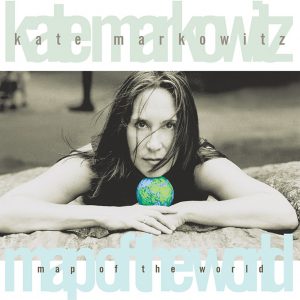
A native of Los Angeles, singer and songwriter Kate Markowitz has a voice you’ve likely heard – whether you know it or not. As one of the most in-demand session vocalists on the immensely competitive L.A. scene, she has toured and recorded with the likes of James Taylor, Shawn Colvin, k.d. lang, Warren Zevon, Randy Newman, George Benson, and others. A Map of the World is the first release to focus on her immense gifts as a lead vocalist, songwriter, and frontperson. Long-awaited and a lifetime in the making, A Map of the World tempers Markowitz’s years of experience with the palpable thrill of her discovering her own unique voice and vision.
Music was in the air as Kate was growing up. Her father lead his first big band when he was only 16, meeting her mother (a half-English/half-Japanese artist) in Paris while studying music and jamming in the vibrant club scene there. After living in Paris for five years, they settled in Los Angeles, where Kate and her brother were born. Her father became a much-admired composer for film and television, but the early death of her mother (when Kate was a mere 10 years old) cast a pall over her younger days.
Music was Kate’s form of escape from the tumultuous family life following her mother’s death, which she sees as a gift from her father. “I was exposed to so many different kinds of music being around him: jazz, classical, Brazilian, pop… much of my love for music came from him. I would go to his recording sessions when I was a kid and watch him conduct an entire orchestra. He never lost his childlike excitement about it. All the players laughed around him, he was a hep-cat from the jazz era that loved to hear them play…he appreciated them and their talent so much. I would watch him in awe”
Kate’s early immersion into a wide range of musical styles lead to a versatility that made her a valuable contributor to a number of projects when she entered music professionally. That same graceful adaptability is a hallmark of the wonderful A Map of the World, which stands as the debut of Kate Markowitz, freestanding artist. Subtle musical sophistication offset by an endearingly honest and forthright lyrical approach places Map of the World in a proud lineage of classic West Coast adult pop. With special appearances by some of L.A.’s finest musicians (and a few of Kate’s illustrious employers), Markowitz’s debut is a special event – the public unveiling of one of contemporary pop’s best-kept secrets.
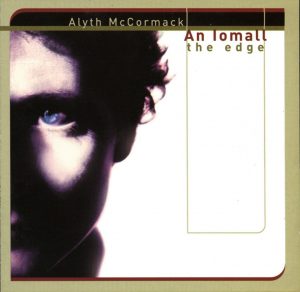
“Alyth McCormack loves singing, and lets you know that with out telling you. You can hear it in her voice. She is from Lewis, sings (but not all exclusively) in Gaelic, and often performs with harp and fiddle – but she’s not a folkie. Her musical education and influences are too widespread to sit in that, or any other ghetto. Minimalists like Reich, the sweeping eclecticism of Adams, sophisticated rock, modal jazz and role models like June Tabor or Marta Sebestyen have taken her down a path where she can sing unaccompanied in a Hebridean hall one day and with a metropolitan fusion samba band the next. She is at home on stage and brings to her music – whether with the close harmony vocalists in Shine or full jazz/rock rhythm section in Sunhoney – a still centre”
– Norman Chalmers, The List, August 2003
A voice described as having “spun glass fragility belying a sinewy strength” and as “transcendentally timeless and effortlessly contemporary”, it is McCormack’s non-complicated conviction with which she communicates with her audiences that ensures she is one of the most exciting singers on the Celtic scene. Her vocal talent and her understanding approach give her an ability to cross over diverse singing styles making her comfortable performing with a variety of artists.
She was born and raised and immersed in the culture of the Island of Lewis of the northwest coast of Scotland. McCormack began performing locally at a young age and then took her talent out on the road. She’s toured extensively in various bands and projects throughout Germany, Spain, Italy, Estonia, North America, the UK, Brazil, Ireland, Switzerland, Greece, Austria, Budapest, Norway and Sweden. During this time she recorded with various artists, appearing on 16 albums to date, and in 2000 released her first solo CD An Iomall (The Edge) on Vertical records.
She has appeared at various festivals: Celtic Colours, Celtic Connections, The Edinburgh International Festival, The Lammertree Festival, The Hebridean Celtic Festival and in 2001 performed with her trio as part of “Distilled-Scotland Live in New York.” McCormack is currently collecting material for a new solo album which she is hoping to have recorded later this year, and is presently touring mainly with her own band. For further info on McCormakc and what she’s up to you can visit her website at www.alyth.com
“..a dozen tracks over 42 minutes are enough to convince me that Alyth McCormack is someone worth going out of my way to listen to…”
– The Irish edition, Philadelphia
“Some of Alyth’s songs are in Gaelic the language of her native Lewis but her thoughtful arrangements and her subtle, intimate delivery speaks volumes in itself” – Sue Wilson, Songlines
“Traditional Gaelic songs with modern arrangements; some are spare some feature tasteful arrangements that recall a post-era Bjork. No matter what the format her voice is spine tingling.” – New York, Time Out
“Recent performances by this young Lewis singer, showcasing material from her debut solo album An Iomall have forcefully endorsed her fast-growing reputation as one or today’s most exciting talents in the world of Gaelic song.” – The Scotsman

The true mark of an artist is his willingness to delve into areas both new and old. In a short time, Rod McGaha has gained respect for doing just that. As a trumpeter, composer, vocalist, lyricist and producer, McGaha is unique in his ability to combine a wide variety of influences into aneclectic, globally conscious blend which rings totally fresh. McGaha is an artist able to bring many gifts to his music. While he is admired for his unique talents as a powerhouse instrumentalist, singer and tunewriter, it is McGaha’s presence as a performing artist that has garnered him respect from some of the best players in the industry, including the legendary drummer Max Roach. A past winner of the Louis Armstrong Jazz Award for Outstanding Jazz Trumpeter and the Oak Lawn Jazz Festival All Star Award, McGaha has joined the ranks of some of the most promising up and coming jazz players today.
Preacherman was produced by Delfeayo Marsalis of the legendary Marsalis family and Rod McGaha and guests on the album include ChrisBrown on drums, Roger Spencer on bass and Lori Meechamon piano. Preacherman, McGaha’s first Compass release, is vastly different from the urban jazz-alternative hip hop of The Servant, which McGaha released in 1997 on the now defunct Magnatone label. Preacherman showcases McGaha’s abilities as a confident player and composer of traditionaljazz, relishing in the sounds of the jazz quartet. Though the music is notgospel per se, McGaha’s spiritual groundings shine through on the threetunes he wrote for the album. McGaha says, “Many of my greatest moments of inspiration come from sitting in church and reflecting on the messages being discussed.” With a background in the Pentacostal church, McGaha says, “I was struck by the sound and emotion that would emulate fromthe female worshippers at the altar. On the title track I concentrated on those memories and tried to create musically the sounds that I’d heard.”Other tunes on the album include a creatively arranged version of the Beatleshit Can’t Buy Me Love and the classic favorite In a Sentimental Mood.
Amazingly, for a composer whose tunes show such a wide diversity, McGaha says he never consciously aims to create one specific vibe or another. “I grew up listening to the Jackson Five, Sly Stone and disco, and have donecountry gigs, so it’s inevitable that all of these are a part of me andaffect the way I write. But rather than force yourself to write a rock tune, a jazz piece or hip hop groove, I start with the statement I want the songto make and let the music evolve from there. Aiming for a specific soundhas never worked for me. It’s better to see where the initial spark takes you.”
Raised in Chicago, McGaha’s father was a huge jazz buff who turned him on to Miles and Louis Armstrong at an early age, McGaha was more apt inhis formative years to be checking out Parliament Funkadelic, James Brown and Kool & The Gang. He began playing both guitar and trumpet around fourth grade, but eventually focused on the horn due to a high school teacher’s great influence.
After playing in numerous school bands and clubs around town, McGahabegan his professional career right out of high school touring with theDuke of Earl himself, Gene Chandler. Later, while attending NortheasternUniversity in Chicago and then DePaul University on scholarship, his eyeswere opened to traditional jazz for the first time. Famed trumpeter ClarkTerry (who played with Duke Ellington and Count Basie) discovered McGaha at a local festival and took the young performer under his wing of which lead to numerous jazz cruises.
While McGaha’s extensive resume as a sideman includes gigs and tourswith top pop and soul names like Kenny Rogers, Bebe and Cece Winans, The O’Jays, Take 6 and Lou Rawls, he is also a highly decoratedjazz performer. Among his other trophies are the Maynard Ferguson Awardfrom the Notre Dame Collegiate Jazz Festival and the Outstanding Trumpet Soloist Award from the National Association of Jazz Educators.He has appeared on BET and his song Wish I Knew was recordedby Shelby Lynne and is featured in the movie Two If By Sea.
McGaha has had the opportunity to play his music throughout the world,with stops in Egypt, Nigeria, Europe and Japan. “There is no doubtthat seeing and hearing the people and music of all these cultures playsa part in what I create,” he says. “I don’t consciously createsongs based on one specific image or another, but the exposure has helped increase my global awareness.”

Wired, the new album from flautist, piper, and composer Michael McGoldrick, is more than just the long-awaited follow-up to his groundbreaking 2000 album Fused. It is the culmination of musical pursuits first hinted at by his formative days in Manchester – pursuits that have defined him as one of the most vital and inventive musicians in today’s British Isles folk renaissance.
On any of his chosen wind instruments (he commands a small army of flutes, pipes, and whistles), McGoldrick combines peerless technique with a musically rich sense of dynamics and texture. These sensibilities – equally apparent in his performances, compositions, and arrangements – add depth and power to whatever project he contributes to. Further, they insure that the traditions that are the bedrock of his art remain simultaneously timeless and strikingly immediate. Wired, released in January 2006 by Compass Records, is the ultimate example of his open-ended approach, with McGoldrick’s fluid, soulful performances and compositions seamlessly melded with a startling variety of rhythmic backdrops. From spacious jazz trappings to surging Indian percussion, electronic loops to bluegrass banjo, Wired brilliantly harnesses the rhythmic momentum of Celtic folk music while bravely pushing into new sonic realms.
A co-founder of best-selling Irish instrumental outfit Lunasa and current member of Celtic favorites Capercaillie, Michael McGoldrick has played a great part in expanding the audience for British Isles instrumental music. The relationship between Irish traditional music and more contemporary forms is something he has explored since the earliest days of his musical career. Born to Irish parents in the British city of Manchester, he was swept up in the city’s active Irish music scene as a youth. At the age of 15 he traded his bodhran for flutes and whistles, and proceeded to win several prestigious All-Ireland Championships. While still in school he founded the popular and influential Celtic-Rock band Toss the Feathers, with whom he first came to international prominence. His 1995 duet album with Toss the Feathers’ fiddler Dezi Donnelly, Champions of the North, won BBC Radio Two’s Young Tradition Award, making him the first wind player to receive the honor.
The ambitious fusion that characterized Toss the Features combined with McGoldrick’s proven abilities in traditional forms soon made him much in demand as a session player in a variety of musical contexts. He was featured alongside Youssou N’Dour and John Cale on Alan Stivell’s 1998 album 1 Douar, and also contributed flutes and whistles to the first two albums by British folk sensation Kate Rusby. In 1999 he appeared on the Afro-Celt Sound System’s album Volume Two – Release, in addition to Karan Casey’s Seal Maiden.
In 1998, McGoldrick was asked to join the popular Scottish folk band Capercaillie, an invitation he accepted. Working on several albums with Capercaillie developed his rapport with producer, arranger, and keyboardist Donald Shaw. Shaw, who in addition to Capercaillie’s albums has produced projects by Karan Casey and Karen Matheson, and McGoldrick collaborated extensively on McGoldrick’s 2000 solo debut album Fused. It became an instant favorite thanks to its daring combination of Irish traditional forms with trance and electronica beats and textures. Following the release of Fused, McGoldrick continued to pursue more eclectic concepts with Capercaillie and in his session work, while maintaining his reputation as a fine traditional player with the albums First Light (a 2002 collaboration with fellow flautist John McSherry) and Tunes, a 2005 release featuring McGoldrick alongside Irish accordion ace Sharon Shannon, fiddler Frankie Gavin, and guitarist Jim Murray.
The result of three years of focused composition, recording, arranging, and sonic experimentation, Wired takes the many threads that define McGoldrick’s music and splices and re-connects them in intriguing new ways. The ingenious electronic element captured on Fused is still palpable, but now expertly intertwined with an even wider range of organic sounds from around the globe. A British Council trip in 2004 allowed McGoldrick to collaborate with musicians from Bangla Desh, inspiring him to include slithering tabla as one of Wired’s most distinctive rhythmic components. Opener “Wired to the Moon” features a loping 5/4 groove, haunting electric guitar, throbbing tabla, smoky brass, and a supple funk backbeat all supporting McGoldrick’s immediately recognizable flute and (as the track unfolds) pipes. It serves as an overture to the album as a whole, hinting at the themes and textures that will be explored in further detail throughout.
Joining McGoldrick on his explorations are old Toss the Feathers mate Dezi Donnelly on fiddle, producer Donald Shaw handling keyboards and programming, veteran bassist Ewen Vernal, tabla master Parvinder Bharat, trumpeter Neil Yates, and Shooglenifty’s James Mackintosh on drums, among others. World-renowned fiddler and producer John McCusker (Kate Rusby, Cathie Ryan) and Grammy™-winning newgrass banjo player Alison Brown also enliven the proceedings on select tracks.
Wired has met with instant critical acclaim in the UK. In a five-star review in the Sunday Herald, writer Sue Wilson proclaimed, “If there’s any justice, Wired should be up for next year’s Mercury Prize.” While the mix of styles and vibrations encompassed by Wired is indeed refreshing and astonishing, it is not surprising that music so exciting and inventive has emerged from the visionary imagination of Michael McGoldrick.

“Sharon Shannon defines casual brilliance. She plays accordion with carefree fluidity, virtuosic but not flashy. She performs traditional Irish music with a contemporary freshness and an ear to compatible ethnic influences…subtle and sublime music.” – The Boston Globe
“Sharon Shannon has the energy and stage presence of rockers and the unpretentious traditional roots of a pub musician…as exciting a live band as you’ll find coming out of post-Celtic-revival Ireland.” – Dirty Linen
“The fact that she’s risen to the cusp of pop stardom without betraying a single note of her traditional roots makes her success even more amazing.” – j poet
The career of accordionist/fiddler Sharon Shannon, which began with the internationally acclaimed Irish folk/rock group the Waterboys in 1988, has blazed a fearlessly eclectic path beginning in traditional music but emerging somewhere entirely new. While never losing sight of her roots in Irish folk music, she has undertaken a musical journey which includes collaborations with Bono and Adam Clayton, classical violinist Nigel Kennedy, reggae legend Denis Bovell, the Kodo drummers of Japan as well as Steve Earle, Jackson Browne, Emmy-Lou Harris and Alison Krauss. Her cross-global collaborations have lead to successful concerts the world over, including performances in the UK, Europe, Japan, Australia, the United States, Canada, and Africa.
Having spent most of 2002 recording and touring with Sinead O’Connor, Shannon’s new album Libertango finds her rediscovering the role of the female voice in her music, while continuing to feature her remarkable touring band. Sinead O’Connor contributes two songs, one an ancient Irish religious chant, the other a beautiful version of Scottish folk song “Anachie Gordon.” The late Kirsty MacColl contributes a cover of Astor Piazolla’s “Libertango,” while the traditional “All the Ways You Wander” gets a stunning performance from current Sharon Shannon Band vocalist Pauline Scanlon. Libertango also features traditional Irish singer Roisin Elsafty, who comes from a Connemara/Egyptian family and sings an original song written by her mother Treasa and Donal Lunny in Gaelic and Arabic, “An Phailistin”(“Palestine”).
The diverse instrumental material on Libertango includes original material by Sharon, Irish and Scottish reels and jigs, the Latin flavoured “Whitestrand Sling,” and even a haunting cover of Fleetwood Mac’s instrumental hit “Albatross.” Shannon’s trademark accordion work continues to dazzle with its nimble precision, and is complimented by a wealth of musicians including longtime collaborator and legendary producer Donal Lunny, drummer and producer John Reynolds (Sinead O’Connor, The Indigo Girls), old Waterboys soul mates Steve Wickham (fiddle) and Trevor Hutchinson (double bass, now with Irish instrumental powerhouse Lunasa), and jazz saxophonist Richie Buckley (best known for his work with Van Morrison).
Taken as a whole, Libertango is a perfect encapsulation of Shannon’s gifts, simultaneously extolling her virtues in instrumental, vocal, traditional, and contemporary contexts. When considering the amazing range of her work, it should come as no surprise that Shannon hails from Clare, on the West coast of Ireland, an area historically steeped in music. She began playing music as a young child, and while still in her teens was asked by director Jim Sheridan (My Left Foot, The Field) to provide the music for his stage production of Behan’s The Hostage. She began her career as a recording artist in l989, when the Waterboys’ producer John Dunford gathered together a wide variety of musicians to accompany Waterboys frontman Mike Scott on the 1990 Room to Roam album. Sharon was asked to join the band by Mike Scott shortly after.
By l99l, Sharon had completed her self-titled debut album, which included performances from Stephen Cooney, Trevor Hutchinson, U2’s Adam Clayton, Mike Scott, and Hot House Flowers’ Liam O’Maonlai. The album, a stunning cocktail of Portuguese, Cajun, Swedish, Scottish and French-Canadian influences, rapidly secured a place in the history books by becoming the most successful Irish traditional music album ever released. Hailed as the “traditional album of the nineties” it was described by New Musical Express as a crossover record which “was creative, deft, and lovely.”
While the inclusion of two of Sharon’s tracks on the groundbreaking all-female Celtic compilation A Woman’s Heart (which sold a staggering 500,000 copies) helped to further increase her profile, it was The Late Late Show (Irish National Television) tribute to Sharon which included all the guests from her debut album that made Sharon Shannon a household name. Viewed by over one million people this show firmly established Sharon as one of Ireland’s leading musicians.
The release of her second album Out the Gap further stretched musical boundaries, reflecting the many influences she had absorbed while maintaining her own unique style. She expanded her musical versatility further by teaming up with veteran dub reggae artiste and producer Denis Bovell. Recorded almost exclusively in Brixton, London, Out the Gap featured a Jamaican rhythm section alongside a collection of Irish and English musician. The lead track, “The Mighty Sparrow” (in honor of the diminutive Caribbean singer) was a favorite with Irish radio.
In l996 Sharon was among a host of international musicians, which included Bono and Adam Clayton, Elvis Costello, Neill and Tim Finn, Mark Knopfler, Kate Bush, Liam O’Maonlai, Brian Kennedy, Christy Moore and Sinead O’Connor, to appear on the EMI album Common Ground. During that summer, she returned to the studio to record her third album, Every Little Thing, which featured a collaboration with the great vocalist/songwriter Kirsty MacColl. Released in February l997, a dance remix of a track called “The Bag of Cats” released as a single stayed in the Irish top 20 pop charts for six weeks.
Her fourth album, Spellbound, was released in September 1998. This useful and impressive compilation featured new material, live tracks and tracks taken from her previous albums. During the same year, Sharon was asked by classical violinist Nigel Kennedy to join a combo of musicians to perform his Jimi Hendrix Suite in some of the major European cities. On her own over the past few years, Sharon has toured extensively in the U.S. and Europe, also visiting Australia, New Zealand and Hong Kong and Japan. Her increasing popularity in the U.K. has brought her music to an ever-growing audience. She has played for Irish President Mary Robinson, for Lech Walesa in Warsaw and for President Clinton in the White House. Sharon also accompanied President Mary McAleese on her Australian State visit.
In July 1999 she played with Donal Lunny’s brilliant Coolfin ensemble around Ireland as part of their warm up tour for a show with the Kodo Drummers from Japan, which took place in the RDS, Dublin. She has also guested on the band’s album Coolfin. Released in autumn of 2000, Sharon’s remarkable album, The Diamond Mountain Sessions continued her pursuit to fuse Irish music with a wide range of international influences. Her own accordion and fiddle playing was as full of virtuosity as ever, but this time she was accompanied by stirring vocal performances from the likes of Steve Earle, Jackson Browne, John Prine and Dessie O’Halloran.
The album went triple platinum in Ireland, and was critically acclaimed internationally. Sharon and her band the Woodchoppers toured for a year worldwide, and it was a recording of the band’s performance in Galway that gave Sharon her next album. Released in December 2001 on her own Daisy label, Live in Galway captured Sharon and the Woodchoppers in typically fiery form.
After joining Sinead O’Connor on tour for most of 2002 (to promote O’Connor’s traditional album Sean-Nos Nua, on which Sharon contributes accordion), Sharon formed a scaled-down version of the Woodchoppers comprised of guitarist Jim Murray, Mary Shannon on banjo and mandolin, and vocalist Pauline Scanlon. Together they form the core of Libertango, due out in the US on September 14 on Compass Records. While musician credits vary from track-to-track, the album is a consistent and invigorating distillation of Sharon Shannon’s amazing career.

Guitar aficionados may be ready to hail the new display of virtuosity on Russ Barenberg’s When At Last—his first solo album in almost 20 years—but for the legendary guitarist himself, the value of the collection is somewhat different. “What I maybe have to bring to the world,” he says with a kind of wry deliberation, “is some good tunes.”
Of course, When At Last does, indeed, showcase subtle, compelling musicianship—and not only from Barenberg, but also from the carefully chosen crew of players who accompany him—yet the point is well-taken. In a world filled with guitarists renowned for technique, Russ Barenberg has always stood out for his intensely melodic approach to playing and writing, and the new album shows that the years since he, resonator guitarist Jerry Douglas and string bass maestro Edgar Meyer made the widely acclaimed, supremely influential Skip, Hop & Wobble have only deepened his musicality. For while Barenberg decided in the late 80s to forego a full-time musical career—or, more accurately, to defer one—he hardly stopped making music, and Skip, Hop & Wobble was only the most visible manifestation of that determination.
“I moved to Nashville in 1986 to be around the scene here and try to get studio work,” Russ recalls. “I thought that possibly I could make a living at it, that I might not have to travel so much. And I did some when I first came down here, but it became clear that it wasn’t a great match for me—I wasn’t deeply enough into pop music that I could thrive in that world. So I took a job that allowed me to have a predictable income, that let me be at home more while my kids were growing up, and that allowed me to do the music I really wanted to do without having to feign interest in stuff I didn’t care about just to put together a living. But it felt to me like I was still dead in the thick of music, because for a lot of that time I was playing in the trio with Jerry and Edgar, and I thought, this is as good a musical situation as I could ever hope for. And so I really felt that even though I was just doing it part-time, I was still doing it in a pretty fulfilling way.”
And indeed, despite the restraints on his time, Barenberg was still wrapped up in music, not only with the trio but with a variety of other projects, most notably the Transatlantic Sessions—a set of filmed-for-TV performances featuring musicians from the British Isles, Canada and the United States in a stunning, evocative cross-cultural exchange. “I’ve been in the house band for all three of them, and a featured artist, too” Barenberg says. “In some ways, it’s the best musical experience one could have. You wake up every morning learning these tunes, and then you film them with different combinations of great musicians—some of whom you’ve never met before. It’s very invigorating.”
Still, despite the satisfactions of projects like the Transatlantic Session, the Barenberg-Douglas-Meyer trio and a miscellany of appearances with friends like fellow guitarist Bryan Sutton, fiddler Aubrey Haynie and singer Tim O’Brien, Barenberg looked forward to the resumption of a career fully devoted to music. “What you miss when you’re working during the day is having the time to really practice and write as much as you would like,” he notes. “One of the most satisfying things for me is writing tunes, and even more, to actually record them and put them together and play them with other people. So I’m very happy to be back in that situation again.”
The fruit of that long gestation, and of his move back to full-time status, When At Last is likely to make a lot of people besides Barenberg happy too. Leading off with the taut groove of “Little Monk,” the set winds its way through bluegrass, Celtic and contradance-flavored tunes that frame Barenberg’s lyricism and rhythmic subtleties in intricate ensembles that feature long-time friends and collaborators. Douglas, fiddle giant Stuart Duncan and percussionist Kenny Malone, who appeared on Barenberg’s last solo album, Moving Pictures, are back for the ride, while the bottom end is held down by Viktor Krauss and Dennis Crouch. “I’d played with both of them in various settings, but I hadn’t recorded with either of them before,” Russ says. “I wanted acoustic bass on the album, and those are two guys whose playing I really like.”
Less familiar contributors turn up too and add a delightful new flavor to the work. “Ruthie Dornfeld is just a fantastic musician,” Barenberg notes. “I played a lot of contra dances with her up around Boston in the early 80s. She’s a great dance fiddler, but she does a lot of other things too and she has a great feel and rhythmic sense; she plays a lot of traditional music and understands it really well. And Jeremiah McLane is a fine accordion and piano player from Vermont who plays in a wonderful trio called Nightingale; they’re one of my favorite bands. He and I and Ruthie, along with Susan Kevra, who’s a great contradance caller and teacher, went to France a few years ago and did a little tour doing dances and concerts. So we have that history together, and I wanted to have some different people from outside of the Nashville crowd on there, particularly on some of the more traditional-sounding tunes.”
Still, while ensemble interplay is the foundation of When At Last, its heart and soul ultimately is to be found in Barenberg’s tunes—some dating back to the early 90s, others composed shortly before recording began—and in his glistening playing. Few guitarists so perfectly blend a mastery of roots music traditions with melodic originality, or so finely balance muscularity with delicacy, and each moment of the album is shaped by these artistic dualities—and by Barenberg’s newfound energy and re-dedication to making music central to his life. “I’m at a point in my life now where I really appreciate what a gift it is to be a musician,” Russ Barenberg says with a smile, “and I’m ready to embrace whatever’s involved in doing it for a living. It’s just a great time for me.”

Conjuring a unique but universal language from that most ubiquitous of instruments, the acoustic guitar, Tony McManus has both extended and transcended the parameters of contemporary Celtic music. Ranked by peers and predecessors alike alongside the guitar world’s all-time greats, his fiendishly dexterous, dazzlingly original playing draws on traditions from the entire Celtic diaspora – Scotland, Ireland, Brittany, Galicia, Asturias, Cape Breton, Quebec – along with still further-ranging flavours, such as jazz and east European music. Long applauded for his uncanny ability to transpose the delicate, complex ornamentation characteristic of traditional bagpipe or fiddle tunes – even the phrasing of a Gaelic song – onto his own six strings, McManus is increasingly being acknowledged also as a pioneering figure in bridging the realms of Celtic music and other guitar genres.
Born in 1965 in Paisley, near Glasgow, his surname the legacy of an Irish grandfather, McManus was introduced to traditional music via the family record collection. Having first tried his hand at the fiddle, whistle and mandolin, he took up the guitar aged ten, although subsequent academic inclinations got him halfway through a PhD in maths before the music won out. After rapidly making his name as an unusually fluent and sensitive accompanist, he took the solo plunge with a triumphant main-stage debut on the final night of Glasgow’s inaugural Celtic Connections festival in 1994, supporting Capercaillie in front of a 2500-strong crowd.
Since then, McManus’s ascent into Celtic music’s international premier league has been simply unstoppable. His first, self-titled album was released in 1996, a formidably accomplished calling-card that earned widespread critical acclaim. Its mainly Scottish and Irish material was rounded off with a taste of eclecticism to come, an arrangement of Louis Armstrong’s Wonderful World that remains one of his most often-requested numbers. Jazz-tinged and improvised stylings were boldly in evidence on 1998’s Pourquoi Quebec?, recorded in Quebec with leading Breton and French-Canadian musicians Alain Genty (fretless bass) and Denis Frechette (piano).
Abetted by an increasingly crowded and globe-trotting live schedule, the album underlined McManus’s growing reputation as a truly prodigious talent, equipped by his deep-rooted grounding in traditional music to articulate its idioms and nuances with rare empathy, while seamlessly incorporating influences from further afield. His skills are also in constant demand by fellow musicians. To date, he has featured on over 50 albums by other artists, including Kate Rusby, Alison Brown, William Jackson, Brian McNeill, Liz Doherty, Colin Reid and Catriona Macdonald, in addition to innumerable live guest appearances. Other current collaborations include his celebrated partnership with master Scottish fiddler Alasdair Fraser – as captured on their breathtaking 1999 album, Return To Kintail – and duo or trio work with the aforementioned Alain Genty, and Breton guitarist Soig Siberil.
Admiration for McManus’s intricately concocted, precisely honed style, however, extends far outwith the Celtic domain. He remains the only non-classical player to be invited three years running to the Dundee International Guitar Festival, from 1997-99, while the Royal Scottish Academy of Music and Drama has enlisted his skills to host seminars for their classical guitar students. Jazz virtuoso Martin Taylor booked him for the inaugural Kirkmichael International Guitar Festival in 1999, while more recently he has performed at the Bogota Guitar Festival in Colombia (directed by Cuban composer Leo Brouwer and Urugyan guitarist Eduardo Fernández) and the Chet Atkins Convention in Nashville. He has also released two highly-praised instructional videos on Stefan Grossman’s world-renowned Guitar Workshop series, with hands-on teaching, also assuming an increasingly important place in his schedule. 2002 will find Tony teaching at both the Fingerstyle and Flatpicking weeks of Steve Kaufman’s Acoustic Camps in Knoxville, Tennessee.
This breadth of mastery and vision is now revealed in yet more abundance with the February 2002 release of his stunning third album, Ceol More. Featuring artfully sparse, subtle accompaniment from Capercaillie’s Ewen Vernal (bass) and Salsa Celtica’s Guy Nicolson (tablas), its eleven tracks continue to extend his musical explorations both within and beyond the Scottish tradition. The title is a pun on the Gaelic phrase ceol mhor, or “big music”, referring to the noble piobaireachd tradition of the Highland bagpipes, a form rendered here with hauntingly stark grandeur in Lament for the Viscount of Dundee. Other tracks range from Burns’s Banks and Braes to Charlie Mingus’s Goodbye Pork Pie Hat, with Breton and French-Canadian material again featuring prominently alongside Scottish and Irish tunes. Having opened with a tenderly lyrical sean nos song air, Sliabh Gheal gCua na Feile, the album closes in exquisitely contrasting – though equally spine-tingling – fashion with a 17th-century Jewish hymn-tune from eastern Europe, Shalom Aleichem, a greeting to the angels traditionally sung before the Sabbath. Eagerly anticipated by guitar fans worldwide, Ceol More resoundingly confirms McManus’s standing as one of today’s most gifted and groundbreaking instrumental artists.

“These guys get it, and Tripswitch is an instant contender for Instrumental Album of the Year—McSherry in the hunt again! Brill.”
– LIVEIRELAND.COM
The pairing of John McSherry on Uillean Pipes and Dónal O’Connor on fiddle brings together two of Ireland’s most celebrated musicians on the scene today.
John McSherry – Hailed as one of the finest exponents of the art of the Uilleann piping in the world today, he’s called “a true master” by Irish Music Magazine and has taken piping to new heights with his unique style. His sense for improvisation has even been compared to that of the great jazz legend John Coltrane. John was a founding member of Irish super-group, Lúnasa and released the duo CD, At First Light (Compass 4430) with musical comrade Michael McGoldrick. At First Light received the award for 2001 Best Traditional Album of the Year from Irish American News.
Dónal O’Connor – Son of the celebrated fiddler Gerry O’Connor (Skylark, Kinvara) and renowned singer Eithne Ní Uallacháin (Lá Lugh), Dónal O’Connor has inherited a great musical legacy of at least five generations of fiddle playing and countless generations of traditional singing. Highly regarded as a fiddle player, the Irish Times calls him “immaculate” “electrifying” and “…born out of naked talent and consummate professionalism.” Recent collaborations have included tours with Michael McGoldrick (Capercaillie, Flook, Lúnasa), live festival performance with Karan Casey (Solas), T.V. Performances with the legendary Sligo Flute player Séamus Tansey and recording work with Brian Kennedy and Máire Brennan of Clannad.
“If there’s a better Irish album released in 2006 I’ll willingly dance naked in Trafalgar Square with a ferret on my head. But only if Tripswitch is playing in the background.” – Geoff Wallis, Songlines
From his early days with his family band Tamalin to his role as a co-founder of Lúnasa, to his recent solo work, Uilleann piper John McSherry has helped to reinvent Irish music, bringing to it urgency and precision matched with an ambitious, sophisticated rhythmic sensibility. That immediacy and sophistication is heard throughout Tripswitch, McSherry¹s new collaboration with young fiddler Dónal O’Connor. Tripswitch mates the pair’s virtuosity and mastery of traditional forms with a fluid, jazz-inflected sense of rhythm casting this ancient art into an exciting new context. McSherry and O’Connor are joined on Tripswitch by Austerian Musician of the Year – Rubén Baba (guitars, bouzouki), as well as McSherry’s brother Paul (guitars), guitarists Tony Byrne and Giles LeBigot, and Shaun Wallace (percussion).
As the son of internationally renowned fiddler Gerry O’Connor and acclaimed vocalist Eithne Ní Uallacháin, Dónal O’Connor comes from a line of traditional musicians spanning back through countless generations. He first encountered John McSherry when asked at the age of 21 to participate in the prestigious Music Network Tour of Ireland, where he was joined by McSherry, the brilliant Scottish guitarist Tony McManus, and vocalist Gabriel McArdle. As both a solo artist and supporting musician he has toured throughout Europe and the United States, including performances in his parents’ group Lá Lugh. Recently, he produced his father’s 2004 solo album Journeyman, and has performed or recorded with Karen Casey, Séamus Tansey, and Brian Kennedy and Máire Brennan of Clannad. O’Connor has also served as a presenter for BBC Radio, and his credits there include BBC Northern Ireland’s ten-part music series An Stuif Ceart.
Deemed a true master piper by Irish Music Magazine, John McSherry hails from Belfast, and is apart of a well-known musical family there. He took to the Uilleann pipes early on, and earned two All Ireland Championship titles by age fifteen. At eighteen he was the youngest musician ever to win the coveted Oireachtas piping competition. He formed the group Tamalin with his siblings, which quickly won acclaim for their forward-thinking fusion of Irish music with elements of rock, Cape Breton music, and sounds from beyond the western world. McSherry is also a first-call session musician, recording with artists ranging from Nancy Griffiths to Clannad to Dónal Lunny’s genre-dissolving Coolfin project. In concert, his versatility and adventurousness has lead him to perform with Sinead O’Connor, Ornette Coleman, and many others. His duo album with fellow Lúnasa co-founder Michael McGoldrick, At First Light (also available on Compass Records), was named Best Traditional Album of the Year by Irish American News.
Despite their formidable individual accomplishments, it is the clarity, focus, and unity of their sound that makes Tripswitch such a thrilling collaboration. Whether soaring in close-knit unison passages or darting around one another in hair-raising counterpoint and harmony, O’Connor and McSherry demonstrate remarkably telepathic empathy. The progressive, escalating rhythmic settings O¹Connor and McSherry devise with their supporting musicians serve to push their playing further into the stratosphere. Opening set “Rose in the Gap” begins with a churning rhythmic backdrop for the titular march, then shifts via a thrilling unaccompanied passage into a pair of reels impeccably delivered at high velocity, complete with a spot-on rhythmic modulation. A set of Castilian dance pieces set in 5/8 time (Spanish 5’s) are hauntingly modal, yet rhythmically spry and demonstrate the rarely-acknowledge impact the Moors had on European music.
While the uptempo selections are riveting, the quieter moments such as the slow-jig set “Commonalty Set” and the slow reel title track speak more directly of the passion that exists at the core of Tripswitch. “Tight as a drum and as louche as a bordello queen,” wrote Siobhán Long in the Irish Times, “Tripswitch is a collection for the wide open road, fuelling the miles long after the tank runs dry.”
-->


