
Born in Glasgow, Scotland, Hamish Stuart shot to fame in the 1970’s as the falsetto voice of The Average White Band, his distinctive songwriting and guitar style paving the way for the band’s worldwide success. When the AWB split in 1982, Hamish went on to tour and record with an array of soul stars including Diana Ross, Aretha Franklin, George Benson and Chaka Khan, for whom he wrote the No.1 chart hit Whatcha Gonna Do For Me? In 1986 David Sanborn invited Stuart to record with him and they released the live album Straight From The Heart on which Hamish sang Al Green’s Love and Happiness–now a Hamish Stuart Band standard. The following year he was back in the studio teaming up with former band member and drummer Steve Ferrone and together they recorded the Easy Pieces album. In 1988 Paul McCartney asked Hamish to join his band and he went on to tour and record with the legendary Beatle for six years, recording 2 studio and 3 live albums in the process before embarking on his solo project.
Since leaving McCartney’s band, Stuart has been working on new material of his own with his newly formed group The Hamish Stuart Band. He still finds time to work on projects such as Quincy Jones’ 64th birthday celebration event in Switzerland last year and most recently accepting Bonnie Raitt’s invitation to duet with her on-stage at her end of tour show in London.
Sooner or Later, Stuart’s first Compass release, showcases his inimitable vocal style and reflects both his own personality and immensely diverse interests and influences. There are haunting, romantic ballads like Care For You and Same Old Moon included among taut, sophisticated slices of urban funk like It Is What It Is and Midnight Rush.
In recent months, the Hamish Stuart Band has blown the roof off of U.K. venues including Ronnie Scotts in London. With the talents of Ian Thomas on drums, Steve Pearce on bass and Jody Linscott on percussion, the band generates a truly ferocious groove. Although it is becoming impossible to book a seat at their monthly gig at the 606 Club in Chelsea, England, fans old and new are always guaranteed a good time and often a bonus from guest friends such as Bonnie Raitt, Brian Auger, former AWB saxophonist Jim Mullen and Molly Duncan. Nostalgia is not the main goal of the shows. It’s hearing a new and soulful band firing on all six cylinders.

Accordionist Tweed (Poozies, Bill Jones) and guitarist Carr (Kate Rusby, John McCusker) meet for an engaging, thoughtful session that encompasses not only their English roots but influences from the world over.
The medleys that Tweed and Carr weave from contemporary compositions and traditional dance tunes are simultaneously modern in conception and rooted in tradition…Tweed is an inventive accordionist who manages to pull music of remarkable depth out of an instrument that is not generally known for its subtlety…Carr stretches the boundaries of folk guitar with unusual chord voicings, quirky melodic lines and playful rhythms….the music of Tweed and Carr brings together the best parts of ancient and modern music. – TipWorld.com
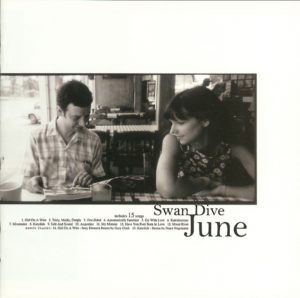
Like the month it’s named after, Swan Dive’s June is full of sunshine, color and warmth. With breezy melodies darting through lush arrangements, it’s pop music that sparkles with both the wonder of spring and the promise of summer.
“There’s a kind of upbeat feeling and optimism on this record,” says songwriter/guitarist Bill DeMain. “Even on the melancholy songs, there’s always a glimmer of hope shining through.”
Since forming in 1993, Swan Dive – the duo of DeMain and singing partner Molly Felder – have been connecting with fans both in their hometown of Nashville and in far-off Japan, where they’ve enjoyed much success – four top 10 singles, many television and radio appearances, videos on MTV and tours full of, as DeMain puts it, “Hard Day’s Night moments.”
As they did on their self-titled U.S. debut for Compass (which won Best Pop Record in the 2000 Independent Music Awards), DeMain and Felder filter the sounds of their favorite music – The Beatles, The Beach Boys, Dusty Springfield, Harry Nilsson, bossa nova, ‘70s soul – into their own striking, immediately recognizable style. From the ultra-catchy Girl On A Wire (a #2 radio hit on Japan’s Cross-FM last summer, and also featured on a recent episode of Felicity) and the ebulliently romantic Truly, Madly, Deeply to the sensual, French-tinged Safe And Sound and delicate Augustine, June delivers more of the intoxicating blend of singing and songwriting that Swan Dive is known for.
“There was a lot of collaboration on this record,” DeMain says of the songwriting process. I traveled to other cities for the sole purpose of co-writing, which was a lot of fun. I find it very freeing when I’m away from home and all the little demands of everyday life. I can really concentrate on writing.” From London to New York to Los Angeles, he teamed up with top tunesmiths such as Marshall Crenshaw, Jill Sobule, Kelley Ryan, Boo Hewerdine and Gary Clark, and brought his song treasures back to Nashville.
Felder says, “I think one of the greatest experiences of making this album was being able to record songs written by Bill with some of the artists we’ve always admired – Marshall, Boo, Jill and Gary Clark from Danny Wilson. It meant so much, personally and professionally.”
On June, DeMain and Felder continue their collaboration with ace producer Brad Jones (Jill Sobule, Cotton Mather, Richard Julian), a multi-instrumentalist and arranger who brings a wealth of creative ideas to the studio. “Brad has a great sense of adventure,” says Felder, “and an amazing ability to know exactly what a song needs to bring it to life.”
Originally released last summer in Japan, this is a newly remastered version of June, featuring two brand new songs plus two stunning remixes, done by Gary Clark.
With a sound that MOJO calls “an imaginative line in classic pop” and the Associated Press says is “sweet but mature, catchy but sophisticated,” Swan Dive is prepared once again to brighten up the independent music scene. Step into June.
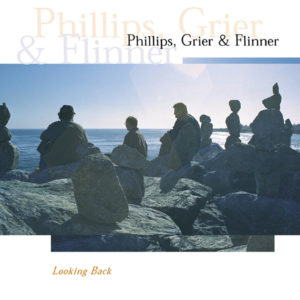
From the Redwoods to the Rockies to the Blue Ridge Mountains, the members of Phillips Grier & Flinner are considered to be among today’s finest acoustic instrumentalists. On the eagerly anticipated follow up to their 1999 debut, two-time Grammy-award winning bassist Todd Phillips, 3-time International Bluegrass Music Association Guitar Player of the Year David Grier and 2-time Winfield National Champion Matt Flinner, combine forces on Looking Back, a beautifully performed collection of instrumental classics. The album showcases bluegrass standards such as “Dixie Hoedown” and “Monroe’s Hornpipe” as well as a cover of McCoy Tyner’s “Search for Peace”, The Beatles’ “I Want You” and Jimi Hendrix’s “Little Wing” – all of which receive a fresh treatment here with plenty of virtuoso soloing from each member of the trio.
Uniquely refreshing in acoustic music today is the sparseness and texture of Phillips, Grier & Flinner’s work. With just bass, guitar and mandolin, the trio engages the listener in a 3 way musical conversation, full of melody but leaving plenty of room for some of the most inspired, and occasionally quirky, improvisation to be found in acoustic music. Listening to Looking Back, one is easily reminded of sitting in on an incredibly memorable jam session; all of the spontaneity and interaction that makes a jam session great is present here – a remarkable feat for a studio album. This undoubtedly has much to do with each player’s ability to provide inspired solos as well as supportive backup playing. Phillips explains, “Everyone had to carry their weight on these tunes. There was no room for any of us to sit back. If someone had, it would have taken away from the texture of the music.”
Two-time Grammy winner Phillips produced Grier’s 1997 highly acclaimed solo album, Panorama, for Rounder Records and produced Flinner’s 1998 Compass debut release, The View From Here as well as his 2001 sophomore effort Latitude. Phillips’ own solo Compass release, Timeframe was praised as an “acoustic gem.” For the three artists, who had enjoyed collaborating on each other’s albums, the next logical step seemed to be to record a trio album. Phillips explains, “It was never a conscious decision to do an album together. Everything we were doing at the time just seemed to lead us in that direction. The only concept for the project was that each of us would bring 3 original tunes and the rest of the trio would help shape the tunes into a spontaneous musical conversation.”
The end result of this musical conversation was the trio’s critically lauded 1999 Compass debut. Bluegrass Unlimited wrote, “It’s amazing how full an acoustic trio can sound. Fans of exquisitely played acoustic music will want to check out the newest ‘power trio’ in string music.” JazzTimes recognized their virtuosity as well writing, “Their playing is exquisite without exception!” The excitement generated over the release led to live performance opportunities for the threesome, who have since appeared at listening rooms and festivals around the country including Rocky Grass and The Four Corners Folk Festival. When it came time to record a second album, they decided to pay tribute to the music and musicians who have inspired them. On Looking Back, influences ranging from Bill Monroe to the Beatles to Jimi Hendrix are all present but each interpretation is uniquely that of Phillips, Grier & Flinner. It is rare privilege indeed to be able to listen in on 3 instrumental masters as they create such a pristine, acoustic tapestry and Looking Back is sure to be embraced by fans of great bluegrass and acoustic music.
Todd Phillips (bass) is one of the founders of the new acoustic movement. An original member of the David Grisman Quintet, he has recorded two solo albums (including the Compass release Timeframe) and has been featured with countless bands and projects including NewGrange, The Bluegrass Album Band and the Grammy winning True Life Blues which he also produced.
David Grier (guitar) is one of today’s top bluegrass lead guitarists. He has four solo albums to his credit and has appeared on over 90 albums including recordings by Mark O’Connor, Jerry Douglas, Alison Brown and Psychograss. He is a three time winner of the International Bluegrass Music Association’s Guitar Player of the Year award.
Matt Flinner (mandolin) is one of the most recognized mandolinists in bluegrass music today. He has recorded three solo albums for Compass Records (Walking on the Moon, The View From Here and Latitude), both of which are stand out releases in the acoustic music genre. In addition to his work with Phillips, Grier and Flinner, this versatile instrumentalist has toured with Leftover Salmon (on banjo) and leads the Matt Flinner Quartet.

First emerging amid the creative fervor of the 1960s British Isles folk renaissance, singer, songwriter, and raconteur Gibb Todd continues to be one of the scene’s most beloved and respected figures. Constant international touring – both solo and with such groups as the legendary Dubliners, the Fureys, and Cherish the Ladies – has made this Scotsman (now based in Australia) welcome around the world and added intriguing layers of international influence to his songwriting and repertoire.
Astonishingly, Goin’ Home is only Todd’s second solo album in a career that now spans over four decades. Recorded in Nashville with an international cast of folk, Celtic, and bluegrass luminaries, it reflects Todd’s wide musical range over a program of aching ballads, rousing shanties, and several compelling originals. Joining Todd are innovative Irish guitarist John Doyle (ex-Solas), maverick banjoist Alison Brown, bluegrass fiddler Stuart Duncan, double bassist Danny Thompson (Richard Thompson Band, Pentangle), Nashville fiddler Andrea Zonn (Vince Gill Band, James Taylor), and vocalist and multi-instrumentalist Tim O’Brien.
With such fine support, Gibb Todd shines as never before – his vocals rugged but nuanced, his performances focused and moving. His greatest gift, his effortlessly affable give-and-take with an audience of any size, takes center stage throughout Goin’ Home. Fittingly considering his reputation as a live performer, Todd will premiere songs from Goin’ Home this February at Glasgow’s massive Celtic Connection festival, where he is a longtime fixture and festival favorite.

Kim Scanlon, one of the Seattle acoustic music scene’s most popular vocalists, makes her solo debut with Nightsongs & Lullabies. Scanlon has gained respect as a powerful interpreter of songs from all genres, including her favorites – vintage pop and jazz – which form the basis of Nightsongs & Lullabies. Scanlon recorded the album while pregnant with her first child and the direction of the music was shaped by her experience with first-time motherhood and interest in creating a recording that parents and children could share.
Nightsongs & Lullabies is a complex yet soothing album, much different than most children’s albums. Scanlon recalls, “When I became pregnant, I decided to make an album as a kind of farewell to my more free-wheeling days. I’ve listened to a lot of children’s CDs and found many of them to be high & sparkly — as if children can’t take texture or deep sounds. The opposite of course is true. Children learn about the world by listening to the music of their parents’ voices. They are tonal sophisticates from day one.”
The album contains a wonderfully cohesive collection of classic songs from the American songbook, covering repertoire by some of America’s most beloved 20th century songwriters including Duke Ellington, Johnny Mercer, Harold Arlen and James Taylor. The songs themselves share strong melodic qualities and a playful tone and create the perfect vehicle for Scanlon’s warm, clear and limber soprano vocals. She explains, “To me Nightsongs & Lullabies is for the young and old. The sound is old yet new and fresh and the music is elegant and playful yet joyous and intimate.” Guest musicians on the album include West Coast luminaries Rebecca Kilgore (vocals), Nina Gerber and Scott Nygaard (guitar), Bob Brozman (steel guitar), John R. Burr (piano) and producer Cary Black (bass).
Scanlon’s career as a vocalist began at an early age; as a child, she was active in the church choir. She has been a fixture in the Seattle acoustic music scene since the 80s, working with a variety of groups including Slow Learner (with Jo Miller and guitarist Scott Nygaard) and the nationally acclaimed alternative country group Ranch Romance. Much in demand as a harmony vocalist, Scanlon was a member of the house band on the nationally syndicated NPR radio show Sandy Bradley’s Potluck and has performed and recorded with a variety of other artists and groups including Uncle Bonsai, Kathy Mattea, Pete Seeger, Rumors of the Big Wave, Kathy Kallick, Laurie Lewis, Ferron and The Laura Love Band.

Astral Project is a band that according to Down Beat is “one of the most distinctive and cohesive quintets in jazz of the ’90s.” Formed in 1978 from the cream of New Orleans” modern jazz scene, Astral Project has remained a unit even while its members explored innumerable other endeavors, including recordings as leaders and sidemen for a wide array of major and independent labels. Through it all, the band known as New Orleans” Premier Jazz Ensemble has always regrouped to reach for the stars. JazzTimes proclaimed Astral Project as “one of the more adventurous working units in modern jazz today.”
On Voodoo Bop, their second album for Compass Records, Astral Project’s improvisational abilities are more tightly woven than ever. The album was produced by Astral Project and mixed and mastered by John Fischbach, Stevie Wonder’s acclaimed engineer during his great ’70s period. Recorded at Kingsway Studios, the historic French Quarter mansion turned recording haven, Astral Project recorded the album live in the large tracking room with no separations or overdubs — a first for the band. Band members attest that the well-known mysterious vibe of the mansion played part in the mystical feel of the tracks on the album.
The ten tracks on the album are all journeys into different musical realms reflecting the fact that the band has continued to grow musically and expand on their vast array of knowledge. “All my life what I’ve enjoyed most is that I get to play all kinds of different gigs with different people,” says drummer John Vidacovich. “But this is what we do. I think what makes us cool as a group is that when we get together for so long over so many years — we bring these other little trips we’ve been on.” The bonus track, “The Queen is Slave to No Man” was written by bass player James Singleton who says, “The idea behind this tune was to highlight instant composition. The only parts of the piece that are composed are the first minute and the last minute; everything else is improvised. It’s exciting for us because each time we play it, it’s new.”
In the ’70s, the band had a nightly gig at a place called the Absinthe House on Bourbon Street. An unknown Bobby McFerrin used to sit in with them almost every night. Recently, while playing in St. Paul, Astral Project was reunited with Bobby McFerrin. After a reminiscent jam session, Bobby invited Astral Project to tour with him in the summer of ’99.
These five veteran musicians — known as tops on their instruments in jazz-rich New Orleans — bring a wealth of diverse experience to the bandstand which has helped gained them features with NPR’s Jazz Set with Branford Marsalis and profiles in Down Beat and JazzTimes. A story in The Chicago Tribune said, “Like New Orleans itself, Astral Project blends a thousand influences into an alluring identity all its own.” They also bring strong ideas about the music they make together. For them, music is a group search for a higher plane of understanding. It is not about formality or classicism, musical boundaries or some misguided dogma on what constitutes “real” jazz.
True to the original spirit of jazz, Astral Project creates real tunes — memorable melodies — while giving the musicians freedom to incorporate influences from all sources. Like a flock of birds in flight, the group shifts direction with an ease so uncanny it seems to verge on telepathy. It’s an ease that can come only from special individuals who have spent 20 years improvising together. “You have to stay out of the way of the music,” says James Singleton “and then the reward is you get something new that you didn’t know before about yourself. If I close my eyes, I can learn more, I can get more. You find it’s a transcendent experience. It’s a spiritual experience in a way. Because you find you become part of a larger thing. It reinforces your faith — in God and existence, human existence. It heals you.”
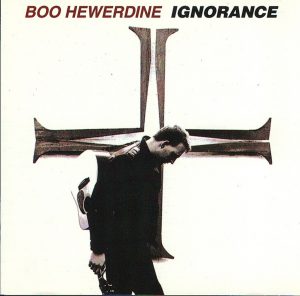
Boo Hewerdine lives in Cambridge, England. He’s incredibly tall. That’s a good thing, because his large frame has to accommodate a massive talent. He’s a singer of real depth and emotion, a musician who can coax a melody out of anything he picks up, and a songwriter who never fails to hit the mark. He has it all.
Boo’s first group was called the Great Divide. Following a couple of singles that made all the right noises (save the ringing of cash registers), the band emulated their name. Undeterred, Boo formed Georgia Peach, which proved to be a pretty silly name for a bunch of Brits. So, they became The Bible. The group played everywhere from student bars to concert halls and went from support act to headliners with almost indecent haste. The music was fantastic: Boo’s voice soared above seemingly effortless grooves. It was pure pop: guitars, choruses you could actually sing along to, and lyrics that spoke to anybody who’d been in and out of love. Walking The Ghost Back Home (1986) and Eureka (1988) were both full of great songs that should have been hits. The latter (produced by Steve Earle) featured Honey Be Good. If ever a turntable smash deserved a high chart position, this was it.
Sadly, commercial success eluded The Bible. As the group fell apart, Boo went to Texas to record with Darden Smith. Evidence (1989, Compass re-issue 1996) confirmed Boo’s talents. He seemed equally at home collaborating with a folkie from the American South as he had been fronting a pop group from the South of England.
Returning home, Boo set out to become a solo artist. For a year, he wrote songs and played them to the diehards who remembered him as “that bloke from The Bible”. Sometimes guitarist Neill Maccoll accompanied him but often it would be Boo alone. He opened for Tori Amos and Michelle Shocked; he played countless gigs where the promoters always seemed to get his name wrong. Finally, he went into the studio to begin his first solo album.
The result was Ignorance (1992, Compass re-issue 1996). The songs ranged from the gospel-tinged Swan Silvertone to the Lennon-esque Gravity. The sound veers from the acoustic starkness of the title track to the electric swagger of History: the mood swings between the rock ’n’ roll urgency of 59 Yards and the eeriness of Little Bits Of Zero, calling at all points in between. Ignorance features guest appearances by Clive Gregson (Any Trouble, Gregson & Collister), Kimberley Rew (Katrina & The Waves) and Ray Shulman (Gentle Giant). But the star of the show is always Boo: the voice, the songs, the vision…
More touring followed. Boo opened for Richard Thompson, Loudon Wainwright III, and formed a memorable trio with Clive Gregson and Eddi Reader (Fairground Attraction). He wrote several songs for Eddi’s 1994 solo CD, one of which, Patience Of Angels scaled pop charts throughout Europe. Boo was nominated for a Novello award for Song of the Year.
Following a brief Bible re-union at the end of 1994 (which yielded one EP, Dreamlife and renewed Boo’s enthusiasm for a solo career, Boo started planning his next solo album. He made a couple of writing trips to Nashville and found himself staying across the street from a medical centre. Thus Baptist Hospital (1996) was christened.
Produced by John Wood (Nick Drake, Richard Thompson, John Martyn), the album features songs written with familiar Boo collaborators (Gregson, Reader, Maccoll) and a couple written with Gary Clark (Danny Wilson). Guest performers include most of the above plus Richard Thompson, Danny Thompson and John “Rabbit” Bundrick. Several songs employ a string section. It’s an astonishing record: Nick Hornby (best-selling author of “Fever Pitch” and “High Fidelity”) wrote: “If I could write books that sounded like this, I’d be… maybe not happy, but very, very fulfilled.” A headlining tour culminated in a sell-out London show and rave reviews.
Following the release of Baptist Hospital, Boo toured the USA (with Darden) to promote the new album and the re-issues of Evidence and Ignorance. Eddi Reader released Candyfloss & Medicine, much of which Boo wrote and played on. He toured the UK, USA and Japan as a featured member of her band.
Boo also collaborated with Neill MacColl on several film scores, including “Fever Pitch” and “Twentyfourseven” which starred Bob Hoskins and was released in the USA. In 1998, Boo returned to the studio with Eddi Reader, this time to co-produce the album Angels & Electricity, which features many of his songs.
Throughout 1998, Boo re-united with producer John Wood to record what he describes as “Baptist Part 2”. Another Nashville writing trip over the Thanksgiving holiday led to a song and album title. Thanksgiving features Boo, Teddy Borowiecki (keys: kd Lang, Eddi Reader), Neill MacColl (guitar), Martin Barker (drums: Billy Bragg), Tim Harris (bass: Steeleye Span), Martha Wainwright (vocals: daughter of Loudon & Kate McGarrigle, sister of Rufus), Clive Gregson (guitars, etc) and the Electra Strings arranged by Tony Cox. The album was recorded in London, Montreal and Nashville.

Lubos Malina (LEW-bosch Me-LEEN-a) is, according to many, the best European banjo player today. He is admired for his technical abilities, precise timing, clean sound and professional attitude. He is also an inventive writer as shown on his first U.S. release, Piece of Cake. He always attracts attention as a valuable member of the Czech bluegrass band Druha Trava (Second Grass). When describing his contribution to the group, Bluegrass Now said, “Malina’s banjo playing dazzles and adds a strikingly colorful thread to the band’s musical weave.” He is also a popular member of his part time group, The Flatt & Scruggs Revival. In his previous musical career, he played with Poutnici (and can be heard on their two albums, which were awarded the Best Non-American Recordings of the Year by the Society for the Preservation of Bluegrass Music in 1989 and 1990), an army brass band (he is professionaly trained on the clarinet) and in various folk and country music groups. He has also played his 5-string banjo with symphonic orchestras and for Czech pop singers. It’s fair to say, Malina is a musician of many talents.
Born and raised in the Czech Republic, where he still lives, Malina has always been drawn to progressive bluegrass music and was greatly influenced in the beginning by Larry McNeely and Earl Scruggs. “I know today that the base for all banjo playing is Earl Scruggs. The more I explore the Scruggs style, the more I realize his genius.” Malina’s heaviest influences come from the mastery of Bela Fleck, the stylings of Tony Furtado and Alison Brown and the timing and inner energy of his mentor, Tony Trischka. “My favorite is Tony Trischka. I’ve been listening to him for about fifteen years, and I’m always surprised by his ideas.” In 1992, Malina was named Best Banjo Player Overall at the 20 year old Banjo Jamboree Festival held at Strakonice (Czech Republic). This was after being voted Banjo Player of the Year annually since 1986. Along with Robert KrestanPoutnici, which sold nearly half a million records in their native land. After the successful release of his first solo effort All You Can Eat, Malina continued touring with Druha Trava and became an endorser of Gibson banjos, receiving and playing a treasured RB-5 Special.
With guests Bela Fleck, Tony Trischka, Peter Rowan, Davy Spillane, Druha TravaPiece of Cake is an incredible example of Malina’s musically diverse style. The album moves from blistering to sweet, wrapping itself around the mood and tempo of each song. From the haunting melody of The Tree of Leaf and Fire, written after learning of the death of a fellow musician and brought to life with lyrics by Peter Rowan, to the Gypsy sounds of Gejza and Berta, Lubos Malina transforms each piece into its own vibrant creation. Occasionally, he’ll add the sultry, mesmerizing tones of the saxophone, an instrument far outside the realm of acoustic stringed instruments but that works beautifully nevertheless, adding an extraordinary emotional tone. The expression and innovative compositions he puts forth are evidence of his growth and vast array of knowledge as a player and leader.
The release of Piece of Cake should further establish Malina as one of the foremost progressive banjo players performing today. With Druha Trava, he is currently scheduled to make three tours of the U.S. in 1999 with appearances planned at major music festivals including MerleFest.

John R. Burr is that rare pianist who combines jazz technique with a genuine love for folk music. The Philadelphia Weekly said, “Pianist extraordinaire John R. Burr has the most sparkling style since former Allman Brother-turned-Rolling Stone hired hand Chuck Leavell.” Discology wrote, “John R. Burr ranks with the best of the elegant jazzers.”
Burr was first drawn to the piano at the age of 10 when he heard Vince Guaraldi’s playing on the Peanut’s animated TV specials. He started out as a child prodigy drummer; he was the only child out of 5 siblings not forced to study the piano. It wasn’t until he was in high school that his focus turned to the keyboard. He then discovered that there were too many drummers to compete with and the piano became his instrument of choice.
After years of touring with such artists as Maria Muldaur, The Alison Brown Quartet, Paul McCandless, Michael Manring and Kathy Kallick and recognition including a feature spot on Windham Hill’s Piano Sampler II, Burr is stepping out with his first solo album, Piedmont Avenue. His playing is as likely to be inspired by James Taylor or Doctor John as by Oscar Peterson or the Yellowjackets although he says it is his love of folk music that has influenced him most. His musical diversity has enabled him to tour and record with a variety of artists and has made him the ideal pianist for the ground breaking folk/jazz group, The Alison Brown Quartet. Burr explains, “I play a sort of jazz piano version of the vocal music that I love to listen to. That’s what influences me. I love to play and study jazz but I listen to vocal, folk/singer/songwriter music. I’m always searching for that melodic song-like quality when I improvise.”
Piedmont Avenue is full of examples of Burr’s musically lyrical style. Burr feels that the seventh track on the album, “Counting the Days”, comes the closest to bridging the gap between jazz and folk. The tune was written with multi-reed specialist Paul McCandless in mind, containing chord changes that are reminiscent of McCandless’ writing and improvising. McCandless joins Burr on this track as well as on Point of Departure. On the lead off track, Burr, a long time Beatles fan, pays tribute to the group with his own take on the classic Lennon & McCartney song, Black Bird. Burr’s unique rendition, playfully titled Black(ened) Bird, incorporates a New Orleans style groove.
Burr’s playing is engaging and his breezy style blending jazz and folk influences makes for a rare and articulate debut album. Piedmont Avenue is cohesive in its conception, inspired in its execution and serves as an excellent introduction to the wonderfully original piano voice of John R. Burr.

When looking for expressive and uncommon sounds, Dolly Parton, Neil Young, Dan Seals, Hank Williams, Jr., Iris Dement and Glen Campbell all turned to the evocative sound of Gove Scrivenor’s autoharp. When Gove released early albums on Flying Fish Records, his friends, Doc Watson, John Hartford, Marty Stuart, Buddy Emmons…all lined up to contribute to his recordings.
Now joined by John Prine, Nanci Griffith and Lari White for his first Compass Records release Shine On, Gove has created a collection of five self-penned and selected favorites of fellow artists. Gove, once again, introduces songs that are full of life and energy and his very personal, soulful sound.
Gove moved to Nashville in the early 70’s after a four-year stint as a submarine sonar technician in the Navy. This move proved to be a wise one, as he was signed by the largest music publishing company in the world, Acuff-Rose. Wesley Rose saw in Gove the qualities that his struggling TRX record label needed, and Gove was soon signed to a recording contract as well as a songwriter agreement. Things began to happen. Scrivenor signed a management and booking deal with the Don Light Talent Agency in Nashville. During his years with Don Light, Gove toured with fellow agency artists Delbert McClinton and Jimmy Buffett and the Original Coral Reefer Band.
These successes opened doors for opportunities and he was soon performing on the popular PBS series Austin City Limits, where he appeared with The Amazing Rhythm Aces. His performance was splendid and he was asked to return again the following year for a show with Doc Watson. Bookings at colleges, festivals and clubs poured in and Gove soon found himself playing all over the US and Australia. Standing ovations and rave reviews were the order of the day, and then the bottom fell out of the Folk and Blues circuit with the advent of “alternative music” in the early ’80s.
Not one to be brought down, Scrivenor kept his optimistic attitude alive and settled right into Nashville. He established himself as a highly sought after sessions player and he met with continued success by singing many jingles, including the early Opryland campaigns for TV and Busch Beer.
Shine On follows the success of Gove’s two prior releases on Flying Fish Records. Shady Gove featured such masters as Doc Watson, John Hartford, Buddy Emmons and a host of others. It was the first of two highly regarded albums for the label. Coconut Gove, his second release, drew participation from such favorites as Marty Stuart, Ben Keith, and Dave Loggins. Solid Gove was re-released as a compilation on Rounder Records in February of 1998.
Gove Scrivenor’s music has been described as “high energy folk blues,” with inventive slide work and powerful vocals, tempered with singular work on the autoharp and beautiful ballads of his own writing. He’s well know for his magical rapport with audiences of all ages.
Scrivenor has experienced his share of luck, but this time, we’re the charmed ones. We’re provided with another unique opportunity to hear this master at work. To once again experience the thumping of our hearts dancing with joy to the rhythm of his beat.

Anything you want to call this is probably fine. It’s dusty rock’n’roll, or alternative country twice removed. Or it’s some kind of dislocated Heartland jangle blended with pathos, power pop and Peter Rowan.
Why Peter Rowan? “Because he’s God,” says Farmer not so John’s Richard McLaurin. “Mack and I worship that guy, and I instinctively knew he would dig our stuff.”
Indeed, Rowan liked the music. Ask him and he’ll tell you. The bluegrass legend sang with Mack Linebaugh and added his distinctive mandola to Receiver’s “Rise Above the Wreckage,” a song whose title is plainly appropriate for a band that has gone in a year’s time from an upstart Nashville quartet with a critically acclaimed self-titled album to a battle-scarred duo with a highly developed stubborn streak and an even better album.
Reasons for the crack-up and restructuring were multifold, predictable and somewhat acrimonious. The short story is former drummer Sean R. Keith became a father and wanted to get off the road. Former bass man Brian Ray had creative issues. Both of them contributed to Receiver. Neither will appear on tour with the band.
Want more biography? Okay. Linebaugh, a Nashville native and Hillsborough High School Class of ’88 graduate, grew up on R.E.M, Neil Young and Bruce Cockburn. He developed an early and ultimately temporary disdain for the country music his father enjoyed. McLaurin was born and reared in the flat, sandy Pee Dee region of South Carolina. He left Clemson University in the mid-1980’s, moved to Nashville without a job, and found touring gigs playing acoustic and electric guitar, lap steel, bass and/or mandolin with Vassar Clements, Maura O’Connell and Iris DeMent.
Then, in 1995, Linebaugh, Ray and Keith formed Farmer not so John. Further direction was established when McLaurin sat in on a practice one afternoon and joined that evening. The band secured a record deal with Compass, McLaurin produced the debut disc, publications from USA Today to Guitar Player took appreciative notice, and the group hopped in a van and began a year of bush league touring in hopes of giving legs to some major league songs.
“It was an odd year,” Linebaugh says. “There would be incredibly low moments of driving a long way for no money and no people. And then we’d go out and play the Bottom Line in New York and have a great response.”
One continuing annoyance was the insistence of some club owners to pair Farmer not so John with rockabilly, hillbilly, and psychobilly bands, as well as other combos of the retro-roots persuasion. The reason for the ill-conceived double bills was a misperception that Farmer not so John was an alternative country band. Linebaugh says this is mostly McLaurin’s fault.
“The only explanation I can think of is that we have a guy that plays steel and mandolin and grew up in South Carolina,” he says. “The whole alternative country thing is so problematic. Are we going to go back and revise history and move the Rolling Stones from Rock’n’Roll to alternative country just because they had some country-influenced songs? We’re a Southern band, but we didn’t grow up on country music, and I defy you to find a traditional country groove or progression anywhere on Receiver.”
Actually, McLaurin says there are three traditional country grooves and 1 1/2 country progressions on Receiver, though he won’t reveal their precise locations. The rest of the album is both a furtherance and a departure from the debut disc.
“We wanted to do a little metamorphosis,” McLaurin says. “This album is darker and more experimental. A lot of that is because of (producer) Tucker Martine, who is a mad scientist if there ever was one. We would do stuff like loop something I was playing on lap steel, using delay and reverb and Leslie effects and lots of tremelo. It ended up sounding real foreboding.”
We’ll skip the other “The Making of Receiver” inside-the-studio type stories, but you’re welcome to ask Mack or Richard about exploding amp cabinets, candle-lit drum booths, canine interruptions or vocal tracks marred by glancing blows from projectiles. You may also pose the “What was it like to work with…?” question as it pertains to special guest pals Rowan, Clive Gregson, Matthew Ryan, Daniel Tashian and Sean Ray.
But before you do any of that, give Receiver a spin. Mash the Repeat button if you like. This is an album textured enough to reward headphone listening and unruly enough for fast cars, high volumes or combinations thereof. It opens with the sweet air, warm wind and possibilities of “Paper Thin,” then takes a harrowing ride through the devastation that occurs when all of the above sour and chill and crumble. And then there are a couple of songs about women…
-->

