
Born in county Sligo, Seamus McGuire grew up in a family that valued both classical and traditional music. He began taking classical violin as a child, and by the time he was a young teenager, he was proficient in both classical violin and traditional Irish fiddle. At the age of fifteen, McGuire won the Fiddler of Dooney competition, soon followed by the Oireachtas (Regionals) senior Irish Traditional fiddler title. As a young adult, McGuire played with the Dublin Symphony, and in 1983, he and his brother, Manus, formed the band Buttons and Bows with Jakie Daly and Garry O’Briain, a group that would prove to be one of the most influential in Ireland at the time.
Buttons and Bows took traditional Irish melodies and mixed them with traditional music from Canada, Scandinavia, and the Shetland Islands, creating a poignant, multi-dimensional sound. The band recorded three albums, all of which were widely acclaimed, and together the quartet toured all over the United States and Canada.
In 1995, McGuire got together with guitarist Arty McGlynn and flautist John Lee to produce an album of “forgotten” flute and fiddle tunes deriving from Co. Leitrim, titled The Missing Reel. Also in that year, McGuire released a solo album titled The Wishing Tree, 1995, wherin he bridges the gap between classical violin and traditional world music.
One of the contributors on The Wishing Tree was Belfast cellist and composer Neil Martin. Together with violinist Niamh Crowley and violist Kenneth Rice, they went on to found the West Ocean String Quartet in 1999, which has gone on to “effortlessly to combine tradition and innovation like nothing on earth.” The West Ocean String Quartet has released two albums and has gone on to collaborate with some of the most prestigious Irish traditional artists of the age, including Dervish, Tony McMaus, Maighread Ni Dhomhnaill, Cathal O’Searcaigh, and Mary Black, among others.

Brilliantly conceived, refreshingly diverse, faultlessly produced, and expertly played, Moving Cloud will first get you up on your feet, and then sweep you off them. Based mainly in Ennis, Co. Clare, this quintet is a stellar concert band as well.
Moving Cloud featured five highly accomplished Irish musicians: Paul Brock (button accordion), Maeve Donnelly (fiddle and viola), Manus McGuire (fiddles) Kevin Crawford (flute and percussion), and Carl Hanson (piano). Moving Cloud’s standard of music was extraordinary, its variety surpassed only by its virtuosity.
Moving Cloud released two albums on Green Linnet; its self-titled 1994 debut earned “Album of the Year” from the Irish Echo, and was deemed “Brilliant from first to last track,” by Earle Hitchner. Bill Whelan, composer of Riverdance, heralded Moving Cloud as “a traditional album of rare grace, subtlety and integrity that also makes a connection with other traditions in a surprising way.” Their sophomore release, Foxglove, earned praise as a “worthy sequel,” featuring guests Trevor Hutchinson on double bass, Johnny “Ringo” McDonagh on the bones, guitarist Garry O’Briain, and banjo player Gerry O’Connor to create a tight, precise sound perfectly suited for set dancers and audiences alike.

Joe Derrane electrified the world of Irish music back in the late 1940s when as a high school senior he recorded eight solo 78-rpm shellac discs for Boston’s Copley Records on the D/C# two-row button accordion. Through his recordings and performances, this native Bostonian defined the state of the art in Irish-American button accordion playing.
The Boston-born son of Irish immigrants, Joe Derrane is among the finest button accordionists in the history of Celtic music. He is also a somewhat elusive legend in the genre. After recording during the 1940s and ‘50s, he disappeared from the traditional music circuit for thirty-five years, popping up again in 1994 at the Irish Folk Festival at Wolf Trap. Since his career’s resurgence he has proved wrong F. Scott Fitzgerald’s famous quote “there are no second acts in American lives”. Over the past 16 years, Derrane has written 22 tunes and his current writing and recorded output is the most imaginative and inventive of his career.
In 2004 Derrane received one of the highest honors for a traditional musician: the National Endowment for the Arts’ National Heritage Fellowship.
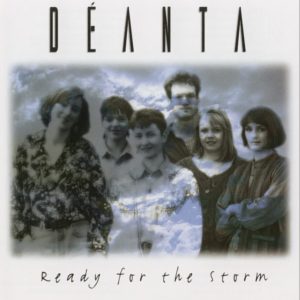
Deanta (pronounced: Jaunt-a) was formed in the early 1990’s in County Antriam, Northern Ireland. The original line-up featured Katie O’Brien, who played fiddle and viola, and her brother, Eoghan, who played guitar and harp. Paul Mullan (flute, whistles), Clodagh Warnock (bouzouki, fiddle, bodhran, percussion) and Mary Dillon (vocals, synthesizer, guitar, harp) rounded out the group although Deidre Havlin later replaced Mullan, and Rosie Mulholland (keyboards, fiddle) was added.

Two of New York’s premier Sligo-style fiddlers, Brian Conway and Tony DeMarco joined together in 1981 to record a single album: The Apple in Winter.
Conway is a Senior All-Ireland champion and both he and DeMarco are held in high regard for their respect for and mastery of the tradition of the American Sligo-style of ornamental fiddle playing made popular by artists such as Michael Coleman, Andy McGann, and Paddy Reynolds.

In the northwest of France lies the province of Brittany, where a unique Celtic culture has flourished for centuries. Kornog merged traditional Breton tunes with the Scottish vocal repertoire, creating an exciting new acoustic music. The quartet’s complex arrangements result in a style quite unlike any other, at once graceful and thrilling, ancient and contemporary.
1980 saw the creation of the trio Kornog (meaning “West” in Breton) with vocalist, bouzouki, mandolin, and cittern player Jamie McMenemy, Breton guitarist Soïg Siberil, and French-born Breton fiddler Christian Lemaître. Soon flautist Jean-Michel Veillon joined the band, and the formula was complete.
Their unique sound, created by a focused unison of flute and fiddle, a complex bouzouki and guitar rhythm section, and complex arrangements, was ideal for the Western Europe concert circuit. When Kornog toured the United States for the first time, they had such an enthusiastic public response that they recorded a live album in Minneapolis, Premiere, released on Green Linnet.
In 1986, Soïg Siberil left the band, and guitarist Gilles Le Bigot joined in order to record the album Kornog IV. After a Yugoslav tour and a stint with the Irish traditional powerhouse the Chieftains, Kornog disbanded. Veillon and Le Bigot founded Barzaz, Lemaître joined Storvan and then the Celtic Fiddle Festival, and McMenemy took a nine-year break before guesting in several recordings throughout the 90s.
Then, in 1999, Kornog reformed with the addition of guitarist Nicolas Quemener. After the reformation, they toured the United States and recorded Korong, 2000.

“Veterans of Planxty, the Bothy Band, De Dannan and more, Patrick Street represents the distillation of a crucial new strain that emerged in traditional Irish music some twenty-five years ago.” – Tim O’Brien
Kevin Burke, Andy Irvine, Jackie Daly and Ged Foley – collectively known as Patrick Street – are known throughout the Irish music world as four of its most brilliant players. On a repertoire steeped in traditional music, the band’s tightly executed arrangements and unparalleled musicianship know no equal. Beginning as a one-time tour of four recognized masters, nearly two decades and eight albums later this “supergroup” has reached legendary status. “Mesmerizing,” says Billboard, “…a must for those who love Irish music.”
Patrick Street adds a new lane this year with the addition of multi-instrumentalist John Carty. Known for his sensational fiddling, John will add double fiddle with Kevin as well as exciting variety to the band with his talents on banjo, flute and tenor-guitar.
Patrick Street was launched in 1986 as a one-off tour de force called Legends of Irish Music. Living up to its name, it featured fiddler Kevin Burke (veteran of The Bothy Band), singer/bouzouki player Andy Irvine (Planxty), and accordion player Jackie Daly (De Dannan), along with acclaimed guitarist Arty McGlynn. With the success of the tour, the quartet released an album that year named Patrick Street (after a road or avenue found in towns across Ireland) and a band was born. The line-up of Burke, Irvine and Daly has remained constant through the years, with other distinctive artists passing through the ranks including guitarist Gerry O’Beirne, fiddler James Kelly, and uilleann piper Declan Masterson. Ged Foley, a highly-skilled guitarist from England with past stints in the Battlefield Band and House Band, came on board in 1996. This year the Street widens it’s talents with John Carty.
The consummate Irish fiddler, Kevin has given to the band’s sound and repertoire the highly ornamented Sligo style for which he’s known. Jackie brings his wide repertoire of Kerry music to the fore with dazzling slides and polkas, and his seamless accordion-and-fiddle duets with Kevin are a highlight of the band’s shows. Andy Irvine is one of the great balladeers of Irish music, and his bouzouki playing has long been a standard by which others are judged. He brings his shared passions for Eastern European rhythms and American folksinger Woody Guthrie to the band. Ged’s inventive guitar licks provide ideal underpinning for Andy’s intricate songs and the group’s blistering sets of reels and jigs. With new recruit John Carty, Patrick Street brims with the spirit and sensitivity of Irish music at its best.
Band Members
Kevin Burke (fiddle)
Kevin Burke was born in London, England to Irish parents who came originally from Sligo, an area renowned for its traditional music, particularly that of the fiddle. As a teenager he played in music clubs throughout England and Ireland, but in 1972 a chance meeting with Arlo Guthrie brought him to the USA to play on Arlo’s album, Last Of The Brooklyn Cowboys. At Christy Moore’s beckoning, Kevin moved for a period to Ireland to join what would become one of the most influential Irish groups of the 1970s, The Bothy Band. After the band’s breakup, he recorded two classic duo albums and toured with Bothy Band guitarist Míchéal O’Domhnaill. He is also a member of The Celtic Fiddle Festival. In 2002, Kevin was awarded a National Heritage Fellowship from the National Endowment for the Arts. “My style is a definite composite,” he says. “The old Sligo players provided the building blocks but I’ve borrowed bits and pieces from all sorts of musicians along the way.” Kevin now makes Portland, OR his home.
Andy Irvine (vocals, bouzouki, mandolin)
Andy Irvine is one of the great Irish singers, his voice one of a handful of truly great ones that gets to the very soul of Ireland. He was a member of two other groundbreaking groups, Sweeney’s Men and Planxty (which has recently reformed), and has worked closely with Paul Brady. Album collaborations include work with the likes of De Danann, Maddy Prior, June Tabor and Dick Gaughan. If his voice explores an aching Irish romanticism, his sprightly bouzouki playing has brought a Balkan edge to his musical collaborations. Andy was one of the first to bring bouzouki and Bulgarian music to the Irish tradition. His collaborative album ’East Wind’ with Riverdance composer Bill Whelan featured Hungarian singer Marta Sebestyen. His latest project is the group Mozaik with Donal Lunny, Bruce Molsky, Nikola Parov and Rens van der Zalm.
Jackie Daly (accordion)
Jackie Daly comes from North Cork and plays in the style of Sliabh Luachra, the area bordering Kerry and North Cork and encompassing such towns as Castleisland and Jackie’s home, Kanturk. Sliabh Luachra is a regional musical style known for its lively slides and lovely, spirited polkas, of which Jackie is a master. He was a member of the famous Irish group De Dannan and has toured or recorded with the likes of Dolores Keane, Buttons And Bows, Kevin Burke (as a duo), John Faulkner and Seamus Creagh.
Ged Foley (guitar, vocals)
Ged (pronounced “Jed”) was born in County Durham in the North East of England. Ged is a superb guitarist, a singer of distinction with a spare, unornamented style and a player of both the fiddle and the Northumbrian smallpipes. A one-time member of Scotland’s The Battlefield Band and a founding member of The House Band, Ged also worked in a duo with the excellent English singer/songwriter Jez Lowe. He replaced original Patrick Street member Arty McGlynn in 1996, and joined the Celtic Fiddle Festival after an initial tour with the band in 2001. He lives in the USA.
John Carty (fiddle, banjo, flute, tenor guitar)
Born in London, England and now residing in Co. Roscommon, Ireland, John plays in the Roscommon and Sligo styles of his family roots. He was recently named Traditional Musician of the Year for 2003 by Irish Television TG4. He has released a number of well-regarded albums and also plays with his band At the Racket.
Quotes From the Press
“With the relaxed grace of masters, Patrick Street use their breathtaking virtuosity to display this ancient music at its wild and humble best.” – The Boston Globe
“An overall joy…Irish traditional music performed with fervor and fidelity.” – Irish Echo
“With the possible exception of the Chieftains, there’s no better Celtic music group in the world right now than Patrick Street!” – The Washington Post
“Mesmerizing…a must for those who love Irish music.” – Billboard

Scottish Fiddler, Johnny Cunningham was widely regarded as one of the world’s best. A founding member of Silly Wizard, Relativity, and Celtic Fiddle Festival, Cunningham was known for his lightning-fast reels and hauntingly beautiful Scottish airs.
Throughout his career, Cunningham also was a member of Nightnoise his own alternative band, Raindogs, and various theatrical productions.

Joe Burke, East Galway accordion player, has influenced box players worldwide through his illustrious career.
From his first public performance in 1955 and his first albums (released on 78rpm, the last 78’s to be released in Europe!) to current recordings and tours, Burke has held a special place in the rolls of Irish traditional musicians. Known for his stylish use of triplets and rolls, he was been the recipient of awards such as the AIB Traditional Musician of the Year Award 1997and Gradam An Chomhaltais 2003.
A well-loved and respected teacher, Burke has offered his expertise to students from Co. Leitrim, Ireland to Paris, France, Dallas, Texas and various logging and fishing towns in Alaska.
He frequently performs with his wife, accordion and guitar player Anne Conroy Burke and has recorded with many musical greats including Andy McCann and Felix Dolan, Sean Maguire and Josephine Keegan, Michael Cooney and Terry Corcoran, Charlie Lennon, Frankie Gavin, Kevin Burke, Brian Conway, Noreen O’Donoghue and Mike Rafferty.

Growing up in Sligo in the 1960s when fiddle music had regained popularity in its native home, the Northwest of Ireland, Manus McGuire was ideally placed to carry on a tradition made legend by fiddlers Michael Coleman, James Morrison, and Paddy Killoran thirty years previously. From an early age he learned various dance tunes by his father’s knee and followed his older brother, Seamus, into the national traditional music arena that was steadily gathering momentum. In 1970, at the young age of 14, Manus won Sligo’s prestigious Fiddler of Dooney competition. Since then, he has toured extensively in North America and Canada.
Manus has recorded eight albums, including The Humours of Lisadell (Folk Legacy, 1980), and Carousel (Gael Linn, 1984),with Seamus; Buttons & Bows (Green Linnet, 1983), First month of Summer (Green Linnet, 1987) and Grace Notes (Gael Linn, 1991), all with the group Buttons & Bows; Moving Cloud (Green Linnet, 1994) and Foxglove (Green Linnet, 1997), with the group Moving Cloud; and a solo debut, Saffron & Blue (Green Linnet, 2000) This last recording was placed in the Top Ten polls of the Boston Globe and Irish Echo newspapers. It was also named Best Album of 2000–and Manus, Best Male Musician of the same year–by the Irish American News.

Kevin Burke is known for being one of the most lyrical fiddle players in Celtic music. He was a founding member of seminal groups such as The Bothy Band, Patrick Street, and Celtic Fiddle Festival and is prized as a solo and duet player.
In 1992, Burke assembled his band, Open House. Made up of Burke, Paul Kotaphish. Mark Graham, and Sandy Silva, Open House developed organically out of jam sessions between Burke, Kotapish and Graham. Silva was invited to join and the new group focused on mixing traditional music from multiple cultures.
Open House stayed together for some years, made three recordings and disbanded in 1999.

“A lot of people think Irish music is wistful and melancholy. That’s one side of it, but there’s also a great, rough, resilient spirit in the music, an element of joy underlying even the most plaintive melody. I grew up listening to musicians with that spirit and I value it. So much in music today makes people passive, bored and boring: three things I never want to be.”
Kevin Burke needn’t worry. His sparkling, lyrical fiddle playing has earned him a reputation as one of the finest, most influential players in music today. From The Bothy Band to Patrick Street, he has defined Irish fiddling for a generation. His work with artists as disparate as Kate Bush, Arlo Guthrie and Christy Moore has given him an audience that not only spans continents, it defies attempts at categorization. Described as “one of the greatest Celtic fiddlers alive” by The New York Times, Burke was recognized with a National Heritage Fellowship Award by the National Endowment For the Arts in 2002, this country’s highest honor in the traditional arts. In 2005, he was named one of Irish America’s Top 100 by Irish America Magazine.
Born and raised in London, England, Burke picked up his first fiddle at age eight when his parents decided music studies were in order. “To this day I have no idea why they chose the fiddle, except that it’s popular in County Sligo, where the family comes from and where we spent our vacations,” he laughs. “For the next five years or so, I dutifully diddled around on it. Then I discovered Irish music. Suddenly I was hooked. I spent my teens wandering into pubs, waiting for a chance to sit in with the musicians.”
London in the 1960s was a vibrant musical scene for the Irish; emigrants could be heard playing the styles of Kerry, Sligo, Galway, Limerick and Clare. And Burke was listening. Though he counts such masters of the Sligo style as Michael Coleman, Paddy Killoran and Tom McGowan as primary influences, he also points to fiddlers Bobby Casey (County Clare) and Brendan McGlinchey (Ulster), and to a wealth of Irish musicians on the London scene as important in his development. “I had access to it all, whereas if I’d been living in Ireland, I might not have been so lucky.”
Good fortune aside, Kevin’s undeniable talents brought him to the attention of Arlo Guthrie in 1972, when he was invited to the States to play on Guthrie’s Last of the Brooklyn Cowboys. Shortly after, Christy Moore, the great Irish singer/songwriter, asked Burke to Ireland to play in his new band. He stayed with Moore two years before joining what would become one of the most influential Irish groups of all time, The Bothy Band.
Hailed as “the Yardbirds of Irish music,” the Bothy Band boasted some of the finest musicians in all of Ireland, including Matt Molloy (Chieftains), Mícheál Ó Domhnaill and Tríona Ní Domhnaill (Nightnoise), Dónal Lunny (Planxty) and uillean piper Paddy Keenan. Burke initially joined the band as a temporary replacement for fiddler Tommy Peoples, but his role soon become permanent. His elegant, impassioned fiddling was a cornerstone of the band’s legendary sound from 1976 until 1979.
During their years in the Bothy Band together, Burke and guitarist Míchéal O’Domhnaill discovered a rare musical rapport. When the band parted ways, the two men toured Europe and recorded a groundbreaking album, Promenade, which was awarded the “Grand Prix du Disque” at the 1980 Montreux Jazz Festival. They followed with Portland, named for the Oregon city where Burke has long resided.
In 1986, Burke joined an all-star cast of Irish musicians that included Andy Irvine and Jackie Daly for a tour that evolved into the legendary quartet Patrick Street. With Ged Foley on guitar and nine albums to their name, Patrick Street is one of the most powerful traditional groups in Irish music. Celtic Fiddle Festival is Kevin’s other current group, a dazzling pan-Celtic ensemble that he founded in 1993 with legendary Scottish fiddler Johnny Cunningham and Brittany’s Christian Lemaître. After Cunningham’s untimely passing in 2003, the young fiddler Andre Brunet from Quebeçois group La Bottine Souriante came on board, and the Fiddles released their fourth CD, Play On (2005, Green Linnet), dedicated to Johnny.
As if that weren’t enough, Kevin toured and recorded with bluegrass star Tim O’Brien and his acclaimed Irish-American group, The Crossing in 2001. Kevin also formed the group Open House during the 1990s, a critically-acclaimed project with American musicians Paul Kotapish, Mark Graham and dancer Sandy Silva. Open House released three CDs that explored music from all corners of the world.
Over the years, Burke has recorded a number of acclaimed solo albums in addition to those mentioned before, including his debut Sweeney’s Dream and If the Cap Fits. In Concert, which came out in 1999 on Green Linnet, was Burke’s first solo release in15 years, and features his inimitable In Concert fiddling on music drawn from throughout his remarkable career. The album was co-produced by noted Irish fiddler Martin Hayes, who also guests on three tracks.
“There are thousands of old tunes, good ones that haven’t been played in years,” concludes Burke. “When I find something I love, I play it. And when I find something I like, I bend it out of shape until I love it. Good music is good music. It should be heard.”
-->

