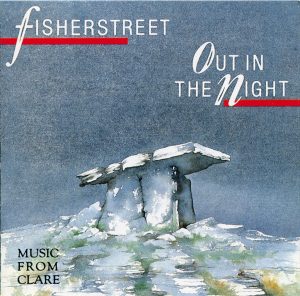
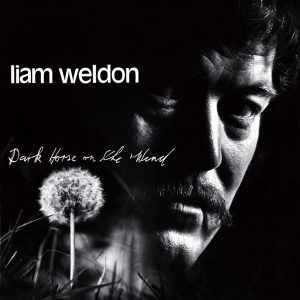
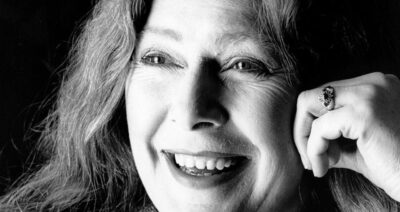
Jackie Daly is credited with revitalizing the image of the accordion and concertina by taking them out of the dance band and into the trad band.
Daly was also a founding member of some of the most prominent Irish bands since the mid-70s including De Dannan, Arcady, Buttons & Bows, and Patrick Street. Born in the Sliabh Luachra region of Ireland in 1945, he remains one of the most emulated carriers of the Sliabh Luachra-style tradition.
Throughout his career, Daly surrounded himself with distinguished fiddlers with whom he would play in tight unison. This fiddle-accordion duet style has now been imitated across Celtic music micro-genres. After playing with Kevin Burke on Burke’s debut solo album,If the Cap Fits the duo continued to play, tour, and record together throughout the 20th century and into the next.
Forty years after If the Cap Fits was first released, Kevin Burke is still considered to be the most prominent living master of Sligo-style Irish fiddling. Burke has recorded over twenty albums, taught at countless camps, universities, and summer schools, and has toured extensively all over the world. A founding member of Patrick Street, Planxty, Bothy Band, The Celtic Fiddle Festival, and Open House, Burke is instrumental in keeping the Sligo music tradition alive.
Together, Daly and Burke founded the band Patrick Street with Andy Irvine and Arty McGlynn. Before leaving the band in 2007, Daly had played with them for 21 years, on all of their nine recordings, and at countless worldwide performances.
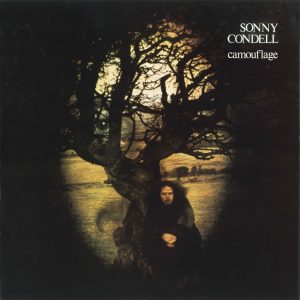
In a musical career spanning 35 years, from the heady days with Irish musical trailblazers Tir Na Nog, which landed him on the biggest stages in the world, to the truly fantastic Scullion, numerous solo albums, to his current incarnation with the band Radar, Sonny Condell is recognized as one of Irelands greatest songwriters. Originally released in 1977 on Mulligan Records, CAMOUFLAGE was Condell’s solo debut and is now regarded as a standard in Irish music. CAMOUFLAGE showcases Condell’s formidable abilities on the acoustic guitar, saxophone, percussion and as a vocalist and features guest musicians Paul Barrett (trombone), Greg Boland (acoustic and electric guitar, bass guitar), Fran Breen (drums, percussion), Ciaran Brennan (double bass), Brian Dunning (flutes), Jolyon Jackson (keyboards, cello), and Rosemary Taylor (backup vocals).

Tommy Keane was born in Waterford City, Ireland in 1953. While in his early twenties, after playing tin whistle for a couple of years, he met local piper Tommy Kearney who encouraged him to take up the uilleann pipes. After attending the Willie Clancy Summer School where he developed his piping skills (with the help of pipers Pat Mitchell and Liam O’Flynn) he became much in demand as a session musician and worked with musicians including Elvis Costello, The Pogues, Clannad, Ralph McTell and more. He has toured with Liam Clancy, Tony McMahon and Seamus Tansey and has performed with The Irish Philharmonic Choir and Orchestra.
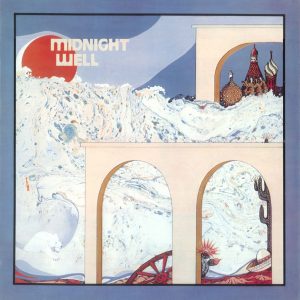
Formed in the mid 1970’s by Irish-American singer-songwriter Thom Moore, Midnight Well was composed of Moore, vocalist Janie Cribbs, guitarist Gerry O’Beirne (The Waterboys, Sharon Shannon Band, Patrick Street) and button accordionist Martin O’Connor (Boys of the Lough, De Danann). Midnight Well was similar to Moore’s earlier group, Pumpkinhead, in that they also combined Irish traditional music with country rock and folkloric influences from all over the world. Midnight Well’s unique sound is created by the variety of O’Beirne’s guitar styles, Moore and Cribbs’ vocal harmonies and O’Connor’s wistful accordion work.

Well-known as one of the greatest bodhran players of all time, Tommy Hayes has been at the forefront of traditional Irish music for over 30 years. In a career that has exemplified diversity he has performed and recorded with most of the great names in traditional music and beyond. Tommy has been a member of a number of ground-breaking groups during his career, including Stockton’s Wing, Puck Fair (with Brian Dunning and Mícheál Ó Domhnaill), Altan, Liam O Flynn and the Pipers Call Band and the Eileen Ivers Band. He was the original percussionist for Riverdance and has performed on more than 400 albums. In the world of film Tommy has played on numerous films amongst them Titanic, The Devils Own, Rob Roy, In the Name of the Father and The Field.

Born in Straide, County Mayo, and now living in Galway, Sean is an All-Ireland champion on both fiddle and whistle.
His 1993 solo debut, The Blue Fiddle, was named one of the ten best albums of that year by The Irish Echo.
Other recordings on which Sean appears include Ceol Tigh Neachtain, Music at Matt Molloy’s, Brendan O’Regan’s A Wind of Change, Alan Kelly’s Out of the Blue and Mosaic, and Dónal Lunny’s Coolfin.

Vinnie Kilduff has been heralded as one of Ireland’s greatest tin whistle players, having shared the stage with everyone from Clannad to U2, he succeeded in gracefully spanning the gap between traditional Irish music and contemporary Irish rock.
A founding member of the Irish rock group Tue Nua, Kilduff released his first solo record The Boys from the Blue Hill in 1990, which is a collection of traditional tunes featuring Kilduff’s multi-instrumental abilities.

“A lot of people think Irish music is wistful and melancholy. That’s one side of it, but there’s also a great, rough, resilient spirit in the music, an element of joy underlying even the most plaintive melody. I grew up listening to musicians with that spirit and I value it. So much in music today makes people passive, bored and boring: three things I never want to be.”
Kevin Burke needn’t worry. His sparkling, lyrical fiddle playing has earned him a reputation as one of the finest, most influential players in music today. From The Bothy Band to Patrick Street, he has defined Irish fiddling for a generation. His work with artists as disparate as Kate Bush, Arlo Guthrie and Christy Moore has given him an audience that not only spans continents, it defies attempts at categorization. Described as “one of the greatest Celtic fiddlers alive” by The New York Times, Burke was recognized with a National Heritage Fellowship Award by the National Endowment For the Arts in 2002, this country’s highest honor in the traditional arts. In 2005, he was named one of Irish America’s Top 100 by Irish America Magazine.
Born and raised in London, England, Burke picked up his first fiddle at age eight when his parents decided music studies were in order. “To this day I have no idea why they chose the fiddle, except that it’s popular in County Sligo, where the family comes from and where we spent our vacations,” he laughs. “For the next five years or so, I dutifully diddled around on it. Then I discovered Irish music. Suddenly I was hooked. I spent my teens wandering into pubs, waiting for a chance to sit in with the musicians.”
London in the 1960s was a vibrant musical scene for the Irish; emigrants could be heard playing the styles of Kerry, Sligo, Galway, Limerick and Clare. And Burke was listening. Though he counts such masters of the Sligo style as Michael Coleman, Paddy Killoran and Tom McGowan as primary influences, he also points to fiddlers Bobby Casey (County Clare) and Brendan McGlinchey (Ulster), and to a wealth of Irish musicians on the London scene as important in his development. “I had access to it all, whereas if I’d been living in Ireland, I might not have been so lucky.”
Good fortune aside, Kevin’s undeniable talents brought him to the attention of Arlo Guthrie in 1972, when he was invited to the States to play on Guthrie’s Last of the Brooklyn Cowboys. Shortly after, Christy Moore, the great Irish singer/songwriter, asked Burke to Ireland to play in his new band. He stayed with Moore two years before joining what would become one of the most influential Irish groups of all time, The Bothy Band.
Hailed as “the Yardbirds of Irish music,” the Bothy Band boasted some of the finest musicians in all of Ireland, including Matt Molloy (Chieftains), Mícheál Ó Domhnaill and Tríona Ní Domhnaill (Nightnoise), Dónal Lunny (Planxty) and uillean piper Paddy Keenan. Burke initially joined the band as a temporary replacement for fiddler Tommy Peoples, but his role soon become permanent. His elegant, impassioned fiddling was a cornerstone of the band’s legendary sound from 1976 until 1979.
During their years in the Bothy Band together, Burke and guitarist Míchéal O’Domhnaill discovered a rare musical rapport. When the band parted ways, the two men toured Europe and recorded a groundbreaking album, Promenade, which was awarded the “Grand Prix du Disque” at the 1980 Montreux Jazz Festival. They followed with Portland, named for the Oregon city where Burke has long resided.
In 1986, Burke joined an all-star cast of Irish musicians that included Andy Irvine and Jackie Daly for a tour that evolved into the legendary quartet Patrick Street. With Ged Foley on guitar and nine albums to their name, Patrick Street is one of the most powerful traditional groups in Irish music. Celtic Fiddle Festival is Kevin’s other current group, a dazzling pan-Celtic ensemble that he founded in 1993 with legendary Scottish fiddler Johnny Cunningham and Brittany’s Christian Lemaître. After Cunningham’s untimely passing in 2003, the young fiddler Andre Brunet from Quebeçois group La Bottine Souriante came on board, and the Fiddles released their fourth CD, Play On (2005, Green Linnet), dedicated to Johnny.
As if that weren’t enough, Kevin toured and recorded with bluegrass star Tim O’Brien and his acclaimed Irish-American group, The Crossing in 2001. Kevin also formed the group Open House during the 1990s, a critically-acclaimed project with American musicians Paul Kotapish, Mark Graham and dancer Sandy Silva. Open House released three CDs that explored music from all corners of the world.
Over the years, Burke has recorded a number of acclaimed solo albums in addition to those mentioned before, including his debut Sweeney’s Dream and If the Cap Fits. In Concert, which came out in 1999 on Green Linnet, was Burke’s first solo release in15 years, and features his inimitable In Concert fiddling on music drawn from throughout his remarkable career. The album was co-produced by noted Irish fiddler Martin Hayes, who also guests on three tracks.
“There are thousands of old tunes, good ones that haven’t been played in years,” concludes Burke. “When I find something I love, I play it. And when I find something I like, I bend it out of shape until I love it. Good music is good music. It should be heard.”
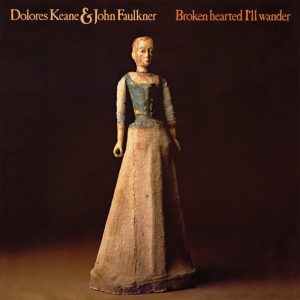
Since they were wed in 1977, vocalist Dolores Keane and multi-instrumentalist John Faulker have recorded three duet albums, toured extensively together, and have since collaborated on several musical projects.
Dolores Keane was born in Co. Galway, Ireland, and was a founding member of the Irish folk group Dé Danann. After she and Londoner John Faulkner wed, he produced her first solo album and the duo subsequently recorded three duet albums.
John Faulkner got his start as a member of songwriter Ewan MacColl’s band in the 1960s and early 70s. Later, he and Keane founded the band Reel Union.
Together they have performed and toured extensively throughout the world, focusing especially on North America, Europe, the Eastern Asia, and Australia. To date, Faulkner’s discography includes fifteen albums, six of which he produced or co-produced, and two of which are solo albums. Faulkner is also an accomplished film composer and songwriter, and wrote the music for the 1970s BBC children’s television show Bagpuss.
-->