
Sligo-style fiddler Kevin Burke and guitarist Mícheál O’Domhnaill first played together as members of the legendary Bothy Band. After the band broke up, the pair toured the United States and Europe, recording two albums together: Promenade (1979), and Portland (1982).
Both albums were critically acclaimed internationally, and are now considered to be staples in any avid Celtic music-lover’s collection. In the making of their two albums, the fiddle and guitar duo aspired to embody relaxed vitality, which they achieved through their compelling melodies, pulsing Sligo rhythms, intricate variations, and vocal perfection.
For over forty years, Kevin Burke has been considered to be the living master of Sligo-style Irish fiddling. Burke has recorded over twenty albums, taught at countless camps, universities, and summer schools, and has toured extensively all over the world. A founding member of Patrick Street, Planxty, Bothy Band, The Celtic Fiddle Festival, and Open House, Burke is instrumental in keeping the Sligo music tradition alive.
Producer, guitarist, vocalist, and keyboardist Mícheál O’Domhnaill began his musical career as a teenager when he created the band Skara Brae with his sisters Tríona and Maighread. Throughout his short life, O’Domhnaill played, recorded, and toured with Mick Hanley, the Bothy Band, Relativity (a band he founded with Triona and brothers Phil and Johnny Cunningham) and ex-Bothy Band members Kevin Burke and Paddy Glackin.
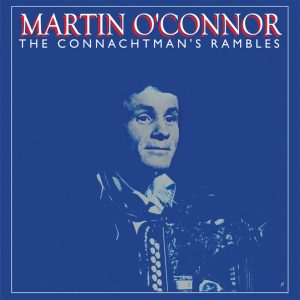
An accordion player since the age of nine, Martin’s career has seen him playing in many of traditional music’s leading groups including Midnight Well, De Dannan, The Boys of the Lough, and Skylark.
His first solo album ’A Connachtman’s Rambles’ met with critical acclaim and established him as a solo musician. His second solo album 1990’s ’Perpetual Motion’ is considered by some to be one of the best accordion albums ever produced by an Irish artist. The release in 1993 of ’Chatterbox’ gave further evidence of his outstanding technique, imagination, and compositional talent.
A popular session musician, O’Connor has appeared on recordings by such diverse musicians as Rod Stewart, Elvis Costello, Mark Knofler, Tanita Tikaram, Townes Van Zandt, Chieftains, the Dubliners, Davy Spillane, Maire Brennan, and the Waterboys.
In 1995, O’Connor became the first recipient of the Allied Irish Banks, Traditional Musician of the Year award at a ceremony in his home town of Galway. The award was to acknowledge the tremendous contribution he’s made to traditional Irish and in particular, accordion music.

Each a master-musician in his own right, Matt, Tommy, and Paul come together on this album to produce a collection of fiery reels, jigs and hornpipes. The tunes here are from different sources, mainly from Counties Clare, Donegal and Roscommon, and capture the atmosphere of the informal yet spirited sessions that traditional musicians revelled in. Superb Irish traditional music from superb Irish traditional musicians.

The Bothy Band evoked universal praise from audiences and critics alike. They are that rare combination of genius, harmonic subtlety, rhythmic drive, and vocal clarity that moved Rogue’s Gallery to dub them, “the most important Celtic band of the rock era.”
From their very first album, the Bothies attracted the attention of listeners on both sides of the Atlantic. When legendary fiddler Tommy Peoples was replaced by Kevin Burke for the group’s second album, Old Hag You Have Killed Me, which came out in 1976, none of the awesome power of the group’s initial surge was lost. It was that auspicious second album which contained a vocal tour de force with an unpronounceable Gaelic title, moving an unabashed fan to proclaim that “one listen to the quick-paced, strangely harmonized Fionnghuala (fuhwhun-NOO-whu-luh is close) will leave you convinced of their greatness.”
By the time their third album, Out of the Wind, Into the Sun, was released, there was no doubt in anyone’s mind that siblings Mícheál Ó’Domhnaill and Triona Ní Dhomhnaill, rhythm genius Dónal Lunny, piping king Paddy Keenan, flute virtuoso Matt Molloy, and brilliant fiddler Kevin Burke stood at the very summit of Celtic music — a group admired by all, imitated by many, surpassed by none.
It was inevitable that the group would record a live album (in that bastion of Celtic music, Paris, France!) producing a wild, uninhibited set of music, “played with verve, and captured with truly great sonics.” Before you knew it, the band members had gone their separate ways, joining up with such celebrated progeny as Touchstone, Patrick Street, The Chieftains and Nightnoise. But the Bothies’ legacy remains on their four stellar albums, as well as a collection, The Best of the Bothy Band, released after their breakup.
Upon hearing this collection, Emily Friedman of Chicago Magazine was moved to deliver the following paean, which might serve as an elegy for the band’s tenure: . . . together they took jazz chords, Gaelic-language songs, taut instrumental interplay, and a deep sense of their shared Celtic past and created a body of music that still shines . . .This was one of the greatest of all bands; get this album and learn how much we lost when its brief career ended.”

Gerry O’Connor, described by many as the best four string banjoist in the history of Irish music, lets creativity take him where it wants to. He’s been doing this for some time now, and in the process has collected a great army of admirers not only in Ireland but also around the world.
O’Connor’s first U.S. release and Compass debut, Myriad is a musical journey of sorts. O’Connor says, “It is really an album about where I’ve been musically over the past while and most importantly where I am at the moment.” The album contains a wide range of colors, textures and rhythms for the listener to experience. “I haven’t done a solo album in a while. That has given me time to feel and experience a great range of influences, ideas and emotions and they’re all sort of collected here.”
Myriad was recorded over a 5-year period, during O’Connor’s time as a member of the Irish band Four Men and a Dog. The band recorded three albums in that time and toured excessively throughout the U.K., U.S., Canada, Australia and Europe. During his off time from touring that O’Connor entered the studio and put down tracks for the album. “Myriad is definitely influenced by the music I’ve been exposed to on my travels. But I was also aware that I carried inside me the musical heritage of my grandparents, my mom and my dad. So that’s why the last track features tunes with my dad and brother. It’s my effort to give back something of myself to the tradition.” The album features many guest artists including Kevin Doherty of Four Men and a Dog on guitar and Manus Lunny on bousouki and bodhran.
Described by Irish Music Magazine as a “banjoist extraordinaire,” O’Connor has developed a phenomenal technique on the tenor banjo, which sometimes gives the impression that there are perhaps three or four clones of the man all playing at the same time, as is apparent on Cam a Lochaigh (Cam-a-luck-ig). “It just sort of happened. I have no conscious memory of, for instance setting out to develop a particular way of playing triplets. I suppose if you keep at it and it’s inside you sooner or later it will wriggle out from that part of your being where it has been hiding.” Indian Storm was composed in a hotel room in Calgary, Alberta, Canada. O’Connor explains, “I had just witnessed the biggest thunder storm of my life. It was awesome, as you say in America. We don’t get storms like that in Ireland. We have ’soft days’ as they say. I couldn’t help but wonder what it was like for people back centuries ago who didn’t have hotel rooms, or the comforts of the 20th century. I tried to capture that feeling in this tune.”
O’Connor’s family heritage has always played an important part in his love of music and to celebrate that, The GarryKennedy Set became a family event. “My father travelled over 100 miles from Tipperary to Dublin to play these tunes with my brother Michael and me. It was my wish to give something back to him for all the music and encouragement he gave me over the years.”
In the tradition of the O’Connor family, Gerry was presented with a fiddle even before he was old enough to hold it properly. His father and uncles were all fiddle players. “The fiddle I got was too big for me and I couldn’t manage it at all,” he says, “But there was more to it than that. I wanted to be a bit different, sure I loved the music but I wanted to make a sound that was different from the fiddle.” It was this desire that lead him to the banjo after hearing a player from Limerick play at the Barge Inn in GarryKennedy. O’Connor instantly fell in love with the bright, rippling sound and had at last discovered the vehicle that would allow him to make an enormous contribution to the development of Irish music.
O’Connor’s music has been featured on the BBC Series Tacsi and he has appeared as a guest on over 12 albums by such artists as Gordon Duncan and Niamh Parsons. Is he satisfied? “Well, I suppose it is the curse and the joy of the musician and the artist in general. You’re never quite satisfied. I suppose the day I’m satisfied is the day I’ll lay down the banjo for good.”

Folk singer/songwriter Andy Irvine found his true voice in traditional music when the 1960s folk revolution exploded in Western Europe.
After recording several singles and an album with Irish folk band Sweeney’s Men, Irvine left Dublin for a journey through Eastern Europe. Upon his return to Dublin, Irvine met and played with Donal Lunny for a while, but his world changed when established Christy Moore asked Irvine, Lunny, and uilleann piper Liam O’Flynn to play on the album, and afterward, the four musicians formed the band Planxty.
Planxty quickly became the premier Irish folk band of the early ’70’s after signing a six-record contract and touring extensively throughout Europe. After their third album, Moore left and was briefly replaced by Paul Brady before disbanding.
Brady, a self-taught pianist and guitarist joined Planxty in 1974. Between 1976 and 1978, he and Irvine played as a duo, a musical affiliation that produced the album Andy Irvine and Paul Brady, which even today is considered “one of the greatest albums ever of traditional Irish songs,” (All Music Guide)
The duo performed a reunion concert at the Royal Concert Hall in Glasgow in February 2008.

A master of the Sligo tradition of flute and tin whistle playing, Matt Malloy has played a vital role in the evolution of Irish music. A charter member of the Bothy Band, Malloy has continued to bring a modern sensibility to Ireland’s traditional music. In addition to recording four memorable solo albums, Malloy has applied the warm, airy tones of his flutes to the music of Paul Brady, Tommy Peoples, Michael O’Suillabhain, Donal Lunny, Planxty, and the Irish Chamber Orchestra. Malloy has been one of two non-Dubliners in the Chieftains since 1979.
A native of the small County Rosecommon village of Ballaghadereen, Malloy represents the third generation of flute players in his family. Starting to learn the instrument at the age of eight, he won the All-Ireland Flute Championship nine years later. An invitation to join the National Fleadh Cheoil And Oirechta followed shortly afterwards. Moving to Dublin in the early ’70s, Malloy quickly established himself as one of the city’s leading traditional musicians. When his busy schedule allows, Malloy can be found at the pub that he owns in Westport, County Mayo.
-->


