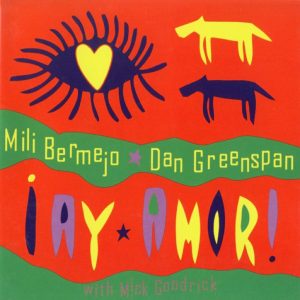
Deftly fusing her Latin heritage — her father was a Mexican composer and her mother an Argentinean singer and tango dancer — with a love and in-depth knowledge of jazz, Mili Bermejo had been performing for some time before her first release, 1992’s Ay Amor! Born in Buenos Aires and raised in Mexico City, Bermejo first studied composition at Mexico’s National School of Music and with noted Latin composer Julio Ernesto Estrada. Her time in college also brought her in touch with jazz, and she eventually relocated to Boston, MA, to study at the Berklee School of Music, where she would continue as a professor after graduating in 1984. With bassist (and husband) Dan Greenspan, she recorded Ay Amor! and the 1998 release Duo. Her Mili Bermejo Quartet released Casa Corazon in 1994 with contributions from Boston’s modern creative jazz ensemble Orange Then Blue. The following year’s release, Identidad, spanned the whole of Latin music in its arc of influences. In 2000, the Mili Bermejo Sexteto, featuring guitarist Claudio Ragazzi, brought the singer’s journey full circle with the release of Pienso el Sur on the Mexican Pentagrama record label. – AllMusic
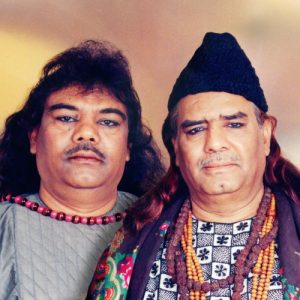
The Sabri Brothers, Haji Amjad Fareed Sabri and Haji Maqbool Ahmed Sabri, were taught music by their father, Ustad Haji Inayat Sen Sabri. The family claims descent from Mian Tansen, one of the greatest and most legendary Hindustani musicians of all time. (The musically gifted Tansen was a musician in the court of Akbar and is credited with miraculous powers of musicianship.)
Maqbool Ahmed Sabri formed his first party of qawwals in 1956, at the age of 11. Soon afterward, his elder brother (who had been singing with Kallan Khan’s qawwal and party) joined him and the Sabri Brothers proper came about. Their career was marked by brotherly squabbles followed by periods of each doing solo work. The duo created a body of recorded work, consistent in quality, but rather more traditional than Nusrat Fateh Ali Khan’s recorded work. Ghulam Farid Sabri’s funeral in Karachi in 1994 was attended by an estimated 40,000 mourners. Maqbool Ahmed Sabri carried the torch for the Sabri Brothers until his death in 2011.
Osadebe started his career when he was 23. He played with the Stephen Amache Band for awhile, then continued his career with the Central Dance Band. In 1964 he started his own band, Soundmakers International. Oasadebe spends most of his time playing highlife music; due to this he is considered to be one of the top highlife musicians. In 1981 he was awarded with a gold disc for the LP Onu Kwulonjo. By the mid-’80s, Osadebe was at the height of his career selling over 700,000 records with his hit album Osondi Owendi.
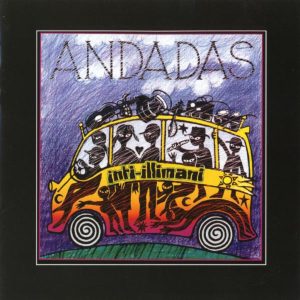
Inti-Illimani – pronounced “Inte-E-gee-mane”
In Ayamara dialect: Inti – “sun,” Illimani – a mountain near La Paz, Bolivia
For over three decades the music of Inti-Illimani has intoxicated audiences around the globe. Wedded in traditional Latin American roots and playing on more than 30 wind, string and percussion instruments, Inti-Illimani’s compositions are a treasure for the human spirit. Their mellifluous synthesis of instrumentals and vocals captures sacred places, people’s carnivals, daily lives, loves and pains that weave an extraordinary cultural mural.
Known for their open-minded musical approach, the “Intis” had a much different mission in mind when they met in the 1960’s at Santiago Technical University — to become engineers. Luckily for the world, their love of music encouraged their restless souls to explore the indigenous cultures of Chile, Peru, Bolivia, Ecuador and Argentina. In some of the poorest, purest and most ancient cultures they discovered Andean music and in a sense their roots. Inti-Illimani’s music became Latin America’s visceral link between pueblo and people, vivified in Nueva Canción.
In 1973, Chilean President Salvador Allende was deposed while Inti-Illimani was on tour in Europe. The young musicians found themselves without patria or passport. Italy became their home for the next 14 years. In 1988, they were warmly welcomed back to Chile, moving home permanently in 1990. Inti-Illimani became, and remains, South America’s ambassadors of human expression. Their unique sound – forged with passion and poetry – is a mantra for peace in the world and within ourselves.
They have appeared on Amnesty International stages with Peter Gabriel , Bruce Springsteen, Mercedes Sosa, Sting, and Wynton Marsalis and at benefit concerts for the Victor Jara Foundation (London, Dortmund, Glasgow) with Peter Gabriel, Paco Peña, John Williams, Emma Thompson, Karen Matheson, Maria Farantouri, Salsa Celtica, and the Rambert Dance Company.
Jorge Coulon, a founding member, in an interview stated: “We have never been so political that it was propaganda. We are not a political group in that sense, but we have always been politically engaged. We have a concept of society and about the relationships between human beings, and we try to translate our ideas into our sound, not to be part of one political party or another but in the sense to bring about a better world.”
In 2000, Inti-Illimani signed a worldwide license agreement with Warner Brothers Latin America. To date Warner has released The Best of Inti-Illimani: 1973-1987, Inti-Illimani performs Victor Jara (a selection of works by the late Chilean composer, singer, poet, actor and close friend of the Intis) and Inti-Illimani: Antologia en vivo (live tracks spanning 33 years). Xenophile Records also released The Best of Inti-Illimani (XENO4055) with works from the four titles they did with Xenophile during the 1990s.
During 2001, Inti-Illimani toured throughout South America, Italy, Spain, Mexico and North America, ending the year with a tour of Chile and Argentina with John Williams and Paco Peña. Inti-Illimani continues to be the most nominated group at the annual Entertainment Journalist Association Awards Ceremony in Santiago.
Recently Inti-Illimani has welcomed three younger musicians into the fold — Manuel Merino, Juan Flores and Christian Gonzalez — and they’ve brought a new energy and passion into the group. This line-up debuted in America in 2002 to great acclaim, and shortly thereafter went into studio in Santiago, Chile, to record.
In April 2003, the group released Lugares Comunes (XENO4056) “common places” on Xenophile Records, their first studio album in five years. The album is alive with a spirit of musical resurgence and rejuvenation for the band. Now in its 35th season, Inti-Illimani’s music, influenced by their numerous encounters with other cultures, has illustriously evolved with powerful poetry and provocative instrumental textures.
Horacio Duran (charango, cuatro, percussion, vocals)
Juan Flores (bass, cajon, charango, cuatro, guitar, quena, vocals)
Manuel Meriño (bass, guitar, tiple, vocals)
Christian González (bass, cajon, flutes, quena, siku, vocals, zampona)
Efren Manuel Viera (bongo, clarinet, congas, saxophone, timbales, vocals)
Watch
I.K. Dairo is the undisputed father of modern Juju, Nigeria’s exuberant folk music. Dairo was Nigeria’s first Juju superstar and an overwhelming influence on two generations of musicians, including King Sunny Ade and Chief Ebenezer Obey.
Forming his first band (the Morningstar Orchestra) over 40 years ago, Dairo forged a modern pop style of sweeping rhythms and hook-filled melodies from Juju’s folksy Yoruba origins, introducing the talking drum and accordion and making the guitar the staple of his new musical hybrid. His band — the Blue Spots — could soon be heard throughout Nigeria, at weddings, socials, and on the radio, driving audiences to their feet dancing to the irresistible rhythms.
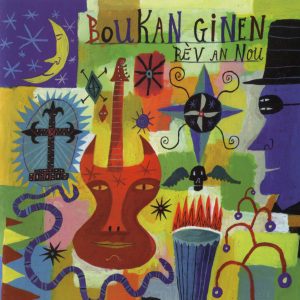
Boukan Ginen stands for “Fire from Africa” in Haitian creole. Founded in 1990, the 10-member group is at the forefront of the mizik rasin (roots music) movement that has captivated Haiti both musically and politically. Fronted by former Boukman Eksperyan’s lead singer, Eddie Francois (called “Haiti’s best male vocalist” by the Village Voice), Boukan Ginen plays a blend of powerful rara rhythms and group chanting of voodoo-inspired passion. The battery of hand-drummers rumble with African and reggae spirit.
Boukan Ginen won the prize for best carnival song at the 1991 Carnival in Port-au-Prince, for their performance of “Pale Pale W”, a song later released on their debut album, Jou a Rive. The song title means “talk” and includes lyrics widely interpreted as supporting the presidency of Jean-Bertrand Aristide. The band’s music was suppressed by the military authority of the junta led by Raoul Cadras that ruled the country from 1991 to 1994. In 1994, Boukan Ginen became the third Hatian musical group to receive the Prix DAcouverte from Radio France International.
Watch
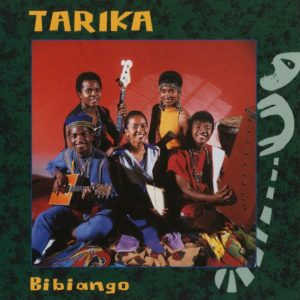
Tarika is a groundbreaking group on every level: a world music ensemble fronted by sisters Hanitra and Noro, a folk group with the drive and intensity of a rock band, and a Malagasy group that cross blends regional musical styles, instruments, and rhythms. Tarika has, in many was, become synonymous with the music of Madagascar.
“Not since the days of Bob Marley has social commentary come wrapped in so many seductive colours,” wrote the UK’s Sunday Times. Tarika is known for combining political subject matter with accessible, infectious dance music. Time Magazine voted Tarika one of the top ten best World Bands alongside U2, Ziggy Marley, and Radiohead, and is considered to be Madagascar’s most successful musical export.
After spending the 1990s on the world music festival circuit, Tarika took a break before coming back as Tarika Bé. Tarika’s discography includes Xenophile releases Bibiango (1994), Avelo (1997), and Son Egal (1997).
Watch
One of the foremost exponents of the Afro-Latin genre, four-time Grammy nominee John Santos is a world-class percussionist, historian, producer, composer, author, vocalist, lecturer, and instructor. Celebrated for his innovation in the combination of traditional Afro-Latin music and contemporary Jazz, the native San Franciscan has worked with everyone from Santana to Dizzy Gillespie and Tito Puente.
Acknowledged as one of the most important writers, historians, and teachers of Afro-Latin and Jazz music, Santos is a member of the Latin Jazz Advisory Committee of the Smithsonian Institution, and since the early 1970s, he has given clinics, workshops and lectures throughout North and South Americas and Europe. Respected as a record and event producer as well as a multi-percussionist and recording artist, Santos’ credits effectively span the Afro-Latin and Latin Jazz genres.
From 1985-2006, Santos founded and directed the Grammy-nominated Machete Ensemble, the superlative Latin Jazz band responsible for nine highly acclaimed records. Since, Santos has worked and recorded with the Latin Jazz Quintet.
Watch
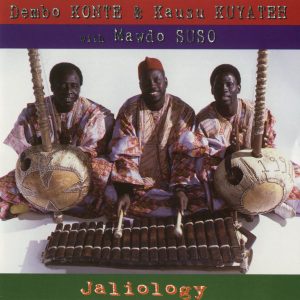
Kora player Dembo Konte is one of Gambia’s most prominent musical exports, and has entranced worldwide audiences since 1987 with the flowing, entrancing melodies of his traditional African harp-lute. The descendant of the great Gambian kora player Alhaji Bai Konte, he has been featured on several recordings from British band 3 Mustaphas 3’s Jail Roll (1990) to the all-star roots dance band Tiger Moth’s Mothballs Plus (Weekend Beatniks, 2004).
In 1989, Konte teamed up with kora great Kausu Kuyateh and balafon (rosewood xylophone) legend Mawdo Suso to create Jailology, (Xenophile). Described by All Music Guide’s John Storm Roberts as “a capsule presentation of the Mandinka culture. It is a collection of songs of praise, remorse, politics and life. It is a journey well worth taking,”
Named for the Haitian god of rain, the Swedish band Simbi, passionately interprets the music and meaning of Haitian and Creole world-beat with funk, rock, and jazz.
The 8-piece Vodou-Roots group was founded in the late 1980s after saxophonist/percussionist/vocalist Sten Kdllman visited Haiti with a study program centered on Creole and Haitian culture. There, Kdllman became fascinated with Vodou rhythms, traditions, and rituals, and upon his return to Sweden, he assembled well-known and respected rock, jazz and folk musicians on the Swedish music scene to create Simbi.
Simbi’s first album, Vodou Beat (1992) was released in the US through Green Linnet/ Xenophile Records in 1995. In 1997, the band was featured on the soundtrack to the movie, The Big Easy.