
“Sparsely accompanied fiddle music has rarely sounded so complete and so essential.” – Colin Harper, Q Magazine
Martin Hayes epitomizes the fiddle music of County Clare for many people. He started playing when he was seven years old and, by the age of thirteen, was touring with the Tulla Ceili Band, arguably the most revered and famous ceili band in Ireland at the time which was led by his father, PJ Hayes. Martin was also entering national competitions and winning them. By the age of twenty he had won every available competition in the country.
The music scene in East County Clare in the 1970’s was full of fine fiddlers, and Martin’s locality near the village of Feakle was home to many of them. In addition to PJ Hayes, Paddy Canny, Martin Rochford, Francie Donnellan, Vincent Griffin and Martin Woods all were a great influence on the young musician. The gentle contemplative style of these fiddlers molded Martin at an impressionable age, and by the time he left school he was playing to the approval of musicians thirty years older and more. It is a rare thing to have such depth and clarity of understanding in one so young, but Martin Hayes seemed to feel the music of his home place and to hear what older players were trying to express.
When Martin left Clare for Chicago in the 1980’s he became immersed in the diversity of musical styles that the city had to offer. It was also in Chicago where Martin met his current musical partner, Dennis Cahill. With several other musicians, they formed an electric/Irish/rock fusion band called Midnight Court, after the poem by the eighteenth century Clareman, Brian Merriman. After three years dedicated to the freedom of musical experimentation and exploration, Martin was drawn back to the music of his roots with new insights and a deeper confidence. He headed for Seattle in the 1990’s and pursued a new path playing a pure and distilled version of the music he had grown up with; a version built on universal musical principles that could now find its place in the wider world of music.
The 1993 recording, Martin Hayes was greeted by widespread critical acclaim, which garnered Martin the National Entertainment Award (the Irish Grammies) and the Hot Press Heineken Award. His second album, Under the Moon, released in 1995, continued to build on the success of the first, attracting an international following.
For Martin, the music spoke to him and inspired him. He constantly sought to express that inspiration and to convey the same musical message as generations of musicians before him. With Dennis Cahill’s understated guitar outlining and intensifying that message, the duo touched audiences across the world. The Lonesome Touch, released in 1997, reached out to the Irish music community and beyond. Hayes and Cahill became more adventurous, more empathic, more attuned to each other, and more able to stretch the music while remaining true to its essential qualities.
Following international festivals, concert tours, television spots and awards ceremonies, Martin and Dennis released Live in Seattle in 1999. Their live sound had become legendary: tunes which never ended, sets which started in one place and finished somewhere totally different. Recorded at the Tractor Tavern, the album featured as its centerpiece one medley lasting almost thirty minutes.
The duo’s new album, Welcome Here Again, is a fresh departure; eighteen tracks and not one of them over seven minutes, but with that same burning intensity and depth of emotion. It used to be common for Irish musicians to record one tune at a time, to make each one a self-contained masterpiece. The new album revives this tradition. The playing of Martin Hayes and Dennis Cahill renders the essence of the tunes, revealed in their purest form, accessible and appealing to all. “The Dear Irish Boy” is one such track. “P Joe’s Reel” is another. The mesmeric rhythms, the tantalizing slow release of melody, the extra tone from viola or tuned-down fiddle, all of that and more is on this album. After eight years, Hayes and Cahill are indeed Welcome Here Again.
Quotes From the Press
“A Celtic complement to Steve Reich’s quartets or Miles Davis’s ’Sketches of Spain.” – The New York Times
“Hayes has one of the most ravishing violin styles in all of Celtic music…the vocal quality of his tone brings an incomparable feeling of warmth to everything he plays. Cahill’s gentle, supportive accompaniment adds precisely the right touch.” – Los Angeles Times
“Together they create a music filled with calm and silence, the likes of which you’ve never heard before. Except, perhaps, in brief snatches of a long forgotten dream.” – Time Out, London
“Martin Hayes…the most important individual musician in Ireland right now.” – Hot Press, Ireland
“There’s no more impressive partnership in Irish instrumental music today than Martin Hayes & Dennis Cahill.” – The Irish Echo
“…maddeningly slow and unbearably beautiful, with an approach so radical it sounds perfectly true to the tradition.” – Acoustic Guitar
“Fiddler Martin Hayes wielded his bow with such an exquisite balance of sweetness and sinew, delicacy and fire, graveness and mischief you just didn’t want him to stop…Simply the loveliest fiddle music I’ve heard.” – Scotland on Sunday
“Hayes redefines your concept of excellence and reveals levels of beauty and artistry that previously hadn’t existed in your frame of reference.” – The Sydney Morning Herald, Australia
“Ireland’s answer to hot young American fiddler Mark O’Connor.” – Washington City Paper
“Hayes weaves seemingly magical spells over his audience, which ride with every curve of the bow as he gently shifts moods, styles and nuances. Dennis Cahill’s symbiotic guitar accompaniment is a crucial foil for Hayes’ deliciously subtle displays of charming brilliance.” – Folk Roots, UK

I.K. Dairo is the undisputed father of modern Juju, Nigeria’s exuberant folk music. Dairo was Nigeria’s first Juju superstar and an overwhelming influence on two generations of musicians, including King Sunny Ade and Chief Ebenezer Obey.
Forming his first band (the Morningstar Orchestra) over 40 years ago, Dairo forged a modern pop style of sweeping rhythms and hook-filled melodies from Juju’s folksy Yoruba origins, introducing the talking drum and accordion and making the guitar the staple of his new musical hybrid. His band — the Blue Spots — could soon be heard throughout Nigeria, at weddings, socials, and on the radio, driving audiences to their feet dancing to the irresistible rhythms.
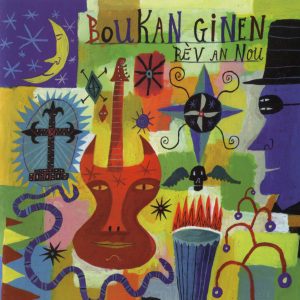
Boukan Ginen stands for “Fire from Africa” in Haitian creole. Founded in 1990, the 10-member group is at the forefront of the mizik rasin (roots music) movement that has captivated Haiti both musically and politically. Fronted by former Boukman Eksperyan’s lead singer, Eddie Francois (called “Haiti’s best male vocalist” by the Village Voice), Boukan Ginen plays a blend of powerful rara rhythms and group chanting of voodoo-inspired passion. The battery of hand-drummers rumble with African and reggae spirit.
Boukan Ginen won the prize for best carnival song at the 1991 Carnival in Port-au-Prince, for their performance of “Pale Pale W”, a song later released on their debut album, Jou a Rive. The song title means “talk” and includes lyrics widely interpreted as supporting the presidency of Jean-Bertrand Aristide. The band’s music was suppressed by the military authority of the junta led by Raoul Cadras that ruled the country from 1991 to 1994. In 1994, Boukan Ginen became the third Hatian musical group to receive the Prix DAcouverte from Radio France International.
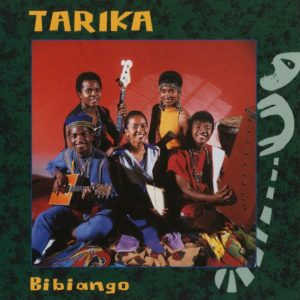
Tarika is a groundbreaking group on every level: a world music ensemble fronted by sisters Hanitra and Noro, a folk group with the drive and intensity of a rock band, and a Malagasy group that cross blends regional musical styles, instruments, and rhythms. Tarika has, in many was, become synonymous with the music of Madagascar.
“Not since the days of Bob Marley has social commentary come wrapped in so many seductive colours,” wrote the UK’s Sunday Times. Tarika is known for combining political subject matter with accessible, infectious dance music. Time Magazine voted Tarika one of the top ten best World Bands alongside U2, Ziggy Marley, and Radiohead, and is considered to be Madagascar’s most successful musical export.
After spending the 1990s on the world music festival circuit, Tarika took a break before coming back as Tarika Bé. Tarika’s discography includes Xenophile releases Bibiango (1994), Avelo (1997), and Son Egal (1997).
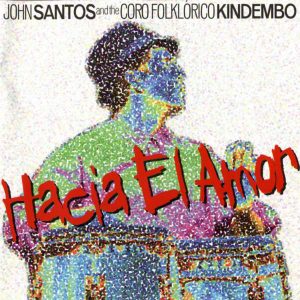
One of the foremost exponents of the Afro-Latin genre, four-time Grammy nominee John Santos is a world-class percussionist, historian, producer, composer, author, vocalist, lecturer, and instructor. Celebrated for his innovation in the combination of traditional Afro-Latin music and contemporary Jazz, the native San Franciscan has worked with everyone from Santana to Dizzy Gillespie and Tito Puente.
Acknowledged as one of the most important writers, historians, and teachers of Afro-Latin and Jazz music, Santos is a member of the Latin Jazz Advisory Committee of the Smithsonian Institution, and since the early 1970s, he has given clinics, workshops and lectures throughout North and South Americas and Europe. Respected as a record and event producer as well as a multi-percussionist and recording artist, Santos’ credits effectively span the Afro-Latin and Latin Jazz genres.
From 1985-2006, Santos founded and directed the Grammy-nominated Machete Ensemble, the superlative Latin Jazz band responsible for nine highly acclaimed records. Since, Santos has worked and recorded with the Latin Jazz Quintet.

Alter Ego is comprised of two former members of the French/Breton group, Ad Vielle Que Pourra; Alain Leroux and Jean-Louis Cros. Both musicians sing and play several different instruments — classically trained Leroux focuses on mandocello, bouzouki and fiddle, while Cros displays a variety of cultural influences in his playing on acoustic, electric and bass guitars, drawing from classical, jazz, blues, bossa-nova, Renaissance and Celtic styles.
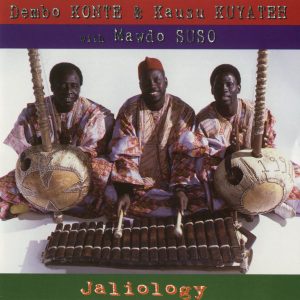
Kora player Dembo Konte is one of Gambia’s most prominent musical exports, and has entranced worldwide audiences since 1987 with the flowing, entrancing melodies of his traditional African harp-lute. The descendant of the great Gambian kora player Alhaji Bai Konte, he has been featured on several recordings from British band 3 Mustaphas 3’s Jail Roll (1990) to the all-star roots dance band Tiger Moth’s Mothballs Plus (Weekend Beatniks, 2004).
In 1989, Konte teamed up with kora great Kausu Kuyateh and balafon (rosewood xylophone) legend Mawdo Suso to create Jailology, (Xenophile). Described by All Music Guide’s John Storm Roberts as “a capsule presentation of the Mandinka culture. It is a collection of songs of praise, remorse, politics and life. It is a journey well worth taking,”
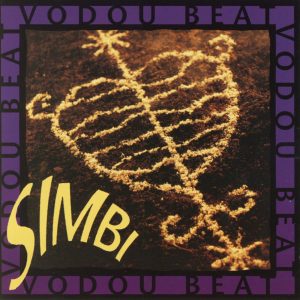
Named for the Haitian god of rain, the Swedish band Simbi, passionately interprets the music and meaning of Haitian and Creole world-beat with funk, rock, and jazz.
The 8-piece Vodou-Roots group was founded in the late 1980s after saxophonist/percussionist/vocalist Sten Kdllman visited Haiti with a study program centered on Creole and Haitian culture. There, Kdllman became fascinated with Vodou rhythms, traditions, and rituals, and upon his return to Sweden, he assembled well-known and respected rock, jazz and folk musicians on the Swedish music scene to create Simbi.
Simbi’s first album, Vodou Beat (1992) was released in the US through Green Linnet/ Xenophile Records in 1995. In 1997, the band was featured on the soundtrack to the movie, The Big Easy.
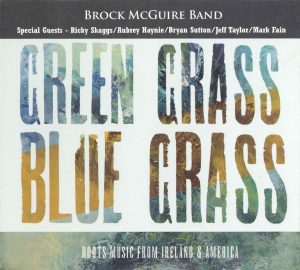
Passion and precision, authenticity and diversity: these are the hallmarks of Ireland’s traditional music quintet, The Brock Mcguire Band. They are steeped in tradition and perform it with abiding respect and rousing creativity. The band’s tight, tenacious blend of instruments often reaches fever pitch on stage, and their repertoire runs wide and deep, emphasizing mostly Irish music but also sprinkling in exciting arrangements of Shetland, French-Canadian, and other Celtic traditions.
Founding members button accordionist Paul Brock and fiddler Manus McGuire are two of Ireland’s most celebrated traditional musicians, and have been at the forefront of Irish music for many years through their joint work with the group Moving Cloud. Manus is also a founding member of Buttons & Bows, and both bands, ranking among Ireland’s finest, have helped to introduce international audiences to the virtuosity of their playing.
A multiple All-Ireland champion born in Athlone, County Westmeath, and now residing in Ennis, County Clare, Paul has many albums to his credit, including the classic Omós do Joe Cooley with fiddler Frankie Gavin, and his solo album Mo Cairdín called “a master piece of accordion playing” by the Rough Guide to Irish music, 2001. Manus was raised in Sligo Town and now lives in East Clare. His solo album Saffron and Blue was placed in many overseas top-ten music polls and was also named best album of 2000-and Manus, best male musician of the same year-by the Irish American News.
Performing with the Brock McGuire Band are two highly-rated musicians on the traditional music scene: young Galway player Enda Scahill, a five-time All-Ireland champion on tenor banjo and a senior All-Ireland champion on mandolin, and his brother Fergal Scahill, a superb multi- instrumentalist who has an all-Ireland senior fiddle title to his credit and who drives the rhythm section of the band on guitar and keyboards.
Manus McGuire
Growing up in Sligo in the 1960s when fiddle music had regained popularity in its native home, the Northwest of Ireland, Manus McGuire was ideally placed to carry on a tradition made legend by fiddlers Michael Coleman, James Morrison, and Paddy Killoran thirty years previously. From an early age, he learned various dance tunes by his father’s knee and followed his older brother, Seamus, into the national traditional music arena that was steadily gathering momentum. In 1970, at the young age of 14, Manus won Sligo’s prestigious Fiddler of Dooney competition. Since then, he has toured extensively in North America and Canada.
Manus has recorded eight albums, including The Humours of Lisadell (Folk Legacy, 1980), and Carousel (Gael Linn, 1984),with Seamus; Buttons & Bows (Green Linnet, 1983), First month of Summer (Green Linnet, 1987) and Grace Notes (Gael Linn, 1991), all with the group Buttons & Bows; Moving Cloud (Green Linnet, 1994) and Foxglove (Green Linnet, 1997), with the group Moving Cloud; and a solo debut, Saffron & Blue (Green Linnet, 2000) This last recording was placed in the Top Ten polls of the Boston Globe and Irish Echo newspapers. It was also named Best Album of 2000–and Manus, Best Male Musician of the same year–by the Irish American News.

Celtophile [kelt-o-fī(-ə)le] : One who is obsessed with the beauty and imagery conjured up by the music that emanates
from the “auld sod”.
(Alt) : A person of rarified taste in Celtic music of all forms (no apologies necessary!).
The Compass Records Group is proud to present the CELTOPHILE collection. Drawn from the vast Green Linnet, Compass Records, and Mulligan Records catalogs, and spanning the breadth of traditional music from Ireland and the British Isles, these CDs are thematically organized and packaged and offered at a special value price. A unique and varied collection, CELTOPHILE is a welcome addition to the music collections of novices and fans alike.
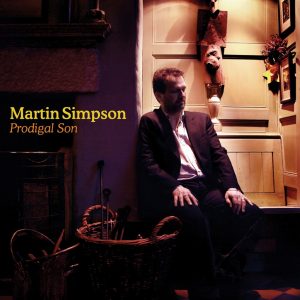
“A guitar god in the US, Simpson has been blending folk and country blues for four decades. Danny Thompson and Radiohead’s Philip Selway are among his helpers on this tasty mix of trad and original material.” – Q Magazine
“A very different animal to Prodigal Son, but in its own way, equally formidable. He sweeps from down’n’dirty to tender reflection in the blink of an eye.” – MOJO
“Martin Simpson returns with an album that confidently walks a tightrope over the gulf between tradition and contemporary songwriting—this is folk at its finest.” – Sunday Mercury
“His performances elicit powerful emotions and subtle, understated beauty.” – Guitar Player Magazine
English folk singer and guitarist Martin Simpson’s last album Prodigal Son was a universally acclaimed, career high for the five time BBC Folk Award winner. His follow up release True Stories is even better. The album features some of England’s finest musicians including bass legend Danny Thompson, Radiohead drummer Philip Selway, pedal steel legend BJ Cole, Bellowhead frontman Jon Boden and many others. The tracks are evenly split between traditional tunes and Martin’s original compositions. Add this to the superb guitar work and vocals from Simpson and you have yet another exceptional disc from this most celebrated British folk icon.
Like the best musicians, Martin Simpson deploys a control of pace and dynamics to his playing that touches the heart, regardless of whether the listener has a bit of Lincolnshire, Mississippi or Ganges beneath their manicured or careworn nails. Martin’s career has included collaborations on stage and in the studio with Kelly Joe Phelps, Danu, Cara Dillon, David Lindley, Dick Gaughan and David Hidalgo (of Los Lobos). He’s a regular nominee at the BBC Radio 2 Folk Awards and was named Musician Of The Year in both 2002 and 2004 and won both Best Original Song for “Never Any Good” and Best Album for Prodigal Son in 2008.

On his debut solo album entitled Far From the Hills of Donegal, Oisin McAuley embraces the opportunity to express musical ideas in a manner that reflects his highly individual and progressive style of fiddle playing. “You’ll probably hear a lot of stuff that is not very traditional, that reaches a bit beyond that,” says McAuley, who has been a member of the award-winning band Danú since 2001. “Danu is known for being a traditional band, but playing music that reaches out from the traditional has been part of my life for a long time, longer than I’ve been with Danú.”
This collection of songs shows McAuley’s approach to tradition is an eclectic one. It begins with the many flavors of Donegal music, moving through Sligo to Brittany to Quebec, and back to Western Ireland. McAuley infuses his traditional musical styling with jazz, bluegrass, and classical.
McAuley grew up in a quiet, rural part of Western Ireland, speaking Irish as his primary language and honing his craft in the wide-ranging and experimental style of famed fiddle player John Doherty. “You’ll hear a lot of John Doherty on this record, both his music and his style,” McAuley says. “He mixed up and changed things a lot, so in a way it was easier for me to mix up different types of tunes.” On this project that mix includes Port Na Bpucai (or Tune of the Fairies), a piece that reaches back into the tradition, Swing and Tears from Breton composer and guitarist Gille Le Bigot, and a set including Paddy Fahey’s My Former Life/Paidin O’ Raifertaigh/The Rumors of a Dart. The last tune is McAuley’s own composition, as are several other pieces on the disc. “The Scottish or Irish tunes that you hear on there are ones that I’d picked up along the way, that are special to me, and ones that I hadn’t heard many other people play, except for the people they came from. I wanted to include some tunes that I had composed myself, too. That’s something I love to do,” McAuley says.
McAuley has been involved with music from an early age, starting with the fiddle when he was nine and living in Carrick County, Donegal. “My grandfather played the fiddle, and he’d often give bed and board to fiddlers, just to hear tunes in the house,” he recalled. Traditional music took a back seat to classical when McAuley moved to Belfast to earn a music degree at Queen’s University, and followed that with a series of gigs (including time with Cran and Stockton’s Wing), some teaching, and a year in Brittany playing with a band and learning tunes before later going on to join Danu. McAuley is now based in Boston, where the sounds and rhythms of bluegrass and newgrass, as well as his love for jazz, attract his ear and his interest in discovering new sounds. “I can never get enough tunes. I love Charlie Parker and Bill Evans and newgrass, too.”
McAuley is rooted and grounded in the West Ireland musical tradition, a tradition that is known for taking influences from other lands and building upon them. For McAuley, reaching beyond traditional Irish music is as much a part of preserving tradition as well as extending it. “There’s no doubt that part of me comes through,” he says. “And it was a great for me to get my ideas down the way I wanted to. It was very freeing for me.”
-->

