Throughout history, philosophers, politicians, thinkers, leaders, and artists ponder the same question. At one point, they all query, “Why are we here?” Michael Doucet offers what might be the answer…
“To have a good time,” he grins. “That’s why we’re here. It’s pretty simple when you break it down.”
The GRAMMY® Award-winning singer, songwriter, artist, founder of BeauSoleil avec Michael Doucet, National Endowment of the Arts Fellow, and Cajun legend crafts the quintessential Louisiana soundtrack to a good time on his new solo album, Lâcher Prise [Compass Records]. Joined by Sarah Quintana [vocals, guitar], Chad Viator [guitar], Chris French [bass], and Jim Kolacek [drums], he stirs up a sweet and simmering brew of Acadian tradition, swamp soul, and infectious grooves.
In many ways, the moniker embodies the spirit of these five musicians.
“In French, Lâcher Prise means ‘let go’,” Doucet explains. “It’s also a Buddhist term. When it came to making this music, it was just total freedom. The new songs were different from what I typically do, so we formed a group of great people and musicians. I’ve reached a point in my life and career where I can do whatever the hell I want to do. There’s freedom for everybody because of the mutual respect though.”
Fittingly, the seeds of the band can be traced back to Mardi Gras 2018. Ambling around the streets of New Orleans among friends, Michael found himself at a favorite local watering hole. Amidst the costumed crowd, “a girl in a pink wig and dress” struck up a conversation with him about everything from relationships to music. That girl happened to be Sarah.
Upon sharing some of her music, Michael arranged an informal jam session.
“We played, and it was just magic,” he recalls. “We did our first gig two weeks later. It was funny because when we met after the party, I didn’t even recognize her without the wig,” he laughs.
The new band, now known as Michael Doucet avec Lâcher Prise, recorded the ten songs comprising the debut in just three days at Dockside in Maurice, Louisiana—a hallowed studio that has hosted everyone from Dr. John to Allen Toussaint, and Rod Stewart to Arcade Fire. The triumvirate of Doucet, Viator, and Compass Records co-founder Garry West produced, and friends including Sarah Dugas [The Duhks], Reese Wynans [Stevie Ray Vaughan, Joe Bonamassa], and Jim Hoke [NRBQ] lent their respective talents to the end result.
Together, they tapped into a distinct and dynamic vibe evocative of the region.
“This isn’t necessarily Cajun music; it’s Southwest Louisiana music,” Doucet says. “This is music we like to play, and we have a lot of fun doing it. We let the magic happen. There was a total live feeling.”
The opener “Water, Water” coasts along on waves of fiddle and accordion before culminating on a hummable chant. Under this deluge of energy, the track tells an unbelievable story.
“We obviously have a problem with water in Louisiana,” he says. “About three years ago, there was a thunderstorm over Lafayette and the Parish, raining 24 inches in 24 hours. It flooded everything. I had to go rescue my daughter-in-law. When I came back, my friends got flooded. The chorus just came to me.”
Harnessing uncontainable energy, the group tracked Boozoo Chavis’ “Lula Lula Don’t You Go to Bingo” in just one take on the spot with its rollicking rhythms, vocal call-and-response, and Doucet’s spirited fiddle. Elsewhere, “Walkin’ On A Mardis Gras Day” strolls through a steady marching band beat as Michael’s deep delivery takes hold on what he describes as “one of the truest love songs I’ve ever written, in a way—not about losing or gaining love, but just being in love.”
“Bad Woman” integrates a Spanish flair as it paints a portrait of a fiery femme fatale. Then, there’s “Marie Catin.” Alternating between French verses and an English refrain, it nods to tradition as it transmits a relatable message, “You have me under your skin, so you can never forget me, but now I have you under my skin.” Everything culminates on “Cajun Gypsy.” A collaboration with Turtle Island Quartet, the instrumental illuminates both the virtuosity of the Quartet and the ‘Lâcher Prise’ spirit of Doucet’s fiddle.
The new band (an ancillary project to BeauSoleil avec Michael Doucet) reflects the spirit of its founder’s own legacy, while at the same time treading new territory. Throughout a career spanning four decades, dozens of albums, and hundreds upon hundreds of gigs, Michael has fueled the beating heart of Cajun music. Fronting BeauSoleil, he has received 12 GRAMMY® nominations, notched two wins, and made history as the “first Cajun band to win a GRAMMY®.” Along his musical journey Doucet has shared stages with the likes of Dr. John and Allen Toussaint, among others, and beyond legendary festival sets, the group appeared on the HBO series Treme and earned acclaim from The New York Times, NPR, The Boston Globe, and more. As a fifth generation Acadian, he remains a staunch historical advocate as well. The National Endowment of the Arts exalted his work with a prestigious National Heritage Fellowship, and United States Artists bestowed upon him the Berresford Prize/USA Fellowship in 2007.
“My aura, my life, and my music are wrapped up in this culture,” he says. “I want to lay a groundwork for young people to learn about it. The culture permeates me. That’s my philosophy. I’m being true and transparent.”
Lâcher Prise ultimately provides another avenue for the expression of his truth.
“Some of the record is cerebral, but it’s got a different feeling overall,” he leaves off. “All of the musicians are amazing. It’s not just my record; it’s ours. I have so much confidence in those guys and gal. Most of all, I hope everyone has as much fun listening to it as we did making it.”
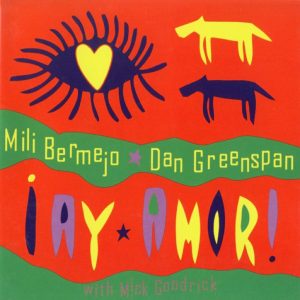
Deftly fusing her Latin heritage — her father was a Mexican composer and her mother an Argentinean singer and tango dancer — with a love and in-depth knowledge of jazz, Mili Bermejo had been performing for some time before her first release, 1992’s Ay Amor! Born in Buenos Aires and raised in Mexico City, Bermejo first studied composition at Mexico’s National School of Music and with noted Latin composer Julio Ernesto Estrada. Her time in college also brought her in touch with jazz, and she eventually relocated to Boston, MA, to study at the Berklee School of Music, where she would continue as a professor after graduating in 1984. With bassist (and husband) Dan Greenspan, she recorded Ay Amor! and the 1998 release Duo. Her Mili Bermejo Quartet released Casa Corazon in 1994 with contributions from Boston’s modern creative jazz ensemble Orange Then Blue. The following year’s release, Identidad, spanned the whole of Latin music in its arc of influences. In 2000, the Mili Bermejo Sexteto, featuring guitarist Claudio Ragazzi, brought the singer’s journey full circle with the release of Pienso el Sur on the Mexican Pentagrama record label. – AllMusic
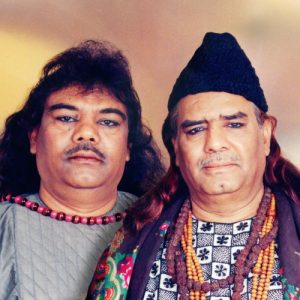
The Sabri Brothers, Haji Amjad Fareed Sabri and Haji Maqbool Ahmed Sabri, were taught music by their father, Ustad Haji Inayat Sen Sabri. The family claims descent from Mian Tansen, one of the greatest and most legendary Hindustani musicians of all time. (The musically gifted Tansen was a musician in the court of Akbar and is credited with miraculous powers of musicianship.)
Maqbool Ahmed Sabri formed his first party of qawwals in 1956, at the age of 11. Soon afterward, his elder brother (who had been singing with Kallan Khan’s qawwal and party) joined him and the Sabri Brothers proper came about. Their career was marked by brotherly squabbles followed by periods of each doing solo work. The duo created a body of recorded work, consistent in quality, but rather more traditional than Nusrat Fateh Ali Khan’s recorded work. Ghulam Farid Sabri’s funeral in Karachi in 1994 was attended by an estimated 40,000 mourners. Maqbool Ahmed Sabri carried the torch for the Sabri Brothers until his death in 2011.
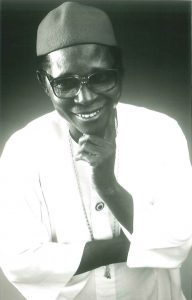
Osadebe started his career when he was 23. He played with the Stephen Amache Band for awhile, then continued his career with the Central Dance Band. In 1964 he started his own band, Soundmakers International. Oasadebe spends most of his time playing highlife music; due to this he is considered to be one of the top highlife musicians. In 1981 he was awarded with a gold disc for the LP Onu Kwulonjo. By the mid-’80s, Osadebe was at the height of his career selling over 700,000 records with his hit album Osondi Owendi.

I.K. Dairo is the undisputed father of modern Juju, Nigeria’s exuberant folk music. Dairo was Nigeria’s first Juju superstar and an overwhelming influence on two generations of musicians, including King Sunny Ade and Chief Ebenezer Obey.
Forming his first band (the Morningstar Orchestra) over 40 years ago, Dairo forged a modern pop style of sweeping rhythms and hook-filled melodies from Juju’s folksy Yoruba origins, introducing the talking drum and accordion and making the guitar the staple of his new musical hybrid. His band — the Blue Spots — could soon be heard throughout Nigeria, at weddings, socials, and on the radio, driving audiences to their feet dancing to the irresistible rhythms.

Belfast-born uilleann piper John McSherry and Detroit natives Tyler Duncan and Michael Shimmin have been dreaming of .the olllam. for the last decade. With a name inspired by the king’s own ollam bards of Irish lore, the trio wanted an ensemble that naturally represented their combined experiences in a multiplicity of styles. McSherry, one of the best uilleann pipers in the world and a founding member of legendary Irish group Lúnasa, has been dubbed “a true master” by Irish Music Magazine and is well known for his current work with his group At First Light as well as his ’90s stint with Donal Lunny’s Coolfin. Duncan and Shimmin have also been busy in the United States performing and recording with their award-winning Irish-jazz crossover group Millish with Duncan doing double-duty in the dance-rock group My Dear Disco/Ella Riot. It seemed that the right moment for collaboration between the three musicians would never present itself.
However, in February 2012 during the calm before the summer festival season, the trio finally wrote and recorded an original album together, overcoming the Atlantic divide by means of the internet — they rehearsed and composed live on Skype and built the tracks back and forth one part at a time between emails. The result, their eponymous debut .the olllam., available Sept. 25 on Compass Records, is lush with trance-like melodies, stunning instrumental virtuosity and a magical marriage of tradition and technology, finding the listener somewhere between Radiohead and Planxty with the ambient emotionalism of Nick Drake or Explosions in the Sky.
Simplicity is key for the trio. They wanted their musical ideas to mature organically in a controlled environment, rather than produce anything contrived or over-composed. It is their collective sense for arrangement—Duncan (uilleann pipes, whistles, guitar, Rhodes) and Shimmin (drums and percussion) both hold degrees in jazz performance, and the legendary McSherry (uilleann pipes and whistles) has performed and written with a wide variety of artists, from Ornette Coleman to Nanci Griffith—that gives the album its distinct style and form.
The trio’s approach to composition is unique in Irish music as well, foregoing the familiar jigs and reels. “We really wanted to investigate the melodies but focus on simplicity and memorability. Everything had a purpose with no excess,” comments Duncan. “Together we created a feeling of a narrative, each song is highly personal and tells a story. There are verses, pre-choruses and bridges instead of the traditional Irish tune forms.”
These 7 adventurous instrumental tracks are fully engaging, whether the rhythm section gradually adds and builds to a powerful climax as on “the belll” or energetic eighth note bass lines interplay with Duncan’s Rhodes piano and McSherry’s catchy melody as on “the follly of wisdom.” Subtle fuzz bass guitar from guest Joe Dart and stripped-down driving percussion of Shimmin compliment the complex and beautiful tone of both McSherry and Duncan. “Conceptually we took a more pop approach but really wanted to make sure it sounded totally organic at the same time. Basically, I was thinking more as a composer and less as a drummer,” comments Shimmin.
Mysterious and masterful as the legendary ollam Irish bards from which they draw their name, McSherry, Duncan and Shimmin have discovered a synergy within their diverse musical backgrounds – introducing a new Irish crossover group rife with creative brilliance and progressive appeal. Reflects McSherry, “I think we were all nicely surprised at how quickly and easily our ideas merged together and manifested into the music – everything seemed to fall into place right from the start. It was like we all knew instinctively that this was to be a special musical journey”

Cecilia Noël is passionate, flamboyant, exotic, and incredible talented. “Salsoul”, the genre Noël created to describe her sound, combines elements of salsa, soul, jazz, funk, and afro-cuban.
Originally from Lima, Perú, Noël’s career began at the age of eight with a starring role in a Perúvian television show called “El Tío Johnny.” As a teenager, Noël’s mother Menina Pereira sent her to Argentina and Germany to take voice, violin, and piano lessons. Upon returning, she sang and studied under the tutelage of famed Italian bandleader Carlo Berscia. Encouraged by the legendary Stan Getz to move to the US, Noël relocated to New York City and sang at the legendary Rainbow Room, and as a principal dancer with Jo Jo’s Dance Factory and with the legendary boy band Menudo.
Noël moved to Los Angeles in 1989, and, with her newly formed SalSoul band Cecilia Noël and The Wild Clams were signed to Epic records shortly thereafter.
A James Brown meets Pérez Prado band, Cecilia Noël And The Wild Clams quickly received attention for their explosive live shows and became one of the most powerful and entertaining live music acts in Los Angeles, and beyond, over the last 20 years.
This year of 2014, finds Cecilia about to release her new album “Havana Rocks” in August, recorded in Havana, Cuba. She is currently playing dates in LA and surrounding areas, with her new somewhat smaller band, with spectacular musicians hailing from Cuba, Puerto Rico and Venezuela.
Noël also performs and records with husband and former Men At Work frontman Colin Hay.

Coralie Clément was born into a family of musicians. Her father is a clarinet player and he brother Benjamin Biolay, also a singer, has written for Henri Salvador and wrote and produced her own debut, as well as its follow-up. Among her claimed inspirations are Françoise Hardy, Jane Birkin and Serge Gainsbourg. She recorded her first album while studying history at university. Clément sang the song “Dorénavant,” used as the theme of the film L’Idole by Samantha Lang, starring Leelee Sobieski as well as the song “Samba de mon cœur qui bat” used in the soundtrack of the movie Something’s Gotta Give starring Diane Keaton, Jack Nicholson, Amanda Peet, Keanu Reeves and Frances McDormand. She released her first album in 2001, Salle des Pas Perdus which was a collaborative effort between her and her brother. Her second album, Bye bye Beauté, was released in 2005 and took more of a pop spin.
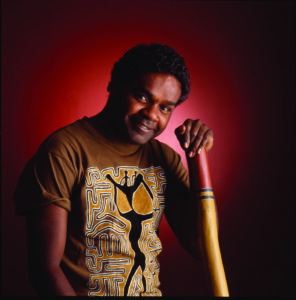 Alan Dargin was born and raised in an Aboriginal tribe in Australia’s northeast Arnhemland and is an internationally acclaimed didgeridoo player as well as having roles in a number of feature films. Dargin began studying the didgeridoo at age five. Dargin’s grandfather taught him how to play, passing on secret techniques which have been passed dow
Dargin’s primary didjeridu is over 100 years old and was given to him by his grandfather. It is made from the branch of a eucalyptus tree which is naturally hollowed out by ants that hatch under the bark and burrow into the wood. The didgeridoo is decorated with Aboriginal tribal markings and was originally used in tribal ceremonies to induce Dreamtime.
Dargin toured extensively in Australia and the US and has performed with the London Symphony Orchestra at the Royal Albert Hall. He toured Korea on behalf of the Australian Foreign Affairs Department. Alan appeared in over 30 feature films and earned a science degree from the University of Toronto.
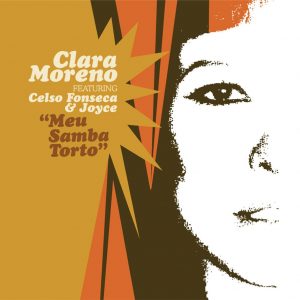
Clara Moreno is the daughter of the famous Brazilian singer/songwriter/guitarist Joyce and composer Nelson Angelo. Born in Brazil in 1971 Moreno recalls her early musical experiences with great fondness: “Every night my mother would rehearse and we use to go to all her concerts – I grew up listening to music from an early age.”
Moreno’s career began soon after she learned to talk, performing backing vocals in children’s choirs for artists such as Milton Nascimento, Egberto Gismonti, Joyce, Originais do Samba and Trem da Alegria amongst others. In 1989, aged 18, Moreno went to study music in France and it was in Paris where she both recorded her first single and first performed solo. She performed regularly at the Lionel Hampton Jazz Club beneath the Le Méridien Etoile hotel – one of the city’s most distinguished jazz venues. In 1991 at Paris’ Théâtre de La Ville, she appeared onstage alongside her mother. Moreno fondly remembers her time in Paris and on her new album, she pays tribute to Edith Piaf, “the French singer who thrilled me most”, with a wonderful cover of “Mon Manege A Moi”.
When she was 23, Moreno returned to Brazil in 1994 and launched straight into a music career, guesting on the track “Minha Gata Rita Lee” on Joyce’s CD Revendo Amigos. This followed guest appearances alongside other artists such as Nelson Ângelo and Robertinho Silva. Her first solo show in Brazil was in 1995 at the Au Bar in Rio in a tribute to the famous Brazilian singer Rita Lee. In 1996, Moreno opened for Paulinho Moska at the Garota de Ipanema park in Rio and recorded her eponymous debut CD.
In 1997, Moreno went to Japan where she appeared in the Gets Bossa Nova show in Tokyo, Japan. That same year she contributed a recording of “Só Danço Samba” for the tribute to Bossa Nova CD 40 Anos de Bossa Nova which solidified her standing as a Brazilian singer in her own right. Her third album Mutante was recorded in 1999, and picked up for worldwide distribution by UK based Timewarp Distribution. At this point, her name was brought to the attention of Brazilian music fans the world over.
2002 saw the release of Morena Bossa Nova – her fourth CD where she experimented with electronic music to create an album with a contemporary take on bossa nova. It was recorded while Moreno was pregnant with the child of producer Rodolfo Stroeter (the producer of Joyce’s most recent CDs Just a Little Bit Crazy and Rio Bahia). Morena Bossa Nova features the Norwegian keyboard player Bugge Weseltoff as well Teco Cardoso, Robertinho Silva & Nailor Proveta – all regular contributors to Joyce’s recent albums.
With Meu Samba Torto, Moreno felt the urge to strip things down and pay tribute to the musical heritage of the city she is from: “Bossa nova has always played a very important role in my life, and I decided to go for it with this CD and really search for the feeling of what it’s like to be a “carioca”. Having listened to this music all my life I had no trouble of thinking of songs to cover and my mother Joyce, suggested some nice songs, as did Celso. I feel that the album has a 60’s bossa nova feeling, which is great, but at the same time, the music that we have done is up to date and reflects a modern view through the roots of Brazilian music.”
Meu Samba Torto features a stellar line-up of Brazilian musicians including Moreno’s mother, the legendary Brazilian singer-songwriter Joyce, and the celebrated songwriter and guitarist Celso Fonseca. It’s Moreno’s most personal album yet and this is something she’s proud of: “The album has a certain level of spontaneity that I don’t think is very common these days. With the exception of the songs arranged by Joyce, the arrangements were all decided once we all arrived in the studio. Everything was recorded live and I was lucky to be blessed with the involvement of Celso Fonseca, Joyce, Tutty Moreno, Rodolfo Stroeter, Diego Figueiredo and Ricardo Mosca – all of them very creative and stylish musicians who helped create an end result of modern music yet steeped in tradition. The album was simply constructed around guitar/bass/drums and the idea was to bring a certain degree of intimacy between myself and the listener“.
Meu Samba Torto features two new compositions written especially for Moreno by Joyce (“Sabe Quem”) and Celso Fonseca (“Litorânea”). In fact with it’s “live” sound, Joyce’s influence runs through Meu Samba Torto. This was a challenge for Moreno: “I had never recorded a “live” album before yet as we began recording, I started to gain more and more self-confidence.” According to Moreno though, there are other amazing musicians besides Joyce who are influential artists on Meu Samba Torto: “João Gilberto is the greatest influence on this album – he is the main root of the cd. I have been listening to him all my life, but during the process of creating this album, I dived deeply into his mood and I recorded many of the songs using João Gilberto’s light – his inspiration was a gift to me”.
Vanguard of the new bossa nova movement, Celso Fonseca plays guitar and sings on three songs on the new album, and the blend of his and Moreno’s voice create some of the albums highlights. There are interpretations of classic bossa nova tracks such as “Moça Flor”, originally recorded by the Tamba Trio, “Vem Morena Vem”, from Jorge Ben’s debut album, and “Morena Boca de Ouro”, made famous by the one and only João Gilberto.
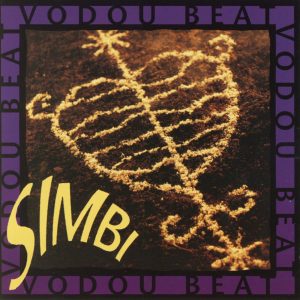
Named for the Haitian god of rain, the Swedish band Simbi, passionately interprets the music and meaning of Haitian and Creole world-beat with funk, rock, and jazz.
The 8-piece Vodou-Roots group was founded in the late 1980s after saxophonist/percussionist/vocalist Sten Kdllman visited Haiti with a study program centered on Creole and Haitian culture. There, Kdllman became fascinated with Vodou rhythms, traditions, and rituals, and upon his return to Sweden, he assembled well-known and respected rock, jazz and folk musicians on the Swedish music scene to create Simbi.
Simbi’s first album, Vodou Beat (1992) was released in the US through Green Linnet/ Xenophile Records in 1995. In 1997, the band was featured on the soundtrack to the movie, The Big Easy.
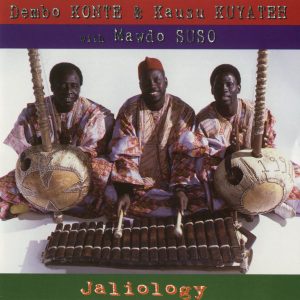
Kora player Dembo Konte is one of Gambia’s most prominent musical exports, and has entranced worldwide audiences since 1987 with the flowing, entrancing melodies of his traditional African harp-lute. The descendant of the great Gambian kora player Alhaji Bai Konte, he has been featured on several recordings from British band 3 Mustaphas 3’s Jail Roll (1990) to the all-star roots dance band Tiger Moth’s Mothballs Plus (Weekend Beatniks, 2004).
In 1989, Konte teamed up with kora great Kausu Kuyateh and balafon (rosewood xylophone) legend Mawdo Suso to create Jailology, (Xenophile). Described by All Music Guide’s John Storm Roberts as “a capsule presentation of the Mandinka culture. It is a collection of songs of praise, remorse, politics and life. It is a journey well worth taking,”
-->