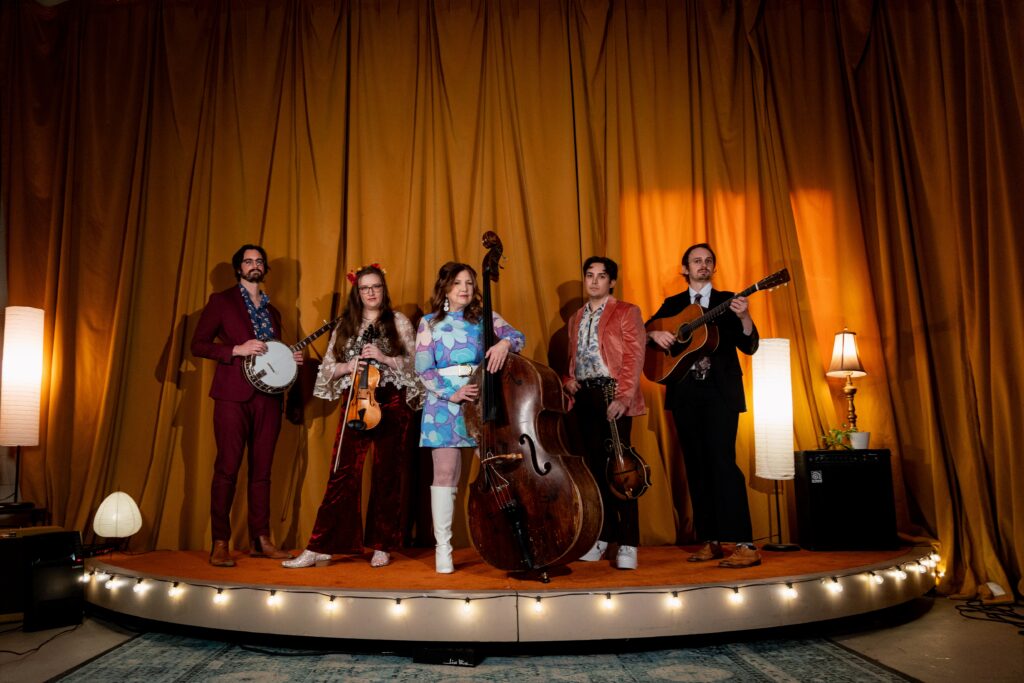
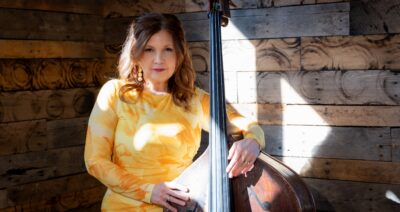
Missy Raines & Allegheny announce the release of their new album Love & Troubleon Compass Records. Working again with producer Alison Brown, the new album showcases a band at the peak of its powers on an inspired set which includes re-workings of traditional songs, contemporary covers and Missy Raines’ originals.
Following on the heels of 2024’s Highlander, the new project firmly establishes Missy Raines & Allegheny as one of the most vibrant bands on the bluegrass scene. Talking about the new project, Missy says: “We had lots of shows under our belt and there was an overwhelming feeling of connection you can only get from a lot of time on stage together. I knew I wanted to try and capture the magic again and I think we did.”
Love & Trouble opens with a driving trio of banjo, fiddle and mandolin on “Yanceyville Jail,” which Missy wrote about a true event. She recalls: “At a bluegrass festival in the 70’s, I was in the audience when the promoter, Carlton Haney, came out on stage to address the crowd. In his very thick North Carolina accent, Carlton said, ‘Now I know that you folks are looking forward to hearing Jimmy Martin tonight. But you’re not gonna hear Jimmy sing tonight cause Jimmy’s gonna spend the night in the Yanceyville jail.’ I was a kid but I was old enough to know this wasn’t a good day in the life of a storied entertainer. So I decided to write a song to tell a version of what might have been going through Jimmy Martin’s head that day.”
From the traditionally-influenced opener, the album segues into “Claude Allen,” a veritable traditional Appalachian ballad that the band discovered on a search through the Library of Congress archives. With Missy on lead vocals, each of the players shines in their ability to instrumentally color this tale of love gone wrong. Fiddler/vocalist Ellie Hakanson is featured on the Hazel Dickens classic “Scraps from Your Table,” a crowd pleaser from the band’s live shows and an homage to Dickens’ 100th birthday this year. And, mandolinist Tristan Scroggins steps into the vocal spotlight on “Future on Ice,” a classic country song recorded by Jimmy Martin more than 50 years ago about drowning the sorrows of unrequited love, featuring special guest Deanie Richardson (Sister Sadie) on fiddle.
The album’s first single, “Anywhere the Wind Blows,” was culled from the repertoire of The Good Ole Persons and penned by Kathy Kallick. Kallick and Laurie Lewis join Missy and Ellie on lead vocal and harmony duties on this driving re-arrangement. Missy comments: “Laurie and Kathy were among the first women to front their own bands and write songs and have influenced generations of musicians including both Ellie and me.”
Love & Trouble closes on the Earl Klugh instrumental “Vonetta,” a staple of the band’s live performances, which gives banjoist Eli Gilbert, guitarist Ben Garnett and the rest of the members a chance to showcase their instrumental versatility on an arrangement that reflects the influences of new acoustic pioneers Tony Rice and David Grisman.
Taken as a whole, Love & Trouble is a strong musical statement from a band at the top of its game. Missy Raines & Allegheny show the possibilities for traditional bluegrass in a contemporary context, expanding the genre’s roots even as they cultivate them. And the result is an ear-opening pleasure.
Love & Trouble is available now via Compass Records.
Two of today’s top Celtic musicians join forces for an album that’s both delightful and inventive. Mixing traditional and contemporary material with glorious ease, piper and whistler John McSherry and whistle and flute master Michael McGoldrick soar with the kind of breezy freshness that’s all too often missing from Irish music these days. That’s perhaps to be expected from people whose pedigrees include the likes of Lúnasa, Donal Lunny, and Afro Celt Sound System, but the pairing proves to be even more natural and joyful than anticipated, as the two push each other further on “Ornette’s Trip to Belfast,” for example, and caress the melody of “The Bloom of Youth.” With some sprightly, sympathetic backing that never becomes overpowering, the two are left in the spotlight–and they shine perfectly.
Coralie Clément was born into a family of musicians. Her father is a clarinet player and he brother Benjamin Biolay, also a singer, has written for Henri Salvador and wrote and produced her own debut, as well as its follow-up. Among her claimed inspirations are Françoise Hardy, Jane Birkin and Serge Gainsbourg. She recorded her first album while studying history at university. Clément sang the song “Dorénavant,” used as the theme of the film L’Idole by Samantha Lang, starring Leelee Sobieski as well as the song “Samba de mon cœur qui bat” used in the soundtrack of the movie Something’s Gotta Give starring Diane Keaton, Jack Nicholson, Amanda Peet, Keanu Reeves and Frances McDormand. She released her first album in 2001, Salle des Pas Perdus which was a collaborative effort between her and her brother. Her second album, Bye bye Beauté, was released in 2005 and took more of a pop spin.
“They called it music, in the church house and the fields /
It was honest, it was simple, and it helped the hard times heal”
Last year, Eric and Leigh Gibson found that lyric, from the title track of their new record They Called It Music, to be truer than they could have realized.
2012 was a year of triumph for the Gibsons, who took home the Entertainer of the Year trophy, bluegrass music’s highest honor, at the International Bluegrass Music Awards. But it was also a time of tragedy due to the death of their father, the duo’s biggest supporter, who passed away before he saw his boys recognized on bluegrass music’s biggest stage. Kelley Gibson, the last in a line of family farmers who had tended soil and raised dairy cattle since the Civil War, was adamant that his two sons not follow in his footsteps; he knew all too well the backbreaking labor and financial instability such a career entailed, especially in a town like Ellenburg Depot in upstate New York, where the climate is temperamental and the land ill-suited for growing much beyond hay for the herds.
When it comes to sustainability and stability, a career in music isn’t the first that comes to mind. But Eric and Leigh, despite being geographically removed from the genre’s Appalachian roots, have made a name for themselves in bluegrass over the past two decades, playing over 80 shows and festivals a year and gradually building a deeply dedicated, nationwide fan base with their spellbinding harmony singing, which can reach the high lonesome notes of Bill and Charlie Monroe and capture the tenderness of pop/country crooners the Everly Brothers.
They Called It Music, the Gibson Brothers’ third release for roots label Compass Records and the follow-up to 2011’s IBMA Album of the Year, Help My Brother, is their best yet, incorporating their varied influences–which range from Roy Acuff to Tom Petty & The Heartbreakers–and delivering gorgeous acoustic music with the finesse that only comes from decades of experience. They’ve always had an uncanny ability to blend the classic and the modern, a tradition that continues on this album. “Home on the River,” a spiritual song that’s approximately a century old—and was recorded by the Delmore Brothers decades before the Gibsons were born–fits seamlessly among well-written originals and covers of songs by contemporary artists like Mark Knopfler (“Daddy’s Gone to Knoxville”) and Shawn Camp and Loretta Lynn (“Dying for Someone to Live For”). “There are so many different flavors on this record,” Leigh says. “Every song has its own personality.”
While both Leigh and Eric have written extensively for their previous albums, as they were working on material for They Called It Music, the latter found a renewed passion for writing. “In the past, I’ve waited for inspiration, but, to me, if you’re going to call yourself a songwriter, you need to find time to write songs,” he explains. The time Eric found wasn’t always deliberate—the poignant album closer “Songbird’s Song” was written during a losing battle with insomnia while on tour in Europe—but the work he put into his craft paid off: the six songs he wrote or co-wrote for They Called It Music, including the title track,display a sharp eye for detail and, in the case of “Something Comin’ to Me,” which was written with Leigh and Shawn Camp a month after Kelley Gibson’s passing, heartbreaking emotional rawness.
The dozen songs on They Called It Music were specifically chosen to highlight the brothers’ hallmark: their sublime harmonies. “That’s always been our calling card,” says Eric, “But we wanted to accentuate it on this record.” “Home on the River” features close harmony singing throughout the entire song, and on rafter-rattlers like “Dusty Old World” and “Sundown and Sorrow,” the harmonies are so tight it’s hard to tell where one brother’s voice ends and the other’s begins.
The five-man band has honed their sound through hundreds of shows and thousands of miles. Mike Barber has played bass behind Eric’s banjo and Leigh‘s guitar for 20 years, so long that he’s affectionately nicknamed “the third Gibson Brother;” fiddler Clayton Campbell has been with them for eight, and the group’s newest member, Joe Walsh, recently celebrated his fourth anniversary as the band’s mandolin player. It’s a lineup that gets better with each performance, providing deft and tasteful backing for Leigh and Eric’s harmonies and occasionally tearing through a blistering bluegrass instrumental. They’re in sync onstage and in-studio – much of They Called It Music was recorded live at Compass Sound Studios in Nashville, capturing the exhilarating energy and impeccable musicianship that captivate the crowds who flock to their performances.
After a year of unimaginable highs and devastating lows, the Gibson Brothers continue to find strength in each other and in the harmonies they’ve honed since childhood. They’re a long way from the pastures of that Ellenburg Depot dairy farm, but They Called It Music sure feels like coming home.
Watch
Cecilia Noël is passionate, flamboyant, exotic, and incredible talented. “Salsoul”, the genre Noël created to describe her sound, combines elements of salsa, soul, jazz, funk, and afro-cuban.
Originally from Lima, Perú, Noël’s career began at the age of eight with a starring role in a Perúvian television show called “El Tío Johnny.” As a teenager, Noël’s mother Menina Pereira sent her to Argentina and Germany to take voice, violin, and piano lessons. Upon returning, she sang and studied under the tutelage of famed Italian bandleader Carlo Berscia. Encouraged by the legendary Stan Getz to move to the US, Noël relocated to New York City and sang at the legendary Rainbow Room, and as a principal dancer with Jo Jo’s Dance Factory and with the legendary boy band Menudo.
Noël moved to Los Angeles in 1989, and, with her newly formed SalSoul band Cecilia Noël and The Wild Clams were signed to Epic records shortly thereafter.
A James Brown meets Pérez Prado band, Cecilia Noël And The Wild Clams quickly received attention for their explosive live shows and became one of the most powerful and entertaining live music acts in Los Angeles, and beyond, over the last 20 years.
This year of 2014, finds Cecilia about to release her new album “Havana Rocks” in August, recorded in Havana, Cuba. She is currently playing dates in LA and surrounding areas, with her new somewhat smaller band, with spectacular musicians hailing from Cuba, Puerto Rico and Venezuela.
Noël also performs and records with husband and former Men At Work frontman Colin Hay.
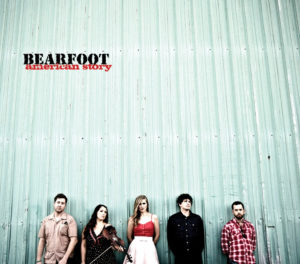
It’s a commonplace that change creates opportunities, but the principle was thoroughly—and successfully—tested by Alaska-by-way-of-Nashville’s Bearfoot last year, when original members Angela Oudean and Jason Norris found themselves presiding over a prolonged period of shifting personnel.Yet the cliché proved true in the end when the pair recruited Todd Grebe, another Alaska-to-Nashville transplant, Nora Jane Struthers, a rising young singer/songwriter andone of her bandmates, P. J. George, to create a renewed ensemble full of energy and creativity.And now, with the release of American Story (available Sept 27), the group’s latest effort for Compass Records, it’s plain to see that the changes were little more than a blessing in disguise.
Following the success of Bearfoot’s 2009 Compass debut, Doors And Windows, which debuted at # 1 on the Billboard Bluegrass chart, American Story introduces three new members, showing off both their distinctive voices and the impressive level of integration the quintet’s already achieved.Lead singer, songwriter and guitar player Nora Jane Struthers is the best known of the additions, having already released one stellar album highlighting her thoughtful songwriting and cool, clear voice—and having won the tough Telluride Bluegrass Festival Band Competition in 2010 with her Bootleggers, a group featuring the second new member of Bearfoot, bass player P. J. George.Rounding out the revamped lineup is guitarist/vocalist Todd Grebe, previously known for his work fronting the acoustic honky-tonkgroup Todd Grebe & Cold Country.And while the group claim that they’re still settling into their new sound, one listen to American Story offers compelling evidence that they’re being more modest than accurate.
With veteran producer/engineer Brent Truitt at the helm, Bearfoot hits the ground running on the new project with the Struthers-penned opener, “Tell Me A Story.”With its restrained prologue and keenly rhythmic body, the song dishes up a healthy serving of the band’s strong points: a winningly intimate lead vocal, tight harmonies, and an arrangement that weaves together a multiplicity of musical strands, from the string band and bluegrass music that made up Bearfoot’s earliest sounds to a unique take on the acoustic pop influences whirling around the group’s East Nashville home.“This song, and in some ways, this album, is really about escapism,” says Nora Jane.“We all have different ways of removing ourselves from reality, and I get myself lost in stories.”
From there, it’s a swift, satisfying run through a dazzling array of sounds and stories to the easy, good-time lope of Grebe’s closing “Mr. Moonshine.”Along the way, there are stops for hard-core bluegrass (“Midnight in Montana” with help from guest Charlie Cushman on banjo), a sly and sultry come-on (“When You’re Away,” written by the entire group), the poignant and ominous portrait of a trapped woman in “Eyes Cast Down” (written by Struthers and Claire Lynch) and much more—true stories and tall tales, but always with real people and real situations at their center.“I really connect with those lyrics,” Jason Norris says of “Feel Free” (written by Struthers and Tim O’Brien). “When Nora Jane first played it for us, I thought ‘Wow, that could actually have been written by me,’” he adds, and in truth, the sentiment could as easily come from a listener.
Adding to the project’s depth, Truitt and Bearfoot haven’t been afraid to explore new sonic territory, deftly blending the group’s acoustic instruments with touches of percussion, electric bass, accordion, banjo and more—many of them supplied by P. J. George, who serves as the group’s gifted utility man—yet always, each touch appears to underline, rather than draw attention from the songs.“I love that the entire album has a really rockin’ element to it, with more energy than we’ve ever had before,” Oudean observes—From start to finish, it’s an album of distinctive music that remains deeply authentic, true to the band’s rootsy origins even as it steps into more sophisticated musical territory.
American Story would be a strong collection coming from a veteran artist and it’s certainly true that the individual members of Bearfoot, old and new, are, while still young, genuine veterans.Yet it’s all the more impressive for being the product of a group that has yet to celebrate its first anniversary as an ensemble.That makes for a great story, and for an even greater appreciation of American Story, but as the members of Bearfoot would be the first to point out, in the end the only thing that matters is the music; here it is, and it’s mighty fine.
Watch
JOANIE MADDEN (flute, whistle) Daughter of button accordionist Joe Madden, was the first U.S.-born competitor to win the All-Ireland senior tin whistle title (1984) and is also an All-Ireland champion on flute. She has recorded a dozen albums with Cherish the Ladies, a group she co-founded in 1985 and still leads.
BRENDAN DOLAN (keyboards) Son of pianist Felix Dolan, is one of the most respected and inventive keyboardists in Irish music today. He appears on Brian Conway’s Consider the Source and Billy McComiskey’s Outside the Box, as well as Live at Mona’s with Patrick Ourceau and Eamon O’Leary and the Irish American music projects of Mick Moloney.
BILLY McCOMISKEY (accordion) The 1986 All-Ireland senior button accordion champion, has recorded three albums with the Irish Tradition (a trio featuring Brendan Mulvihill and Andy O’Brien) and two with Trian (a trio featuring Liz Carroll and Dáithí Sproule), as well as two solo CDs for Green Linnet / Compass.
BRIAN CONWAY (fiddle) The 1986 All-Ireland senior fiddle champion, has several recordings to his credit. They include two solo releases, First Through the Gate in 2002 and Consider the Source in 2008, and two trio albums, The Apple in Winter (with Tony DeMarco and Caesar Pacifici) in 1981 and A Tribute to Andy McGann (with Joe Burke and Felix Dolan) in 2000.
“These girls inspire and motivate each other, which has enabled them to create a common musical idiom that crosses national borders. They seem to glow with their joy in playing and respect each other immensely.” – Nordlys (Norway)
The String Sisters is a collaboration of the Celtic music world’s top female fiddlers; Annbjørg Lien from Norway, Catriona Macdonald from Shetland, Liz Carroll and Liz Knowles from the US, Mairead ni Mhaonaigh (Altan) from Ireland and Emma Härdelin from Sweden. Originally brought together for a special one-time show at Glasgow’s annual Celtic Connections festival to celebrate each of their region’s musical traditions, the results of this live recording contain some of the most brilliant fiddling heard in Celtic music. On Live, the String Sisters are joined by David Milligan (piano), Conrad Ivitsky (double bass), Tore Bruvoll (guitar) and James Mackintosh (drums).
“Jeremy Kittel has already established himself as a world class fiddler.” – SingOut!
“Jeremy is just too damn young to play as well as he does.” – Fiddler Magazine
“We’d call him a rising star, but he’s clearly already risen.” – Detroit Free Press
Jeremy Kittel is at the forefront of a new breed of fiddlers and violinists who easily navigate between a multitude of musical styles and traditions. Fluidly mastering this rich musical heritage, he also breaks exciting new ground while helping to redefine the role of his instrument.
Currently touring internationally with his name-sake group, the Jeremy Kittel Band,he leads audiences into exciting new-acoustic music territory. He also maintains an active schedule of collaborations with some of today’s most innovative and influential artists, from genres diverse as folk, jazz, classical, and pop music. Recently completing a five-year position as a full-time member of the Grammy-winning Turtle Island Quartet, he has also toured and recorded with such musical giants as Mark O’Connor, Bela Fleck, Edgar Meyer, Chris Thile, Paquito D’Rivera, the Assad Brothers, Stefon Harris, My Morning Jacket, Jars of Clay, Abigail Washburn, and Ben Sollee. He has appeared on the NPR radio show A Prairie Home Companion, has been a guest performer with multiple symphony orchestras, and has performed at venues as diverse as Carnegie Hall, the Kennedy Center, Bonnaroo, and the Telluride Bluegrass Festival.
His most recent solo recording, Chasing Sparks (Compass Records), clearly establishes Jeremy as a formidable composer and arranger as well as a violinist of the highest technical and musical sensibilities. This comes as no surprise given that his three previously released CDs span the musical spectrum from jazz to celtic, with a strong dose of originality and technical mastery.
One of the leading improvising violinists of his generation, Jeremy has a master’s degree in jazz violin from the Manhattan School of Music, and he is the recipient of the 2010 Emerging Artist Award from his alma mater, the University of Michigan. He is also a National US Scottish Fiddle champion as well as a multiple winner of Detroit Music Awards and ASTA Alternative Style awards.
As a lover of song, and as a singer himself, Kittel enjoys collaborating with singers and lyricists from any genre. Most recently, he has arranged and recorded orchestral-style strings for several major-label releases: Abigail Washburn’s “City of Refuge,” My Morning Jacket’s “Circuital,” and an upcoming release by the Platinum-selling, Grammy-winning band Jars of Clay.
The Chapmans are a family band from The Ozarks with contemporary bluegrass, Americana, and acoustic country roots. Together now for 20 years and with fans such as Rhonda Vincent and Chris Thile, brothers John, Jeremy, and Jason, and dad Bill possess “an abundance of major league talent” (Nashville Scene). After they signed to Compass Records, they released their album, Grown Up, in the spring of 2010.
Watch
“…a voice as distinctive as a thumbprint…if only more songwriters—and more people—had his balance of wit and fortitude.” – Jim Farber, New York Daily News
“One of the best songwriters and record makers I’ve heard in a very long time.” – Randy Newman
“…aphoristic folk-rock songs packed with sly, joking wordplay. Keen social observation is tinged with a hipster’s sarcasm.” – Stephen Holden, The New York Times
“…appealing, unassuming acoustic pop colored with shades of folk, country, blues and jazz.” – Chuck Arnold, People
Richard Julian began releasing albums in 1997 on Billy Lehman’s (son of the infamous Wall Street trader Ivan Boesky) label, Blackbird. During that time he recorded Richard Julian and Smash Palace and toured Europe with Suzanne Vega. When Blackbird folded, the label-less (and broke) artist made his third record, Good Life, with Brad Jones (Smash Palace), who let Julian record in his home. Julian then released and promoted Good Life on his own to rave reviews and was invited to open Norah Jones’ “Come Away With Me” tour in North America. Slow New York, his EMI/Manhattan debut, cemented Julian’s reputation as one of the keenest voices in songwriting and, in 2008, was followed by the critically-acclaimed Sunday Morning In Saturday’s Shoes also on Manhattan. Richard Julian lives in Brooklyn, plays Santa Cruz guitars, and loves good tequila. He is currently filming and starring in an upcoming television and web series about the best food, drink and music finds in NYC.
Richard’s latest album, Girls Need Attention is a musical atonement: vulnerable, honest, and painfully direct as it chronicles a break-up. “I don’t know how to not write confessionally… the songs always feel like a shopping cart that veers in that direction no matter which way I try to steer it.” Recorded at Norah Jones’s home studio, the record features stellar accompaniment from Nels Cline (Wilco) on guitar, Jolie Holland on box fiddle, and Sasha Dobson on vocals. The backing band, who was “essentially paid in fine tequila”, says Julian, a self-professed food and drink aficionado, contains such luminaries as Lee Alexander (who also produced the album), Tim Luntzel (bass) and Dan Rieser (drums), and is sparingly augmented throughout with keyboards (Dred Scott), baritone guitar, (Steve Elliot) french horn (Louis Schwadron), tuba (Marcus Rojas), and bass clarinet (Doug Wieselman).
Watch
Compass Records is particularly proud of our long association with Irish musician, John McSherry, founding member of the seminal Irish band Lunasa, and one of the foremost composers and performers on low whistle and uilleann pipes. John is widely regarded as a premier contemporary torch-bearer of the uilleann pipes, a venerable instrument with a storied history comparable to the blues in America, but even more mysterious and mythological in character. John’s new album THE SEVEN SUNS follows the recent release of a comprehensive, 610 page examination of the art form that he co-authored with music writer, Colin Harper, The Wheels of the World: 300 Years of Irish Uilleann Pipers, described as “an epic tale of triumph and survival, where the soulful heart of a nation has been kept alive across ages by a slender thread of guardians.”
While John is well known on whistles, in particular the low whistle—familiar to mainstream ears by its omnipresence on soundtracks such as Rob Roy, Braveheart and Titanic—he is also both a guardian of the piping tradition and its most profound boundary pusher. This album doesn’t disappoint on either score—in the words of Donal Lunny, legendary founder of The Bothy Band, John “embraces the ancient strangeness of music passed on to us from centuries before while also possessing the harmonic and rhythmic sensibilities of the best of rock and contemporary music.”
In McSherry’s words: “I’ve been fascinated by the ancient megalithic monuments of Ireland since I was a boy. Shrouded in mystery, these magical monuments have inspired so many artists over the centuries and continue to spur the imagination today. They are the remnants of an ancient civilisation that stretched all along Europe’s Atlantic coast and into the Meditteranean, from The ‘Ring of Brodgar’ in The Orkneys to the Menhirs of Mzora in Morocco. The Irish monuments, in particular those of Brú na Boinne (Newgrange, Knowth and Dowth), Loughcrew and Carrowmore, are truly awe inspiring and invoke a deep sense of the spiritual. The music on this album has been inspired by these marvelous sites and the stories that go with them. Hope you enjoy!”










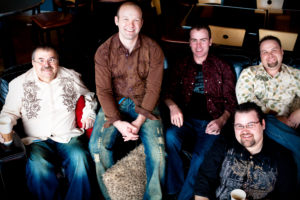 The Chapmans are a family band from The Ozarks with contemporary bluegrass, Americana, and acoustic country roots. Together now for 20 years and with fans such as Rhonda Vincent and Chris Thile, brothers John, Jeremy, and Jason, and dad Bill possess “an abundance of major league talent” (Nashville Scene). After they signed to Compass Records, they released their album, Grown Up, in the spring of 2010.