
Ciarán Tourish, best known as the nimble fiddler from Altan, is one of East Donegal’s most celebrated musical exports, recognized by fellow musicians worldwide as an unusually gifted player. To be singled out amid the hotbed of traditional music that is Donegal is no small accomplishment. Tourish grew up surrounded by Irish traditional music’s best, including fiddler Dinny McLaughlin, who shared his hometown of Buncrana. If his upbringing provided plenty of competition, however, it also facilitated Tourish’s own musical development. McLaughlin began teaching the young fiddler, wooing his protégé away from an early start on the whistle, and grounding him in a mastery of the Irish dance music tradition.
Tourish, who continues to play whistle as a second instrument, is now recognized as
one of the premier contemporary Irish fiddlers, an integral member of one of Ireland’s most beloved trad supergroups. His quick ear and a love of harmony and counterpoint have also led to several collaborations on non-Altan (and even non-Irish music) projects with a wide range of musicians and singers. He has worked with the likes of Matt Molloy, Mary Black, Maura O’Connell, Martin O’Connor, Dolores Keane, De Danann, and American musicians Jerry Douglas and Tim O’Brien.
Down the Line, Tourish’s first solo album, draws on this transatlantic cast of collaborators, as well as the musical versatility of its producer/artist/arranger. Tourish showcases both his fiddle and whistle, demonstrating his ability to play them as solo melody instruments, accompanying textures, or components of a dynamic ensemble sound. The ten-song CD includes five traditional instrumentals, including one which Tourish identifies in the liner notes as “one of the first ‘big’ reels I learnt from my teacher – Dinny McLaughlin.” Tourish also features two of his own compositions, as well as three guest vocals. Tim O’Brien and Alison Krauss sing the Carter Family’s “Are You Tired of Me My Darling?” Maura O’Connell delivers the traditional “Slan Le Mhaigh,” and Paul Brady performs his own original, “Dreams Will Come.” Brady also contributes keyboard and guitar parts on several other tracks. Musicians on Down the Line include Jerry Douglas on dobro, Phil Cunningham on accordion, Neil Martin on cello, Darrell Scott and Arty McGlynn on guitar, Percy Robinson on pedal steel, Viktor Krauss on bass, Jim Higgins on percussion, and Kenny Malone on drums.

Fiddler Aly Bain and accordionist Phil Cunningham are two of the most celebrated musicians on the Scottish traditional scene. By the time they began working together in 1988, they were already renowned for their previous accomplishments. Bain was a founding member of the Boys of the Lough, a group whose repertoire includes both Scottish and Irish influences. Cunningham became a member of the infamous Silly Wizard at the age of sixteen, launching a prolific and diverse musical career. The duo first worked together on a television series in 1988, and embarked on their first tour shortly after. They were so well-received that they have been touring together ever since. Their two previous duo recordings, The Pearl (1996) and The Ruby (1998), have been met with high acclaim.
Phil Cunningham was born in Edinburgh, Scotland in 1960. His musical career began with accordion lessons at the age of three and violin a few years later. His initial training was in classical music but his deep love of traditional Scottish music developed simultaneously. In 1976, he joined his brother Johnny in the highly acclaimed Scottish band Silly Wizard and was a full-time member until 1983. Cunningham contributed many of his own compositions to their mostly traditional repertoire, adding to the musical heritage of Scotland and keeping the tradition alive.
Cunningham left Silly Wizard in 1983 to pursue a solo career, as he found himself in demand as a composer and performer for television, radio, film and stage. Between 1985 and 1987 he toured and recorded with supergroup Relativity, with his brother Johnny, and Irish brother and sister, Michael and Triona O’Domnaill. During this time he also produced two solo albums, Airs and Graces (Green Linnet, 1984), and Palomino Waltz (1989).
Cunningham has produced albums for many popular traditional artists, including Dolores Keane and Altan. In 1990, he wrote the music for Bill Bryden’s spectacular theater productions The Ship (1990) and The Big Picnic (1994). In recent years, he has worked as music director and composer for various BBC Scotland series, and also wrote The Highlands & Islands Suite, an orchestral work which was performed at The Glasgow Royal Concert Hall. He has recently toured with Bonnie Raitt and Kepa Junkera, in addition to running CAP recording studios.
Bain hails from Lerwick, a small, enchanting town in the Shetland Islands. He began learning fiddle at the age of eleven. Tom Anderson, his teacher, is acknowledged as one of the true masters of Shetland music. Bain developed a highly dramatic style of playing, matching his great tone and technical ability with genuine emotion. Alert to the musical potential of the dynamic interaction between Irish and Scottish traditions, he helped establish the Boys of the Lough. The group is now recognized as one of the best in the tradition.
Simultaneously, Bain pursued his solo career. Since 1986, he has been working with Pelicula Films on various television series dealing with folk music. The first series, Down Home, traces fiddle music from its roots in Scotland across the Atlantic to the United States and Canada. The second, entitled The Transatlantic Sessions (1995), featured many prominent artists such as Emmylou Harris, Iris DeMent, Kathy Mattea, Kate and Anna McGarrigle, Mary Black, Karen Matheson, Mairead Ni Mhaonaigh, Donal Lunny, Dick Gaughan, and of course, Phil Cunningham.
Bain has released two critically acclaimed solo albums, First Album (1984), and Lonely Bird (1996). He has also recorded numerous albums with the Boys of the Lough, as well as with Hue and Cry, Eddi Reader, Fish, Richard Thompson and Runrig. In 1993, his autobiography Fiddler on the Loose, co-written by journalist and editor Alastair Clark, was published. Bain continues to tour extensively with the Boys of the Lough in addition to his collaborations with Cunningham.
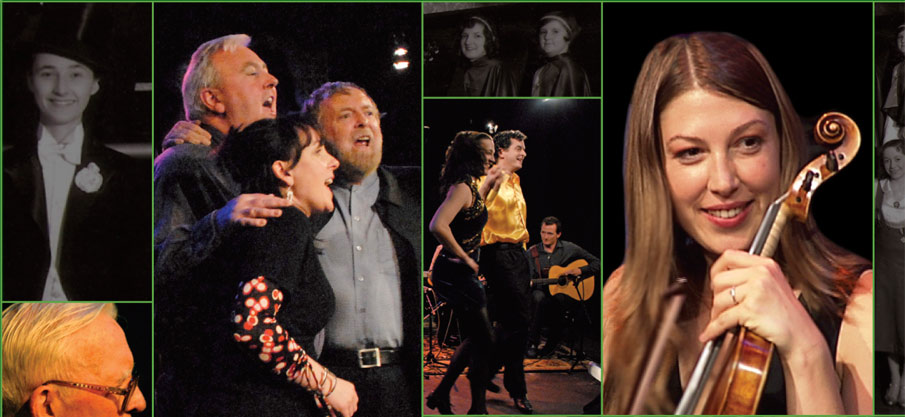
As seen on public television.
Absolutely Irish! brings together the brightest stars of traditional Irish music for a once-in-a-lifetime concert that will leave folk music fans stunned by the virtuoso performances. In April 2007 at the Irish Arts Center in the fabled Hell’s Kitchen area of New York City, film maker Paul Wagner and musician and producer Mick Moloney brought some of the finest Irish musicians, singers and dancers in America together for a special one-off concert. All the artists had known one another and played together in various combinations for years, but this was a chance to meet up in an informal situation and simply have fun, make music and dance together. For two days they rehearsed and then put together a magical performance that was filmed for American Public Television and recorded for Compass Records. Absolutely Irish is the product of this astonishingly brilliant, exuberant and joyful celebration of the very best of Irish music, song and dance.
Featuring Mick Moloney, Susan McKeown, John Doyle, Séamus Egan, Eileen Ivers, Karan Casey, Liz Carroll, Joanie Madden, Athena Tergis, Robbie O’Connell, Niall O’Leary, Darrah Carr, Jerry O’Sullivan, Billy McComiskey, Brendan Dolan, Rhys Jones, Tim Collins, Mac Benford, Mike Rafferty and Jo McNamara.
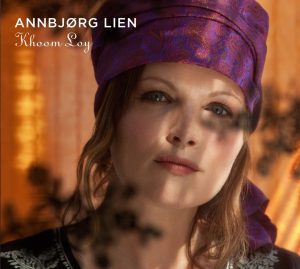
“If you like moody, sometimes dark, folk music, punctuated by beautiful musicianship and artistry, then you will find nothing to dislike here.” —PopMatters
“Lien’s spectral fiddling proves hauntingly absorbing as it introduces the past to the future.” —The Washington Post
A virtuoso of Norwegian traditional music deeply inspired by the music of other cultures, fiddler Annbjørg Lien crosses musical borders as a pioneer for true “world music.” Khoom Loy, Thai for “Paper Lanterns,” is Lien’s eighth solo album and explores a broad spectrum of traditions ranging from her traditional Norwegian folk to Irish and Asian music, with Lien playing her native Hardanger fiddle as well as the keyed fiddle. Lien says of the album, “this is a tribute to a lovely ritual of the East: releasing lanterns in remembrance of the dead, or as a prayer for a good life. They serve as bridges connecting us to the past and the future, the east and the west, tradition and innovation.”
Steeped in the music of other cultures, Khoom Loy also represents a first for Lien—her world vocal debut to stunning and haunting effect, notably on the title track and “Den Storste Daarlighed,” which also offers a unique fusion of the Indian tabla with Celtic whistles. The album features Bjørn Charles Dreyer, Hans Fredrik Jacobsen, Bjørn Ole Rasch, Per Elias Drabløs, Per Hillestad, Orsa Spelmän, Kristiansand String Quartet, and Pat Broaders.
Winner of the Garmeleng Prize for classical folk and the Hilimar Award in her native Norway, Lien is also is a member of the world music fiddle group String Sisters (Mairéad Ní Mhaonaigh, Liz Knowles, Catriona MacDonald, Liz Carroll and Emma Härdelin) and has collaborated with American fiddler Bruce Molsky amongst many others. Lien comes from a musical family and learned traditional music from her father and classical music at the music school in Ålesund. She has since been teaching privately with other top musicians, as Hauk Buen from Telemark.
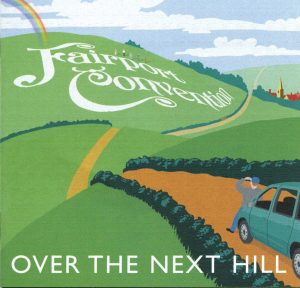
Fairport Convention is:
Gerry Conway: drums
Chris Leslie: mandolin, fiddle, bouzouki, vocals
Simon Nicol: guitar, vocals
Dave Pegg: bass, mandolin, vocals
Ric Sanders: fiddle, mandolin
“Fairport Convention has always been a working band,” muses bassist Dave Pegg. “We don’t like being held up in the studio. We need to be on the road. We still love doing that – getting in the van and going.”
It is this resolute drive and devotion, both to themselves and their legions of fans, that has steered folk-rock architects Fairport Convention through periods of uncertainty and transition that would have leveled lesser bands. Not only do they survive – they grow stronger, translating their experiences into consistently inventive art. Now entering their 37th year, the source of Fairport Convention’s unyielding momentum is twofold. Part if it stems from their roots in English traditional song, the noble nomadic legacy of the troubadour is indeed deep in their collective bloodstream. The other key to their longevity is something few other groups can lay claim to: having persevered for nearly four decades, Fairport Convention has created their own tradition. They are the inheritors of their own legacy, a sound that is distinctly theirs but, like all traditions, thrives on innovation and reinvention.
The title of Over the Next Hill reflects their enduring commitment to continue on in the face of adversity. “The title sums up the record perfectly,” says Pegg, who over the years has emerged as Fairport’s shepherd and unofficial ringleader. “Even though this was a very difficult album to make,” he continues, “the title implies a grand optimism.”
Trials are nothing new to Fairport Convention, having been defined early on for their ability to emerge renewed from a variety of unfortunately circumstances. “There was a time,” laughs Fairport biographer Nigel Schofield, “when Melody Maker magazine seemed to have the headline ‘Phoenix Fairport’ permanently typeset!” Beginning life in 1967 under the auspices of visionary bassist Ashley Hutchings (later of Steeleye Span, the Albion Band, the Etchingham String Band, and many others), Fairport shared bills with Sid Barrett’s Pink Floyd and other early rock radicals. Their first sound was an inventive hybrid equally influenced by the American underground of the time, electric blues, and traditional and contemporary folk music.
The arrival of folk-steeped vocalist Sandy Denny in 1968, along with the blossoming of guitarist Richard Thompson’s songwriting ability, pointed the future direction of Fairport Convention. Their two early 1969 releases, What We Did On Our Holidays and Unhalfbricking, saw traditional British ballads like “Nottamun Town” and “A Sailor’s Life” sharing space with compositions from Thompson, Denny, and contemporary lights like Bob Dylan. A horrific motorway crash in May of 1969, which killed drummer Martin Lamble and Thompson’s girlfriend Jeannie Franklin, sent the band into a sudden, reclusive spiral. Deciding for the first of many times to carry on, they returned in December of 1969 with Liege and Lief, one of the defining albums of British folk-rock. Epic traditional ballads were embroidered with electric fury, original compositions at last achieved the depth and weight of the folk tunes that inspired them, and fiddle – courtesy of new member David Swarbrick – was introduced to their sound.
What followed was decades of re-alignment, as members departed and returned with confusing frequency. The current lineup an ideal balance of seasoned vets and musicians young enough to have been originally inspired by Fairport’s early albums, and has been in place for 6 years now. Bassist Hutchings left in 1970, allowing Dave Pegg to assume the role which he continues to hold to this day. Guitarist and vocalist Simon Nicol, present at the earliest gigs in 1967, is the band’s link to its earliest days. Drummer Gerry Conway, a longtime fixture of the British folk-rock scene (that’s him bashing the skins on Fairport spinoff group The Bunch’s 1972 album Rock On), joined officially in 1998. Fiery fiddler Ric Sanders (previously of Soft Machine and Ashley Hutching’s Albion Band), signed on in 1985, while multi-instrumentalist, vocalist, and songwriter Chris Leslie hopped aboard in 1997.
This new lineup shone brightly on 1999’s The Wood and the Wire and 2002’s anniversary collection XXXV, but truly assert themselves on Over the Next Hill. The album was born amid much strife, as upheavals in Dave Pegg’s personal life (addressed candidly on the band’s website, www.fairportconvention.co.uk) forced him to sell Woodworm Studios: the band’s home base for over 20 years. Along with the studios, Pegg was forced to dissolve the management and record companies that had handled the band’s annual Croperdy Festival, casting that treasured ritual into uncertainty. The creation of Over the Next Hill demanded that the band to overcome once again.
“It was done under the cloak of some very strange things,” reflects Pegg, “We pulled the band together and went into Woodworm one last time to prove that we still had a future. Over two and a half years of touring, we arrived at a great unity: the sound that came out was a very different Fairport.”
Despite the difficulties surrounding its completion, Over the Next Hill is a refreshingly ebullient collection – palpably conveying the optimism inherent in the title. It’s Fairport at their most rock-tinged, sporting a ragged, bracing overall sound. “It was recorded quickly,” says Pegg, “mostly live in the studio, without any click tracks or anything. We went back and revised some things, but that live spirit shines through. It’s up and rocky.”
“The first thing that comes to mind about Over the Next Hill,” Pegg continues, “is that Chris Leslie’s songwriting has hit a whole new level. He is writing about true events and people – in effect creating real, modern day folk songs.” Leslie’s contributions, “I’m Already There,” “Over the Falls,” and “The Fossil Hunter” are detail-rich narratives that are still profoundly musical. He also takes lead vocal on Ben Bennion’s “Wait for the Tide to Come In,” an item unlike anything in Fairport’s catalog: a streamlined, pulsating Lydian pop song. Muscular and melodic in turn, it is already turning heads in Fairport’s set. “That’s Chris on electric mandolin,” Pegg says, beaming. “Sorry guitar fans.”
Simon Nicol is featured on several lead vocals, while underpinning the band with tasteful rhythm guitar throughout. His is the first voice heard, on Fairport friend Steve Tilson’s title track. The song’s positive, forward-looking message is balanced by a series of sly musical and lyrical allusions to the past (“So far I’ve found 19,” says Nigel Shofield) acknowledging the roads traveled before while still looking ahead. Tilson’s other contribution also features Simon. “Willow Creek” is a charged retelling of the classic folk tale of the girl on the nut brown mare. “That one is very percussive,” chuckles Pegg. “We’re still taken folk-rock in strange new directions!”
Fiddler Ric Sanders contributes a suite of instrumental themes called “Canny Capers,” which begins with Pegg and Leslie dueting on mandolins, followed by Sander’s entrance on fiddle, all with tasteful percussion in the background. The song soon builds to a thrilling series of instrumental breaks, with charged drumming from Conway pushing Sanders to ever-more daring flights of virtuosity. Sanders goes in the opposite direction with his other composition, “Some Special Place.” “Ric has lost several people close to him in the past months,” says Pegg. Clearly their memory inspired this lovely, touching twin-fiddle instrumental.
While traditional themes work their way into several of the original songs, “The Wassail Song” is the sole purely traditional tune on Over the Next Hill. Debuted on the last Fairport tour, it is a typically stunning revision. “People may have heard ‘The Wassail Song’ before,” says Pegg, “but they haven’t heard it in 5/4 time!” Brisk and rich with tricky meter shifts, it sports a daring and musicianship reminiscent of Fairport’s early years. Speaking of, they do revisit one chestnut from their past…
“Ah yes,” says Simon Nicol, “our re-interpretation of our ‘hit,’ ‘Si Tu Dois Partir.’” Originally recorded in 1969, the song is a curious translation of Bob Dylan’s “If You Gotta Go, Go Now” into an ersatz Cajun romp. It remains one of Fairport’s best known songs, having reached #21 in the charts of the day. “I never expected we’d be re-recording this,” Nicol continues, “but, but it seemed to go so well on the winter tour that we had to give it a go. Don’t tell Island Records, but I nicked a sample of Martin Lamble kicking over a pile of plastic chairs and smashing some milk bottles from the original version, and I’ve slotted it in. Shame on me – but nice to have him back,” says Nicol of Fairport’s first drummer, who was killed in that tragic motorway crash of 1969, “What a life he would have had.” It is the life that the current members of Fairport Convention have inherited: the sum of their tragedies and their persistence, blended with their own musical ingenuity and the bottomless well of tradition.
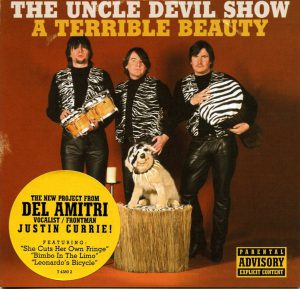
Is it a put-on? A con? Maybe – if the music weren’t so good. Kaleidoscopic psychedelica of the highest order. As Diana Ross didn’t quite put it, refractions of what used to be. The Uncle Devil Show begin with core kernels of classically composed pop songs, melodically incisive with a driving beat of the Mersey stripe. Then, through the distorted lens of their own wit and humor, things mutate. Sinister lines emerge from verses which first seem innocuous. Cunning allusions to arcane Britannia punctuate the proceedings – a dip in Barrymore’s pool anyone? And the music…exhilarating guitar driven Anglo-pop, rinsed in the waters of the Beatles, the Small Faces, the Kinks, and the like, yet entirely the property of the big brain known as The Uncle Devil Show.
Think of it as a movie, with no pictures: three actor/musicians leaving behind the roles they previously made famous to invest themselves in a b(r)and new scenario. Justin Currie, the frontman, songwriter, and vocalist for Scottish pop favorites Del Amitri (best known stateside for their massive Triple-A radio hit “Roll To Me”), stars as bassist and ex-postal worker Jason Barr. At his side is guitarist/vocalist/fellow postman Langton Herring, played by cult Scottish songwriter Kevin McDermott. Rounding out the combo is the former cruise ship drummer only known as Terrance, as portrayed by Jim McDermott – best known for his work with another formidable Scottish band, Simple Minds.
Taking their name from a 1985 episode of The New Twilight Zone TV series, The Uncle Devil Show work from within their fictitious personas and leave any trace of pop-star ego in the dust. Consequently, their resulting debut album, A Terrible Beauty, arrives as if transported from some other, strangely better dimension. The precise popsmarts that fueled Del Amitri are well intact, matched with a keen sense of the gloriously, profoundly absurd. All three sing, both lead and lusciously captivating harmonies, and the compositions (co-written by Currie and Kevin McDermott) are ingeniously humorous while avoiding the pitfall of being merely funny.
The opening “Leonardo’s Bicycle” introduces itself as a relaxed meditation on cycling away from the urban hustle, until it is revealed that the instrument of transit wasn’t just designed by Leonardo – it was stolen from him. After all, nothing releases the adrenalin like a good heist. Currie delivers the cross-dresser’s lament “Plus Ca Change” with tender frustration, befitting what is perhaps the only pop missive to transvestite angst. Meanwhile, Kevin McDermott shines on “Sidelong Glances of a Pigeon Kicker,” a portrait of a man driven mad by the unending streams of chirping, flapping, and feces from the local feathered rat population. Sneeze at the right time, and you’ll miss a tasty sonic nod to a certain Liverpudlian foursome. One of many, truth be told.
From “Tambourine’s” elliptical swells to “I Had a Drink About You Last Night’s” plaintive hybrid of hyperbole and self-pity, A Terrible Beauty delights in testing the lyrical limits of the timeless Brit-beat-pop song. The first single, the Currie-sung “She Cuts Her Own Fringe,” is the absolute pinnacle of the Uncle Devil vibration. Bittersweet, touching, yet distinctly skewed, “Fringe” is a peculiar love song about a peculiar lass. She’s taught her parrot to sing Motorhead songs. She mangles her own clothing. “She keeps her phone in a tin,” Currie swoons, “so that the ringer sounds like an alien.” And Currie – aka Jason Barr – can’t get enough of her.
Strapped to a tunefully driven backbeat and complete with harpsichord solo, “She Cuts Her Own Fringe” is destined to introduce the world to all the wonders that The Uncle Devil Show has to offer. Who better to summarize the situation than the band themselves, who modestly surmised the following in their first, self-composed press release: “Not everyone digs the way they wear their hair – but then not everyone unused to a life of dignified manual labour knows how to dig properly. The Uncle Devil Show does. These handsome rakes are the aces of spades. They’re hoes who are seriously bitchin’. They’re earthy sods, and this is sweet soil music. Mulch ado about something!”

“It’s hard for me to express how I feel,” reflects Sean Doyle from his home in Sligo, Ireland. “I never thought I’d get to make this record.”
While most artists don’t make their debut album at age 58, vocalist, song collector, and retired policeman Doyle comes from an environment far removed from the mainstream music industry. A member of a large and deeply musical family, he has been content to hone his craft in pubs, at fleadhs, and assorted informal gatherings over the past six decades. The thought of recording a proper album in a studio simply never occurred to him until his son, the renowned guitarist/producer/songwriter John Doyle, suggested it.
“John browbeat me into it,” the elder Doyle states, matter-of-factly. “When John was doing his first record [2001’s Evening Comes Early], I came in and did one track. It seemed to go well and a lot of people liked it. I wasn’t that keen on doing my own album really, but he kept at it.” So began the saga of what eventually became The Light and the Half-Light.
“Doing my record was Dad’s first experience in the studio,” says John Doyle. “From then, I really had to stay on him and push him to make this record. But I feel it’s important: I grew up hearing him sing, he’s given me so much in terms of my music. And no one does what he does musically.”
What he does is mine a very narrow vein of song, a melodic strain that exists at the intersection of Irish, English, and Scottish traditions. “It’s in between English ballad singing and Irish sean nos,” explains John. “Dad likes that gap – he sings a lot of Irish songs that have been translated into English.”
Decades of performing in pubs and other noisy, informal environments has given Sean Doyle an edge that many of today’s concert-hall-bred musicians lack. “A pub doesn’t get completely quiet,” Sean explains, “so you need a strong voice to make yourself heard. You learn to project, to be assertive.”
While marked by an unapologetic boldness, Doyle’s singing never seems blustery or bathetic. Doyle achieves this by balancing his strong, deep voice with a disarming tenderness and keen sense for a song’s unfolding drama.
“Dad’s music is serious drama,” notes John. “It all comes down to how he relates to songs. He thinks of them not as music, but as stories. This influences everything he does: his meter, his phrasing, his timing. As an instrumentalist, accompanying him on this album has been a great challenge for me.”
“I’ve never sung with anyone before,” Sean adds. The tradition he comes from is based on unaccompanied vocal performance. “Apparently I sing in the strangest keys,” he laughs. “To John’s credit, he let me do my own thing and just followed on with what needed to be done. I sung as if there wasn’t accompaniment. I didn’t change what I did at all. I’m not used to fitting in with other people.”
“Sometimes I just told him not to listen to me,” cracks John. “I just watched him and listened – I really tried to preserve everything he does.” As producer, arranger, and primary accompanist on The Light and the Half-Light, the younger Doyle succeeds exquisitely. His playing elevates the material with dashes of rhythm and harmony, and yet leaves plenty of room for his father to maneuver and express the nuances of each song.
Choosing the songs for The Light and the Half-Light was an equally demanding process for John. “We started with about forty tunes – mind you, these are all from Dad’s memory, nothing written, no notation of any kind. And we slowly started to whittle it down to a manageable number. We tried to balance the serious, sad, and more humorous tunes. And every now and then, when I thought I’d heard everything he had, he would surprise me with something I’d never known about.”
“For instance,” John elaborates, “when me and Dad and my brothers all get together, we always wind up singing. Last Christmas we started going around the room, swapping songs. This started at about seven in the evening, and wrapped up around five in the morning. That’s where I first heard dad sing ‘Let Mr. Maguire Sit Down,’ which wound up on the album.”
“I couldn’t believe they hadn’t heard that one,” responds the elder Doyle. “It was old hat to me – we were tired of it in the fifties! That Christmas I started to discover how old I am!”
Born January 2, 1946, Sean Doyle – like his son John – was first introduced to music through his father. “My dad was an accordion player, and was part of a ceilidh band that would practice in the house. They’d drag me out and make me sing waltzes with them when I was small.” This opened Doyle’s young ears to singing, a pursuit further fueled by the social events in his native Sligo. “Any house dances finished with singing,” he explains. “It went around the whole assembly, and people were coerced into singing a tune apiece. When I heard a really good ballad, it affected me. I wanted to sing it myself.”
While leaving home to join the Dublin police force at age 18 (“There’s still some top secret stuff he won’t tell me about,” half-jokes John), Sean Doyle continued to pursue his interest in Irish singing through singing clubs, contests, and fleadhs. He watched with fascination and encouragement as vocal music achieved its rightful place alongside traditional instrumental music. “Singing has come up,” he says. “It was the poor second cousin to instrumental music for a long time. Now it’s on a much better footing.”
Those years of earnest apprenticeship come alive on The Light and the Half-Light. Completed over two years of intermittent sessions in Ireland; Asheville, North Carolina; and Louisiana, the album has a natural ease and dramatic flow that sounds as though it could have been recorded in one session. There is no audible trace of Sean’s initial apprehension. “We had to loosen him up a little,” says John. “The experience reminded me how artificial the studio environment is. Especially compared to the pub.” Despite the pristine fidelity, there is a beguiling intimacy throughout, especially on the album’s centerpiece “The Flying Cloud.”
“‘The Flying Cloud’ was the one song I really wanted to have on there,” says Sean. “I’m very drawn to the theme of it: an Irish sailor falling first into the awful slavery trade, then getting caught up with pirates and thieves. It’s dealt with with such intelligence and compassion. It’s a real epic.” Like all the songs on The Light and the Half-Light, it was learned the old-fashioned way, at a fleadh. “It stuck to me,” Doyle concludes. Delivered over eight chilling minutes and accompanied by gentle bouzouki chords from John, it is a mesmerizing, deeply affecting performance that finds Sean Doyle evoking the sadness and grief of the tale through expert dramatic timing and a vast dynamic range that veers from full-voice to hushed, whispered passages.
Throughout The Light and the Half-Light, the supporting music is sublime and understated. “I’m so overwhelmed with the people who played on this,” says Sean of the album’s cast, which includes Liz Carroll, John Williams, Dirk Powell, Rayna Gellert, and Kieran O’Hare. “It’s the crème de la crème of Irish music.” John Doyle’s expert hand brings it all together, paying the ultimate tribute to his greatest influence, his father.
With a masterful debut album now completed, Sean Doyle is playfully stubborn about a potential follow-up. “No second,” he laughs. “I put my foot down. I’m going back to retirement.”

Noam Pikelny has been building a reputation as one of the most talented and virtuosic young banjo players alive since his 2004 solo debut In The Maze on Compass Records. He is a founding member of Punch Brothers, the string ensemble led by Chris Thile, which The Boston Globe calls “a virtuosic revelation” and The New Yorker describes as “wide-ranging and restlessly imaginative.” Pikelny was also the winner of the inaugural Steve Martin Prize for Excellence in Banjo and Bluegrass and praised by Martin as “a player of unlimited range and astonishing precision.”
Pikelny solidified his own style and solo approach on his 2011 album Beat The Devil and Carry A Rail, and successfully so – the album garnered him a GRAMMY nomination and international attention. He now presents his third solo album Noam Pikelny Plays Kenny Baker Plays Bill Monroe (October 1st), a unique interpretation of traditional bluegrass through a bold, complete adaptation of one of the most influential instrumental bluegrass records of all-time.
“Could I get away with calling an album Noam Pikelny Plays Kenny Baker Plays Bill Monroe?” Pikelny jokingly texted mandolinist Ronnie McCoury. Over a year later, as he reflected on the gag, Pikelny began listening anew to Kenny Baker’s seminal album Kenny Baker Plays Bill Monroe, and realized there may be validity to such a project; the instrumental classics of Bill Monroe are to the bluegrass canon what the Bach solo violin sonatas and partitas are to the classical world and reimagining the album would allow Pikelny to develop a unique banjoistic voice for each track. “The concept was to play these classic melodies note for note on the banjo,” says Pikelny, “but beyond that, this is representation of how you can play traditional bluegrass, in the here and now, uniquely in your own voice while still paying tribute to the masters.”
It also felt like the right time to put out a “standards” album: “There never seemed like an obvious opportunity for me to cut a bluegrass standards record. My professional career started as a member of bands way on the fringes of bluegrass, and so it’s almost like I leapfrogged past that moment,” says Pikelny. “Interpretation of the classics is an essential part of most bluegrass players’ careers—one way of showcasing your voice is by playing stuff that is already familiar to people. The guitarist David Grier has this great story about the time a woman who raised her hand in the middle of his concert and asked, ‘Will you play something that I know so I can tell if you’re any good or not?’ There’s definitely some truth to that idea.”
For the next two months, Pikelny examined each of the Monroe tunes on Baker’s album with microscopic scrutiny and encountered several puzzles as he began to arrange them. The first was a matter of logistics: “How do I arrange something so idiomatic to the fiddle onto the banjo?” The second posed more of a challenge: “How do I make these classic, yet overplayed bluegrass tunes—tunes that have been recorded and played countless times—sound new and fresh?”
Ironically it was his non-bluegrass education and skills developed with Punch Brothers over the last six years that allowed Pikelny to solve both problems. “I was taking something very bluegrass-y to begin with and then fitting it on the banjo in the same manner as I would be doing if it were a piece of classical music, a Punch Brothers arrangement or an electronic synth part from a Radiohead record. Playing the melody on the banjo, just like Kenny Baker did on the fiddle, sounds progressive because it requires techniques that I never would have stumbled upon if I hadn’t been playing non-bluegrass music with Punch Brothers. It was a long and winding path to get to the point where I could consider the concept of this record and also have the technical facility to pull it off.”
The concept of developing banjo techniques outside of bluegrass to play challenging music isn’t new – In the first major shift from the Earl Scruggs-style of playing (where the essence of a melody is encircled by cascading drone string), Bill Keith developed a style in the 1960’s in which he tried to match the note-for-note melody of the fiddle more closely. Since then, banjo players have further developed those techniques of borrowing from other instruments; Béla Fleck recorded jazz pieces like Chick Corea’s “Spain,” and Punch Brothers even have an arrangement of one of the movements from Bach’s Brandenburg Concertos. By assimilating the styles of pioneers like Earl Scruggs, Béla Fleck, Tony Trischka, and Bill Keith, Pikelny was able to develop his own approach that turned all those banjo styles upon themselves to create beautiful and impressive arrangements of what he once feared would be clichéd bluegrass material.
“I’ve had the experience of telling a few colleagues about this project and they said, ‘Oh that’s great you’re going to be doing a record like that, but…you’re not going to record “Wheel Hoss,” are you?’ That comes out of the fact that, without some kind of real reinvention, there’s no need for another version of “Wheel Hoss.” The world needs another version of “Wheel Hoss” like I need a hole in my head,” laughs Pikelny. He was instead empowered by that challenge and, by sticking to his formula and following Baker’s melodies note-for-note, Pikelny’s “Wheel Hoss” is a tour-de-force tune that spans the entire fretboard of the banjo—technically demanding because of its range and speed while still musically real, and emotionally moving.
Other tunes like “Lonesome Moonlight Waltz” aren’t innately banjoistic either – the sustain of the fiddle is difficult to replicate on the banjo and Pikelny was challenged to preserve the lyrical integrity of the tune’s slow, beautiful melody. “I did a lot of note-bending on that tune and a lot of stuff that comes from my obsession with pedal steel guitar music,” says Pikelny. “I treated Kenny’s “Lonesome Moonlight Waltz” more like a sketch. It’s a simple, beautiful melody and so a lot of the choices one would make to ‘make it their own’ emerge in phrasing and dynamics.” As he transcribed each tune and checked them one-by-one off Kenny Baker’s master list, he began to imagine the recording process, and it was time to find the perfect band to fit the bill.
The musicians that Pikelny chose to join him on the album are some of the best in bluegrass and award-winners in their own right, and just as on the Baker album, Pikelny uses the same five instruments on every track— Recorded over a four-day period at Skaggs Place Recording in Hendersonville, TN, Pikenly’s banjo was joined by Stuart Duncan’s fiddle, Bryan Sutton’s guitar, and Ronnie McCoury’s mandolin, all underpinned by Mike Bub’s bass.
For a generation of bluegrass musicians born around the late fifties/early sixties, Kenny Baker plays Bill Monroe was their definitive instrumental record. Kenny Baker’s album is a landmark collection of bluegrass standards that in many ways catalogued and set the standard for style and approach, creating a mini-fakebook for the bluegrass genre – the original album features twelve classic tunes written by the father of Bluegrass, Bill Monroe (1911-1996), performed by his longtime fiddler Kenny Baker (1926-2012). “When I was mulling over this concept, whether it should remain a text message or become an album, I started thinking about the fact that when I was a kid learning bluegrass, I would’ve killed to have had this record made by one of my banjo heroes-” says Pikelny, “ I’ll do it.’”
Though the musicians supporting Pikelny in part grew up with the original album and know the tunes inside and out, Pikelny chose them for their distinct musical personalities, rather than their familiarity with the music. “Ronnie McCoury asked me early on in the session, ‘Do you want me to play it just like Bill plays it on the record?’ and I replied ‘No, absolutely not.’” says Pikelny. “I’m using Kenny’s melody as a springboard on the banjo, but I chose these musicians because I love how they interpret the melody in their own way. I wanted their unique versions to be on the album and I think we succeeded in that. They played so beautifully.” The only aesthetic criterion given to the band was to play close to the melody as much as possible. Everything else was creative fair game.
Having the tunes and the sequence laid out ahead of time provided the band the opportunity to re-record the classic tunes as they had imagined over their years of absorbing and playing the album. The band was enabled to create fresh versions of each track by moving tempos around, featuring more improvisation, or featuring more highly arranged versions with creative exchange of the melodies. “I remember turning to Ronnie McCoury at the end of the first day of recording and saying ‘Ronnie, do you think this is the most money that’s ever been spent on “Big Sandy River?”’ and he said, ‘Absolutely, undeniably.’ In most cases, for a fiddle tune like “Big Sandy River,” you’d just go in and lay it down. But we wanted to experiment, we had to find the right version that was going to fit into the sequence and play best to this concept. So we spent over a half-day. Hey, it’s no small river!” says Pikelny.
The resulting record is a polished, reimagined approach to the classic bluegrass album. Never an exercise in musical impersonation, Pikelny’s end result represents a contemporary catalog of current bluegrass with a direct nod of respect to the genre’s legacy and masters. Noam Pikelny Plays Kenny Baker Plays Bill Monroe, shows Pikelny at a new pinnacle of maturation as a banjo player and musician, redefining the role of the banjo in his own way with an unprecedented approach to melodic playing and thereby setting a new standard in bluegrass for years to come.
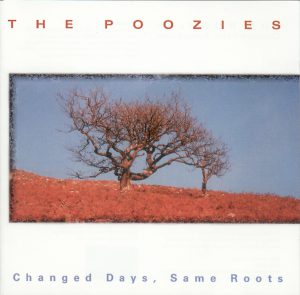
Currently celebrating their tenth anniversary as the UK’s finest all-female folk group, the Poozies continue to expand their sound their latest project, Changed Days, Same Roots. Deftly integrating Scandinavian, contemporary folk, Broadway, and Polish influences into their seasoned British Isles folk sound, Changed Days, Different Roots is marked by the same lush vocal quality, innovative arrangements, and superb instrumental performances that first distinguished the band.
Composed of founding members Karen Tweed (accordion, vocals), Patsy Seddon (electro-harp, clarsach, fiddle, vocals) and Mary MacMaster (electro-harp, clarsach, vocals) along with new arrival Eilidh Shaw (fiddle, vocals), the Poozies have been individually and collectively featured on recordings by Kathryn Tickell, Swap, The Two Duos Quartet, the May Day project, Sileas, Clan Alba, Caledon, and Harem Scarem, as well as many other live projects and guest sessions of artists including Roy Bailey, Lal and Norma Waterson, Dick Gaughan, June Tabor and Eliza Carthy.
“With their combined backgrounds, their ability is beyond question.” – Allmusic.com
“The Poozies deserve to be known beyond the confines of the British folk and roots scene…a delight.” – Q Magazine
“This is a band at the height of its powers. Forget their prestigious past. The future looks very bright for the Poozies.” – BBCinteractive

Glasgow native Eddi Reader embraces her Scottish roots on this stunning folk/pop song-cycle drawn from the tunes of the great bard Robert Burns. This ambitious project is Reader’s crowning achievement, a savvy translation of Burns’ classic songs into a modern setting, joined by a host of the finest British and Scottish musicians around (John McCusker, Kate Rusby, Ian Carr, Phil Cunningham, and more). Some of the songs are rendered faithfully, others are re-envisioned, all of them are marked by Reader’s trademark mix of swagger, tenderness, and sincerity.
USA Today: “Reader’s elegant renderings of such songs as My Love is Like a Red Red Rose and Jamie Come Try Me seem fresh and magical.”
Time Out NY: “Haunted hearts, unguarded affections, and drunken benders have long littered Reader’s musical landscape, so it’s not surprising that she would discover a kindred spirit in Burns…Devotees will welcome this warming balm against the bitterest of winter winds.”
Seattle Post-Intelligencer: “Reader brings new vitality to the songs of Robert Burns in this lovely collection. Reader’s voice is flawless…a magnificent gift from the heart of Scotland.” Grade: A
Irish-American News: “The most creative, wonderful, and difficult-to-describe album we have heard in years…a masterpiece. Flat out.”
Boston Herald: “Her enlightening tribute is a glorious set of towering romantic odes, sprightly jigs and reels, and poignant anti-war ballads.”

Catriona Macdonald (pronounced “Catrina”) is a proud bearer of one of the world’s great fiddle traditions, that of the Shetland Isles. A cluster of islands located in the North Sea, closer to Norway than Scotland, the Shetlands have offered some of Scotland’s finest and most beloved traditional musical exports including the legendary fiddler Aly Bain. Steeped in this tradition, Catriona Macdonald at once embodies the strength and spirit of her musical heritage and the freshness and diversity of a thoroughly modern performer. Her superb playing and charisma have established her a worldwide reputation.
Catriona began playing as a child back in 1981 under the masterful musical tutelage of Dr. Tom Anderson MBE. Less than two years later, she took both the title of Young Fiddler of the Year in the annual Shetland Folk Society competition and the deputy leadership of a new fiddle group, Shetland’s Young Heritage. Young Heritage was set up to help preserve Shetland traditional music and to help teach Shetland traditional fiddle to local school children. In 1991, her dexterity and presence became acknowledged on a wider stage when she won the prestigious BBC Radio Two Young Tradition Award, a high profile competition featuring the cream of Britain’s young traditional players. At the age of eighteen, she found she could sing and was whisked away for some enjoyable and instructive years training in opera at the Royal College of Music in London (where she met former playing partner Ian Lowthian). Even given all of these experiences, Catriona has still been lucky to focus her musical career on her first love, that of the Shetland fiddle.
On her new album BOLD, Catriona flourishes as a progressive performer in her own right, offering a wealth of exciting, original musical ideas while still firmly holding hands with the past, a part of the ever-evolving tradition. The gorgeous aires, reels and jigs on the album attest to her mastery of the Shetland fiddle styles while the expert accompaniment provided by her guest musicians leaves little doubt that the future of traditional music is in able hands. Bassist Conrad Ivitsky and pianist David Milligan, 2/3 of Catriona’s touring trio are on hand, as well as top percussionist James Mackintosh (also a member of Shooglenifty, in addition to his regular high-profile appearances with Capercaillie and the Afro-Celts Sound System); much sought-after Norwegian church organist Iver Kleive (a Winter Olympian musician, and lynchpin of the renowned Kirklige Kulturverkstad label) and former playing partner Ian Lowthian, (whose wizard piano accordion playing offers continuity in sound from ’opus blue’, Catriona’s previous album), and guitarist Tony McManus, one of the most distinctive celtic guitarists of this age.
In addition to her solo work, Catriona is well known for her splendid duo with piano accordion wizard Ian Lowthian. The superb technical mastery and beautiful evocative arrangements for which they were critically acclaimed (amongst their fans is Mark Knopfler, former frontman of Dire Straits) led them to play for audiences throughout the world…always purveying a unique spirit, enjoyment and charisma on any stage. She is also involved with the wildly energetic Highlands and Islands fiddle ensemble, Blazing Fiddles (also featuring Iain McFarlane, Allan Henderson, Aidan O’Rourke, Bruce MacGregor, Duncan Chisholm, Andy Thorburn & Marc Clements) and does occasional work with Norwegian Hardanger fiddle player, Annbjorg Lien (Catriona herself has studied Hardanger fiddling with Norway’s foremost player Knut Buen.) The two women play exciting contemporary sounding music celebrating the many musical links between their respective traditions, which are rooted back in the 15th century.
Catriona’s commitment to the promotion of her Shetland Island heritage through education is also an important part of her work. She is currently acting as visiting tutor as part of the Scottish Music Degree (the first of its kind!) at the Royal Scottish Academy of Music and Dance in Glasgow. She is also personally researching a book and CD of whole archives of previously unknown/untranscribed Shetland tunes due for release in the next year or so. Catriona also teaches Shetland fiddle on a regular basis, particularly at many of the country’s summer schools such as Folkworks, Burwell House (in Cambridge), Stirling and her own Shetland Fiddle School in Vementry, Shetland.
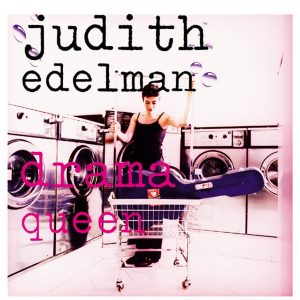
It’s hard to deconstruct Judith Edelman. While the music she plays may be rooted in simplicity, she is not and her music is all the more affecting because of the shadows lurking beneath the surface. As Dirty Linen Magazine observed, “On one level, Judith Edelman’s music…is progressive bluegrass with occasional slips into Irish jigs….but lyrically, her songs and themes are a lot closer to the streets of her native New York and the dark musings of Richard Thompson…”
Manhattan-born Judith Edelman arrived at what she calls “the front porch sensibility” of her music through an unlikely route. She grew up on New York’s Upper East Side, daughter of 1972 Nobel Prize-winner Gerald M. Edelman and educator/editor Maxine Morrision, the youngest of three children. Musical study was mandatory in her household and Judith opted for classical piano lessons. She followed one of her brothers, coincidentally a bluegrass-loving fiddler, to Swarthmore College. But life as a professional musician was still not in her sights.
After graduation, Judith pursued a career in Third World development in the Bay Area and eventually landed in Kenya and Zimbabwe. In Kenya, Judith contracted a serious illness that eventually brought her work there to an unexpected conclusion. She returned to San Francisco to recuperate and, inspired by a cassette tape a friend had made of groups such as The Stanley Brothers, Tim O’Brien, and The Nashville BlueGrass Band, began to study bluegrass guitar.
In the mid-90’s Judith set out on the bluegrass touring circuit with bands such as Coyote Ridge and Ryestraw. Life with Ryestraw meant traveling on a shoestring and sometimes finding herself in accomodations no more elegant than a sleeping bag and tarp thrown down on the side of the road. Despite such hardships, the community of acoustic musicians held endless fascination for Judith. She found a sense of place, a grounding, in both the music and the lifestyle it inspired.
In Nashville in 1995, then-BMI executive Jody Williams introduced Judith to Grammy-award winning engineer/producer Bill VornDick who worked with her on her first two Compass releases, PERFECT WORLD (1995) and ONLY SUN (1998). Both albums received high critical praise with particularly effusive accolades coming from Billboard editor Timothy White. Judith’s diverse array of musical influences impressed pundits. Glimmers of contemporary Celtic melodies, blues, jazz, country string bands and British acoustic music illuminated her interpretations of bluegrass with a unique spark.
Judith produced her latest release DRAMA QUEEN in Nashville, with the intention of creating of a very intimate and immediate sound. She describes the process as getting her complex lyrical and harmonic ideas distilled into a simple essence that does justice to the quotidian tales she likes to tell. Judith finds her songwriting to be story-driven and her characters seem to come to life from the dark corners of her imagination.
Although she’s a well-seasoned touring veteran, (having appeared with such artists as Arlo Guthrie, Townes Van Zandt, Ben Harper, The Nashville Bluegrass Band, Peter Rowan, The Sam Bush Band and The Fairfield Four), Judith’s looking forward to playing some of the major bluegrass festivals this year including a first-ever appearance at Telluride. She took up bouzouki just a few months ago and her quickly acquired proficiency is evident on the new album. As The Judith Edelman Band evolves and changes, Judith finds the ensemble becoming an ever more authentic reflection of the artist herself. “Everyone wants to travel the path of being as true to oneself as possible, don’t they?”, she muses. All listeners know is that they’ll travel down any path Judith wants to take them, enthralled by a rich and delicious talent coming into her own.
-->


