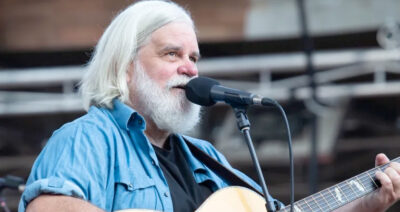
Frank Solivan & Dirty Kitchen are true masters of progressive bluegrass. They have built a reputation as one of the most exciting bands on the scene, delivering electrifying live performances and drawing new listeners to the genre through their wide-open approach to the music. Perhaps their expansive vision of bluegrass shouldn’t be a surprise. After all, front man and Alaskan Frank Solivan is a bona fide Renaissance man. He has worn a lot of hats in a career that has included tenure in the US Navy band and work as leather craftsman, master cook (who picked up recipes from his Filipino grandfather) and pick maker. He even did a stint blowing up mountains in Alaska.
Powered by Solivan’s bold and dynamic vocals and driven by the band’s virtuosic instrumental chops, the group has earned widespread critical acclaim as well as Grammy nominations for their most recent two albums. They have also received multiple International Bluegrass Music Association awards and nominations, both collectively and individually, including 2 wins for IBMA Instrumental Group of the Year.
Frank and company bring it up a notch on their newest release HOLD ON. Triple-threat Solivan shines as a vocalist and mandolinist and shows his stuff as a songwriter on the album’s 11 tracks, 6 of which were written or co-written by Solivan himself. There’s an overarching theme of optimism that runs through the album and a spirit of hope for better days ahead. Solivan explains: “I was going through the hardest time of my life leading up to the pandemic. And then the world stopped! Exploring some of the subject matter and song ideas that came out of those difficult times led me to these songs. Songs that helped bring me out of a seemingly hopeless situation. Finding light where there was darkness and trying to relay some of my journey of figuring out how to ‘hold on’. My hope is that the listener will be able to relate and will have these songs to help them get through difficult times.”
Together with bandmates banjo master Mike Munford, guitarist Chris Luquette and bassist Jeremy Middleton, the band dazzles on covers including Newgrass Revival’s, “Sail to Australia” (featuring NGR’s bassist John Cowan on harmony vocals), Buzz Busby’s “Lost,” and a crafty cover of Orleans’ “Sails,” bringing their instrumental savvy and deep groove to each track. But the real heart of the album is the original material Solivan contributes here, including several outstanding new songs destined to take their place in the bluegrass canon.
The upbeat “I’m Already Gone” and “Hold On” which open the album are both ready-made bluegrass classics, the later written by Solivan in about 15 minutes right before the recording session. “Goodbye, Goodbye,” co-written by Solivan and his cousin singer/songwriter Megan McCormick, has one of the catchiest choruses you’ll hear in any kind of music, and the achingly beautiful “Modesto,” co-written by Megan McCormick and Amanda Fields, is a gorgeous tip of the hat to the town where Solivan was born. The album also features a re-record of the Solivan-penned instrumental dazzler “Scorchin’ the Gravy,” the first tune the band ever played together. This version, recorded live with no overdubs, leaves little doubt why the quartet is a multiple IBMA Instrumental Award winner.
Frank Solivan & Dirty Kitchen’s reputation as one of the most dazzling bands on the bluegrass scene is even more firmly established with the release of HOLD ON. Old and new fans alike will delight as the band plants another flag in their journey of musical exploration, continuing their seemingly endless upward trajectory, and raising the bar for bluegrass in the process.
Grounded in her roots as a native Virginian, bluegrass trailblazer Rebecca Frazier found herself reawakening to a whole new journey of inspiration and invention. For the flatpicking luminary, who achieved notoriety in the music world as the first woman ever to appear on the cover of Flatpicking Guitar Magazine, that creative rebirth turned into her most captivating work yet: BOARDING WINDOWS IN PARADISE, releasing Sept. 13 on Compass Records.
The album title seems appropriate, as Frazier stepped into these last years with more strength and intention than ever before. Like the generations of her ancestors who have lived along Virginia’s coast, she, too, has weathered life’s hurricanes and battering winds — and witnessed its luminous beauty — and she wanted to capture that juxtaposition on this record.
“The paradox presented in the last line of ‘Hurricanes,’ the album’s closing song—’We just keep on living here, boarding windows every year in paradise’—that’s what pushed me to my current space,” Frazier explains. “The realization that I can create my own paradise through daily maintenance, daily actions—and yes, if it’s paradise, if it’s innately perfect, why should I have to work at it? But that daily, deliberate initiative is a gift of choice.”
Embracing creativity in her present moment brought it boiling to the surface with a newfound energy and a heightened knowledge of the important things in her life. She spent time honing her craft in such a detailed way that now she is sharper, more in tune with herself and living with more clarity than ever.
While she didn’t intend to wait a decade to follow up her last album, the highly regarded 2013 Compass release, When We Fall, the native Virginian was following her gut. “I focused on being a supportive mom, playing select shows, and refining my own craft,” she says. “I went into a deep dive with my writing and my guitar—learning songs and legendary solos for inspiration—doing that kind of introspective work that just takes time and you can’t do when you’re traveling all the time.”
Now, her kids aren’t young anymore, and being there for them as they grew has been one of the most rewarding times of her life. “You think when you’re in the midst of raising small children that it will be there forever and it’s not,” she says. “Being present with them has been my goal. I wasn’t comfortable missing a recital or birthday party. I enjoy making music as part of daily life, singing three-part harmonies in the car or around the dinner table. We play concerts together. These experiences create a bond between us that I hope they’ll carry with them once they’ve grown up and moved on.”
Once she knew what she wanted to say, her direction for the new album became clear. The title, Boarding Windows in Paradise, is a metaphor speaking to the changes occurring in her own life during this time and the resilience that often lies on the other side of closing one chapter and opening another. Being real and true was a top priority for her.
“Authenticity was one of the most important parts of this new project,” she says. From the songwriting to the musicians, to the sounds and instrumentation to who she worked with as producer, all the pieces needed to come together with strength while still being unapologetically true to the person she had become.
Frazier’s bond with GRAMMY-winning producer Bill Wolf was the catalyst. The two developed a deep friendship and bond that was necessary and pivotal for her to make the album she wanted to make. Wolf, legendary in bluegrass and acoustic circles for producing most of Tony Rice’s albums and engineering Grateful Dead albums, brought a purity and understanding to the project that she had been seeking and was grateful to find.
“Bill and I have a similar approach to artistry, and we clicked right away,” Frazier recalls. “I’d been craving that old-fashioned style of making an album—the kind where you hang out together outside the studio and both feel an energy and investment in the project. Looking back, there’s no one else who could’ve done this. Bill throws his heart, soul, and intellect into everything he does.”
Inspired by her transformative decade living in Colorado, the album opener “High Country Road Trip”invokes majestic Rocky Mountain scenery while posing questions about living in the moment as one is considering life-changing decisions.
“My whole life has been a counterpoint of going with my gut and enjoying the moment while also considering intention and the bigger picture,” she explains. “I grew up on the water. I love going with the flow and being taken for a ride. But I’ve got that philosophical side, where I’m also asking, ‘Where is this leading?’ This song is meant to capture that moment of joy somewhere in the middle: that elevated feeling of loving the lightness of not knowing what’s around the bend, and not necessarily trying to create a specific outcome.”
The recorded outcome of “High Country Road Trip” exceeds Frazier’s and Wolf’s expectations, although they had a clear vision for the song. “In the studio with legends Béla Fleck, Sam Bush, Stuart Duncan, Josh Swift and Barry Bales, our charts looked like a mess,” Frazier laughs. “We were percolating with ideas, and even though I’m guessing we overwhelmed them, they interpreted all of our ideas and added their own creativity, like the A-game professionals they are. The result is beyond my wildest dreams—especially the improvisational sections that emulate driving over a breathtaking mountain pass.”
The song “It’s Over,” a Roy Orbison original, had been in Rebecca’s mind since she first heard it on the radio. “I sat on this song for 20 years,” she says. “I loved Orbison’s soaring voice and soul-wrenching lyrics. I chose the song before I ever got married and now know that life has all kinds of seasons of beginnings and overs,” she says. “Bill brought the song to life in an almost cinematic way, providing heartfelt arrangement ideas with the instrumentation from Ron Block, Barry, Stuart and Josh.”
“Make Hay While the Moon Shines,”which Frazier wrote with bluegrass heavy-hitters Jon Weisberger and Bob Minner, is another celebration of experiencing the here and now. The song evokes moonlit anticipation and high-spirited, light-hearted mirth. “I had a blast writing with Jon and Bob. I love the spirit of yodeling through the hook,” she says. “Growing up in Virginia and spending much of my childhood by the Chesapeake Bay, I’ve always felt an ethereal connection to the moon. To me it feels like there’s magic in the air when the moon is full.”
Wolf suggested reaching out to Béla Fleck, Sam Bush, Stuart Duncan, Barry Bales and Josh Swift. “This was the first song we laid down with them,” Frazier recalls. “I think these guys read the mood and nailed it right away. When Bill asked them to build the spirit of anticipation with their climactic improvisation, they provided that energy and then some! I love the way this song came together, from start to finish.”
She recorded Madonna’s ‘80s classic, “Borderline,” with the band Love Canon in Virginia with Duncan playing fiddle. With Frazier’s unique flatpicking appended to the track, the driving instrumentation gives the listener the feeling that perhaps the song, which speaks to love pushed to its edge, belonged to bluegrass all along.
One can also feel the drive of forward momentum on “Train Is Moving,” co-written with Lisa Aschmann, a physicist turned songwriter. “I always wanted to write a train song,” Frazier says. “It’s about time and how it keeps progressing whether we jump on or not. We can either move on, transform our reality, or be pushed along passively. I was forced to reinvent, so for me it was a new season.”
With “Seasons,”she offers some insight into the heartbreak of life’s journey and asks pivotal questions about holding on to love. “‘Seasons’ was inspired by my grandmother’s life,” Frazier says. “She was divorced in 1950 and didn’t pass away until 1990. In all that time, she never moved on. I realized you grow into new seasons intentionally. There’s a vulnerability in reinventing what you want of your own reality. Reframing with myself was a turning point.”
The lilting, lighter fluttering feel of “Cantie Reel” gives a hopeful instrumental vibe as the album heads into “Available,” a bluegrass romp with Trey Hensley guesting on vocals and lending a lighthearted, tongue-in-cheek take on the meaning of wearing a wedding band.
The authenticity of what Wolf brought to the process is on display in the album’s closer, “Hurricanes,” a metaphor for intentionally maintaining priorities in life. “We discussed having water and coastal sounds for this track,” Frazier mentions. “I suggested we find a pre-recorded water sound, but Bill refused. So we made a day trip out of it. We packed a picnic, drove to Virginia’s Eastern Shore and spent all day gathering recordings of waves, crickets and birds. This was for a three-second clip of audio. With Bill, you’re never going to get a shortcut; it’s not in his nature. He possesses integrity of the highest quality in every aspect. I’ve never met anyone with Bill’s integration of humanistic passion with an almost rocket-scientist approach to audio precision and detail,” she says. “On top of that, he’s witty and keeps me laughing. I feel blessed to have him in my life. My kids call him ‘Uncle Bill’ and he signs his birthday cards, ‘U.B.’”
This meaningful collaborative effort resulted in an album illustrating strength in moving forward. “I was finding my way through my own seasons and was inspired by other people going through theirs as well,” she says. As the pivotal line in “Hurricanes” says so perfectly, “we were made to handle this.” Frazier’s music shows that the best is sometimes on the other side of the journey.
“It’s only icing on the cake that I’m proud of the end result,” Frazier says. “I’m grateful for the journey of this creative experience.”
Darden Smith is a singer-songwriter based in Austin whose thirty-year career redefines what it means to be a musician. In addition to fifteen critically acclaimed albums, Smith continues to break new ground using the craft of songwriting in education, entrepreneurship, and in service to others. He is the founder and creative director of SongwritingWith:Soldiers, a nonprofit that pairs award-winning songwriters with veterans and service members in retreat settings to craft songs about combat and the return home.
Smith began writing songs the age of ten, and has been recording since 1986. His music remains rooted in the songwriting traditions of his home state of Texas, while reflecting influences of rock, folk, and Americana rhythms and melodies. Described by All Music Guide as “a singer-songwriter blessed with an uncommon degree of intelligence, depth, and compassion,” Smith continues to write songs and tour across the U.S. and Europe. His latest album, Everything, will be released in April 2017 on Compass Records and features musicians Roscoe Beck (bass), JJ Johnson (drums), Charlie Sexton (guitars), Michael Ramos (keyboards) and David Mansfield (mandolin, pedal steel and strings), with vocal help from James House, Beth Nielsen Chapman, Bonnie Bishop, and Kelly Willis. Recorded in Austin during August 2016, the collection features songs written by Smith and with collaborators House, Radney Foster, Matraca Berg, Bruce Robison, and Jay Clementi.
About Everything, songwriter Mary Gauthier says, “Darden Smith has made a beautiful new record, filled with hope and love and heartfelt tenderness. These songs are medicine for a world gone wrong. Give a listen, let them wash over you, receive the balm. This music is magic, and who doesn’t need a little magic right now?”
Smith’s career evolved in unexpected directions when he began to explore the creative potential in what he calls “writing songs with people that don’t write songs.” He founded The Be An Artist Program in 2001, encouraging students in the US and Europe to discover their own creativity and passions. After a decade spent tapping the transformational possibilities of collaborative songwriting in a range of contexts—from homeless youth at Covenant House to HIV-affected villagers in South Africa and Botswana—Smith founded SongwritingWith:Soldiers in 2012.
The collaborative songwriting process at the heart of SongwritingWith:Soldiers offers veterans “a creative means to cathartic healing” (Anne Marie Dougherty, Executive Director of the Bob Woodruff Foundation). To date, the program has held more than thirty events at locations in Texas, New York, New Jersey, California, Maryland, Florida, Colorado and Virginia, and has expanded to include retreats for military families, military couples and student veterans. The music created during retreats and one-day workshops is shared online and through social media and concerts to raise awareness and help bridge the divide between military and civilian communities.
Smith served as Artist-In-Residence at Oklahoma State University’s Institute for Creativity and Innovation and the Riata School of Entrepreneurship (2011–2013), exploring the connections between art and business thinking with students and faculty. He leads songwriting workshops in the US and the UK, and works with major companies in key areas (conflict resolution, team building, innovative thinking) using songwriting to inspire creativity and collaboration within the traditional work environment. Smith has delivered keynote speeches, contributes to Huffington Post’s Arts & Culture Blog, and has recently completed a book manuscript called The Trick: Surviving a Life in Creativity.
The family band has always possessed a genetic magic, gifting its members with a mysterious psychic connection and powerful vocal blend. AP, Sarah and Maybelle Carter, the founding family of country music, had a profound impact in music through their tight mountain-gospel harmonies and signature sound and that tradition has been carried forward in the bluegrass-country-gospel music of the Cox Family and the Marshall Family Band and followed more recently by The Whites on the O Brother Where Art Thou soundtrack. Next in line is the Southern Illinois-based bluegrass band The Bankesters.
Sisters Emily, Alysha, and Melissa, joined by brother-in-law Kyle Triplett and parents Phil and Dorene have grown from a family that simply enjoys playing music together into a serious band. On their first internationally distributed album Love Has Wheels (Compass 9/24) they shine as vocalists, instrumentalists and articulate songwriters.
Music has always been a family affair for The Bankesters and as the children grew and matured, so did the band. “As dad, I’d been leading the band, but I’ve been trying over the last 2 to 3 years to step back from running everything,” says Phil Bankester. “Everybody gives their input.” Love Has Wheels is all collaboration – from song choice to arrangements to adding harmonies to each other’s tracks. Though all family members sing and contribute vocals here, they’re also adept instrumentalists in their own right: 2012 IBMA Momentum Vocalist of the Year Emily contributes fiddle and claw hammer banjo, Alysha plays the mandolin and Melissa holds down the upright bass. Kyle Triplett is the multi-instrumentalist of the group, playing banjo, guitar and tenor guitar parts while Phil and Dorene hold down rhythm guitar duties.
With the help of producer Alison Brown, The Bankesters invited a few select players to join them on the album, including Sierra Hull on mandolin and harmony vocals, longtime family friend Josh Williams on vocals and guitar, Rob Ickes on Dobro and Jim Hurst on guitar. Working with Alison helped the band push their talents to the next level. “In a very encouraging way, she just tried to pull things out of people and then help them finesse it,” says Phil. “She could see what was there and helped draw it out, especially with Alysha and Emily – they would say ‘I can’t do that,’ and she said ‘Yeah, you can.’”
While the band was responsible for the majority of the song selection, it was Alison that brought “The Cup Song” to the table, and it quickly became a favorite for Emily and Alysha. The song (made famous in the teen movie Pitch Perfect as main character Beca (Anna Kendrick)’s talent show audition piece) goes back to that first generation family band – the original title of the song is “Will You Miss Me When I’m Gone” and the original copyright belongs to AP Carter. With its playful rhythms (contributed by Kenny Malone), viral melody, and deep roots, the Bankesters quickly brought the song back to bluegrass with their own spirited rendition.
Oldest sister Melissa contributed two new songs to the album, including “Time and Love” written on a sleepless night trying to put her baby to bed, and “Found,” a song written for the organization This Able Veteran, a group that returns hope to injured veterans and their families by providing them with service dogs. The song cleverly juxtaposes the heart-wrenching perspective of the veterans and the rescued dogs: “Even though I’ve walked through the valley of the shadow/ Somehow I’m not laying in the ground/Lonely and abandoned you restored my needy soul/ Taking what was lost and now I’m found.”
The band demonstrates its bluegrass prowess on the album’s opening title track “Love Has Wheels” with Kyle’s driving banjo lines guiding Melissa’s voice until she’s joined by Josh Williams to tell the story of a fiery romance that won’t wait for anything. “Storms” is a quick-paced song about resilience in the face of adversity where Emily, Alysha and Kyle all adding tasteful instrumental touches. The song Phil sings, “She’s A Stranger,” hits so close to home that initially he didn’t know if he’d be able to sing it. “That’s my parents’ story, except that’s my mom that’s got the Alzheimer’s and Dad is the one who’s been there every single day with her.”
The album-closing gospel quartet “Rise Up,” featuring the unique swampy fingerstyle picking of guitarist Jim Hurst, is a breath-taking testament to the power of family harmony. “When the kids were born they were always hearing music and they were singing almost from the time they could speak,” says Phil. “They were singing harmonies with each other without knowing even what they were. If one person started singing a song the others would sing harmonies for them and over time everybody learned to develop their own lead voice and everybody learned how to sing the other harmonies. It was a very organic development.”
There’s a maturity that has come with that organic development; the little girls have grown into gifted young musicians. With their new album Love Has Wheels and the ties of family leading the way, The Bankesters are not only poised to break on the national scene but have also begun writing the next chapter of the book on the legacy of family bands in bluegrass music.
Over the past three decades, A.J. Croce has established his reputation as a piano player and serious vocal stylist who pulls from a host of musical traditions and anti-heroes — part New Orleans, part juke joint, part soul. While his last album, JUST LIKE MEDICINE, paired him with soul legend Dan Penn and an all-star cast of players, his new album was born of memories — of favorite artists and shows, but mostly, of late-night gatherings with groups of friends, many of them fellow musicians, with Croce at the piano taking requests. Croce revisits these musical evenings on BY REQUEST, 12 personally curated covers that traverse decades and genres, propelled by his spirited, loose-and-easy piano mastery and emotive vocals.
It’s a tribute to Croce the music fan as well as Croce the musician that both the variety and execution is inspired, aided by a full band and horns.
BY REQUEST is the first album Croce has released since losing his wife of 24 years, Marlo Croce, after a sudden heart ailment. It’s also the first album by Croce to feature his full touring band: Gary Mallaber on drums (Van Morrison, Steve Miller band), GRAMMY®-winning bassist David Barard (Allen Toussaint, Dr. John), and up-and-coming guitarist Garrett Stoner.
From sharing an obscure song by Motown artist Shorty Long, “Ain’t No Justice,” to his funky, dead-on version of Billy Preston’s “Nothing from Nothing,” Croce keeps the virtual party hopping. While he delivers faithful recreations of such nuggets as The Five Stairsteps’ “Ooh Child” and Allen Toussaint’s “Brickyard Blues,” he puts his own spin on piano-driven arrangements of songs by Neil Young, The Beach Boys, Sam Cooke, The Faces and more. Young’s “Only Love Can Break Your Heart” is reinterpreted as a gospel song, and The Beach Boys’ “Sail On Sailor” becomes a trippy, rollicking ride. “I reimagined the arrangement, wondering how Willie Dixon would have recorded it if he were on psychedelics,” Croce explains.
Guitar legend (and Croce’s East Nashville neighbor) Robben Ford guests on a version of folk/blues greats Sonny Terry and Brownie McGee’s “Better Day” with stellar results. “I’ve loved Sonny and Brownie since I first heard them. This song was the first tune I learned on guitar. I added quite a few chords in my arrangement, but what’s new,” he quips.
Although he lost his famous father, music legend Jim Croce, when he was just two years old, he pays tribute by covering Randy Newman’s “Have You Seen My Baby” since the first show he attended was a bill featuring his dad and Newman. “I love so much of his music, and while this is by no means my favorite of his, it’s been a request at soirées. I sort of treated it as if Little Richard sat in with The Flaming Groovies and played it like I was 15, with reckless abandon.”
“BY REQUEST is my way of inviting you over for a private gathering at my place,” Croce says of the collection. “We listen to great music, laugh, make great food and after a few drinks and maybe a few more we end up in my music room and I start taking requests of every genre and era. The music is always fun and completely diverse. We’ll play and sing all kinds of music. Some of my friends are professional musicians, some do it for fun and many friends are just serious music fans. So you’ll fit right in.
“There’s no way that I could record the thousands of songs I’ve performed at home over the years, nevertheless every song on this album has been requested by close friends who have hung out at my place many times for many years.
About A.J. Croce
Over his ten studio albums, it’s clear that A.J. Croce holds an abiding love for all types of musical genres: Blues, Soul, Pop, Jazz, and Rock n’ Roll. A virtuosic piano player, Croce toured with B.B. King and Ray Charles before reaching the age of 21, and, over his career, he has performed with a wide range of musicians, from Willie Nelson to the Neville Brothers; Béla Fleck to Ry Cooder. A.J. has also co-written songs with such formidable tunesmiths as Leon Russell, Dan Penn, Robert Earl Keen and multi-Grammy winner Gary Nicholson. His albums have all charted, and done so on an impressive array of charts: Top 40, Blues, Americana, Jazz, Independent, College, and Radio 1, to name a few. The Nashville-based singer/songwriter also has landed 18 singles on variety of Top 20 charts.
The late, great New Orleans piano player and Croce hero, Allen Toussaint, summed him up best: “In such a crowded music universe it is a pleasure to witness triple uniqueness: pianist, songwriter, singer and at such a level, and who does he sound like? The answer is himself … A.J. Croce.”
A.J.’s last two albums epitomize these qualities: 2014’s Twelve Tales found him working with six celebrated producers — “Cowboy” Jack Clement (Johnny Cash, Elvis Presley), Mitchell Froom (Los Lobos, Crowded House), Tony Berg (Fiona Apple, Bob Dylan), Kevin Killen (Elvis Costello, Peter Gabriel), Greg Cohen (Tom Waits, John Zorn), and Toussaint (Dr. John, Lee Dorsey) — who each chose two songs (a single’s “A” and “b” sides). The resulting collection was recorded in five cities with six different bands. American Songwriter wrote: “Regardless of the genre, Croce slides into these songs with an easy charm.”
In 2017, A.J. enlisted legendary Muscle Shoals producer/songwriter Dan Penn and an all-star backing crew that included Steve Cropper, Vince Gill, David Hood, Colin Linden, Bryan Owings, The Muscle Shoals Horns, and The McCrary Sisters for his album Just Like Medicine, which ABC News praised as sounding “like it was crafted with the influence of greats like Van Morrison, Bob Dylan and Elvis Costello in mind.”
A.J.’s deep love for music is understandable considering that his mother, Ingrid, was a singer/songwriter as was his father, the late Jim Croce. He never knew his father, who died in a tragic plane crash just before his second birthday. A.J., who started playing piano as a young age, purposely avoided his father’s music in order to establish his own identity as a musician. A.J.’s relationship with his father’s music began changing around a dozen years ago, when he began digitalized his father’s tapes. One old cassette contained a bar performance of Jim Croce playing blues tunes that had influenced him. These were deep-cuts by folks like Mississippi John Hurt, Blind Blake, Brownie McGhee & Sonny Terry, and A.J. was amazed since these songs were the ones that he had been playing since he was 12.
A.J. Croce’s family musical legacy is just part of his very unique life story. Born outside of Philadelphia, A.J. moved with his mother and father to San Diego when he was 18 months old. Around the age of four, he went blind due to horrific physical abuse from his mother’s then-boyfriend. A.J. was hospitalized for half a year and was totally blind in both eyes for six years. It was during this time that he started playing piano, inspired by blind pianists like Ray Charles and Stevie Wonder. Croce, who regained sight in his left eye when he was ten, went on to spend his early teen years performing including at his mother’s establishment, Croce’s Jazz Bar. In 2018 he lost his wife of 24 years, Marlo Croce to a rare heart virus.
Reinvention: It’s a word that gets used a lot in the music world, and to put it politely, it’s not always justified. But when it comes to Mountain Heart, no other will do. Following the release of 2010’s That Just Happened, the bluegrass-born quintet changed virtually everything but their commitment to making deeply authentic, brilliantly crafted music. With their self-produced acclaimed 2016 release Blue Skies, the new Mountain Heart is showing how compelling that kind of renewal can be.
Metaphorically, instrumentally and on stage, Mountain Heart’s voice belongs to Josh Shilling, writer and singer of most of the material. Barely into his 30s, he’s the group’s senior both in age and tenure. A sought-after co-writer who’s had cuts with similarly eclectic colleagues like Sierra Hull and The Infamous Stringdusters, he can dish out the brash defiance of “Miss Me When I’m Gone” and deliver the funky charm of a guy who’s just looking for a good time (“Blue Skies”), but also bring the introspection of “No One To Listen,” the gritty social realism of “Have You Heard About The Old Home Town” and the melancholy spirituality of “Hurting”—and do it all with singing and playing that are in equal measure virtuosic and heartfelt.
The same can be said about the core members of Mountain Heart—multi-instrumentalists Aaron Ramsey and Jeff Partin and sought-after guitar phenom Seth Taylor—as well. Ramsey’s instrumental, “The Bad Grounds,” organically moves from archetypal bluegrass rhythms to delicate textures and back again. While the song serves as a showcase for each individual, it collectively demonstrates the ability to forge a clear identity from all their different influences. Sometimes, as in, “Can’t Get Over You,” that means diving deep into a single groove, or instead, “She’ll Come Back To Me,” will wind down a path where every turn brings something new into sight. Since every member of the group can play multiple instruments, the possibilities are almost limitless.
Want to measure the breadth of Mountain Heart’s appeal to musicians, critics and fans alike? It’s easy enough to do by looking at the places they’ve been and the artists with whom they’ve shared the stage—the former include top acoustic music venues like Merlefest, Grey Fox, Delfest and Sisters Folk Fest, while the latter include everyone from guitar legend Tony Rice (with whom they’ve performed entire sets) to Punch Brothers, Yonder Mountain String Band, Alison Krauss, and even Levon Helm and Merle Haggard. But really, there’s a simpler way: just hit play on Blue Skies, sit back and take a good listen; the music here will tell you all you need to know.
There are many famous duos in the history of American roots music — from the Monroe Brothers, Stanley Brothers and Everly Brothers to Milk Carton Kids, Civil Wars and The War and Treaty. In the case of Rob Ickes & Trey Hensley, they cement themselves as legends amongst a long list of other iconic duos with their astounding instrumental firepower and sheer virtuosity. Ickes is a 15-time IBMA (International Bluegrass Music Association) Dobro Player of the Year and Hensley is a Tennessee-born guitar prodigy who made his Grand Ole Opry debut with Earl Scruggs and Marty Stuart at the age of 11. Together they shatter all expectations for their respective instruments. Ickes and Hensley are equally accomplished vocalists as well, with Hensley’s voice a rich baritone that evokes Merle Haggard one minute and George Jones the next, and Ickes a road-schooled harmony singer who’s voice hugs every twist and turn of phrase.
On their new album, Living In A Song, Ickes and Hensley showcase their songwriting chops in a set of 12 songs, 5 of which they co-wrote with GRAMMY award-winning producer Brent Maher (The Judds, Merle Haggard, Willie Nelson). In classic Nashville fashion, the threesome hashed out some 30 songs before picking the dozen that would make up Living In A Song. Paying homage to the troubadours that shaped the Nashville sound, the duo made the conscious decision to lean the music in a classic country direction stylistically, with elements of Americana and bluegrass thrown in for good measure. The results of their collaboration show the depth of their musicianship and are nothing short of stellar.
The title track “Living In A Song” grew out of their experiences as touring musicians, and according to Hensley, the song practically wrote itself after a long day on the road driving through Ohio. When Hensley digs into the lyrics there is no question that he has lived the story he is telling, and the song’s message is lifted even further when Ickes joins in harmony on the chorus.
“Deeper Than A Dirt Road” is a radio friendly, feel-good paean to rural living, evoking life in the tiny East Tennessee town where Hensley was raised.
The duo’s rendition of “Way Downtown” draws its inspiration from Doc Watson’s version recorded 50 years ago on the Nitty Gritty Dirt Band’s Will The Circle Be Unbroken album and gives the duo a chance to trade some tasty licks with fiddle virtuoso Stuart Duncan.
“Is The World Still Turning” was the first song written for this project and is a gorgeous broken-hearted love song inspired by the historically unprecedented shut down at the beginning of the COVID pandemic.
“I Thought I Saw A Carpenter” is a heart-felt power ballad inspired by Ickes’s father’s last words as he lay dying, and the emotion that Ickes captured in the Dobro solo is as poignant as any vocal.
The album closes with “Thanks”, a track reminiscent of early Johnny Cash. Hensley wrote words to the melody penned by his friend Lyle Brewer, and the lyrics reflect on his love for his family. The demo version of the track had such a great feel that it ended up being the master, with producer Maher playing “percussion” on the back of an old Gretsch guitar.
Taken together, the tracks on Living In A Song illustrate the breadth of Ickes and Hensley’s musical vision and their depth as practitioners of their craft leaving little doubt why the two are some of the most sought-after musicians in Nashville. Ickes is known for having co-founded the highly influential bluegrass group Blue Highway and has been an A-team Nashville session player and live performing musician for decades, with credits including Vince Gill, Earl Scruggs, Merle Haggard, Alan Jackson, Reba McEntire and Alison Krauss. Hensley has been called “Nashville’s hottest young player” by Acoustic Guitar magazine and his soulful baritone vocals have received similar praise. With influences including The Allman Brothers Band, Ray Charles, Merle Haggard and Stevie Ray Vaughan, Hensley has shared the stage with a long list of legends including Johnny Cash, Steve Wariner, and Peter Frampton.
As a duo, Ickes and Hensley have collaborated with Tommy Emmanuel, Taj Mahal, Nitty Gritty Dirt Band, David Grisman, and Jorma Kaukonen & Hot Tuna — all enthusiastic admirers of theirs — as well as Luther Dickinson of North Mississippi All Stars, and many more. The duo were key players on “Original,” the GRAMMY-nominated Compass Records album by bluegrass giant Bobby Osborne; their participation garnered a Recorded Event of the Year Award for Bobby’s version of “Got To Get A Message To You.” from that album. They were also featured artists on the 2016 IBMA Recorded Event winner “Fireball,” featuring Special Consensus, in 2016. Ickes and Hensley’s discography includesWorld Full Of Blues (Compass Records, 2019), The Country Blues (Compass Records, 2016) and the Grammy-nominated Before The Sun Goes Down (Compass Records, 2015).
Love and fear are two of life’s greatest motivators. Both played a key role in taking Hilary Perkins (aka Nell Robinson) back to the musical passions of her youth and on to pursue a recording and performing career.
Described variously as “a modern-day Patsy Cline” and one of the “freshest voices in roots music,” and compared to early Emmylou Harris, Dolly Parton, and Hazel Dickens, Perkins has come full circle on her musical journey. Singing since she was a young child in Alabama, whether in the church choir or the colorful backyard musicals she orchestrated with her friends, Perkins paid homage to her Southern roots by taking the name of her grandmother, Nell Robinson, when she moved on to professional stages and studios.
Those roots were two-edged. One side was rich with storytelling, old world traditions, and a time-out-of mind way of life that Perkins found resonant and enchanting; the other bound by social mores rewarding conformity and discouraging self-expression–whistling women, cackling hens; speak when spoken to; skeletons belong in the closet. Plus, despite very progressive parents, she was raised on military bases where there were serious consequences for not toeing the line. “At a certain age,” she recalls, “ I just went underground.”
Consequently, singing ultimately became a private endeavor, an emotional outlet, and something she did alone, on her own. “It was a way for me to be completely myself, completely authentic, and free myself from certain emotional messages.”
While Perkins went on to work in political organizing and fundraising, she never lost sight of her love of music. In her mid-40s, after “25 years of singing by myself in my car,” she became “intrigued by fear, by what I was afraid of, and exploring it,” Perkins says. “I didn’t want it to get in the way of living.”
Bracketing that motivation was one of love, a force Perkins found even more powerful. On the verge of celebrating an important anniversary with her husband, she mustered the courage to hire a local country band and sing a special tune for him in front of friends and family. “I was terrified; it was like an out of body experience;” she recalls. Her husband got up and joined her for the last chorus and their friends went nuts. “And what happened to me was I didn’t want to stop.”
Not only didn’t she stop, but in moving forward found a deep connection with her audience and a remarkable onstage charisma that served to forge and foster it.
And so with love and fear as powerful fuel, Perkins closed the gap and returned to a place of farmhouses and country stores, backwoods wisdom and back porch ghost stories, fireflies and family spirit that echoes with the sounds of Hank Williams and Johnny Cash.
The result is what one critic calls “a timeless, sepia-toned world at the intersection of bluegrass, country, folk, and Americana.”
Inspired by tradition but not bound by it, she finds value in the past, in the lives of her elders and those they knew, in the rich tapestry of tales they told and which she in turn re-tells in her own fashion as Nell Robinson. Perkins speaks of stories that “foster this deep connection to people and place, so much so that sometimes I miss a past I wasn’t even present for. These histories occupy me and music is a voice for expressing that part of myself.”
“Singing is my current mode of subversion. There are all sorts of things I still I feel I am ‘not supposed to do,’ and at this point in time, I relish breaking free of limits I have felt all my life.”
Whether playing with musical partner Jim Nunally or backed by her All-Star band of John Reischman and the Jaybirds, Perkins is equally at home. Her side-projects, from the poignancy of Soldier Stories to the whimsy of The Henriettas, further attest to the breadth and ambition of the youthful musical passions she let flower.
In performance, she’s interested in bridging worlds and breaking down the barriers between performers and audience. She invites fans and ghosts alike to be part of the show. Everyone is welcome.
A fiddle prodigy who received a GRAMMY nod for his Compass Records release, PORTRAITS IN FIDDLES, Mike Barnett returns with a new album of 14 duets he’s titled + 1. The album, originally slated for a fall 2020 release, was delayed when Mike suffered a brain aneurysm last summer at his Nashville home. Friends and fellow musicians rallied, and Mike’s friend and fellow Kentucky Thunder band-member Jeff Picker started a GoFundMe to assist Mike and his wife, violinist Annalise Ohse, through two successful surgeries and an initial round of rehabilitation in Atlanta. Annalise and Mike are currently doing an intensive round of rehabilitation in Chicago, where, he tells The Bluegrass Situation, he is working to “reconnect his brain to his fingers,” and is “excited about getting the music on ‘+ 1’ to the fans and community that have offered him so much support.”
Mike says: “Here’s a good old Bill Monroe classic… oh wait, except for the ‘A’ part. I put one note per ping pong ball and played lottery bingo for that part… just kidding, though it might sound that way. I sometimes enjoy taking tunes outside the box, but still maintain some semblance of where it came from. This is a hybrid of ‘outside’ and ‘in’ based on Bill Monroe’s ‘Wheel Hoss.’ Grounding this in the tradition of banjo/fiddle seemed appropriate. Cory Walker’s instincts and diverse musical pallet make him one of very few people who could tackle this.”
Though he’s a Nashville native who became a professional player at a young age as part of Jesse McReynolds’ band, Barnett can still be considered among the recent crop of breakout talents from the Boston roots music scene that produced the likes of Lake Street Dive, I’m With Her and The Deadly Gentlemen, a newgrass outfit where he held fiddle duties from 2011 to 2014. Now relocated to Nashville where he holds down fiddle duties as a member of Ricky Skaggs and Kentucky Thunder, Barnett has been working on +1 over a period of four years. He started recording when he was still living in NYC and was collaborating with fellow artists from his years in the Berklee Music Scene, including Sarah Jarosz; later tracks came once he moved to Nashville and include duets with fellow Nashvillians Sierra Hull, Molly Tuttle and Dominic Leslie in addition to Skaggs.
Drawing on the deep virtuosic talents of the cast of players, the album’s tracks flow seamlessly from traditional American tunes to newgrass with elements of Celtic music, pop and jazz-tinged improvisation thrown in for good measure. From an instrumental sea shanty performed on fiddle and saxophone (“The Breath and the Bow” featuring Eddie Barbash) to “hopped up bluegrass with a little extra thrown in” (“Hybrid Hoss” featuring Cory Walker) to the plaintive vocal melodies of “Righteous Bell” and “Hollow City,” both featuring Sarah Jarosz, + 1 is a dynamic collection that spans cities, countries and genres.
Barnett always intended + 1 to be a studio project. Inspired by some of his favorite duet albums, including two Compass Records releases from the early 2000s – Darol Anger’s DIARY OF A FIDDLER and THE DUO LIVE: AT HOME AND ON THE RANGE with Mike Marshall – coupled with the realization that he enjoyed the musical freedom the duo configuration offers, Barnett began plans for the album. A lot of the music grew out of the time Barnett spent living in Brooklyn.
It was living and gigging in New York City that Barnett started playing a lot as a duo. “The nature of playing around the city is that there are a lot of small venues and I had a lot of friends I enjoyed playing with who were in and out of town,” he says. “It’s one of my favorite contexts to play music in, but it’s a challenging context to record in, especially for a fiddle, which in general, in band context, plays the role of the melodic instrument. In a duo context, when another person is soloing, you have to fill out the music in a different way and get creative there. It was something I thought would be nice to write some music specifically for.”
While in NYC, Barnett’s girlfriend, now wife, got a job offer in Austin, TX. “I decided to follow her but I wanted to stay connected to my NYC friends, so I used writing tunes in these duo contests and going back up there to record, as a way to keep in touch with my friends and keep making music in that scene From there I got a call from Ricky Skaggs to audition for his band.”
Relocating to Nashville, Barnett soon began playing with other young players in the area, including Sierra Hull and Molly Tuttle, and brought them into the project.
“I was playing with different folks around Nashville – old friends and new friends,” says Barnett. “I got to a place with a nice cohesive list of songs that represented different genres of music that I’ve spent time digging into and that I love so much, and a collection of people that I feel proud to know and be friends with.” The project lives as “a nice snapshot in time, a time capsule,” he says. Barnett also includes a gorgeous duet featuring Ricky Skaggs on clawhammer banjo and vocals on the hauntingly beautiful medley of old time tunes cleverly dubbed “Little Sisters Melodies.”
With the perspective of having completed the project, Barnett muses, “There’s always the feeling as an artist of looking back on something you started long ago where you want to redo this – it’s kind of nice to look back and see it as a moment in time and let it be at a certain point.”
+1, with its musical breadth, stunning virtuosity and deep musicality, is an album that is sure to stand the test of time and assert Barnett’s place as one of acoustic music’s greatest fiddle players and musical visionaries of his generation.
Coming off of an incredible GRAMMY win for 2015’s SHINE FOR ALL THE PEOPLE (Best Roots Gospel album), Nashville rocker Mike Farris keeps it earthy and personal on SILVER & STONE, out September 7 on Compass Records. The title refers to his wife, Julie’s wedding ring, and the album is a celebration of their 23 years of marriage and her steadfastness in sticking by him through his years struggling with addiction and alcoholism. Now sober for 7 years, Farris has the energy and conviction of a man saved, a stack of anecdotes and life experiences that would make most people’s heads spin, and a soulful vocal delivery reminiscent of Sam Cooke or Otis Redding. SILVER & STONE isn’t a “gospel” album by any means, but Farris still takes us to church on these 12 engaging tracks, including a cover of Bill Withers’ “Hope She’ll be Happier.”
Produced at Compass Sound Studio (AKA “Hillbilly Central” – the birthplace of Outlaw Country) in Nashville by Compass Records co-founder, Garry West, SILVER & STONE finds Farris imbuing his songs with a vibey, lighthearted feel, returning to his roots as a rocker and soul singer. The album weaves through the traditions of American music the way that Tennessee born and bred Farris has done expertly throughout his 25-year career, starting with his major label band, Screamin’ Cheetah Wheelies.
Sonically, SILVER & STONE’s warm organic sound and stellar playing recalls the cream of the Stax Records’ catalog. The album opener and Farris original, “Tennessee Girl,” seguing into “Are You Lonely For Me Baby?” and “Can I Get a Witness,” are loose and groove-driven, hitting all the right notes of soul, and blues with an effortlessness that shows what a natural Farris is for this sound.
The studio band includes famed “Memphis Boy” Gene Chrisman (Dusty Springfield, Elvis Presley, Dan Auerbach) sharing drum duties with Derrek Phillips (Robben Ford, Hank Williams Jr.), keyboardists Reese Wynans (Joe Bonamassa, Double Trouble) and long-time Farris collaborator Paul Brown (Waterboys, Ann Peebles), guitarists Doug Lancio (Patty Griffin, John Hiatt), Rob McNelly (Delbert McClinton) and George Marinelli (Bonnie Raitt) with Steve Mackey (Wallflowers, Delbert McClinton) and producer West splitting bass duties. Farris is quick to credit the crew in the band for putting their modern spin on classic grooves and progressions. The band was given just enough structure so they could add their own flavor. Among the album’s many standout moments is Joe Bonamassa‘s searing solo on “Movin’ Me” (Bonamassa became a fan and friend while opening for Screamin’ Cheetah Wheelies in the 90’s).
Melding the spiritual and the earthly, Farris says the album is about “reaching something better without actually trying.” This sentiment drives the Farris-penned composition, “Golden Wings”, written for his son, Christian, at “a pivotal point in his life, with so many options in front of him. That feeling of ‘Where am I supposed to be?’”
Farris told Rolling Stone Country. “It’s one of those songs that just flowed out after I did an exercise where you write a letter to your younger self. It has a dual message— something to say to a young person who is looking for answers, but also a reminder to myself to be free and open to the possibilities of life.”
Another Farris composition, “When Mavis Sings,” hits equally close to his heart. Over his years as a performer, he’s had the privilege of becoming close to legendary singer and gospel icon Mavis Staples. He says, “Mavis is everything you want your heroes to be.” Julie Farris elaborates, “She calls him ‘Mikey’.” The song is actually a history lesson on Mavis’ life, as it’s completely comprised of literal tidbits of her life.
“I wanted to explore that upbringing, being in that neighborhood with all of these luminaries and absorbing that music,” he says. “It was exciting to watch all the pieces come together and fit lyrically.”
The album closes with “I’ll Come Running Back To You,” an acknowledgment of the surrender intrinsic in love by accepting the kind of love that conquers shame and self-doubt. Where the narrator of this song is losing his identity in service of unrequited love, for Farris, it’s quite the opposite—it’s relinquishing a vision of identity that needs to be served by attention or self-medication and instead takes root and grows through love.
“It’s the most essential, yet most difficult, part of faith,” Farris says. “Remembering to open up and allow the universe to have its way with you and your gifts. Be open and free to the possibilities of life.”
“I think everything you listen to has an influence over what you write and the way you play,” says Robbie McIntosh. “It all goes into the machine, and then comes out all minced up. People whom I’ve admired as writers over the years include Bob Dylan, the Beatles, Jimmy Webb, and Chrissie Hynde, but to say I wrote songs anywhere near as good as those guys would be presumptuous to the max.” McIntosh needn’t worry though. His solo debut album Emotional Bends was widely praised; Performing Songwriter Magazine called it “as stunning a debut as you’re likely to hear!” The album was a Top 10 hit on Gavin’s non-comm AAA chart (where it spent a total of 14 weeks) and earned him an appearance on the Late, Late Show with Craig Kilborn and features in a variety of national publications including Billboard, Stereo Review’s Sound & Vision, Blues Review and Gannett News Wire.
Robbie McIntosh returns with a vengeance on Widescreen, his sophmore release. McIntosh and company are in rare form, delivering another stinging set of rootsy, hard hitting songs with McIntosh’s raw vocals and mind bending electric guitar style front and center. McIntosh penned all 12 tracks on Widescreen and his writing style slips easily from folk-oriented guitar pop to stark balladry, Texas swing and whisky-drenched blues. Standout tracks include Fire and Flame, a longing love ballad featuring McIntosh’s former Pretenders boss Chrissie Hynde on harmony vocals and Separate Tables, featuring the vocal support of fellow Englishman Paul Young. Throughout the album, McIntosh Band members harmonica master Mark Feltham, pedal steel player Melvin Duffy and drummer Paul Beavis all deliver scorching performances. Not only are these guys some incredible musicians, it’s also clear that they have fun making music together. That energy shines throughout the album and perhaps nowhere better than on No Feeling for the Blues, a high energy blues shuffle with a nod to Bob Wills that gives the players a chance to step out.
But the core attraction here is Robbie McIntosh. While his guitar playing is sure to please fans from his Pretenders and McCartney days, it is his writing and singing on Widescreen that are likely to attract the most attention. He has a penchant for coming up with hook ladened pop music; take the opening track Rat in a Hole for example with its catchy chorus that’s likely to lodge itself in the listener’s mind for days. But McIntosh also gives the listener some lyrically introspective offerings as well, such as the moody Edge of the Same Old World which is a musical cross between Dire Straits and Fairport Convention. Throughout, he shapes his vocal delivery to suit the song and impresses with the versatility and expressiveness of his voice. That’s a rare feat for a musician who, prior to his debut release, was known only as a guitarist and sideman.
McIntosh began his career as a guitarist for the group Night in 1978 whose song Hot Summer Nights went to #18 in America. The group toured the U.S. supporting The Doobie Brothers in 1978-1979 which led to a relationship with producer Richard Perry and work with Littlefeat and Jackson Browne. He came to national attention when he joined the Pretenders in 1982. Since that time, he toured as a member of the Paul McCartney Band for 6 years and has appeared on countless recordings by a literal who’s who in pop music including Rod Stewart, Eric Clapton, George Martin, Paul Young, Joe Cocker, Mark Knopfler, Annie Lennox and Carl Perkins. He has performed in major venues all over the globe and has played at the Greatest Show on Earth – Live Aid. McIntosh currently resides in Dorsett, England, and tours regularly with The Robbie McIntosh Band.
Watch
Credit: Tobin Voggesser
Few bands stick around for thirty years. Even fewer bands leave a legacy during that time that marks them as a truly special, once-in-lifetime type band. And no band has done all that and had as much fun as Leftover Salmon.
Since their earliest days as a forward thinking, progressive bluegrass band who had the guts to add drums to the mix and who was unafraid to stir in any number of highly combustible styles into their ever evolving sound, to their role as a pioneer of the modern jamband scene, to their current status as elder-statesmen of the scene who cast a huge influential shadow over every festival they play, Leftover Salmon has been a crucial link in keeping alive the traditional music of the past while at the same time pushing that sound forward with their own weirdly, unique style.
The band now features a lineup that has been together longer than any other in Salmon history and is one of the strongest the legendary band has ever assembled. Built around the core of founding members Drew Emmitt and Vince Herman, the band is now powered by banjo-wiz Andy Thorn, and driven by the steady rhythm section of bassist Greg Garrison, drummer Alwyn Robinson, and dobro player & keyboardist Jay Starling.
The current lineup is continuing the long, storied history of Salmon which found them first emerging from the progressive bluegrass world and coming of age as one the original jam bands, before rising to become architects of what has become known as Jamgrass and helping to create a landscape where bands schooled in the traditional rules of bluegrass can break free of those bonds through nontraditional instrumentation and an innate ability to push songs in new psychedelic directions live.
Salmon is a band who for more than thirty years has never stood still; they are constantly changing, evolving, and inspiring. If someone wanted to understand what Americana music is they could do no better than to go to a Leftover Salmon show, where they effortlessly glide from a bluegrass number born on the front porch, to the down-and-dirty Cajun swamps with a stop on Bourbon Street in New Orleans, to the hallowed halls of the Ryman in Nashville, before firing one up in the mountains of Colorado.




 Grounded in her roots as a native Virginian, bluegrass trailblazer







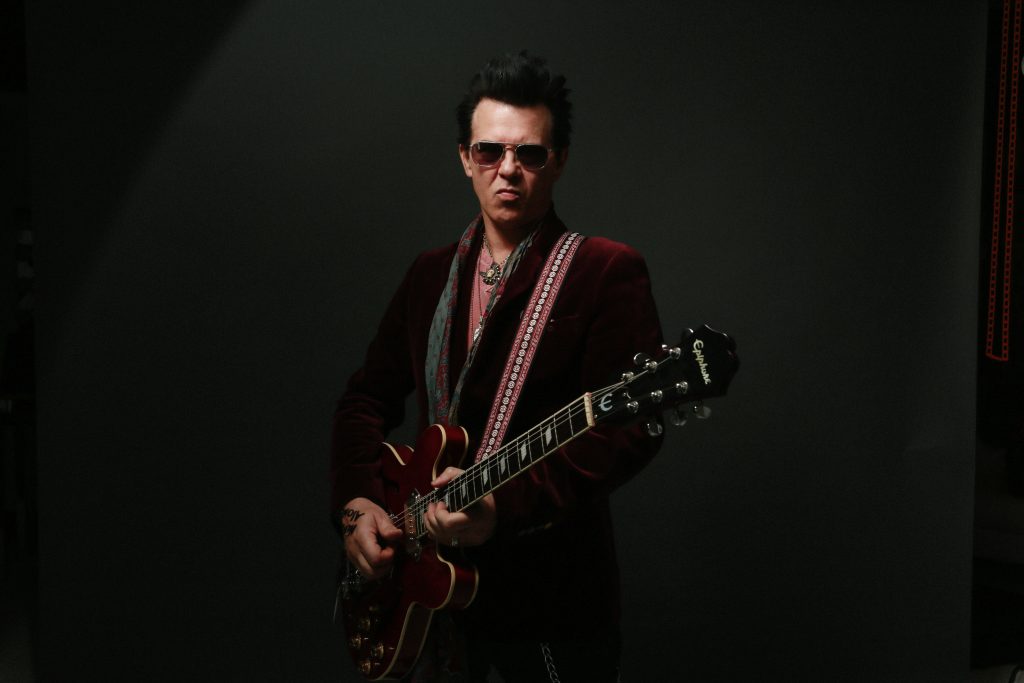


 “I think everything you listen to has an influence over what you write and the way you play,” says Robbie McIntosh. “It all goes into the machine, and then comes out all minced up. People whom I’ve admired as writers over the years include Bob Dylan, the Beatles, Jimmy Webb, and Chrissie Hynde, but to say I wrote songs anywhere near as good as those guys would be presumptuous to the max.” McIntosh needn’t worry though. His solo debut album Emotional Bends was widely praised; Performing Songwriter Magazine called it “as stunning a debut as you’re likely to hear!” The album was a Top 10 hit on Gavin’s non-comm AAA chart (where it spent a total of 14 weeks) and earned him an appearance on the Late, Late Show with Craig Kilborn and features in a variety of national publications including Billboard, Stereo Review’s Sound & Vision, Blues Review and Gannett News Wire.