
Lubos Malina (LEW-bosch Me-LEEN-a) is, according to many, the best European banjo player today. He is admired for his technical abilities, precise timing, clean sound and professional attitude. He is also an inventive writer as shown on his first U.S. release, Piece of Cake. He always attracts attention as a valuable member of the Czech bluegrass band Druha Trava (Second Grass). When describing his contribution to the group, Bluegrass Now said, “Malina’s banjo playing dazzles and adds a strikingly colorful thread to the band’s musical weave.” He is also a popular member of his part time group, The Flatt & Scruggs Revival. In his previous musical career, he played with Poutnici (and can be heard on their two albums, which were awarded the Best Non-American Recordings of the Year by the Society for the Preservation of Bluegrass Music in 1989 and 1990), an army brass band (he is professionaly trained on the clarinet) and in various folk and country music groups. He has also played his 5-string banjo with symphonic orchestras and for Czech pop singers. It’s fair to say, Malina is a musician of many talents.
Born and raised in the Czech Republic, where he still lives, Malina has always been drawn to progressive bluegrass music and was greatly influenced in the beginning by Larry McNeely and Earl Scruggs. “I know today that the base for all banjo playing is Earl Scruggs. The more I explore the Scruggs style, the more I realize his genius.” Malina’s heaviest influences come from the mastery of Bela Fleck, the stylings of Tony Furtado and Alison Brown and the timing and inner energy of his mentor, Tony Trischka. “My favorite is Tony Trischka. I’ve been listening to him for about fifteen years, and I’m always surprised by his ideas.” In 1992, Malina was named Best Banjo Player Overall at the 20 year old Banjo Jamboree Festival held at Strakonice (Czech Republic). This was after being voted Banjo Player of the Year annually since 1986. Along with Robert KrestanPoutnici, which sold nearly half a million records in their native land. After the successful release of his first solo effort All You Can Eat, Malina continued touring with Druha Trava and became an endorser of Gibson banjos, receiving and playing a treasured RB-5 Special.
With guests Bela Fleck, Tony Trischka, Peter Rowan, Davy Spillane, Druha TravaPiece of Cake is an incredible example of Malina’s musically diverse style. The album moves from blistering to sweet, wrapping itself around the mood and tempo of each song. From the haunting melody of The Tree of Leaf and Fire, written after learning of the death of a fellow musician and brought to life with lyrics by Peter Rowan, to the Gypsy sounds of Gejza and Berta, Lubos Malina transforms each piece into its own vibrant creation. Occasionally, he’ll add the sultry, mesmerizing tones of the saxophone, an instrument far outside the realm of acoustic stringed instruments but that works beautifully nevertheless, adding an extraordinary emotional tone. The expression and innovative compositions he puts forth are evidence of his growth and vast array of knowledge as a player and leader.
The release of Piece of Cake should further establish Malina as one of the foremost progressive banjo players performing today. With Druha Trava, he is currently scheduled to make three tours of the U.S. in 1999 with appearances planned at major music festivals including MerleFest.

First emerging amid the creative fervor of the 1960s British Isles folk renaissance, singer, songwriter, and raconteur Gibb Todd continues to be one of the scene’s most beloved and respected figures. Constant international touring – both solo and with such groups as the legendary Dubliners, the Fureys, and Cherish the Ladies – has made this Scotsman (now based in Australia) welcome around the world and added intriguing layers of international influence to his songwriting and repertoire.
Astonishingly, Goin’ Home is only Todd’s second solo album in a career that now spans over four decades. Recorded in Nashville with an international cast of folk, Celtic, and bluegrass luminaries, it reflects Todd’s wide musical range over a program of aching ballads, rousing shanties, and several compelling originals. Joining Todd are innovative Irish guitarist John Doyle (ex-Solas), maverick banjoist Alison Brown, bluegrass fiddler Stuart Duncan, double bassist Danny Thompson (Richard Thompson Band, Pentangle), Nashville fiddler Andrea Zonn (Vince Gill Band, James Taylor), and vocalist and multi-instrumentalist Tim O’Brien.
With such fine support, Gibb Todd shines as never before – his vocals rugged but nuanced, his performances focused and moving. His greatest gift, his effortlessly affable give-and-take with an audience of any size, takes center stage throughout Goin’ Home. Fittingly considering his reputation as a live performer, Todd will premiere songs from Goin’ Home this February at Glasgow’s massive Celtic Connection festival, where he is a longtime fixture and festival favorite.
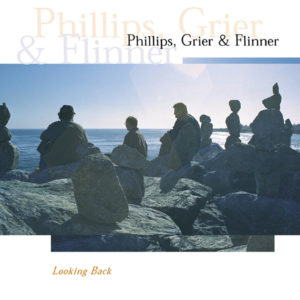
From the Redwoods to the Rockies to the Blue Ridge Mountains, the members of Phillips Grier & Flinner are considered to be among today’s finest acoustic instrumentalists. On the eagerly anticipated follow up to their 1999 debut, two-time Grammy-award winning bassist Todd Phillips, 3-time International Bluegrass Music Association Guitar Player of the Year David Grier and 2-time Winfield National Champion Matt Flinner, combine forces on Looking Back, a beautifully performed collection of instrumental classics. The album showcases bluegrass standards such as “Dixie Hoedown” and “Monroe’s Hornpipe” as well as a cover of McCoy Tyner’s “Search for Peace”, The Beatles’ “I Want You” and Jimi Hendrix’s “Little Wing” – all of which receive a fresh treatment here with plenty of virtuoso soloing from each member of the trio.
Uniquely refreshing in acoustic music today is the sparseness and texture of Phillips, Grier & Flinner’s work. With just bass, guitar and mandolin, the trio engages the listener in a 3 way musical conversation, full of melody but leaving plenty of room for some of the most inspired, and occasionally quirky, improvisation to be found in acoustic music. Listening to Looking Back, one is easily reminded of sitting in on an incredibly memorable jam session; all of the spontaneity and interaction that makes a jam session great is present here – a remarkable feat for a studio album. This undoubtedly has much to do with each player’s ability to provide inspired solos as well as supportive backup playing. Phillips explains, “Everyone had to carry their weight on these tunes. There was no room for any of us to sit back. If someone had, it would have taken away from the texture of the music.”
Two-time Grammy winner Phillips produced Grier’s 1997 highly acclaimed solo album, Panorama, for Rounder Records and produced Flinner’s 1998 Compass debut release, The View From Here as well as his 2001 sophomore effort Latitude. Phillips’ own solo Compass release, Timeframe was praised as an “acoustic gem.” For the three artists, who had enjoyed collaborating on each other’s albums, the next logical step seemed to be to record a trio album. Phillips explains, “It was never a conscious decision to do an album together. Everything we were doing at the time just seemed to lead us in that direction. The only concept for the project was that each of us would bring 3 original tunes and the rest of the trio would help shape the tunes into a spontaneous musical conversation.”
The end result of this musical conversation was the trio’s critically lauded 1999 Compass debut. Bluegrass Unlimited wrote, “It’s amazing how full an acoustic trio can sound. Fans of exquisitely played acoustic music will want to check out the newest ‘power trio’ in string music.” JazzTimes recognized their virtuosity as well writing, “Their playing is exquisite without exception!” The excitement generated over the release led to live performance opportunities for the threesome, who have since appeared at listening rooms and festivals around the country including Rocky Grass and The Four Corners Folk Festival. When it came time to record a second album, they decided to pay tribute to the music and musicians who have inspired them. On Looking Back, influences ranging from Bill Monroe to the Beatles to Jimi Hendrix are all present but each interpretation is uniquely that of Phillips, Grier & Flinner. It is rare privilege indeed to be able to listen in on 3 instrumental masters as they create such a pristine, acoustic tapestry and Looking Back is sure to be embraced by fans of great bluegrass and acoustic music.
Todd Phillips (bass) is one of the founders of the new acoustic movement. An original member of the David Grisman Quintet, he has recorded two solo albums (including the Compass release Timeframe) and has been featured with countless bands and projects including NewGrange, The Bluegrass Album Band and the Grammy winning True Life Blues which he also produced.
David Grier (guitar) is one of today’s top bluegrass lead guitarists. He has four solo albums to his credit and has appeared on over 90 albums including recordings by Mark O’Connor, Jerry Douglas, Alison Brown and Psychograss. He is a three time winner of the International Bluegrass Music Association’s Guitar Player of the Year award.
Matt Flinner (mandolin) is one of the most recognized mandolinists in bluegrass music today. He has recorded three solo albums for Compass Records (Walking on the Moon, The View From Here and Latitude), both of which are stand out releases in the acoustic music genre. In addition to his work with Phillips, Grier and Flinner, this versatile instrumentalist has toured with Leftover Salmon (on banjo) and leads the Matt Flinner Quartet.

It’s hard to deconstruct Judith Edelman. While the music she plays may be rooted in simplicity, she is not and her music is all the more affecting because of the shadows lurking beneath the surface. As Dirty Linen Magazine observed, “On one level, Judith Edelman’s music…is progressive bluegrass with occasional slips into Irish jigs….but lyrically, her songs and themes are a lot closer to the streets of her native New York and the dark musings of Richard Thompson…”
Manhattan-born Judith Edelman arrived at what she calls “the front porch sensibility” of her music through an unlikely route. She grew up on New York’s Upper East Side, daughter of 1972 Nobel Prize-winner Gerald M. Edelman and educator/editor Maxine Morrision, the youngest of three children. Musical study was mandatory in her household and Judith opted for classical piano lessons. She followed one of her brothers, coincidentally a bluegrass-loving fiddler, to Swarthmore College. But life as a professional musician was still not in her sights.
After graduation, Judith pursued a career in Third World development in the Bay Area and eventually landed in Kenya and Zimbabwe. In Kenya, Judith contracted a serious illness that eventually brought her work there to an unexpected conclusion. She returned to San Francisco to recuperate and, inspired by a cassette tape a friend had made of groups such as The Stanley Brothers, Tim O’Brien, and The Nashville BlueGrass Band, began to study bluegrass guitar.
In the mid-90’s Judith set out on the bluegrass touring circuit with bands such as Coyote Ridge and Ryestraw. Life with Ryestraw meant traveling on a shoestring and sometimes finding herself in accomodations no more elegant than a sleeping bag and tarp thrown down on the side of the road. Despite such hardships, the community of acoustic musicians held endless fascination for Judith. She found a sense of place, a grounding, in both the music and the lifestyle it inspired.
In Nashville in 1995, then-BMI executive Jody Williams introduced Judith to Grammy-award winning engineer/producer Bill VornDick who worked with her on her first two Compass releases, PERFECT WORLD (1995) and ONLY SUN (1998). Both albums received high critical praise with particularly effusive accolades coming from Billboard editor Timothy White. Judith’s diverse array of musical influences impressed pundits. Glimmers of contemporary Celtic melodies, blues, jazz, country string bands and British acoustic music illuminated her interpretations of bluegrass with a unique spark.
Judith produced her latest release DRAMA QUEEN in Nashville, with the intention of creating of a very intimate and immediate sound. She describes the process as getting her complex lyrical and harmonic ideas distilled into a simple essence that does justice to the quotidian tales she likes to tell. Judith finds her songwriting to be story-driven and her characters seem to come to life from the dark corners of her imagination.
Although she’s a well-seasoned touring veteran, (having appeared with such artists as Arlo Guthrie, Townes Van Zandt, Ben Harper, The Nashville Bluegrass Band, Peter Rowan, The Sam Bush Band and The Fairfield Four), Judith’s looking forward to playing some of the major bluegrass festivals this year including a first-ever appearance at Telluride. She took up bouzouki just a few months ago and her quickly acquired proficiency is evident on the new album. As The Judith Edelman Band evolves and changes, Judith finds the ensemble becoming an ever more authentic reflection of the artist herself. “Everyone wants to travel the path of being as true to oneself as possible, don’t they?”, she muses. All listeners know is that they’ll travel down any path Judith wants to take them, enthralled by a rich and delicious talent coming into her own.

Noam Pikelny has been building a reputation as one of the most talented and virtuosic young banjo players alive since his 2004 solo debut In The Maze on Compass Records. He is a founding member of Punch Brothers, the string ensemble led by Chris Thile, which The Boston Globe calls “a virtuosic revelation” and The New Yorker describes as “wide-ranging and restlessly imaginative.” Pikelny was also the winner of the inaugural Steve Martin Prize for Excellence in Banjo and Bluegrass and praised by Martin as “a player of unlimited range and astonishing precision.”
Pikelny solidified his own style and solo approach on his 2011 album Beat The Devil and Carry A Rail, and successfully so – the album garnered him a GRAMMY nomination and international attention. He now presents his third solo album Noam Pikelny Plays Kenny Baker Plays Bill Monroe (October 1st), a unique interpretation of traditional bluegrass through a bold, complete adaptation of one of the most influential instrumental bluegrass records of all-time.
“Could I get away with calling an album Noam Pikelny Plays Kenny Baker Plays Bill Monroe?” Pikelny jokingly texted mandolinist Ronnie McCoury. Over a year later, as he reflected on the gag, Pikelny began listening anew to Kenny Baker’s seminal album Kenny Baker Plays Bill Monroe, and realized there may be validity to such a project; the instrumental classics of Bill Monroe are to the bluegrass canon what the Bach solo violin sonatas and partitas are to the classical world and reimagining the album would allow Pikelny to develop a unique banjoistic voice for each track. “The concept was to play these classic melodies note for note on the banjo,” says Pikelny, “but beyond that, this is representation of how you can play traditional bluegrass, in the here and now, uniquely in your own voice while still paying tribute to the masters.”
It also felt like the right time to put out a “standards” album: “There never seemed like an obvious opportunity for me to cut a bluegrass standards record. My professional career started as a member of bands way on the fringes of bluegrass, and so it’s almost like I leapfrogged past that moment,” says Pikelny. “Interpretation of the classics is an essential part of most bluegrass players’ careers—one way of showcasing your voice is by playing stuff that is already familiar to people. The guitarist David Grier has this great story about the time a woman who raised her hand in the middle of his concert and asked, ‘Will you play something that I know so I can tell if you’re any good or not?’ There’s definitely some truth to that idea.”
For the next two months, Pikelny examined each of the Monroe tunes on Baker’s album with microscopic scrutiny and encountered several puzzles as he began to arrange them. The first was a matter of logistics: “How do I arrange something so idiomatic to the fiddle onto the banjo?” The second posed more of a challenge: “How do I make these classic, yet overplayed bluegrass tunes—tunes that have been recorded and played countless times—sound new and fresh?”
Ironically it was his non-bluegrass education and skills developed with Punch Brothers over the last six years that allowed Pikelny to solve both problems. “I was taking something very bluegrass-y to begin with and then fitting it on the banjo in the same manner as I would be doing if it were a piece of classical music, a Punch Brothers arrangement or an electronic synth part from a Radiohead record. Playing the melody on the banjo, just like Kenny Baker did on the fiddle, sounds progressive because it requires techniques that I never would have stumbled upon if I hadn’t been playing non-bluegrass music with Punch Brothers. It was a long and winding path to get to the point where I could consider the concept of this record and also have the technical facility to pull it off.”
The concept of developing banjo techniques outside of bluegrass to play challenging music isn’t new – In the first major shift from the Earl Scruggs-style of playing (where the essence of a melody is encircled by cascading drone string), Bill Keith developed a style in the 1960’s in which he tried to match the note-for-note melody of the fiddle more closely. Since then, banjo players have further developed those techniques of borrowing from other instruments; Béla Fleck recorded jazz pieces like Chick Corea’s “Spain,” and Punch Brothers even have an arrangement of one of the movements from Bach’s Brandenburg Concertos. By assimilating the styles of pioneers like Earl Scruggs, Béla Fleck, Tony Trischka, and Bill Keith, Pikelny was able to develop his own approach that turned all those banjo styles upon themselves to create beautiful and impressive arrangements of what he once feared would be clichéd bluegrass material.
“I’ve had the experience of telling a few colleagues about this project and they said, ‘Oh that’s great you’re going to be doing a record like that, but…you’re not going to record “Wheel Hoss,” are you?’ That comes out of the fact that, without some kind of real reinvention, there’s no need for another version of “Wheel Hoss.” The world needs another version of “Wheel Hoss” like I need a hole in my head,” laughs Pikelny. He was instead empowered by that challenge and, by sticking to his formula and following Baker’s melodies note-for-note, Pikelny’s “Wheel Hoss” is a tour-de-force tune that spans the entire fretboard of the banjo—technically demanding because of its range and speed while still musically real, and emotionally moving.
Other tunes like “Lonesome Moonlight Waltz” aren’t innately banjoistic either – the sustain of the fiddle is difficult to replicate on the banjo and Pikelny was challenged to preserve the lyrical integrity of the tune’s slow, beautiful melody. “I did a lot of note-bending on that tune and a lot of stuff that comes from my obsession with pedal steel guitar music,” says Pikelny. “I treated Kenny’s “Lonesome Moonlight Waltz” more like a sketch. It’s a simple, beautiful melody and so a lot of the choices one would make to ‘make it their own’ emerge in phrasing and dynamics.” As he transcribed each tune and checked them one-by-one off Kenny Baker’s master list, he began to imagine the recording process, and it was time to find the perfect band to fit the bill.
The musicians that Pikelny chose to join him on the album are some of the best in bluegrass and award-winners in their own right, and just as on the Baker album, Pikelny uses the same five instruments on every track— Recorded over a four-day period at Skaggs Place Recording in Hendersonville, TN, Pikenly’s banjo was joined by Stuart Duncan’s fiddle, Bryan Sutton’s guitar, and Ronnie McCoury’s mandolin, all underpinned by Mike Bub’s bass.
For a generation of bluegrass musicians born around the late fifties/early sixties, Kenny Baker plays Bill Monroe was their definitive instrumental record. Kenny Baker’s album is a landmark collection of bluegrass standards that in many ways catalogued and set the standard for style and approach, creating a mini-fakebook for the bluegrass genre – the original album features twelve classic tunes written by the father of Bluegrass, Bill Monroe (1911-1996), performed by his longtime fiddler Kenny Baker (1926-2012). “When I was mulling over this concept, whether it should remain a text message or become an album, I started thinking about the fact that when I was a kid learning bluegrass, I would’ve killed to have had this record made by one of my banjo heroes-” says Pikelny, “ I’ll do it.’”
Though the musicians supporting Pikelny in part grew up with the original album and know the tunes inside and out, Pikelny chose them for their distinct musical personalities, rather than their familiarity with the music. “Ronnie McCoury asked me early on in the session, ‘Do you want me to play it just like Bill plays it on the record?’ and I replied ‘No, absolutely not.’” says Pikelny. “I’m using Kenny’s melody as a springboard on the banjo, but I chose these musicians because I love how they interpret the melody in their own way. I wanted their unique versions to be on the album and I think we succeeded in that. They played so beautifully.” The only aesthetic criterion given to the band was to play close to the melody as much as possible. Everything else was creative fair game.
Having the tunes and the sequence laid out ahead of time provided the band the opportunity to re-record the classic tunes as they had imagined over their years of absorbing and playing the album. The band was enabled to create fresh versions of each track by moving tempos around, featuring more improvisation, or featuring more highly arranged versions with creative exchange of the melodies. “I remember turning to Ronnie McCoury at the end of the first day of recording and saying ‘Ronnie, do you think this is the most money that’s ever been spent on “Big Sandy River?”’ and he said, ‘Absolutely, undeniably.’ In most cases, for a fiddle tune like “Big Sandy River,” you’d just go in and lay it down. But we wanted to experiment, we had to find the right version that was going to fit into the sequence and play best to this concept. So we spent over a half-day. Hey, it’s no small river!” says Pikelny.
The resulting record is a polished, reimagined approach to the classic bluegrass album. Never an exercise in musical impersonation, Pikelny’s end result represents a contemporary catalog of current bluegrass with a direct nod of respect to the genre’s legacy and masters. Noam Pikelny Plays Kenny Baker Plays Bill Monroe, shows Pikelny at a new pinnacle of maturation as a banjo player and musician, redefining the role of the banjo in his own way with an unprecedented approach to melodic playing and thereby setting a new standard in bluegrass for years to come.

In a heartwarming display of international musical cooperation and human solidarity, scores of artists from England, Scotland, Wales, Ireland and the United States have joined hands to create Compass Records’ Hands Across The Water. Produced by Andrea Zonn and John Cutliffe, the CD’s proceeds will go to programs assisting Southeast Asian children whose lives were uprooted by 2004’s devastating tsunami. Yet beyond its tangible contribution to disaster relief, the project gives another rare gift to those who hear it—an entire set of unprecedented, compelling collaborations between some of the finest performers of Celtic and American roots music.
There is no “short list” of Hands Across the Water contributors, for all are among the most respected and preeminent artists in their fields: the 16-track CD features Darrell Scott with Muireann Nic Amhlaoibh, Oisin McAuley and Paul Rodden; Jim Lauderdale with Maura O’Connell; Karen Matheson with Donald Shaw, The Duhks and Bryan Sutton; Jon Randall with Máirtín O’Connor and Alison Brown; Tim O’Brien with Lúnasa; Sharon Shannon with Jackson Brown; Solas with Mindy Smith; John and Fiona Prine with Dermot Byrne; Beth Nielsen Chapman with Christina Quinn, Bonnie Raitt, Michael McGoldrick and Donald Shaw; Paul Brady with Rodney Crowell; Blue Merle with Pauline Scanlon; Altan with Vince Gill; Cerys Matthews with John Jorgenson and Stuart Duncan; Andrea Zonn with Flook and Bill Shanley; John Cowan with the Brock McGuire Band; Jerry Douglas with Ciaran Tourish—and adding still more depth to the album depth is an equally lengthy and stellar array of backing musicians.
While some of these collaborations bring together masters of a particular genre, the CD also features many top artists working outside their usual styles and formats. Vince Gill’s English-language version of a traditional Irish song reworked by Altan is one such highlight; as is “An Occasional Song,” a traditional Welsh number performed by European rock star Cerys Matthews with help from Stuart Duncan and John Jorgenson.
Hands Across the Water was born in a phone conversation between Zonn and Cutliffe last December. Cutliffe, a transatlantic presence in the Irish music world, both behind the scenes and as a player, was horrified by the destruction caused by tsunamis in Southeast Asia. Zonn, an accomplished solo artist and one of Nashville’s busiest fiddlers (regular player with James Taylor, Vince Gill, Alison Brown, Lyle Lovett), suggested that between the two of them, they knew some “pretty good musicians” who “wouldn’t mind helping out if we were to set something up to ease the suffering caused by the Tsunami.” Both remarks turned out to be vast understatements. Cutliffe emailed Garry West of Compass Records, who responded from vacation within an hour, throwing his full support behind the idea. In under a year, Hands Across the Water brought together many of acoustic music’s biggest names, all of whom gave very generously of their work, making time in homes, buses, and hotel rooms to contribute to the project.
Recording the album was truly a trans-national effort, employing the services of 27 studios, 29 studio engineers, and over 100 musicians from Nashville to Sydney, Australia. As Cutliffe wrote, “I myself have driven more than 10,000 miles and we can’t even begin to count the thousands of emails and hours of phone calls that have kept lines buzzing worldwide. We have uploaded and downloaded gigabytes of session tracks and mixes.” Contributing artists chose their own tracks, offering songs and
pieces for Cutliffe and Zonn to mould by adding additional collaborators. The resulting collection is a unique blend of the very best in American roots and Celtic music, an achingly beautiful soundscape that affirms the spirit of working together which made it possible.
FEATURING: Altan • Blue Merle • Paul Brady
• The Brocke McGuire Band • Alison Brown
• Jackson Browne • Dermot Byrne
• Beth Nielsen Chapman • John Cowan
• Rodney Crowell • Jerry Douglas
• The Duhks • Stuart Duncan • Flook
• Vince Gill • John Jorgenson
• Jim Lauderdale • Lúnasa • Oisín McAuley
• Michael McGoldrick • Karen Matheson
• Cerys Matthews • Muireann Nic Amhlaoibh
• Tim O’Brien • Maura O’Connell
• Máirtin O’Connor • Fiona Prine • John Prine
• Jon Randall • Paul Rodden
• Pauline Scanlon • Darrel Scott
• Sharon Shannon • Donald Shaw
• Mindy Smith • Solas • Bryan Sutton
• Ciaran Tourish • Andrea Zonn

Philip Aaberg • Darol Anger • Alison Brown •
Mike Marshall • Tim O’Brien • Todd Phillips
NewGrange is the quintessential Americana band. These six celebrated acoustic music veterans take the listener into the heart of American folk music, the common ground from which jazz, blues and country music emerged. By looking backward to move forward, NewGrange has created a completely unique band sound. They pay homage to the roots of American music while delivering a sophisticated, contemporary take on the string band. No other group has been as successful at combining traditional stringed instruments with piano and creating such a cohesive texture.
With the 2007 release of A Christmas Heritage on Compass Records, these six giants of acoustic music come together to explore musical holiday traditions at the roots of Americana. This collaboration is a seasonal recording unlike any other, featuring traditional holiday music from Ireland, France, and Eastern Europe woven together with Americana and Gospel repertoire. A Christmas Heritage digs deep to explore the full diversity of the American Christmas season.
From the first strains of Mike Marshall’s solo fingerstyle guitar on ’Greensleeves’ through Tim O’Brien’s spirited blues reading of ’Go Tell It on the Mountain,’ this all-star acoustic ensemble offers a variety of lush soundscapes, fresh takes on venerable chestnuts, and some surprising new additions to the holiday canon. Alison Brown’s five-string klezmer banjo breaks fresh ground in a medley with a fiddle trio led by Darol Anger on “Shalom Aleichem/Breakin’ Up Christmas.” Pianist Philip Aaberg leads the group through an extended romp on “Christmas Eve,” and bassist Todd Phillips provides the impeccable underpinnings for the sextet’s flights of fancy.
Imaginative, whimsical, and at times contemplative, this collection is a welcome addition to the Christmas music library.
NewGrange was born on the road. In 1998, Mike Marshall and Darol Anger assembled their personal “dream team” of acoustic musicians for a 22-city holiday season concert tour. The performances drew raves, as did the group’s recording: more than anything, audiences and critics responded to how well the band played together. Probably no one was more delighted than the band itself. Mike Marshall explained, “I was ready for anything when we decided on the players. I thought, ’Well, this is going to be really great or really horrible.’ I was amazed at just how easily these musicians worked together.”
The series of concerts was such an exciting musical experience that the six members decided to transform NewGrange from a one-off touring ensemble into a band. In the spring of 1999, they reconvened in San Francisco and recorded a self-titled album. Though the members of New Grange maintain busy schedules as solo artists, session players, and music business executives, their work together is clearly something special, the sort of innovation that inspires new directions in music.
“It’s exciting to me to think where this style is going,” Mike Marshall said following the release of NewGrange’s self-title. “I’m most excited by the initial impulse that creates a new form. Earl Scruggs, or Bill Monroe, what was going on in their heads at the moment they created those styles? What music were they aware of? What did they want to bring out?”
It should come as no surprise that NewGrange has ventured off the beaten path. All six members of the group are musical innovators as well as instrumental virtuosi. “Darol Anger and Todd Phillips were in the original David Grisman Quartet,” bandmate Alison Brown notes, adding, “That band was the beginning of new acoustic music. I can’t imagine what acoustic instrumental music would be like without these innovations and these innovators. These guys took it to a whole new place.” Brown herself has made a distinctive mark on acoustic music both as a genre-bending, jazz-savvy banjo player/composer and as the president of Compass Records. Mike Marshall, another former member of the Grisman band, has moved beyond American roots and jazz to explore Latin and classical styles, playing mandolin, guitar and violin with everyone from Bela Fleck to Stephane Grappelli to MacArthur Fellowship winner Edgar Meyer. Tim O’Brien, a singer/songwriter whose material has been covered by the likes of the Dixie Chicks, Garth Brooks, and Kathy Mattea, was an early, steadfast exponent of the country/bluegrass/roots-rock fusion now known as Americana. Philip Aaberg, perhaps the boldest choice for the group, has lent his talents as a pianist and composer to a variety of projects, classical to country, jazz to rock. His credits include recordings and performances with the Boston Pops, Peter Gabriel, Elvin Bishop, and John Hiatt.
However, NewGrange not only draws on the innovative style of each of its members: it pushes each musician to extend their creativity even further. “I think they challenged me, pushed me to try new tonalities and stretch a bit,” said Tim O’Brien of his bandmates following the group’s second recording. Brown agreed. “It really is an inspiration to play with these guys, who are some of the giants of modern acoustic music.”
The name of the group reflects the combination of spontaneity, inspiration, and discipline the six-person ensemble generates. “There’s a place in Ireland called Newgrange, and Tim wrote a song about it for our Christmas record,” explained bass player Todd Phillips. “It’s a place where the people of an ancient civilization built this structure so the light would shine through it on the winter solstice kinda like a ’Raiders of the Lost Ark’ sort of thing where you have to stand there and wait for the sun to shine through at just the right time.”

The Matt Flinner Trio has mastered the craft of composing music “on the go.” The group practices a unique approach—writing in hotel rooms, dressing rooms, on airplanes and in the back of tour vans—and debuting the new pieces the same night. Sonically founded in bluegrass, jazz and American acoustic music, the virtuosic collaboration between esteemed mandolinist Matt Flinner, guitarist Ross Martin and bassist Eric Thorin, is a finely tuned composition machine. Now with over two hundred tunes in their repertoire, the trio will release Winter Harvest this January 31st, a road-crafted sequel to their 2009 release, Music Du Jour.
“We’re building on what we started with Music Du Jour, debuting tunes the day they were written. But I think Winter Harvest is a more mature CD; we’ve done close to seventy of these shows now, so we’re getting to choose fifteen tunes out of two hundred and six. We wanted to choose the few tunes that really defined the group and where we’d gone.”
Stylistically, the group is self-defined as “deeply-rooted new acoustic music,” a GRAMMY-nominated mandolinist Matt Flinner has made a career out of playing acoustic music in new ways. Whether it’s with his own Matt Flinner Trio or with Phillips, Grier and Flinner, the Frank Vignola Quartet, Darrell Scott, Steve Martin, the Ying Quartet, Tim O’Brien, Leftover Salmon or the Modern Mandolin Quartet, Flinner’s style and compositional ability have established him as one of the most accomplished and musically diverse mandolinists in the world.
Starting out as a banjo prodigy who was playing bluegrass festivals before he entered his teens, Flinner later took up the mandolin, won the National Banjo Competition in Winfield, KS in 1990, and won the mandolin award there the following year. Matt now tours regularly with the Matt Flinner Trio, which is known for its off-the-cuff compositional daring, writing music the same day it’s performed on most of their shows. He also tours regularly with the Modern Mandolin Quartet, which was nominated for three Grammy awards for their CD Americana in 2013. Over the last several years, Flinner has become known as one of the leading writers of instrumental music in the acoustic world, and his background in classical composition has led him into new avenues in both classical and string band music. Some of Flinner’s longer-form compositions have been performed by the Ying Quartet, the Nashville Chamber Orchestra, Chatterbird, the Expedition Quintet and the Modern Mandolin Quartet. Flinner currently lives in Nashville, TN.
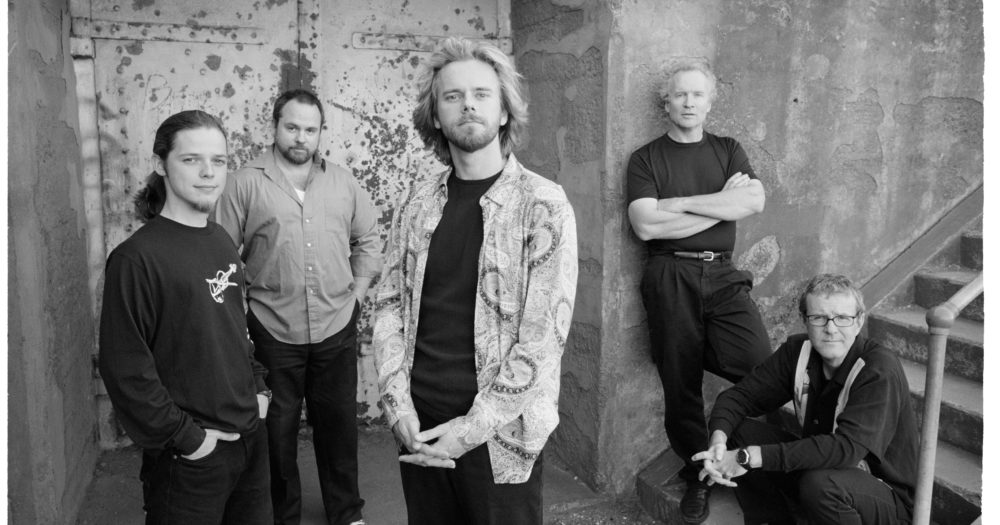
They draw freely from the old school and the old world, but The Waybacks are no throwback. They’ve been erroneously pigeonholed as a bluegrass band and celebrated as purveyors of “acoustic mayhem.” They are as uninhibited and unpredictable as the eclectic San Francisco Bay area that claims them, and for nearly a decade, their experiments have always proven sharp-witted and musically dazzling. They’re living proof that in music anyway, evolution and intelligent design are entirely compatible.
“The whole spirit of improvisation – that’s always been the cornerstone of this band for me,” says singer, songwriter and guitarist James Nash. “Through all the stylistic changes and regardless of the instruments we’re playing, to me the fun of this band has always been that in some ways I can do whatever I feel like doing at any moment.”
They’ve been through changes for sure. Now a four-piece with a full arsenal of acoustic and electric instruments, The Waybacks are releasing Loaded, the boldest, rangiest and most exciting album of their career. Produced by Nashville bassist, composer and consummate sideman Byron House, it’s a musical rebuke to anyone who would typecast true artistry.
The folk and roots underpinnings that have long been a Waybacks hallmark are still there, but after years of playing a huge range of venues and festivals, touring with Grateful Dead founder Bob Weir, and reconfiguring themselves around the hot guitar of James Nash and the fiddle virtuosity of Warren Hood, The Waybacks are enjoying a refreshed repertoire – one that’s touched by Memphis soul, honky-tonk, Parisian swing, classical music, vintage blue pop and much more besides. Nash and Hood have stepped forward as songwriters, allowing The Waybacks to assemble their first project of entirely original music. They’re finding a new collective voice, right before our ears.
Besides Nash, the Waybacks include drummer Chuck Hamilton, bass player Joe Kyle Jr. and the newest member, fiddler and mandolinist Warren Hood. Those who have followed the band’s progress over the past five years have had to bid good-bye to two long-time members, finger-stylist and singer Stevie Coyle and multi-instrumentalist Chojo Jacques. But in welcoming Hood (who sometimes refers to the revamped band as a power trio plus fiddle) and focusing around a more rhythmic, far-reaching sound. You might say The Waybacks have grown by shrinking.
“I just thought they were all very talented players,” says Hood about his attraction to The Waybacks. “I really couldn’t put them into a genre, but I guess that’s what I liked about it. I’d rather be in a band that plays a little of everything than a band that lives in one genre all night.”
The Waybacks were launched in 1999, when Nash, a guitar phenomenon raised in Nashville, was making a living in San Francisco playing solid-body electric guitar. His involvement in an acoustic side project was not supposed to change his life, but it did. “It was kind of a novelty to me,” he says. “It was a liberating, exciting thing where I kind of rediscovered that I love playing acoustic instruments.”
As they began touring, Nash was quickly recognized as a top-flight picker even in the rarified company that circulated at the world’s best folk, roots and bluegrass festivals. The Waybacks’ show was built around blazing instrumental skills and large doses of hilarity. They’d play traditional fiddle tunes with their own twist, original songs that fell into no category, and insanely difficult jazz tunes like Charlie Parker’s “Scrapple From The Apple.”
Fans loved it, and so did the critics. The Chicago Tribune’s David Royko praised their “near-ideal balance of irreverence, chops, discipline, and originality.” Bay Area writer Michael Miller admired their “exotic settings” and “mind blowing picking.” It led to major festival bookings and eventually a recording arrangement with Nashville’s roots label Compass Records.
The Bob Weir shows were one of the most recent validations that The Waybacks had tapped into something profound. The Grateful Dead co-founder has remained incredibly prolific over the years, and in The Waybacks he saw something he recognized. He and the band collaborated on several memorable shows in 2006, including much buzzed-about sets at Merlefest in North Carolina and Hardly Strictly Bluegrass in San Francisco. They translated some of the Dead’s electric repertoire into a newgrass format, while working up covers together from the likes of Johnny Cash and Led Zeppelin. So it should come as no surprise if you hear overtones of the Dead’s freedom and eclecticism in songs like “Good Enough” and “The River” on Loaded.
When they were getting ready to make the new album, Nash and company scheduled their longest-ever period of pre-production. It was a necessary step to finding out how to work as a four-piece and a productive investment in crafting an album that accomplishes a lot of things. “We were so much better prepared for the studio and we had a lot more fun this time,” says Joe Kyle. “Once we got to Nashville with the meter running we were able to get down to business at once. The vibe was strong in the studio. We were at once purposeful and focused and we were having a ball.”
Kyle also says that for the first time The Waybacks had more original material to record than they had space for. That’s because of the songwriting energy of Nash and Hood. Warren’s songs lean toward the vintage, and he shows chops beyond his 24 years in the complex chord changes and sophisticated melodies of tunes like “Savannah.” “Nice To Be Alone” sounds like something Sam Cooke might have recorded, and “Tired of Being Right” is a full-tilt roadhouse boogie. Hood also proves he’s a gifted singer and every bit the son of Champ Hood, whose seminal Uncle Walt’s Band is one good historical touchstone for The Waybacks.
Nash’s songs tend to jam out harder and tell great stories. The characters in “Loaded” and “City Boy” are palpable and have motivation. The proud-because-she-has-to-be girl in “Conjugal Visit” is no lighter weight for being the subject of a funny song. “Beyond the Northwest Passage” is a no-holds-barred sea shanty with a rousing sing-along chorus that features the band’s beer-fueled pals from the Greencards and the Infamous Stringdusters.
Drummer Chuck Hamilton says “each successive Waybacks recording project has been an improvement on the previous one – more fun, better musicianship, better production – and Loaded continues in that tradition. Somehow everything seems more authentic now. There’s a combination of freedom and pressure that I really like.”
When you think about it, that’s the essential tension behind all great music. One without the other just doesn’t work. It’s that balance that makes The Waybacks a real ensemble, one that transcends genres in the best possible way. As Hood says, “I’d like to hear them try to call us a bluegrass band now!”

“Lord you know I’ve been so many places/At least I know I have a longer view”, sings Leftover Salmon lead singer and mandolin player Drew Emmitt over a rollicking mandolin lick on the title track of his third solo effort, Long Road. “I’ve been on the road since the 80’s – can you believe that? That’s 25 years, a quarter of a century…Long Road is all about where I’ve been, what I’ve seen, where I’ve ended up and I invited all of my friends I met along the way to help me tell the story.”
Revered as one of the most energetic and innovative mandolin players on the jamband/newgrass scene today, Emmitt’s “inestimable talents” (An Honest Tune) don’t end with just the instruments that can be picked. Holding the wheel steady on acoustic and electric slide mandolin, acoustic and electric guitar and mandola, Long Road also showcases Emmitt’s superlative storytelling and versatile vocal abilities. With seven originals, including co-writes with John Cowan (“Long Road”) and Jim Lauderdale (“I’m Alive”), Emmitt saavily chose a few best-of-life-on-the-road songs, such as Supertramps’ “Take the Long Way Home”, Marshall-Tucker Band’s “Take the Highway”, and Van Morrison’s “Gypsy in my Soul”. Co-produced by Emitt and Compass Records co-founder Garry West, “my heaven band”, is how Emmitt describes the special guest musicians on Long Road: Billy Nershi of The String Cheese Incident (dobro), Chris Pandolfi of The Infamous Stringdusters (banjo), Andy Hall of The Infamous Stringdusters (dobro), Stuart Duncan (fiddle), Tim O’Brien (harmony vocals), Alison Brown (banjo), Darrell Scott (vocals), Eric Thorin (bass), Jeff Sipe of The Aquarium Rescue Unit (drums), John Cowan (vocals), Reese Wynans (Hammond B3), Steven Sandifer (percussion) and Tyler Grant (guitar). Hallelujah.
Following a decade of success with Leftover Salmon, Emmitt released his first solo effort, Freedom Ride, in 2002 drawing on the talent of peers John Cowan, Peter Rowan, Sam Bush, Ronnie McCoury, Vassar Clements, Stuart Duncan and Randy Scruggs. Critics and fans loved the collaboration and Emmitt relished the chance to record with some of the giants with whom he’d shared festival stages. “It’s amazing,” he said, “it’s like walking in a dream….Standing on stage next to Sam (Bush) is pretty indescribable.” In 2005 he followed up with Across The Bridge, an equally impressive effort showcasing Emmitt’s bluegrass chops and songwriting talents as a straight-ahead bluegrass man. After touring as the Emmitt-Nershi band with Billy Nershi of The String Cheese Incident for the past year and making several reunion appearances with Leftover Salmon, Long Road finds Emmitt rejuvenated and once again taking the contemporary, live gig, fresh everytime approach to bluegrass music.
Drew Emmitt will be on tour throughout the summer and fall of 2008, including appearances with Leftover Salmon at the Telluride Bluegrass Festival and the 10,000 Lakes Festival and with the Emmitt-Nershi band at the High Sierra Music Festival, the Rothbury Festival and Jam Cruise 7. Drew Emmitt and The Waybacks toured the US in October 2008.

3x IBMA Female Vocalist of the Year and daughter of bluegrass Dale Ann Bradley celebrates her musical heritage with new original tracks, a classic rock cover and a timeless tribute to Bill Monroe.
“I grew up in a tar and paper covered shack right near Loretta Lynn’s childhood home,” reflects Dale Ann Bradley on her rustic origin in the hills of east Kentucky as a hardscrabble preacher’s daughter. ”It was very different. It was not easy,” she says. And even as a girl, she knew she wanted more. With Somewhere South of Crazy (available August 30th), this three-time IBMA Female Vocalist of the Year shares what has shaped her life and music, by going deeper—deeper into bluegrass, deeper into her own musical passions, deeper into her own history as a veteran entertainer who spent years singing country music alongside her ‘grass at Kentucky’s venerable Renfro Valley.
The result is a set that ranges from first-generation bluegrass classics through long-cherished favorites to brand new songs from Bradley and her friends—but always, always with her incomparably rich voice and east Kentucky sensibilities right at the center.
The title track provided Bradley with some especially enjoyable moments. “We had the best time writing,” she says of writing—and singing—partner Pam Tillis. “I just love her. We sat down, and she had that title line and the idea, and I came up with the melody and some lines—we had worked on a few different things, but this was the one that we finished, and as soon as we did, I knew it was going to be the title track.” Bill Monroe’s “In Despair” may be more unexpected. “I didn’t plan it as a tribute,” Bradley says with a laugh. “But I hope people will think of it as one. I just wanted to showcase a more traditional side of what I do. But I’m glad it’s coming out on his 100th birthday!” The track “Come Home Good Boy” was more intentional and especially poignant, lending itself to Bradley’s first memory of a funeral, when, at age five, a neighbor boy who served with her uncle in Vietnam returned home in a casket.
A smartly selected crew of singers and players frame Bradley’s tender yet muscular singing to perfection. A couple of her regular bandmembers—harmony singer Kim Fox and banjo man Mike Sumner—make appearances, and so do supple, inventive musicians like the Infamous Stringdusters’ Andy Hall, ace studio fiddler Stuart Duncan, bass stalwart Mike Bub, producer Alison Brown (who doubles on guitar and banjo) and, perhaps most surprisingly yet appropriately, young mandolin phenomena Sierra Hull. All those elements come together in the partnership here with singer, guitarist, songwriter and friend Steve Gulley. “We grew up together,” Bradley notes. “Steve and me—we each know what the other one’s going to do.” Yet as strong as the supporting cast is, the focus is, as always, on Dale Ann and the songs she’s chosen—and as always, they’re a deliciously varied bunch.
To a listener unfamiliar with her unique ability to pull songs from the rock vaults and make them her own, Seals & Crofts’ ‘Summer Breeze,’ will undoubtedly be the biggest surprise, but Bradley sees it as a natural. “I’ve always wanted to do that song,” she says. “I don’t pick out a rock tune just for the sake of having one—it has to be one that I always grew up with, or one that I hear that strikes me as fitting into the mix. Sometimes a melody or lyric will just have that feel, just lend itself to the banjo or something like that—like this one, it almost sounds Celtic to me.”
Some songs, like “I Pressed Through The Crowd” and “Will You Visit Me On Sundays,” have been in Bradley’s repertoire for years, yet were never recorded until now. “I was so tickled when Alison gave the o.k. to ‘Sundays,’” she notes, “because it brings back the traditional country that Steve and I have been singing together for a long, long time. And of course, ‘I Pressed Through The Crowd’—I’ve been doing that one for a long time, and it just keeps getting more and more meaningful to me.” Others are more recent. ‘Leaving Kentucky’ was, ironically enough, started in Nashville, but finished after Bradley moved back to Kentucky.

Unlike rock ‘n’ roll, bluegrass music’s boundaries are often defined in very narrow terms and that has caused some bands to carefully consider their place within the genre. But, in order to survive, everything must evolve… even bluegrass. Enter the Infamous Stringdusters, the very model of a major modern bluegrass band.
“At a certain point in our career, there was hesitation in calling us a bluegrass band,” guitarist Andy Falco admits. “These days, we’re much more comfortable with that label.” Banjo man Chris Pandolfi echoes the point: “We love bluegrass, but we have been influenced by other genres as much, if not more. When it comes to making music, we always try to be a blank slate and give new songs whatever they need to come to life. We just try to make something good, something that is true to who we are.”
On The Laws of Gravity, that’s exactly what the Infamous Stringdusters — Andy Hall (dobro), Jeremy Garrett (fiddle), and Travis Book (double bass), in addition to Falco and Pandolfi — have done. Their seventh studio set further proves that the band’s collective whole is far greater than the sum of its individual parts, as the song selection and pitch-perfect performances weighs the Stringdusters’ appeal to traditional fans against their musical quest to attract new listeners. It’s a balance that comes naturally to the band.
Here, trad-leaning tunes like “Freedom,” “A Hard Life Makes a Good Song,” “Maxwell,” and “1901: A Canyon Odyssey” pick hard and soar high, letting trade-off solos and layered vocal harmonies work their magic. As it continues on, Gravity reaches its roots deep and wide, but never sacrifices the wings of the band, as exemplified in tracks like “Back Home” and “This Ol’ Building” which pull from the blues and R&B strands of the Stringdusters’ musical DNA.
“The specific feelings in those songs lend themselves to a soulful sound,” Hall explains. “The longing of ‘Back Home,’ the passion of ‘This Ol’ Building.’ Slowing things down a bit, but still having a real edge and passion is the essence of that. And probably a bit of maturity on our part brings out a more authentic soulful sound.”
Indeed, the Stringdusters have worked hard to become the band they are or, perhaps, the band they wanted and knew themselves to be — a self-discovery process to which The Laws of Gravity bears witness. “Once you start to move out of that, a lot of good things happen,” Pandolfi says. “You know who you are, and how to do your thing with confidence and experience. This colors the songwriting process as much as anything. We work so hard on the music, but it’s not hard work. It’s really the payoff, and it comes more naturally with time.”
Letting the past inform and the present propel, the Stringdusters’ style and substance are uniquely Infamous. Since 2007, the band’s ever-evolving artistry and boldly creative collaborations — including Ryan Adams, Joss Stone, Bruce Hornsby, Joan Osborne, and Lee Ann Womack — have pushed them past the edges of traditional acoustic music and carved out a musical niche all their own in the hearts of fans and critics, alike. Over the past couple of years, they released 2015’s Undercover, a covers EP, followed by 2016’s Ladies & Gentlemen, an album featuring multiple female guest vocalists. Those projects may have seemed like artistic tangents, but they actually proved to be a pretty direct route from there to Gravity.
“Being singers and songwriters, we were really ready to put some of our own songs out with us singing them,” Falco says. “In the same way solo projects can take you away to be able to come back and feel refreshed, the last two records have done that and we were ready to hit the studio with our songs sung by us.”
“We had much more of a vision for how we wanted this album to come together than we did with past projects,” Pandolfi adds. “We got the music, including all our individual parts, to a place where we knew we could go into the studio and just let it happen live. We are a band. We play live together and, more than any one song or achievement, this is what we do. Now we have an album that captures that.”
Part of Gravity‘s vision involved not road-testing and adapting the songs before taking them into the studio. That’s a new step in the Stringdusters’ process which starts with filtering through and whittling down a wealth of material to the best of the batch. “We take those 20 or so songs and take them to the next level as a band,” Pandolfi explains. “So much gets accomplished in this writing/arranging stage. It’s where songs become Stringduster songs. In the end, we share the songwriting credit because of all the collective work that goes into this (and every other) aspect of being in a band.”
“We may try the song in a number of different feels before landing on something that works for the sound of the band. If a song is good, it usually comes together fairly quickly,” Halls says, adding, “But we’re writing more diverse stuff these days, so some experimentation is always welcome.”
While the new record boasts a single instrumental track, “Sirens,” where the five fellas really cut loose on their respective strings, the vocals across the other dozen tracks tie this music to the bluegrass tradition in an even more profound way. “Singing is a big part of bluegrass music,” Falco says. “It’s an important part of the sound and I think that part of music gets overlooked a lot. The singing should convey the emotion of the song. That’s what we aim to do. One could argue that it’s more important than the playing.”
Out beyond The Laws of Gravity, the Infamous Stringdusters have an even broader vision. “We just want to keep making original music, keep evolving as people and musicians, and continue to help our amazing community of fans grow and enjoy this experience together,” Pandolfi says. “When we hear from people that our music or the community around our music has helped them find joy in life, it makes everything seem very worthwhile.”
Falco adds, “We love playing together and that’s the reason we’ve been doing it for as long as we have. We want to able to do this until we’re old and grey. That’s really it — making music together and continuing to evolve our brand of bluegrass music.”
-->


