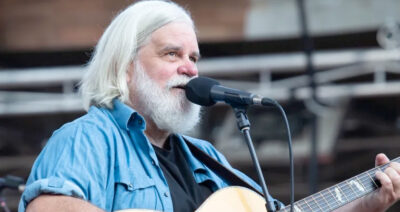
Clive Gregson and Christine Collister were the most moving and memorable U.K. folk-rock duo to emerge since Richard and Linda Thompson. Gregson’s wry tales of the ins and outs of love, sung in Collister’s heartbreaking voice have earned the duo (and subsequent solo work) respect and a devoted following, though commercial success and mainstream recognition have eluded them. Gregson (born January 4, 1955) was the founder of Any Trouble, a pub-rock/new wave quartet, in Manchester in 1975. The band’s sound, and Gregson’s songwriting and singing, reminded some of Elvis Costello, and Any Trouble was signed by Stiff, Costello’s label. The band made several well-remembered but poor-selling albums, then split up in 1984.
In 1984, Gregson discovered Collister singing in a folk club and, impressed by her talents, he offered to work with her on future projects. Gregson had already begun an association with Richard Thompson, initially singing backup on the classic Shoot Out the Lights album in 1982. While working on Thompson’s Hand of Kindness, Gregson suggested using Collister for additional backup vocal duties. The formula worked and the two continued for years as integral parts of the Richard Thompson touring band — arguably the finest live band he’s assembled. In 1985, Gregson made a solo album, Strange Persuasions, with Collister singing backup on a few tracks. The two began performing as a duo on the folk club circuit shortly thereafter. The duo’s first release was a homemade tape sold at gigs, later released as Home and Away. It was followed by their first formal album, Mischief, in 1987, and by a Change in the Weather in 1989. Love Is a Strange Hotel, released later the same year, was an album of cover versions of Gregson and Collister’s favorite songs. By 1992, the stress of constant touring and working together without substantial success finally took its toll on them. The two decided to go their separate ways after one parting shot, The Last Word, and on final tour. They both continued on as solo acts.
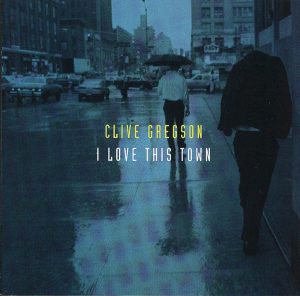
Gregson eventually relocated to Nashville and has been the more active of the two, releasing the live “official bootleg” Carousel of Noise on his own label in 1994, People & Places in 1995, and I Love This Town in 1996 for Compass Records, in addition to various production work and side collaborations with Boo Hewardine. Christine Collister continued to play the folk circuit, releasing a live album, Live, in 1995 and a new studio album, Blue Aconite, in 1997. In 1998, after a brief stint in the group Plainsong, Gregson returned with Happy Hour, and launched a successful tour of the UK with Hewardine and Edie Reader. Gregson’s 2002 release Comfort and Joy was followed by extensive touring, including rare jaunts to the United States and Japan, but in 2003 his career was put on hold for several months after a fall from a ladder resulted in a broken shoulder and arm. Thankfully, Gregson fully recovered, and returned with a low-key solo set, Long Story Short, in late 2004.
Watch
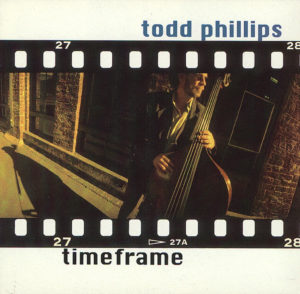
Bassist Todd Phillips’ musical pedigree is unbeatable. He staked his claim in musical history in 1975 as a member of the original Dave Grisman Quintet. He has performed and recorded with some of acoustic music’s most influential artists, including John Gorka, Montreux and Psychograss. On his latest solo album Timeframe, Phillips establishes himself as a multi-instrumentalist and composer capable of blending diverse influences into a seamless musical statement.
Phillips was born in San Jose, California in 1953. He began playing electric bass at age 11 and had his first professional studio recording experience when he was 15. Around the time that he graduated from high school he began playing the acoustic bass and developed an interest in bluegrass and jazz.
Soon afterwards, Phillips began studying with mandolinist David Grisman. This relationship quickly led to his involvement in the development of the original David Grisman Quintet. During his tenure with the group, Phillips had the opportunity to work with many well-known acoustic instrumentalists including Stephane Grappelli,Darol Anger, Mike Marshall, Tony Rice and Richard Greene. He credits the experience as having had tremendous influence on his musical growth. In particular, he says: “Spending so much time with Grisman when I was young both twisted and widened my perspectives (in a creative way) about all music.”
In 1984, Phillips recorded his first solo album Released which received critical acclaim. Billboard Magazine wrote: “Todd Phillips makes a winning new acoustic frontman.” The San Francisco Bay Guardian heralded Phillips as “one of the most meticulous and musically focused artists of the new acoustic musicmovement.” Phillips was also the 5-time recipient of the Frets Magazine readers’ poll award for Best Jazz and Bluegrass Bassist Grammy Award for his work with JD Crowe and the New South.
Throughout the 80’s and into the 90’s, Phillips continued to be involved in a variety of projects. Together with musical associates Mike Marshall and Darol Anger from the David Grisman Quintet, Phillips formed the eclectic jazzgrass group Psychograss. Theband recorded one album for Windham Hill which furthered their individual reputations as leading innovators in new acoustic music. Phillips also continued to build a successful career as a sessionmusician and appeared on dozens of recording projects including records by Alex de Grassi, Tony Rice, Jerry Douglas and Tony Trischka.
In 1991, Phillips began composing and arranging music for Timeframe.His goal was to write, arrange and record in a way that incorporated as much of what he loves about music as possible. The end result is what Phillips labels a “musical hybrid” – a sound that is at once reminiscent of the west coast “cool jazz”scene, the bachelor pad sound, and the new acoustic movement, and draws inspiration from sources as unlikely as Bill Evans,John Coltrane, Steely Dan, Joseph Haydn and Bill Monroe. Together with reed master Paul McCandless (Oregon), violinist Darol Anger (Turtle Island String Quartet), Joe Caploe on vibes and drummer Paul van Wageningen, Phillips delivers a focused and assured take on acoustic jazz which the Nashville Scene described as “music that’s both accessible and beautiful while remaining constantly surprising and fresh.”
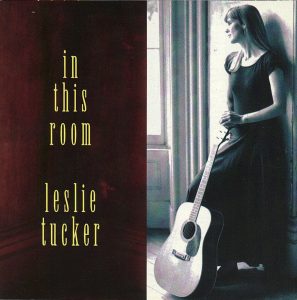
Featuring Jerry Douglas, Tim O’Brien, Make Marshall, Stuart Duncan, and Clive Gregson, Leslie Tucker’s debut is an sincere, earnest masterpiece of confident, genuine songwriting.
“I would pay to hear Leslie sing from the index of a computer manual.” – Tim O’Brien
“That kind of honesty can’t be made up – it has to be lived.” – Pierce Pettis
Watch
Through the Round Window, the solo debut of renowned tenor banjo player Éamonn Coyne, is a rare achievement. Using his masterful technique as a foundation, Coyne builds a musical bridge between the traditional Irish sounds of his upbringing and his other, more international influences. The high esteem Coyne commands in Irish music circles is reflected in the clarity, precision, and impeccable timing of each note he plays. Wherever his vast musical imagination takes him, the power and resonance of his ingrained heritage shines through. The result is a remarkable album that explores new terrain for the Irish tenor banjo while radiating the warmth and integrity of a centuries-old musical lineage.
“Over the years,” Coyne explains, “I have been lucky enough to experience lots of different types of music. I wanted to record a CD to explore some of these influences on my playing. Through the Round Window comes from the music of these different sources passing from me through the main instrument I play, the Irish tenor banjo – whether it be Donegal fiddle music, Irish box and flute playing, or old-timey American fiddle and banjo tunes.”
Channeling Coyne’s eclectic tastes through his own virtuosity on the tenor banjo lends Through the Round Window a freshness that never sounds incongruent – even at its most far-reaching. On the more traditional side are “Whistling Reels,” a set recorded with flautist Michael McGoldrick, “Mazurka & Jigs,” which combines a Donegal-styled mazurka with a pair of jigs, and the languid “Tommy & Jerry,” which ingeniously blends tunes from Tommy Peoples (in a highland style) and two Cape Breton tunes from Jerry Holland.
Careful sequencing allows Through the Round Window to unfold gracefully, the more adventurous excursions beautifully balanced by the invigoratingly executed traditional fare. One of the threads unifying Through the Round Window is the interrelation between different cultures. Nowhere is that give-and-take better demonstrated than on “Nine String Susannah,” a trio of American old-tyme fiddle tunes played as a duet with Grammy-winning 5-string banjoist Alison Brown. Kevin Doherty, of the acclaimed eclectic Celtic band Four Men and a Dog, contributes two original compositions that combine the soulfulness of classic balladry with a contemporary edge.
All of the performances on Through the Round Window sparkle with empathy and audible camaraderie between the players. “That’s because this CD has come together thanks to the great friends I have,” Éamonn Coyne says with a smile, “who happen to be musicians.” That sound – of good friends, good taste, and good times – is what, more than anything, makes Through the Round Window such a gem.
Watch
Fiddlers 4 is a gathering of some of today’s most celebrated fiddlers. Michael Doucet is well loved for his work as the leader of Cajun supergroup Beausoleil. Darol Anger, a veteran of the David Grisman Quintet and founding member of the Turtle Island String Quartet, is the leading exponent of jazz-hued newgrass. Bruce Molsky is internationally revered as a leading old time fiddler and Rashad Eggleston, a hot newcomer cellist, is lauded for his scorching hot technique. Each has made a major musical statement and helped revolutionize their field, inspiring numerous emulators and new genres. Their repertoire spans a heroic reach of American culture, covering the spectrum of American fiddle, from the oldest dance tunes to sophisticated jazz sounds, with singing and stories.
On their debut album, these four master musicians create a cross-cultural fiddling extravaganza, with stops in the Louisiana bayou, the Appalachian mountains and the Marin foothills. On tracks such as You Little Wild Thing (La Betaille), Cajun master Michael Doucet sings with the passion that launched his group Beausoleil to the forefront of Cajun music makers. Pickin’ the Devil’s Eye is an adaptation of the old time standard that gives each fiddler a chance to dazzle. Fiddler players across the world are coming together and realizing the great potential of fiddle music to move and inspire all ages. In this spirit, these influential and accomplished musicians have joined forces to create something beautiful and new out of very old cloth.
Darol Anger has changed bluegrass and jazz fiddling by blending elements of the two, just as swing fiddlers did in the mid-fifties, by using modern harmonies and rhythms. Violinist, fiddler, composer, producer and educator, he is at home in a number of musical genres, some of which he helped to invent. With the jazz-oriented Turtle Island String Quartet, Anger developed and popularized new techniques for playing contemporary styles on string instruments. The virtuoso ‘Chambergrass’ groups Psychograss and NewGrange, his highly lauded partnership and duo creations with string master Mike Marshall, and the plugged-in Anger-Marshall Band feature his compositions and arrangements. His Grammy-nominated folk-jazz group Montreux provided one of the original musical models for the New Adult Contemporary radio format. The David Grisman Quintet forged a new genre of acoustic string band music with Darol’s ‘fertile inventiveness, surprising touches and technical mastery’ often in the forefront.”
Michael Doucet brought Cajun Music out of obscurity to joyful public acclaim. Michael’s super-charged fiddling and singing powers his two-time Grammy award-winning group Beausoleil, by far the best known Cajun band in the world. With his constant research and vast knowledge of Acadian history, Michael has not only preserved an essential part of American culture, but moved it forward into the mainstream. Beausoleil, now in its 25th year and a regular guest on NPR’s Prairie Home Companion, composed and played the music for the feature film Belizaire The Cajun, and has released a score of best-selling recordings on Arhoolie and Rhino Records.
Bruce Molsky has been dubbed the “Rembrandt of Appalachian Fiddling” for his brilliant mastery of regional styles, encyclopedic knowledge of tunes, and especially his supercharged and entirely personal rhythm, which has been known to break glass, explode closed containers, and compel dionisian episodes of involuntary dancing. Renowned musicians Tommy Jarrell and Albert Hash were two of Bruce’s mentors in the Blue Ridge Mountains where Bruce learned to play. He has been featured in Acoustic Guitar, Fiddler Magazine, Dirty Linen, Acoustic Musician, and other magazines. His three recordings on Rounder Records have created an unprecedented stir in the rapidly growing world of old-time music, and he is accomplished on guitar, banjo, and vocals.
Rushad Eggleston is an enormously talented cello player, a master of improvisation and fiddle styles on a relatively unwieldy instrument and has already done things that nobody has done with the cello. He was the first stringed instrument student admitted to the prestigious Berklee School Of Music on a full scholarship. A newcomer to the professional community, Rushad brings an element to Fiddlers 4 that helps make the dream of a truly masterful American Vernacular String Quartet a reality.
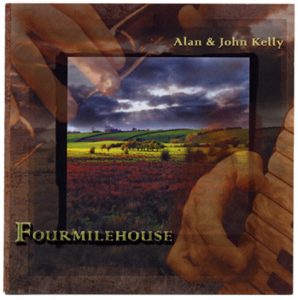
To the musical question of our time, “O Brother, Where Art Thou?” Alan and John Kelly can each answer, “Right here.” The pure-drop playing of Alan on piano accordion and John, his younger brother, on flute and whistle can be likened to the impact of that movie soundtrack. Fourmilehouse is traditional music served straight up, with no need for studio sweeteners or sleight of hand, and harks back to a time when Irish music, like American old-timey and early country music, had a back-porch ease belying considerable skill.
Such skill runs deep in the family of Alan and John Kelly, who were born in Roscommon town. Their grandfather was a fiddler; their grandmother, a melodeon player; their father, Frank Kelly, a piano accordionist from Fourmilehouse in southern Roscommon who won the All-Ireland senior title in 1964; and their mother, Mary ( Ryan) Kelly, an adept pianist and saxophonist. From the late 1950s to the early 1960s, Frank and Mary Kelly were members of the Killina C Band, a gifted ensemble also featuring fiddler Paddy Ryan, a first cousin of Mary and a music instructor to both Alan and John.
“When we were children, Paddy and my father gave us th e encouragement and the rudiments for playing,” Alan explained. “We used old notation from Paddy for a lot of the tunes we recorded on Fourmilehouse.” John drolly added that “we hadn’t played some of those tunes in years, so we had to learn them all over again.”
Learning tunes and honing technique came rapidly for both brothers. Alan found his first piano accordion, an old Paolo Soprani model won by his dad in a raffle, tucked in a turf shed. Besides his father, he counts former Silly Wizard member Phil Cunningham as a prime reason for taking up the instrument. “I heard Phil play the piano accordion one night on Radio One and couldn’t believe how much music he got out of it,” Alan recalled. His brother John points to Mary Bergin as the main influence on his whistle playing and to Roscommon’s Patsy Hanley, John Carlos, and Frank Jordan as the principal influences on his flute playing.
This album captures the two brothers in peak performance. It is the first full-bore recording by John, who previously guested on a few tracks of his brother’s solo albums, Out of the Blue in 1996 and Mosaic in 2000. Alan’s other recording credits include appearances on Niamh Parsons’s Loosely Connected in 1992, Michael McGoldrick’s Morning Rory in 1996 and Fused in 2000, and Seán Keane’s Seansongs in 2002. He also played for such acclaimed theatrical productions as Brian Friel’s Wonderful Tennessee and Mabou Mines’s Peter & Wendy.
The repertoire Alan and John have chosen is a deft blend of unaging standards, such as “The Duke of Leinster” reel that Sligo fiddler Michael Coleman made popular in 1927, and more recent tunes destined to become standards, such as Liz Carroll’s “Diplodocus” reel, Pat Crowley’s “Harp and Shamrock” hornpipe, and Billy McComiskey’s “Palm Tree” reel. Some evergreen compositions of Newtown, County Tipperary’s Paddy O’Brien (1922-1991) also make the mix that much more appealing, and the support the Kellys get from guitarist Arty McGlynn, percussionist Jim Higgins, organist/pianist Rod McVey, bouzouki player Cyril O’Donoghue, banjoist/pianist Brian McGrath, and bodhrán player John Moloney is exemplary.
For Alan and John Kelly, Fourmilehouse proves you can go home again musically. What a stunning duet album these talented brothers have given us.”
– from the liner notes by Earle Hitchner
Credit: Tobin Voggesser
Few bands stick around for thirty years. Even fewer bands leave a legacy during that time that marks them as a truly special, once-in-lifetime type band. And no band has done all that and had as much fun as Leftover Salmon.
Since their earliest days as a forward thinking, progressive bluegrass band who had the guts to add drums to the mix and who was unafraid to stir in any number of highly combustible styles into their ever evolving sound, to their role as a pioneer of the modern jamband scene, to their current status as elder-statesmen of the scene who cast a huge influential shadow over every festival they play, Leftover Salmon has been a crucial link in keeping alive the traditional music of the past while at the same time pushing that sound forward with their own weirdly, unique style.
The band now features a lineup that has been together longer than any other in Salmon history and is one of the strongest the legendary band has ever assembled. Built around the core of founding members Drew Emmitt and Vince Herman, the band is now powered by banjo-wiz Andy Thorn, and driven by the steady rhythm section of bassist Greg Garrison, drummer Alwyn Robinson, and dobro player & keyboardist Jay Starling.
The current lineup is continuing the long, storied history of Salmon which found them first emerging from the progressive bluegrass world and coming of age as one the original jam bands, before rising to become architects of what has become known as Jamgrass and helping to create a landscape where bands schooled in the traditional rules of bluegrass can break free of those bonds through nontraditional instrumentation and an innate ability to push songs in new psychedelic directions live.
Salmon is a band who for more than thirty years has never stood still; they are constantly changing, evolving, and inspiring. If someone wanted to understand what Americana music is they could do no better than to go to a Leftover Salmon show, where they effortlessly glide from a bluegrass number born on the front porch, to the down-and-dirty Cajun swamps with a stop on Bourbon Street in New Orleans, to the hallowed halls of the Ryman in Nashville, before firing one up in the mountains of Colorado.
Cara Dillon seems to have seduced the entire nation in just a few short, breathtaking, eventful years. Make that several nations, for among the rare ingredients of her irresistibly natural personality and mesmerising ability to relate a great story in song, is an all-embracing quality that defies borders, cultures, and even languages.
Born in 1975 in Dungiven, Co. Derry, Ireland, Cara demonstrated her striking vocal ability in winning the All Ireland Traditional Singing Trophy at the tender age of 14 and a year later she was in her first band, Oige. They were pretty successful too. She went on to sing with De Dannan and then folk supergroup, Equation, joining the latter in 1995 as a replacement to Kate Rusby.
Equation (signed to Blanco Y Negro, WEA) seemed to be heading for the top, but the album they recorded ’Return To Me’ didn’t get a release. However, Cara had found her soulmate Sam Lakeman in the band and the pair decided to try their luck as a duo. They re-signed to Blanco and there followed a long and frustrating period as they experimented with writing and recording songs with a succession of top producers and songwriters around the world. However, none of the projects and collaborations seemed to fulfill the inner visions that Cara and Sam had developed, so after six years of being tied to a major label, they decided to abandon ship and set sail on their own. The world is glad they did.
“Cara Dillon, is without exaggeration, amongst the very finest to be heard today.”
– Folk Roots
“Blessed with a voice of unearthly beauty” – Sunday Herald
“Every so often a singer comes along and stops me in my tracks making me look at music in a slightly different light.”- The Living Tradition
Watch
The Matt Flinner Trio has mastered the craft of composing music “on the go.” The group practices a unique approach—writing in hotel rooms, dressing rooms, on airplanes and in the back of tour vans—and debuting the new pieces the same night. Sonically founded in bluegrass, jazz and American acoustic music, the virtuosic collaboration between esteemed mandolinist Matt Flinner, guitarist Ross Martin and bassist Eric Thorin, is a finely tuned composition machine. Now with over two hundred tunes in their repertoire, the trio will release Winter Harvest this January 31st, a road-crafted sequel to their 2009 release, Music Du Jour.
“We’re building on what we started with Music Du Jour, debuting tunes the day they were written. But I think Winter Harvest is a more mature CD; we’ve done close to seventy of these shows now, so we’re getting to choose fifteen tunes out of two hundred and six. We wanted to choose the few tunes that really defined the group and where we’d gone.”
Stylistically, the group is self-defined as “deeply-rooted new acoustic music,” a GRAMMY-nominated mandolinist Matt Flinner has made a career out of playing acoustic music in new ways. Whether it’s with his own Matt Flinner Trio or with Phillips, Grier and Flinner, the Frank Vignola Quartet, Darrell Scott, Steve Martin, the Ying Quartet, Tim O’Brien, Leftover Salmon or the Modern Mandolin Quartet, Flinner’s style and compositional ability have established him as one of the most accomplished and musically diverse mandolinists in the world.
Starting out as a banjo prodigy who was playing bluegrass festivals before he entered his teens, Flinner later took up the mandolin, won the National Banjo Competition in Winfield, KS in 1990, and won the mandolin award there the following year. Matt now tours regularly with the Matt Flinner Trio, which is known for its off-the-cuff compositional daring, writing music the same day it’s performed on most of their shows. He also tours regularly with the Modern Mandolin Quartet, which was nominated for three Grammy awards for their CD Americana in 2013. Over the last several years, Flinner has become known as one of the leading writers of instrumental music in the acoustic world, and his background in classical composition has led him into new avenues in both classical and string band music. Some of Flinner’s longer-form compositions have been performed by the Ying Quartet, the Nashville Chamber Orchestra, Chatterbird, the Expedition Quintet and the Modern Mandolin Quartet. Flinner currently lives in Nashville, TN.
When Bill Jones won the Horizon award as Best New Artist at 2001’s BBC Radio 2 Folk Awards, it suggested the arrival of a major new English folk talent. Since then, Jones has nurtured that potential beautifully, continuing to challenger herself while staying true to own idiosyncratic vision of the English folk tradition. A disarmingly pure and unaffected vocalist and multi-instrumentalist (piano, flute, accordion, and various recorders and whistles), Ms. Jones (Bill being short for Belinda), with the release of her third studio album Two Year Winter, stands at the forefront of England’s rich folk renaissance.
The vitality and freshness of Jones’ music stems in part from the fact that she has only been performing professionally for a couple of years. Although her father played fiddle in a ceilidh band, Bill came to folk music relatively late and purely by accident, as part of a university project.
Bill was born and brought up in Staffordshire, England. Her part-Indian mother sang Buddy Holly songs around the house, and though she heard folk songs through her dad she paid little attention. “I just thought they were songs old people sang; they didn’t seem to be anything I should be interested in.” Instead she seemed destined to pursue a career in classical music as a concert pianist. She spent five years at music school, dropped out of an arts degree course at Middlesex University and then took on a course in music at London’s City University. That course changed her life and played a big role in shaping her career. Bill studied music from all over the world, including England, and as part of school project, she put on a concert of traditional music.
The concert was a huge success and friends persuaded Bill that she had a natural aptitude for singing traditional songs. She’d never previously thought of herself as a singer, limiting her party pieces to coy interpretations of Kate Bush and Beverly Craven songs, though she also played keyboards with predominantly female band The Wise Wound, and appeared with them twice at Glastonbury Festival. When she was 20, The Wise Wound who christened her Baby Bill and she took up the accordion as an alternative to dragging keyboards to remote festivals, where she often discovered there was no electricity anyway. All she had was a huge antiquated accordion from her Grandmother and a book of Karen Tweed tunes.
After leaving university at 22 Bill enrolled in a Folkworks summer school and became involved in the Newcastle folk scene. She started working in a duo with guitarist Steve Moffatt and, after they split, took a big gulp and went on the road as a solo artist. Word spreadabout her music fast and in response to requests from her audience, she made her first (cont.) album, Turn To Me, in 2000. It was an imaginative mix of mainly traditional songs, from “Long John Moore” to “Handsome Cabin Boy,” “Mist Covered Mountains,” and “Ye Mariners All.” Her impassioned interpretations may sound so fresh because she’s a recent convert to them. She says she still hasn’t heard many of the classic performers, mostly because she was always too broke to buy their records. The album also features a radical interpretation of the old Buffy Sainte-Marie anti-war classic “Universal Soldier” (a hit for Donovan). When she recorded it, Bill had not even heard Buffy Sainte-Marie’s version; she’d found the song on the internet and because she couldn’t hear the tune properly, set it to the tune of “The Birmingham Boys.”
Bill’s second album and first US release Panchpuran was produced by Karen Tweed (The Poozies, Swap). The album’s title (pronounced “ponch pure on”) is a Hindi expression that literally means ‘five spices’. Bill picked the name to suggest the idea of many different things all mixed up together. This concept applies well not only to the cd and Bill’s musical influences, but to her family’s background as well. Throughout Panchpuran, Bill’s open-minded approach to folk music informs the songs, arrangements and choice of guests. Guests include Kathryn Tickell on fiddle, Kellie While (E2K, the Albion Band) on harmony vocals, Paul Jayasinha on cello and flügelhorn, Keith Angel (The John Tams Band) on percussion, and David Wood on guitar. A brass band from County Durham also joined in on one track, and a beautiful Finnish string quartet fill out the arrangement on two songs.
Released on August 12, 2003, Two Year Winter is the next step forward for Ms. Jones, bringing the adventurous impulses of Panchpuran into sharper focus, yet retaining the accessible immediacy of her debut. Jones’ own songwriting has grown richer and increasingly detailed, while collaborations with American singer/songwriter Anne Hills are achingly poetic laments given a sense of urgency by Jones’ unadorned, visceral vocals. The instrumental palette is equally luscious, ranging from sparse a cappella interludes to jazz-inflected flugelhorn intermingling with classic fiddle, accordion, and recorder. Joining Bill are two members of her touring band (Keith Angel, percussion and Miranda Sykes, double bass and vocals) alongside Stewart Hardy (violin), Paul Jayasinha (flügelhorn), David Wood (guitar), and Sarah Wright (flute).
By turns stark, haunting, elegant, and playful, Two Year Winter finds Jones freshly energized by two years of constant touring throughout the US, UK, Japan, Denmark, and Belgium. “It was my first time in the States since my honeymoon,” she jokes. Existing at the intersection of heritage, contemporary experience, and Jones’ own unbridled senses of adventure and curiosity, Two Year Winter is up to the daunting task of following her previous two triumphs. The result is stunning, beguiling music that resonates with timeless echoes while expanding the boundaries of traditional music.
Over twenty years ago, two of contemporary string music’s greatest masters joined forces for the first time, setting in motion a partnership that would take them all over the world, exciting acoustic music lovers along the way. Mike Marshall and Darol Anger began making music together in 1978 as members of The David Grisman Quintet and continued stretching from solo and duo records for Kaliedoscope, Rounder and Windham Hill, through the Montreux Band, Psychograss and The Anger/Marshall Band. They have consistently been at the center of the acoustic music scene and can be heard on hundreds of recordings in the acoustic music world. Marshall’s mastery of mandolin, guitar and violin and his ability to swing gracefully between jazz, classical, bluegrass and Latin styles is rare in the community of American vernacular instrumentalists. Anger’s ability to be at home in a number of musical genres, some of which he helped to invent, have put him at the top of his field.
These two major forces in contemporary string music once again join talents to explore a musical world stretching from Brazil through the Appalachian hills, by way of Manhattan and the Florida Swamps. Their brand new release, At Home and On The Range, continues their journey together, begun in 1978. This live cd, recorded during a tour of the U.S. eastern seaboard during which the duo played The Community Church in Chapel Hill, the Prism Coffeehouse in Charlottesville, VA, the Arden Club in Delaware, Acoustic Stage in Hickory, North Carolina and the Zirinsky Home in Long Island, is engaging and sheds light on this duo that The Oakland Tribune called “Some of the most gifted and amazing players in the field”. At Home and On The Range features the duo’s mind-bending improvisations, eclectic instrumental compositions and tight synergistic relationship on tunes like Down In The Willow Garden and Fiddles of Doom Medley (Old Dangerfield/Big Mon). Marshall and Anger have mastered the powers of simple virtuosity and once again careen their musical backhoe straight across the backyards of jazz, newgrass, rock and world music, cutting a deep trench filled with tunes so exuberantly personal that it can’t be mistaken for anyone else .
At Home and On The Range reflects the journey and growth of this longtime partnership as they continue their musical odyssey together. This duo is at the edge of the world of modern American string bands in the 21st century and ready to fly once again.
If bluegrass is the point at which jazz rhythms, blues inflections, Scotch-Irish fiddle tunes, and Appalachian ballads intersect, The Other Side of the Mountain is the place where all of those influences are tossed into the air and reassembled on their way down. While the tracks on this illuminating new collection draw from bluegrass music in different ways, they have in common is the same adventurous spirit that was present at the founding of bluegrass music — a spirit of innovation as well as the freedom of not being limited by any one musical source.
In its nearly fifteen years of existence, Compass Records has emerged as a premier outlet for unfettered bluegrass explorations. Founded in 1995 by Grammy-winning banjoist Alison Brown and bassist/producer Garry West, Compass’s willingness and flexibility – stemming from it being artist-owned – has made it a haven for creative musicians of all genres. In addition to being an exquisite document of trends in modern bluegrass, The Other Side of the Mountain doubles as testament to Compass’s unflagging commitment to the artistic visionaries at the cutting edge of bluegrass.
Features performances by Alison Brown (w/Vince Gill), Victor Wooten (w/Bela Fleck), Drew Emmitt & Peter Rowan, Matt Flinner, David Grier, Todd Phillips, NewGrange (Tim O’Brien, Mike Marshall, Darol Anger, Todd Phillips, Philip Aaberg, and Alison Brown) and more.